
Wrongful Death · Sunrise, Florida
When a Loss Changes Everything, Your Family Does Not Have to Face It Alone
Questions about responsibility, the law, and what comes next can feel overwhelming in the days after a death. Here is a clear, plain-language guide to help you think it through.
By CHG Lawyers · Published November 17, 2026
Losing someone suddenly is hard enough. Many families in Sunrise also want to know whether someone else is responsible, and whether they can do anything about it.
In Florida, they often can. A wrongful death claim lets a family seek compensation when another party’s wrongful act or negligence causes a death. Sunrise is home to the Florida Panthers’ arena, and families here live with the same state rules as everyone else in Florida. This guide explains those rules in plain language.
What Wrongful Death Means in Florida
A wrongful death claim is a case a family brings after a death caused by someone’s wrongful act, negligence, default, or breach of contract or warranty. Florida law says that when a death is caused by a wrongful act, negligence, default, or breach of contract or warranty, and the event would have entitled the person injured to maintain an action and recover damages if death had not ensued, the responsible person or company can still be held liable under the Act, even when the death happened under circumstances that also constitute a felony (Fla. Stat. § 768.19).
Florida’s rules for these claims sit in the Florida Wrongful Death Act. A sudden death leaves questions as well as grief. Who decides what happens next? What can the family recover? Every family’s situation is different, and a lawyer can explain how these questions apply to your case.
If you're weighing whether your family may have a claim after a loss in Sunrise, our team is ready to listen and walk through your options with you. Talk it through with our team — the first consultation is free, confidential, and carries no obligation.
Who Can Bring a Florida Wrongful Death Claim
The claim is brought by the decedent’s personal representative. That is the person legally appointed to manage the deceased person’s estate. The personal representative recovers for the benefit of the survivors and the estate (Fla. Stat. § 768.20).
Blood relatives and adoptive brothers and sisters can also count when they depended on the person for support or services (Fla. Stat. § 768.18). For this Act, “minor children” means children under 25.
The damages depend on each family member’s relationship to the person who died. Survivors may recover the value of lost support and services. A surviving spouse may recover for lost companionship and mental pain and suffering. Medical and funeral expenses paid by a survivor can also be recovered (Fla. Stat. § 768.21).
Survival Claim vs. Wrongful Death Claim
Many people search for the difference between these two claims. In Florida, a separate personal-injury case does not continue after the death. When a personal injury results in death, no action for the personal injury survives. Any such action pending at the time of death ends (Fla. Stat. § 768.20).
The estate’s own losses come through the Act instead. For example, the decedent’s lost earnings from the injury to the date of death can be recovered there (Fla. Stat. § 768.21).
Which claim fits a family’s case depends on the facts. Families should keep the final medical records, hospital and ambulance bills, and funeral receipts. These papers matter however the claim is framed.
How Fatal Injuries Happen in Sunrise
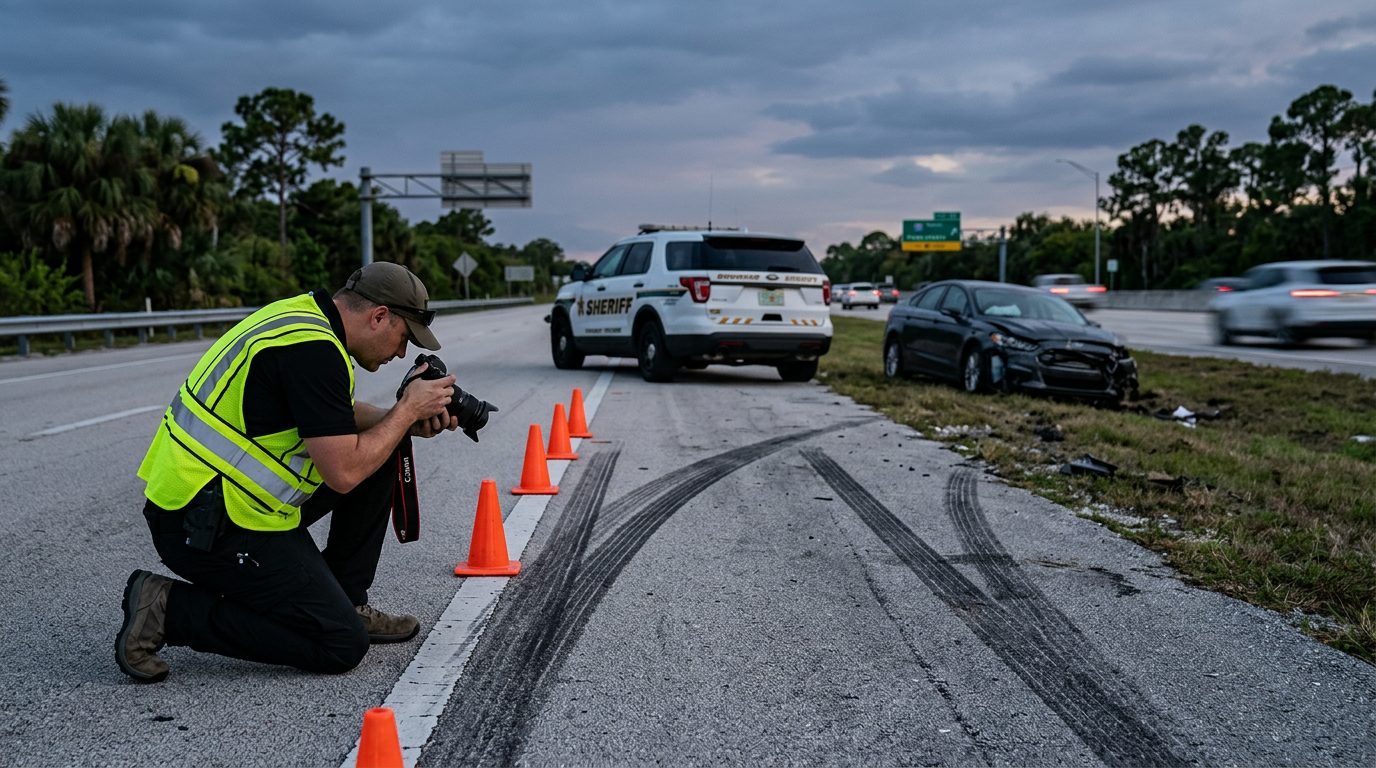
Sunrise sits in Broward County, where busy commercial roads, intersections near shopping centers, and heavy traffic share space with drivers, delivery vehicles, and people on foot. Crashes that cause death often involve large trucks, motorcycles, ATVs, bicycles, or pedestrians. These riders and walkers have little protection when a vehicle strikes them.
Impaired driving is one cause the public data tracks. The CDC’s impaired driving facts describe deaths involving alcohol-impaired drivers. The National Highway Traffic Safety Administration also tracks fatal crashes in a public dataset called the Fatality Analysis Reporting System.
When a commercial truck is involved, the questions go beyond the driver. Families may need to ask who owned, leased, loaded, or dispatched the vehicle. Those answers can shape who may be responsible.
When a Fatal Attack on Someone Else’s Property May Lead to a Claim
Picture a loved one who goes to a parking garage, an apartment complex, a hotel, a bar, a gas station, or a store. A person attacks them and they are shot, stabbed, or killed. The gate did not work, the lights were out, the cameras were not recording, and no guard was on duty.
A lawyer can review what happened and explain the options available to your family. Lawyers call this kind of case a negligent security claim.
Florida law says that in an action brought by a person lawfully on the property who was injured by the criminal act of a third party, against the owner, lessor, operator, or manager of commercial or real property, the trier of fact must consider the fault of all persons who contributed to the injury (Fla. Stat. § 768.0701).
Evidence matters a great deal in these cases. Useful records include prior incident reports at the property, security logs, repair requests for broken locks or gates, lighting and camera records, police reports, and names of witnesses. Video can be recorded over on a schedule, so families should act early.
Are Wrongful Death Cases Hard to Win?
They take real proof. A lawyer can help families understand what their own case involves. Insurers and defense lawyers often dispute fault and the value of the losses, so strong evidence matters from the start. No lawyer can promise a particular result, and every case turns on its own facts.
Does Florida reduce damages if the person was partly at fault?
In a negligence action to which § 768.81 applies, a party found more than 50 percent at fault for their own harm may not recover any damages (Fla. Stat. § 768.81). This does not apply to an action for damages for personal injury or wrongful death arising out of medical negligence pursuant to chapter 766. For causes of action filed after March 24, 2023, Chapter 2023-15 applies.
Can a surviving spouse still recover?
Yes. In Ripple v. CBS Corp., the Florida Supreme Court held that a surviving spouse does not bring a separate loss of consortium claim when the injury causes death. The spouse’s losses are recovered in the wrongful death action under Fla. Stat. § 768.21. The court also held that a marriage formed after the injury does not bar those damages.
Not sure what your next step is?
Talk it through with our team — the first consultation is free, confidential, and carries no obligation.
Florida Deadlines: How Long After a Death Can a Claim Be Filed?
Florida law sets a two-year limit for actions founded on negligence (Fla. Stat. § 95.11). Deadlines apply to every family. Grief and the time it takes to gather records do not pause them.
A separate rule lets some wrongful death suits against a person who commits certain intentional killings be filed at any time (Fla. Stat. § 95.11). Acting early still helps preserve evidence and protect every deadline that applies.
Talk With Our Team About Your Family’s Next Steps
Families who have lost someone can talk with our team about whether a claim may fit their situation. CHG Personal Injury Lawyers is a Florida-based firm that represents clients throughout Florida. Igor Hernandez is the responsible lawyer for this page, and our attorneys are licensed in Florida.
The initial consultation is free, confidential, and carries no obligation to continue. CHG charges no attorney’s fees and no case costs unless there is a recovery.
If your family is deciding what to do next, tell our team what happened. You do not have to sort out the records, the deadlines, and the grief on your own. Contact our team to start the conversation.
How Our Firm Can Help Your Family
We Start With Your Family
Every wrongful death claim begins with the people who lost someone. We listen first and take the time to understand what your family has been through.
We Look at the Full Picture
We review the accident or incident, the records, and the circumstances that led to the death so that your family understands the options in front of it.
We Advocate for Your Family
Our team works to hold the responsible parties accountable and to pursue the compensation that families in Florida may be able to seek.
Clear Answers, Plainly Explained
Our attorneys explain legal terms in everyday language, so you can make informed decisions at your own pace.
No Fees Unless There Is a Recovery
The firm charges no attorney's fees and no case costs unless there is a recovery.
Steps Families Often Take in the Early Days
Gather Important Records
Keep copies of the police or incident reports, medical and hospital records, funeral and death certificates, and any correspondence from insurers or other parties.
Preserve the Evidence
Photos, video, witness names, and physical items connected to the incident can be lost quickly. Let us know what exists so it can be protected.
Be Careful With Statements
Insurance adjusters may contact your family soon after a death. You do not have to give a recorded statement or sign documents before speaking with an attorney.
Reach Out for Support
Grief affects every part of family life. Lean on people you trust, and let our team handle the legal questions while you focus on your loved ones.
Time Matters
Deadlines apply to wrongful death claims in Florida. Contact our firm promptly rather than waiting, so that your options can be reviewed while the details are still fresh.