
Wrongful Death Claims · Sweetwater, Florida
When a Loss Is Someone Else's Fault, Your Family Deserves Answers
Losing a loved one is devastating. CHG Personal Injury Lawyers helps Sweetwater families understand their options and decide what to do next, on their own timeline.
By CHG Lawyers · Published November 17, 2026
Wrongful Death in Sweetwater: What Florida Families Should Know
Losing someone suddenly to a wrongful death in Sweetwater is one of the hardest things a family can face. If another person’s or a business’s carelessness may have caused the death, the weeks that follow can bring paperwork, insurance calls, and hard questions all at once.
Florida families may have a wrongful death claim in that situation. This page explains who can bring one, what it can cover, and which deadlines and fault rules matter most. It is general information, not advice about your case.
If your family’s case is handled that way, we will explain how it works before you decide. Talk it through with our team — the first consultation is free, confidential, and carries no obligation.
Wrongful Death in Sweetwater: When a Family Loses Someone Suddenly
A wrongful death claim lets a family seek compensation when someone else’s wrongful act, negligence, or failure to act caused a death.
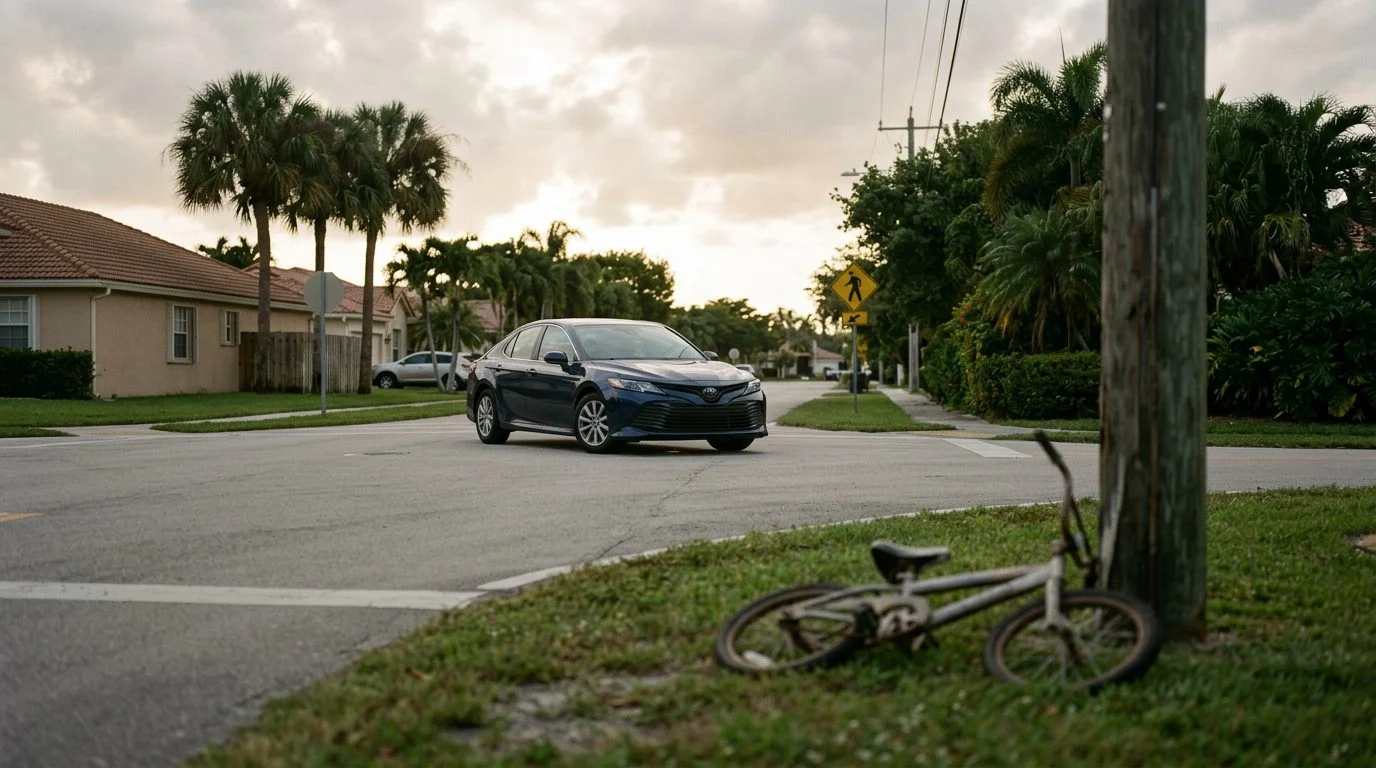
A crash on Tamiami Trail, a fatal fall at a store, or a violent attack in a parking garage can each lead to a claim. It depends on the facts. Families in Sweetwater and across Miami-Dade often face these losses close to home.
Florida law says that when a death results from someone’s wrongful act or negligence, the party who would have been liable had the person lived remains liable for damages. Fla. Stat. § 768.19 states that rule. Florida calls this body of law the Florida Wrongful Death Act. Fla. Stat. § 768.16 says it may be cited by that name.
The claim is about the family’s loss as well as the law. A spouse, child, or parent loses a person who paid bills, cared for others, and filled a daily place in the home. The law gives the family a way to seek recovery for those losses.
That claim is separate from any criminal case that may follow.
In the first weeks, most families deal with a death certificate, police or crash paperwork, and calls from insurers. This page walks through those pieces in order.
What Florida’s Wrongful Death Law Lets Families Pursue
The case is brought by the personal representative. This is the person appointed to manage the estate of the person who died. The claim is made for the benefit of the survivors and the estate.
Fla. Stat. § 768.20 says that when a personal injury results in death, the injury claim itself does not survive. The wrongful death action is brought by the decedent’s personal representative, who recovers for the benefit of the decedent’s survivors and estate.
Who counts as a survivor? Fla. Stat. § 768.18 names the spouse, children, and parents. It also includes blood relatives and adoptive brothers and sisters who depended on the person for support or services. Fla. Stat. § 768.18 reads: “It includes the child born out of wedlock of a mother, but not the child born out of wedlock of the father unless the father has recognized a responsibility for the child’s support.” Under that statute, “minor children” means children under 25.
- Under Fla. Stat. § 768.21, a survivor may recover the value of lost support and services.
- A surviving spouse may also recover for lost companionship and protection. A spouse may also recover for mental pain and suffering.
Minor children may recover for lost parental companionship, instruction, and guidance. Parents of a deceased minor child may recover for mental pain and suffering. The decedent’s personal representative may recover the person’s lost earnings from injury to death for the estate, less lost support of survivors excluding contributions in kind. It may also recover certain medical and funeral expenses.
Florida’s Supreme Court has also held that a surviving spouse does not bring a separate loss-of-consortium claim. As the court explained in Ripple v. CBS Corp., under the Act the surviving spouse does not bring a separate cause of action based on loss of consortium. See Ripple v. CBS Corp..
Examples of Wrongful Death in Sweetwater and Miami-Dade
Most of these cases start with one event. It may be a crash, a violent act on unsafe property, or a hazard someone should have fixed.
- A fatal collision on a busy roadway. Corridors like Tamiami Trail and SW 8th Street carry heavy daily traffic. A driver who runs a light or drifts out of a lane can change a family’s life in seconds.
- A pedestrian or bicyclist struck by a driver.
- A motorcycle rider hit by a car that turned in front of them.
- A commercial truck crash. These can involve more than one responsible party. A family may need to look at the driver, the trucking company, and any company that maintained the vehicle.
- A drowning or electrocution when a known hazard was not fixed. One example is a broken pool gate at an apartment complex. Another is exposed wiring at a work site.
National crash-fatality data from the National Highway Traffic Safety Administration describes how fatal crashes are recorded across the United States. For a Florida family, the local crash report is usually the first document to request.
When a Death Follows Violence on Someone Else’s Property
If someone was shot, assaulted, or attacked on another person’s property, the family may have a claim. This applies when the owner failed to provide basic safety.
Picture an apartment complex with a gate that doesn’t lock. Or picture a garage with dark corners, or a hotel where the cameras don’t work. A resident or guest may be attacked there. The family may then ask whether the owner did what a reasonable owner would do to keep people safe.
The safety at issue often includes:
- Working locks and gates
- Adequate lighting
- Functioning cameras
- Guards, where an owner had reason to provide them
Lawyers call this type of claim “negligent security.” Florida law says that in an action against the owner, lessor, operator, or manager of commercial or real property, brought by a person lawfully on the property who was injured by the criminal act of a third party, the trier of fact must consider the fault of all persons who contributed to the injury. This applies when the injured person was lawfully on the property and was injured by the criminal act of a third party. See Fla. Stat. § 768.0701.
Florida also has a separate law for apartment and townhouse properties with at least five units. See Fla. Stat. § 768.0706.
Every case turns on its own facts. A key question is what the owner knew or should have known. Florida’s Supreme Court has said businesses owe visitors a duty to keep their premises reasonably safe. See Valladares v. Bank of America Corp..
Florida Deadlines and the Fault Rules Families Need Early
Florida gives two years to file a lawsuit based on negligence. Families should treat the calendar as urgent from the start. The two-year limit is in Fla. Stat. § 95.11.
Under Florida law, an action founded on negligence must be commenced within two years, as provided in Fla. Stat. § 95.11(5)(a). See ch. 2023-15, Laws of Florida.
Claims against a person who committed a deliberate killing may follow a different timing rule. Under § 95.11(11), wrongful death claims against a natural person for an intentional tort resulting in death from acts described in s. 782.04 or s. 782.07 may be started at any time. Deadlines still apply, and the rules differ by claim.
Florida’s fault rule also matters. Under Fla. Stat. § 768.81(6), in a negligence action a party found more than 50 percent at fault for their own harm may not recover any damages. This rule does not apply to personal injury or wrongful death claims arising out of medical negligence under chapter 766. A defendant may argue that the person who died shares the blame.
On medical and investigative questions, follow the guidance of your doctors and the medical examiner’s office. Insurance companies often reach out early. A family can ask for time before giving any recorded statement.
Not sure what your next step is?
Talk it through with our team — the first consultation is free, confidential, and carries no obligation.
Evidence Families in Sweetwater Can Preserve Now
The most useful evidence is usually the paperwork and scene details a family gathers early.
- Start with the death certificate.
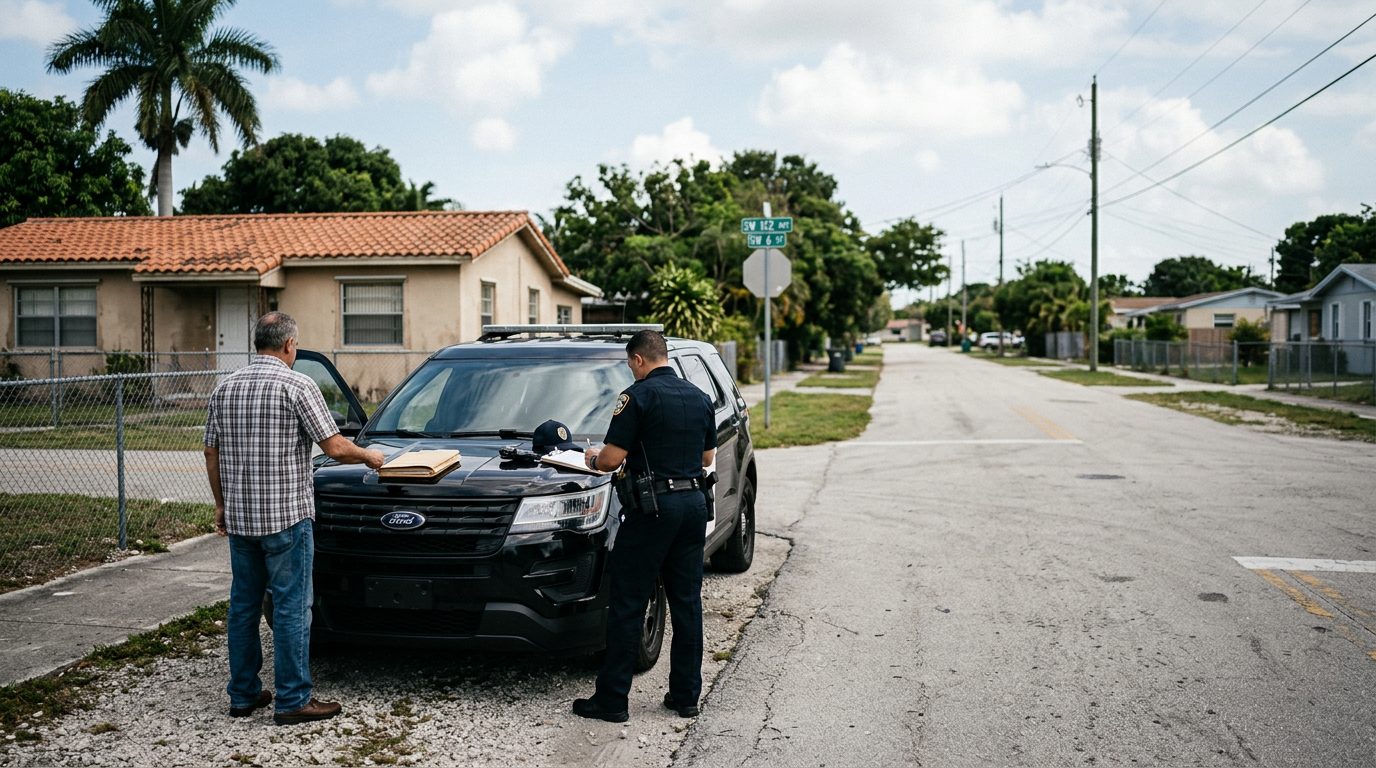
- Request the crash or police report. Florida requires a Florida Traffic Crash Report to be submitted within 10 days after the investigating officer finishes the investigation. This applies to crashes that result in death of, personal injury to, or any indication of complaints of pain or discomfort by any of the parties or passengers involved in the crash, that involve a violation of s. 316.061(1) or s. 316.193, that render a vehicle inoperable to a degree that required a wrecker to remove it from the scene, or that involve a commercial motor vehicle. Parties and their legal representatives may access it. See Fla. Stat. § 316.066.
- Save photos of the scene and vehicles.
- Write down witness names and phone numbers while memories are fresh.
- Ask for business and apartment video promptly. Video can be overwritten quickly.
- Keep pay records, bills, and anything that shows what the person contributed to the household. These records help show the support and services the survivors may have lost.
- Keep a simple file of insurer calls and letters, with dates and names.
- Avoid posting details about the death or the case on social media.
Who Pays in a Wrongful Death Case and Whether a Claim Is Worth Pursuing
Payment usually comes from insurance held by the responsible driver, business, or property owner. In some cases, it comes from that party’s own assets.
Going up against an insurance company alone can feel like the Miami Heat trying to close a fourth quarter with one player on the floor. A family should not have to carry that load by itself.
No honest lawyer can promise a settlement or verdict amount. The value of a claim depends on the facts of each case. No two families’ losses look the same.
While a wrongful death action is pending, a settlement as to amount or apportionment among the beneficiaries needs court approval in some situations. Fla. Stat. § 768.25 reads: “While an action under this act is pending, no settlement as to amount or apportionment among the beneficiaries which is objected to by any survivor or which affects a survivor who is a minor or an incompetent shall be effective unless approved by the court.” This applies when a survivor objects to it or when it affects a minor or incompetent survivor. See Fla. Stat. § 768.25.
If Medicare paid some of the bills, different rules apply. CMS explains that a conditional payment must be repaid when a settlement, judgment, award, or other payment is made. See CMS Medicare Secondary Payer overview.
CHG charges no attorney’s fees and no case costs unless there is a recovery. The initial consultation is free, confidential, and carries no obligation to continue.
Why a Florida Firm Matters for a Family in Sweetwater
CHG Personal Injury Lawyers is a Florida-based personal injury firm. It serves people throughout Florida, including families in Miami-Dade County.
The firm focuses on personal injury cases of every severity. These range from everyday car accidents and slip-and-falls to catastrophic injuries and wrongful death. The firm handles crash cases, truck accidents, and negligent security claims.
Igor Hernandez is the responsible lawyer for this page. Our attorneys are admitted to The Florida Bar. Our team includes attorneys and support staff who help families through the paperwork and calls that follow a loss.
Some matters may be referred to, or handled together with, another law firm. If your family’s case is handled that way, we will explain how it works before you decide.
Talking With a Lawyer About Your Family’s Loss in Sweetwater
Deciding whether to file a claim, answering an insurance call, and tracking the deadline can all land on a family in the same week.
If your family faces those decisions after a sudden death, you don’t have to sort them out alone. Contact our team to talk through your situation.
The person you lost deserves to be remembered with dignity. Your family deserves answers, support, and a clear next step.
Frequently Asked Questions
Who can file a wrongful death claim in Florida?
Under Florida law, all potential beneficiaries of a wrongful death recovery, including the decedent’s estate, must be identified in the complaint, and their relationships to the decedent must be alleged. It is brought for the benefit of surviving family members, such as a spouse, children, or parents. Florida’s rules on who may recover can depend on the family’s situation. That is why it is important to ask early.
How long do families have to file a wrongful death lawsuit in Florida?
Florida law generally requires a wrongful death lawsuit to be filed within two years of the date of death. Other rules can apply in some situations. Deadlines like this are strict. Families should contact CHG Personal Injury Lawyers promptly to learn what applies to their case.
What types of damages can a family recover in a Florida wrongful death case?
Florida’s wrongful death law allows recovery for losses such as medical and funeral expenses. It also covers lost support and services the person would have provided. For eligible survivors, it can include lost companionship and mental pain and suffering. The amount available depends on the facts of each case, and no result can be promised. CHG charges no attorney’s fees and no case costs unless there is a recovery.
Can a wrongful death claim arise from a crash or violent crime in Sweetwater?
Yes. Wrongful death claims can follow fatal car, truck, motorcycle, pedestrian, or bicycle crashes. They can also follow deaths from violent crime on property where the owner failed to provide reasonable security. Whether a claim exists depends on the facts. The initial consultation with CHG Personal Injury Lawyers is free, confidential, and carries no obligation to continue.
How We Support Families
Focus on Your Family
We understand that a wrongful death claim is about the people left behind, not only the legal steps that follow.
Licensed Florida Attorneys
Our lawyers are licensed attorneys admitted to The Florida Bar, and we handle wrongful death matters for clients throughout Florida.
Clear, Plain-Language Guidance
We explain the claim, the process, and what the family may need to gather in terms you can follow, without legal jargon.
Confidential, No-Obligation Talks
The initial consultation is free, confidential, and without obligation to continue. Our team is ready to listen.
Don't Wait to Ask Questions
Legal deadlines apply to wrongful death claims in Florida. Waiting can limit the options available to your family, so please contact our firm promptly to have your questions reviewed.
Steps Families Often Take After a Fatal Accident
Focus on Your Loved One's Care
Follow the guidance of medical providers and law enforcement, and keep copies of reports, bills, and other records as they become available.
Preserve What You Can
Photos, witness names, insurance information, and messages can be important. Share them with your lawyer rather than trying to reconstruct the events alone.
Speak With a Lawyer Early
Early conversations help families understand who may be responsible and which deadlines apply to their situation.
Protect Your Family's Well-Being
Grief affects everyone differently. Lean on people you trust, and let our team handle the legal details while you focus on your family.