
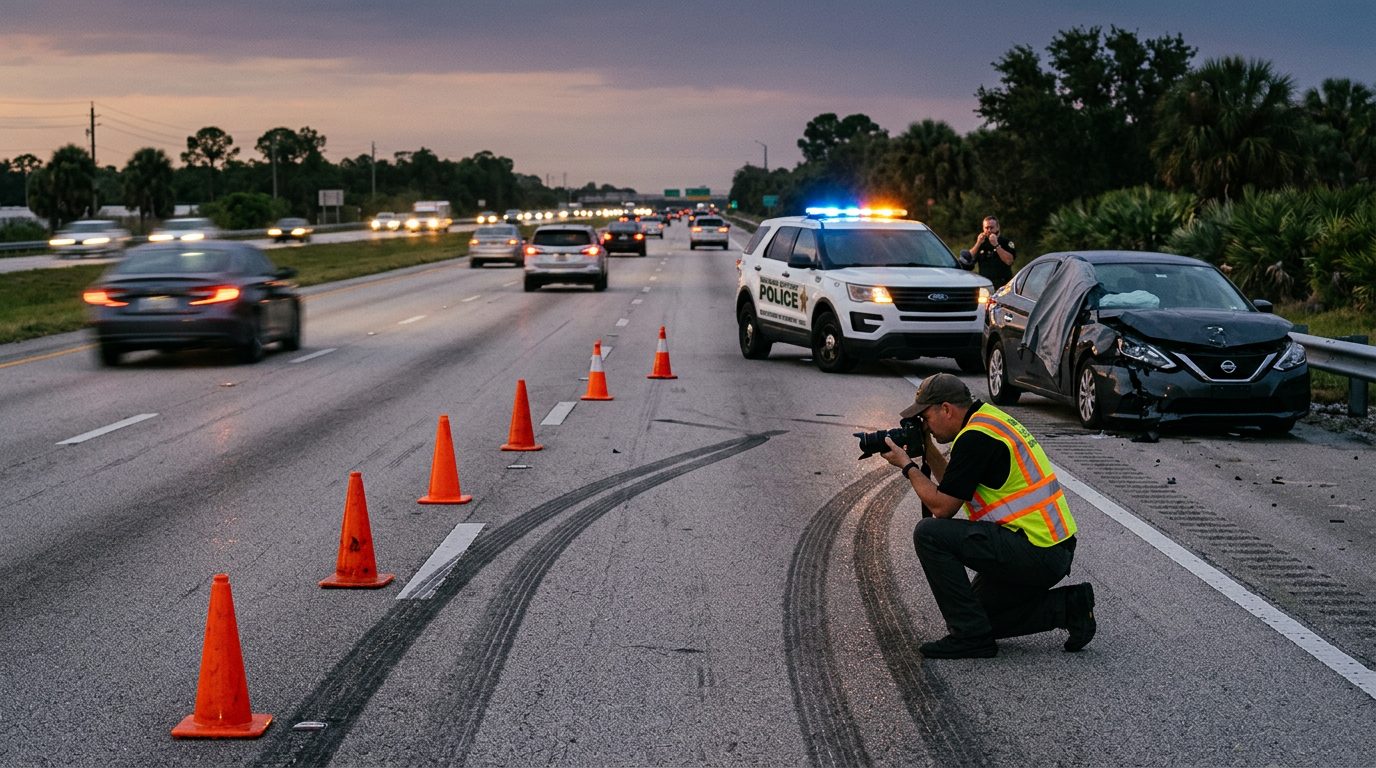
Wrongful Death in Tamarac, Florida
Losing a Loved One Changes Everything. You Do Not Have to Face the Questions Alone.
Grief, paperwork, and hard decisions often arrive all at once. Here is a clear, calm place to begin.
By CHG Lawyers · Published November 17, 2026
Losing someone in a crash or an attack is painful. Many families search for answers in the first days after a death, when grief makes even simple questions hard to ask. This page explains Florida wrongful death law in plain words for families in Tamarac and across Broward County. Roads in Broward County can fill up quickly, including on Florida Panthers game nights in Sunrise, and a crash can leave an injured person facing questions about what to do next.
In Florida, a family may be able to bring a wrongful death lawsuit when another person’s wrongful act or negligence causes a death. The claim is brought for the survivors and the estate. The general filing period for negligence claims is two years, so families should talk with a lawyer early.
What Is a Wrongful Death Lawsuit in Florida?
A wrongful death lawsuit asks the court to hold the responsible party accountable for a family’s loss. It applies when a person dies because of another party’s wrongful act, negligence, default, or breach of contract or warranty, and the event would have entitled that person to maintain an action and recover damages had death not ensued. Fla. Stat. § 768.19 states that the party who would have been liable had the death not occurred is still liable for damages under the Act.
Florida calls these rules the Florida Wrongful Death Act. Fla. Stat. § 768.16 says the sections may be cited that way.
Families often get confused about one point. If the injured person lived for a while, that person may have started a lawsuit of their own. Under Fla. Stat. § 768.20, a personal injury lawsuit does not continue after death. A case still pending at the time of death ends. The decedent’s personal representative brings the action, and recovery goes to the decedent’s survivors and estate, and it proceeds as a wrongful death action.
The claim is about the family’s loss, not only the cause of death. It looks at the people left behind and what they lost.
If your family lost a loved one in a crash or an attack in Tamarac, you don't have to face the questions alone. Talk with us in a free, confidential consultation. Talk it through with our team — the first consultation is free, confidential, and carries no obligation.
Who Can File a Wrongful Death Claim in Florida?
The claim is brought by the decedent’s personal representative. Under Fla. Stat. § 768.20, that person recovers for the benefit of the survivors and the estate. A personal representative is the person a court appoints to act for the deceased person’s estate. Families often need that appointment before the case can move forward.
Florida law also defines who counts as a survivor. Fla. Stat. § 768.18 lists the decedent’s spouse, children, and parents. It also includes blood relatives and adoptive brothers and sisters who were partly or wholly dependent on the person for support or services. Fla. Stat. § 768.18 reads: “It includes the child born out of wedlock of a mother, but not the child born out of wedlock of the father unless the father has recognized a responsibility for the child’s support.” The statute treats children under 25 as minor children.
Whether a blood relative or adoptive brother or sister qualifies depends on the facts of each family, because they must be partly or wholly dependent on the decedent for support or services. An adult child is a survivor whether or not they depended on the person who died, while a sibling qualifies only if a blood or adoptive sibling was partly or wholly dependent on the decedent for support or services. Ask a lawyer to review your family’s situation rather than guessing.
How Much Time Does a Tamarac Family Have to File?
Florida’s general filing period for negligence claims is two years. Lawyers call this deadline the statute of limitations. Filing deadlines can affect injury claims, so contact the firm promptly to discuss your situation. Florida’s 2023 law, ch. 2023-15, made changes to that limitations rule.
Deadlines apply, and the facts of a case can affect how they work. Evidence can also fade. Surveillance video gets overwritten, and witnesses move or forget details. That is one more reason to act early.
Nothing here means a family still has time to file. The safe step is to contact a lawyer promptly, before the period runs out.
What Damages Can Families Recover in a Florida Wrongful Death Claim?
Florida law sets out the losses a family may recover. Under Fla. Stat. § 768.21, each survivor may recover the value of lost support and services. It counts losses from the date of injury to the date of death, with interest. It also covers future losses, reduced to present value.
A survivor who has paid medical or funeral bills may recover those costs. The personal representative may also recover, for the estate, the decedent’s lost earnings from the date of injury to the date of death. That recovery is reduced by the lost support of survivors. Medical or funeral expenses charged to the estate, or paid on the decedent’s behalf, may be recovered for the estate by the personal representative, excluding amounts recoverable under subsection (5) by a survivor who paid them.
The statute also names certain losses for certain survivors. Those are covered in the next section.
No one can predict the amount of any claim. The value of a case depends on its facts, the people involved, and the evidence.
Can Survivors Recover for Emotional Distress in Florida?
The law calls this “mental pain and suffering.” Florida’s statute ties each survivor’s right to the family relationship. Fla. Stat. § 768.21 sets out these categories.
A surviving spouse may recover for the loss of the decedent’s companionship and protection. A spouse may also recover for mental pain and suffering from the date of injury. Minor children, and all children when there is no surviving spouse, may recover for lost parental companionship, instruction, and guidance. They may also recover mental pain and suffering.
Each parent of a deceased minor child may recover for mental pain and suffering. A parent of an adult child may recover that damage only when there are no other survivors. In claims for medical negligence, parents of an adult child may not recover that damage.
The Supreme Court of Florida addressed spouses in Ripple v. CBS Corp. (2024). The court held that a surviving spouse does not bring a separate loss of consortium claim under the Act. The court also held that the “marriage before injury” rule does not bar a surviving spouse’s recovery of damages under the wrongful death statute.
Losing a spouse, a child, or a parent changes a family’s life. Courts hear that grief in plain terms. Our team keeps the focus on the family’s loss, not only on legal technicalities.
Wrongful Deaths in Tamarac and Broward County: Common Situations
Fatal crashes happen on the roads families use every day. In Tamarac, that includes Commercial Boulevard, Sample Road, University Drive, and routes near I-95 and the Sawgrass Expressway. Pedestrians, bicyclists, and motorcyclists have far less protection than people in cars. Their families often face the hardest questions.
Another kind of case involves an attack. A person is killed in an assault, shooting, or robbery on property where basic safety was missing. Think of an apartment complex with a broken gate, a parking garage with dark stairwells and no working cameras, or a hotel with locks that failed. If the owner did not provide reasonable safety, the family may have a claim against that owner. Lawyers call this kind of case negligent security.
Florida law requires the fault of everyone involved to be weighed. Under Florida law, in an action for damages against the owner, lessor, operator, or manager of commercial or real property brought by a person lawfully on the property who was injured by the criminal act of a third party, the trier of fact must consider the fault of all persons who contributed to the injury.
Other fatal incidents within our practice include drownings, electrocutions, slip and falls, and construction zone accidents. Each has its own facts.
Not sure what your next step is?
Talk it through with our team — the first consultation is free, confidential, and carries no obligation.
Why Fatal Crash Data Matters for Broward Families
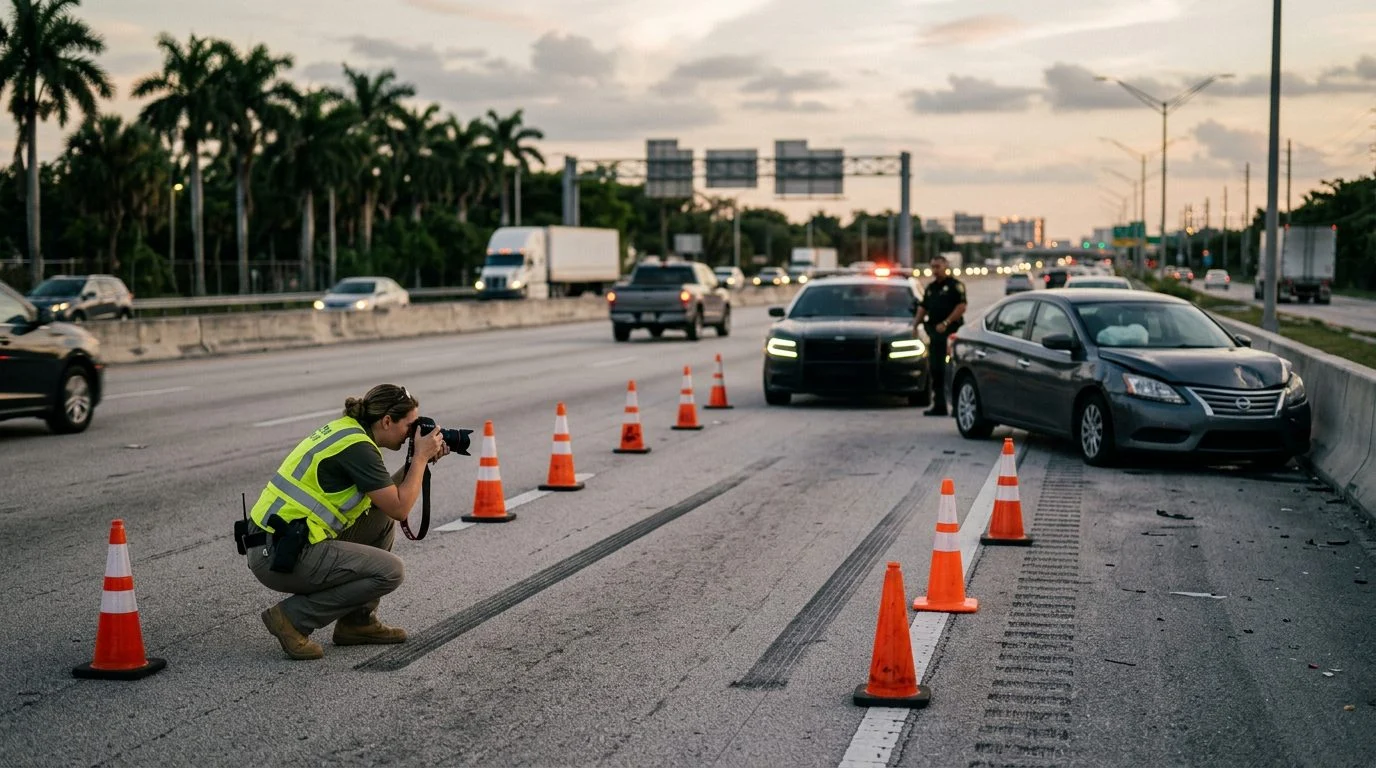
Official records often show families how a fatal crash happened. Florida law requires a long-form crash report for crashes that resulted in death of, personal injury to, or any indication of complaints of pain or discomfort by any of the parties or passengers involved in the crash, or that involved a violation of s. 316.061(1) or s. 316.193. Under Fla. Stat. § 316.066, that report must be submitted within 10 days after the investigating officer completes the investigation. The statute also lets the parties to a crash and their legal representatives access these reports.
The driver in a crash that results in death has duties at the scene. Under Fla. Stat. § 316.027, the driver must remain at the scene until the legal requirements are met.
Public data helps show patterns. The National Highway Traffic Safety Administration maintains the Fatality Analysis Reporting System, a public dataset of fatal crashes. The Centers for Disease Control and Prevention also publishes CDC impaired driving facts on traffic deaths involving alcohol-impaired drivers. Those figures describe trends. They do not decide any one family’s case.
How Long Does a Wrongful Death Settlement Take?
There is no set timeline. A case can resolve through negotiation, or it can go to court. Timing depends on the facts, the evidence, the parties involved, and the court’s schedule.
A settlement is an agreement reached before a verdict. A verdict is the decision a judge or jury reaches after trial. Many cases resolve before trial, but no one can promise that for any family.
Florida adds a court step in some cases. Under Fla. Stat. § 768.25, while an action is pending, no settlement as to amount or apportionment among the beneficiaries that a survivor objects to, or that affects a minor or an incompetent survivor, is effective unless the court approves it. Families should expect that review to be part of the plan.
A lawyer can explain how the process is likely to unfold for your family’s specific facts.
Steps Tamarac Families Can Take Now
The first steps are simple. Keep records, save evidence, and talk with a lawyer before deadlines pass.
- Request the official crash or incident report from the investigating agency.
- Keep the death certificate, funeral and burial receipts, and bills.
- Gather records of the income and support the person who died provided to the family.
- Save photos, video, witness names, and messages about the incident.
- Keep phone records and social media posts. Don’t delete anything, and avoid posting about the case.
Medical questions belong with the family’s doctors and the medical examiner. Follow their care guidance.
How CHG Personal Injury Lawyers Serves Families in Tamarac
CHG Personal Injury Lawyers is a Florida-based personal injury firm. It serves people throughout Florida, including Tamarac and Broward County. Igor Hernandez is the lawyer responsible for this page. Our lawyers are admitted to The Florida Bar.
The firm handles personal injury cases of every severity. That includes everyday accidents, catastrophic injuries, and wrongful death. Families dealing with a death often need privacy and patience as much as legal help. Our team keeps that in mind from the first call.
CHG charges no attorney’s fees and no case costs unless there is a recovery.
Talk With a Tamarac Wrongful Death Lawyer Before the Deadline Passes
If your family is weighing whether to file after a fatal crash or an attack on property, you don’t have to sort it out alone. Talking early helps you learn the facts and the deadlines that may apply.
Common Questions
Can a family in Tamarac file a wrongful death claim?
Possibly. Whether a claim exists depends on the facts of each case.
How long does a family have to file?
Florida’s general filing period for negligence claims is two years. Deadlines apply, so contact a lawyer promptly.
Is the first meeting free?
Yes. The initial consultation with CHG is free, confidential, and carries no obligation to continue.
If your family lost someone in a crash on a Tamarac road or in an attack on a property, the next step is a conversation about what happened. Contact CHG Personal Injury Lawyers for a free, confidential consultation.
How CHG Personal Injury Lawyers Supports Families
Compassion First
We understand that a wrongful death case is about a person, a family, and a life that mattered. We listen before we talk about legal steps.
Serving Families Across Florida
Our attorneys represent families in Tamarac, Broward County, and communities throughout Florida, including Miami, Orlando, Tampa, and Jacksonville.
Plain-Language Guidance
We explain each step in clear terms, in English or Spanish, so you always know what is happening and why.
Focused Advocacy
Our practice focuses on serious injury and wrongful death claims, and we work to hold responsible parties accountable for the loss your family has suffered.
No Fees Unless There Is a Recovery
CHG charges no attorney's fees and no case costs unless there is a recovery.
Time Matters
Florida deadlines apply to wrongful death claims. Waiting can make it harder to protect your family's rights, so please contact a lawyer promptly.
Questions Families in Tamarac Often Ask
Can our family file a claim?
Whether a wrongful death claim exists depends on the facts of each case. Our attorneys can review what happened and explain the possible options.
Who can bring the claim?
Florida law determines who may bring a wrongful death claim. Our team can explain how the rules apply to your family's situation.
What should we do first?
Keep records of medical care, bills, and the accident or incident. Follow the guidance of your loved one's doctors and your family's own needs, and contact us to talk through next steps.
Is the first meeting free?
The initial consultation is free, confidential, and carries no obligation to continue.