
Wrongful Death | Plantation, Florida
When a Loved One Dies in an Accident, Florida Law May Give Your Family a Path Forward
Plantation families facing sudden loss often have questions about who can act, what the law allows, and where to begin. Our Florida personal injury team is here to explain your options in plain language.
About CHG Personal Injury Lawyers
Florida
Florida-based personal injury firm serving families across the state
Licensed
Attorneys admitted to The Florida Bar
No Fee
No attorney's fees or case costs unless there is a recovery
How Our Firm Supports Families After a Wrongful Death
Respect for your family's loss
We understand that a death in the family is more than a legal matter. We take time to listen, and we keep you informed at every step.
Clear explanations
Wrongful death law has its own rules and vocabulary. Our attorneys explain what applies to your family's situation in everyday language.
Support for every family member
Florida law allows certain survivors to bring a claim. We help you understand who may be involved and how the family can work together.
A free, confidential consultation
The initial consultation is free, confidential, and without obligation to continue. Call us to talk through what happened and what your options may be.
By CHG Lawyers · Published November 18, 2026
Wrongful Death in Plantation: A Florida Family Guide
If someone you love died in Plantation because another person or company was careless, you may be weighing a wrongful death claim. Your mind is probably racing. Who can act? How much time do you have? What should you do first?
Here is the short answer. In Florida, a wrongful death claim is brought by the person legally in charge of the deceased person’s estate. The claim is for the benefit of the surviving family. Florida generally requires the case to start within two years.
This guide explains the basics for families in Plantation and across Broward County. It is written in plain language.
Not sure what your next step is?
Talk it through with our team — the first consultation is free, confidential, and carries no obligation.
When a Wrongful Death in Plantation Is Caused by Someone Else
A wrongful death claim is a lawsuit. It can follow when another person’s or company’s negligence or wrongful act causes a death. Negligence means failing to use the care a reasonable person would use.
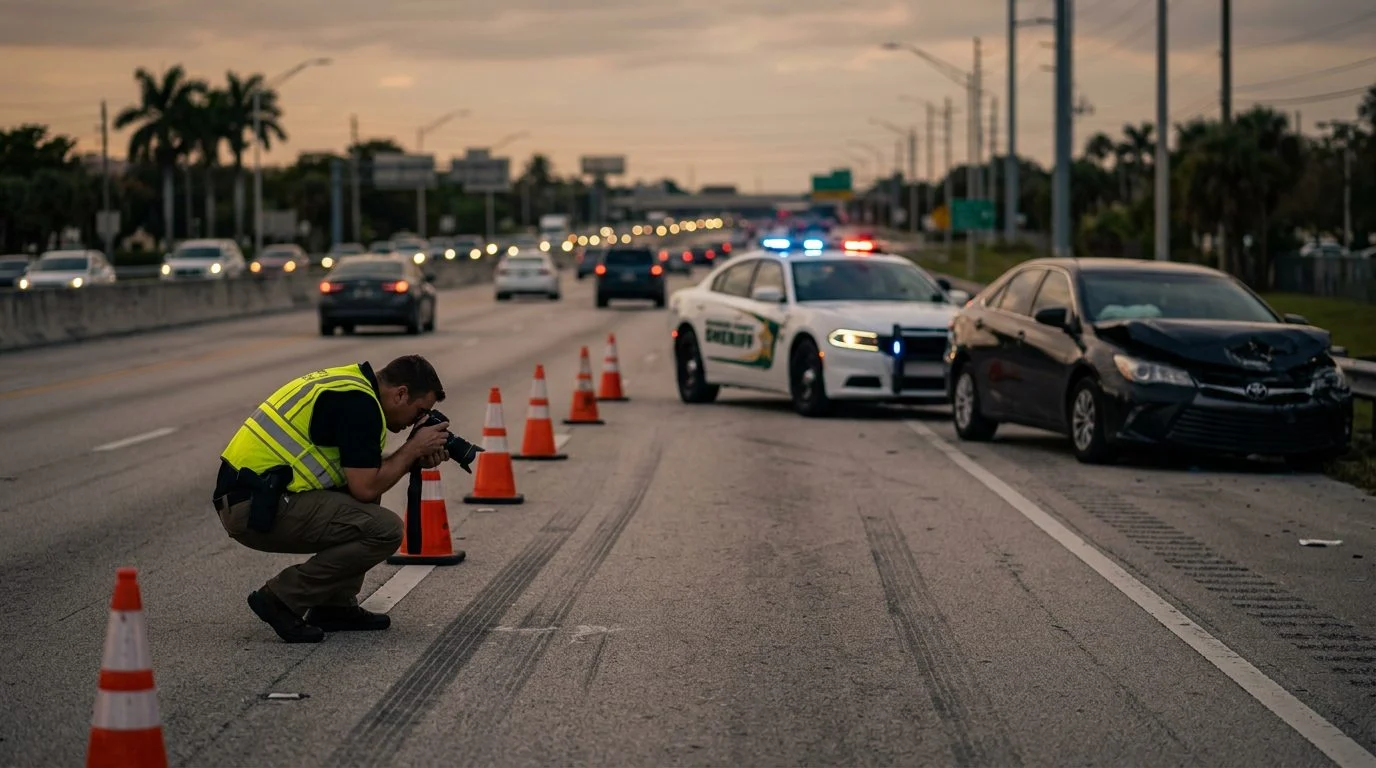
Plantation families often face these losses after a crash. Busy roads carry heavy daily traffic. These include Interstate 595, the Sawgrass Expressway, and State Road 7/US 441. A fatal crash on any of them can change a household in seconds.
The situations covered are wider than many families expect. They include:
- Fatal car and truck crashes
- Motorcycle and bicycle crashes
- Pedestrian deaths
- Deaths from violent attacks on property the owner did not keep reasonably safe, such as an assault in an apartment complex or a shooting in a parking garage
A claim can involve more than one party. A driver, an employer, a property owner, or another company may share responsibility.
Florida’s rules for these claims are in the Florida Wrongful Death Act, § 768.19. For statewide context, read our Florida wrongful death guide.
Who Can Bring a Wrongful Death Claim in Florida?
The deceased person’s personal representative brings the claim.
“Survivors” are the people the law counts as family for this claim. They include the spouse, children, and parents. A child born out of wedlock counts through the mother, but a child born out of wedlock counts through the father only if the father has recognized a responsibility for the child’s support. Blood relatives and adoptive brothers and sisters can also count. They count if they depended on the person for support or services. See § 768.18.
Florida also treats children under 25 as “minor children,” even if they are adults.
Families often need to sort out these roles early. Who is the personal representative? Who are the survivors? Talking through these questions can keep the process organized. Our team can help families understand this step.
A surviving spouse is one of the survivors defined in § 768.18, and that section does not say how the spouse’s losses are recovered.
- A spouse is one of the survivors defined in § 768.18, and that section does not address loss of consortium claims. Under Florida law, a surviving spouse may also recover for loss of the decedent’s companionship and protection and for mental pain and suffering from the date of injury (Fla. Stat. § 768.21(2)).
- A surviving spouse is one of the survivors defined in § 768.18.
Is There a Deadline to File a Wrongful Death Lawsuit?
Yes. Florida generally requires a wrongful death action to start within two years. Florida sets different filing deadlines for different kinds of claims, and the deadline that applies to your case depends on the type of claim, as set out in Florida’s limitations statute, § 95.11.
Don’t assume you have time. The two-year period is a legal limit, not a suggestion. Missing it can end a claim. Families should contact a lawyer promptly. Do not wait.
What a Plantation Family May Be Able to Recover
Florida law lets survivors seek money for certain losses under § 768.21. Each survivor may recover lost support and services. The estate can recover some expenses and lost earnings.
- A surviving spouse may recover lost support and services, loss of companionship and protection, and mental pain and suffering.
- Minor children of the decedent, and all children of the decedent if there is no surviving spouse, may recover lost parental companionship, instruction, and guidance, plus mental pain and suffering.
- Each parent of a deceased minor child may recover for mental pain and suffering.
- A survivor who paid medical or funeral bills caused by the injury or death may recover them.
Loss of services covers the everyday help a person gave at home. Think of cooking, childcare, yard work, or running errands. The replacement value of that help may be considered.
No one can promise what any family will recover. The amount depends on the facts of each case.
Are Wrongful Death Cases Hard to Win?
Wrongful death claims require real proof. No outcome can be promised. Each case turns on its own facts.
Did someone else’s carelessness cause the death? Do the family’s losses follow from it? Other parties may dispute those points.
Florida also uses a shared-fault rule. Under § 768.81(6), in a negligence action to which this section applies, a person found greater than 50 percent at fault for his or her own harm may not recover any damages, but this does not apply to personal injury or wrongful death claims arising out of medical negligence under chapter 766.
Evidence, witnesses, and how quickly records are kept often shape how a case develops. Facing an insurance company alone can feel like a Florida Panthers power play with one skater on the ice. Families don’t have to face it alone.
Not sure what your next step is?
Talk it through with our team — the first consultation is free, confidential, and carries no obligation.
Evidence Plantation Families Should Preserve Early
Early records matter most. Keep these items:
- The crash or police report
- The Medical Examiner records
- Any video or witness details
Police crash reports can be an important early record. The Plantation Police Department or the Broward Sheriff’s Office may have responded. This depends on where the crash happened.
The Broward County Medical Examiner’s records can be central to a case. They include the death certificate and any autopsy findings. Families can ask a lawyer to request them.
Video from nearby businesses, traffic cameras, and phones can disappear quickly. A lawyer can advise on preservation letters. These are letters asking others to keep their records.
If a death happened at an apartment complex, parking garage, hotel, or business, write down what you know. Note the locks, gates, lighting, cameras, and any past complaints.
Witness names and contact details matter too. Accident reconstruction professionals and other third-party witnesses can review what happened.
How a Wrongful Death Claim Moves Forward
A wrongful death claim usually moves through these steps:
- A consultation
- An investigation
- A filing
- Discovery
- Settlement talks
- If needed, trial or appeal
Discovery is the exchange of information between the sides. How long each step takes varies by case. No one can predict the timeline in advance.
If the person who died had Medicare, the Medicare contractor may send a conditional payment letter. This is a notice about amounts Medicare paid for care. It is not a final amount. According to CMS guidance on reporting a case, a Medicare beneficiary must notify Medicare when a claim is made against a party with liability insurance, no-fault insurance, or workers’ compensation. Notice can be given through the Medicare Secondary Payor Recovery Portal or the Benefits Coordination & Recovery Center.
Some cases are referred to, or handled together with, another law firm. If that applies to your family, we’ll tell you.
The first consultation is free, confidential, and carries no obligation to continue.
Talk With Our Team Before the Two-Year Deadline Runs
Families weighing a wrongful death claim should talk with a lawyer soon. The two-year deadline applies to most of these cases.
CHG charges no attorney’s fees and no case costs unless there is a recovery.
Igor Hernandez is the responsible lawyer for this page. Our lawyers are licensed attorneys admitted to The Florida Bar. The firm serves families throughout Florida, including Plantation and the rest of Broward County.
If your family is in Plantation and deciding whether to speak with a lawyer about a loved one’s death, we’re ready to listen. Deadlines apply, so reach out soon. Contact our team to schedule a free, confidential consultation.
Frequently Asked Questions
Who can file a wrongful death lawsuit in Florida after a loved one dies in an accident?
Under Florida’s Wrongful Death Act, the lawsuit is usually filed by the personal representative of the deceased person’s estate. The personal representative files for surviving family members. These include a spouse, children, and parents, and, when partly or wholly dependent on the decedent for support or services, blood relatives and adoptive brothers and sisters. Who qualifies depends on each family’s situation. Who qualifies depends on each family’s situation. A Florida personal injury lawyer can explain how the rules apply.
What can a family seek in a Florida wrongful death case?
Families may seek compensation for losses. A surviving spouse may also recover for the loss of the deceased person’s companionship and protection. Florida law sets out which damages are available to each survivor. The details depend on the facts of the case.
How long do families have to file a wrongful death lawsuit in Florida?
Florida generally requires a wrongful death lawsuit to be filed within two years. Other timing rules can apply. Families should contact a lawyer as soon as possible. Missing a deadline can stop a claim from moving forward.
Does a family pay upfront to pursue a wrongful death case with CHG Personal Injury Lawyers?
No. CHG charges no attorney’s fees and no case costs unless there is a recovery. The first consultation is free, confidential, and carries no obligation to continue. Families can call to discuss what happened and their options.
Act Promptly
Florida sets deadlines for wrongful death claims, and evidence such as crash reports, photographs, and witness information can be lost over time. If your family has lost someone in an accident, speak with a lawyer as soon as you are able. Following your loved one's medical or legal guidance remains important throughout this process.
Steps Families Often Take
1. Take care of your family
Grief, paperwork, and funeral arrangements can feel overwhelming. Lean on people you trust, and let your legal team handle the questions about the claim.
2. Keep records and documents
Gather the police or crash report, medical and hospital records, the death certificate, and any photos or messages related to the accident, if you have them.
3. Speak with a Florida attorney
A lawyer can review how the death occurred, who may be responsible, and which family members may have the right to bring a claim under Florida law.
4. Decide next steps together
Your family decides whether to pursue a claim. Our attorneys explain each option so you can make informed choices at your own pace.