
Wrongful Death in Opa-locka, Florida
When a Loved One Dies Because of Someone Else's Wrongdoing, Your Family Doesn't Have to Face the Questions Alone
A plain-language guide for Florida families on what happens next, what losses may be part of a claim, and how our Florida-based team can help you understand your options.
Why Families Reach Out to CHG
Florida
Florida-based personal injury firm
Licensed
Attorneys admitted to The Florida Bar
Free
Initial consultation, confidential, no obligation
By CHG Lawyers · Published November 17, 2026
A sudden death after a crash or an attack leaves a family with hard questions. Can your family bring a claim? Who gets to file it?
Yes. Florida’s wrongful death law lets certain family members sue.
This guide covers the basics of wrongful death in Opa-locka and across Miami-Dade County. Opa-locka’s Moorish Revival buildings are easy to recognize. The legal steps after a loss are harder to see. We’ll keep them plain.
When a Loved One Dies Because Someone Else Was Careless
A wrongful death claim is a civil lawsuit. A civil lawsuit asks a court for money. It is not a criminal case.
A family brings this claim when someone else’s wrongful act or negligence (carelessness) causes a death.
“Civil” means the case asks for money damages. It does not seek criminal punishment.
Florida treats the injury lawsuit and the death lawsuit differently. If the injury causes death, the injury case does not continue. Instead, the family moves forward under the wrongful death law. § 768.20 explains this.
The criminal case is separate. Under Florida law, the wrongful death action is brought by the decedent’s personal representative, who recovers for the benefit of the decedent’s survivors and estate, but the injured person’s own personal injury action does not survive the death.
This is true even when the death happened under circumstances that are a felony. The rule applies if the injured person could have sued and recovered damages had death not followed. See § 768.19.
Many families ask whether criminal charges must come first. Under § 95.11(11), a civil wrongful death action for certain intentional killings does not require an arrest, formal criminal charges, or a conviction.
If your family lost someone in a crash or a violent attack in Opa-locka, you don't have to sort out these deadlines alone. Talk it through with our team — the first consultation is free, confidential, and carries no obligation.
Can You Sue for Wrongful Death in Opa-locka, Florida?
Yes. The Florida Wrongful Death Act lets certain family members bring a claim. They can do this when another person’s wrongful act or negligence causes a death. The law covers sections 768.16 through 768.26 of the Florida Statutes.
Under § 768.20, the lawsuit is brought by the decedent’s personal representative. Here is what those terms mean:
- Decedent: the person who died.
- Personal representative: the person appointed to manage the deceased person’s estate.
- Estate: the property and affairs the person left behind.
The representative sues for the benefit of the survivors and the estate.
Survivors include the spouse, children, and parents. Blood relatives and adoptive siblings can also count, but only when they are partly or wholly dependent on the person for support or services. They count if they depended on the person for support or services. See § 768.18. Under that statute, “minor children” means children under 25.
Families often ask whether they qualify. Survivor status depends on family ties. A child born out of wedlock counts through the father only if he has recognized a responsibility for the child’s support. For some relatives, it also depends on dependence.
Fatal Crashes on Miami-Dade Roads
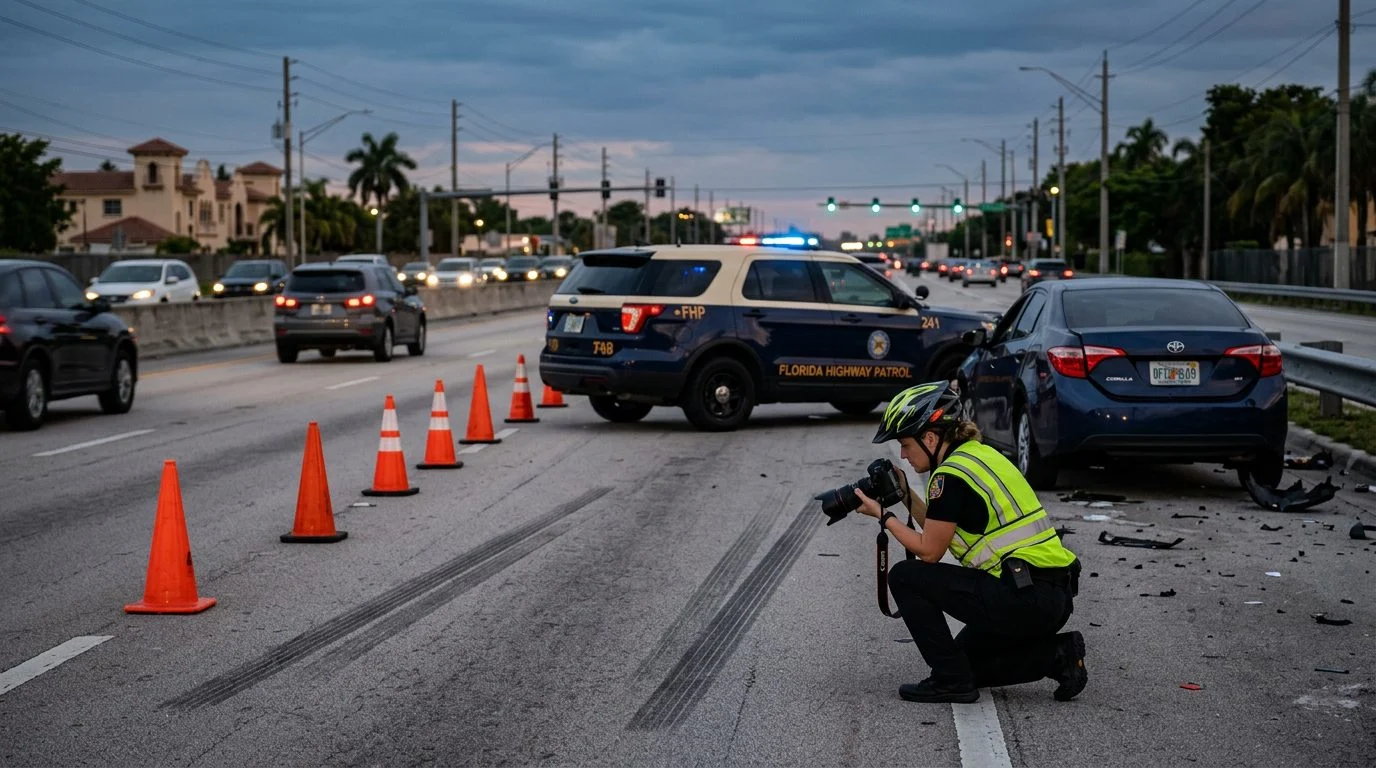
A fatal crash can lead to a wrongful death claim. This can happen when a driver, a company, or a vehicle owner acted carelessly.
Miami-Dade’s busy roads carry cars, commercial trucks, delivery vans, motorcycles, and bicycles. A deadly collision can involve any of them.
Under federal law, a company that rents or leases vehicles generally is not liable under state law just because it owns the car, for harm that arises during the period of the rental or lease, if it is engaged in the trade or business of renting or leasing motor vehicles and the other conditions of the statute are met. That protection has a limit. It does not apply when the company was negligent or criminally at fault. See 49 U.S.C. § 30106, as quoted in Rosado v. DaimlerChrysler Fin. Servs. Trust.
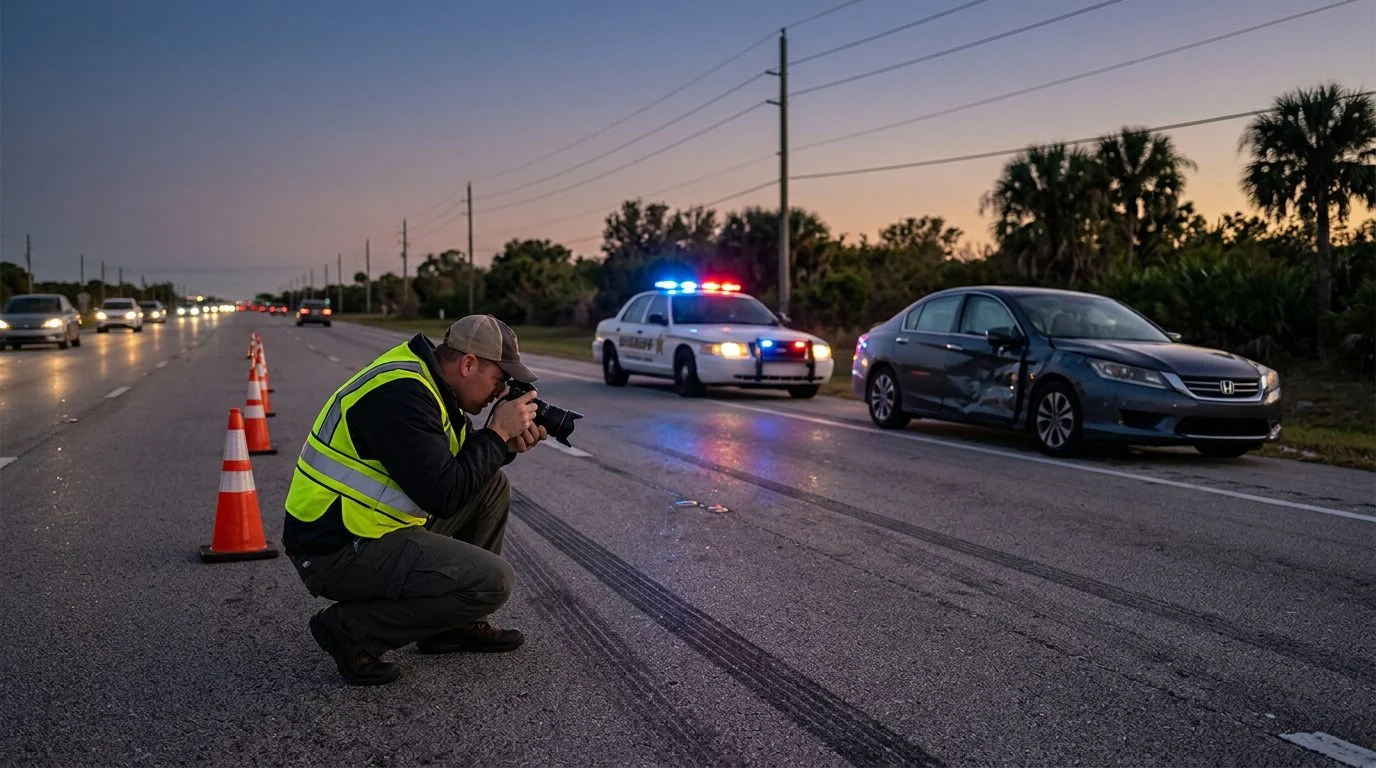
Police and crash reports can document how a crash happened. Keep a copy of any report you receive.
Keep photos, insurance letters, and funeral receipts.
When a Wrongful Death Happens on Someone Else’s Property in Opa-locka
A family may have a claim against a property owner. This can happen when a loved one was attacked or shot on that owner’s property. The death may have happened because reasonable security was missing.
Picture an apartment complex with a broken gate. Picture a parking garage with dark stairwells. Picture a hotel door lock that never worked. Picture a store, bar, or gas station where the cameras were off.
Reasonable security can mean working locks and gates, lighting, cameras, or guards.
Lawyers call this kind of claim negligent security. The term means a claim against a property owner for failing to provide reasonable security.
Whether a claim fits depends on the facts of each case. Those facts include what the owner knew and what security was in place.
How Much Crime and Traffic Danger Is in Opa-locka?
Official public sources track crime and traffic deaths. Check them for the numbers in Opa-locka.
For crime, look to the Florida Department of Law Enforcement (FDLE) crime reporting. You can also look to the FBI’s Uniform Crime Reporting program.
For traffic deaths, the National Highway Traffic Safety Administration tracks crash fatalities. It does this in its Fatality Analysis Reporting System, called FARS.
These figures describe crime and crashes in general. They do not, on their own, show who was at fault in any one death.
Who is responsible for a particular death is a question for the evidence in that case. That evidence includes:
- The crash or police report
- Witness statements
- Surveillance video
- Property records
Some video is kept only for a limited time. Early action helps.
What a Florida Wrongful Death Claim Can Cover
A Florida wrongful death claim can recover several kinds of losses. Which ones apply depends on who the survivors are. Under § 768.21:
- A surviving spouse may recover for the loss of companionship and protection.
- A surviving spouse may also recover for mental pain and suffering.
- Minor children may recover for lost parental companionship, instruction, and guidance.
- Each parent of a deceased minor child may recover for mental pain and suffering.
A survivor who paid medical or funeral bills may recover those costs. The decedent’s personal representative may recover for the estate the person’s lost earnings from the date of injury to the date of death, less lost support of survivors, with interest.
The Supreme Court of Florida addressed spouses in Ripple v. CBS Corp. (2024). The spouse’s losses are recovered in the wrongful death action under § 768.21(2).
Every case is different. No one can promise a result or an amount before the facts are reviewed.
Not sure what your next step is?
Talk it through with our team — the first consultation is free, confidential, and carries no obligation.
Deadlines, Government Defendants, and Next Steps
Florida sets filing deadlines. The general deadline for a negligence lawsuit is two years. Florida law also sets two years for an action for wrongful death, except that an action for wrongful death brought against a natural person for an intentional tort resulting in death from acts described in s. 782.04 or s. 782.07 may be commenced at any time. See § 95.11.
Claims against government bodies follow different limits. Under § 768.28, an action may not be instituted on a claim against the state or one of its agencies or subdivisions unless the claimant presents the claim in writing to the appropriate agency and, except for claims against a municipality, county, or the Florida Space Authority, also presents it in writing to the Department of Financial Services within 3 years after the claim accrues, and the Department or the agency denies the claim in writing. They are liable in the same manner and to the same extent as a private individual under like circumstances, but liability does not include punitive damages or interest for the period before judgment, and neither the state nor its agencies or subdivisions is liable to pay a claim or judgment by any one person exceeding $200,000, or total claims from the same incident exceeding $300,000.
For a wrongful death claim against the state or its agencies, the claim must be presented in writing to the Department of Financial Services. Fla. Stat. § 768.28 reads: “(6)(a) An action may not be instituted on a claim against the state or one of its agencies or subdivisions unless the claimant presents the claim in writing to the appropriate agency, and also, except as to any claim against a municipality, county, or the Florida Space Authority, presents such claim in writing to the Department of Financial Services, within 3 years after such claim accrues and the Department of Financial Services or the appropriate agency denies the claim in writing; except that, if: 1.” Under Fla. Stat. § 768.28(6)(a), a lawsuit may not be filed until the claim has been presented in writing to the appropriate agency and denied in writing by that agency or the Department of Financial Services. When the action is for wrongful death, the statute requires the written claim to reach the Department of Financial Services no later than 2 years from the date the claim accrues.
Deadlines are strict. Families should move quickly.
CHG Personal Injury Lawyers is a Florida-based firm. Igor Hernandez is the responsible lawyer for this page. Our team serves families across Florida.
If your family lost someone in a crash or a violent attack in Opa-locka, you don’t have to sort out these deadlines alone. Contact CHG Personal Injury Lawyers to talk through what happened.
The initial consultation is free, confidential, and without obligation to continue. CHG charges no attorney’s fees and no case costs unless there is a recovery.
La consulta inicial es gratuita, confidencial y sin compromiso de continuar. CHG no cobra honorarios de abogado ni costos del caso a menos que haya una recuperación.
Frequently Asked Questions
What is a wrongful death claim in Florida?
A wrongful death claim lets certain surviving family members seek compensation. They can do this when a person dies because of another party’s negligence or wrongful act. Under Florida’s Wrongful Death Act, the claim can cover losses. These include medical and funeral bills and lost support and services. A surviving spouse may also recover for loss of the decedent’s companionship and protection. Minor children, or all children if there is no surviving spouse, may recover for lost parental companionship, instruction, and guidance.
Who can file a wrongful death lawsuit in Florida?
The lawsuit is brought by the personal representative of the deceased person’s estate. It is filed for the surviving spouse, children, and parents or other eligible survivors. Florida law sets out who qualifies. Families should ask about their specific situation early.
How long do families have to file a wrongful death lawsuit in Florida?
Florida law generally requires a wrongful death lawsuit to be filed within two years of the date of death. Other rules can change that timeline. Because deadlines apply, families should contact a lawyer promptly after a loss.
Does it cost anything to talk with CHG Personal Injury Lawyers about a wrongful death case in Opa-locka?
The initial consultation is free, confidential, and carries no obligation to continue. CHG charges no attorney’s fees and no case costs unless there is a recovery.
How We Support Grieving Families
Compassion First
Losing someone is devastating. We listen first, so you can share what happened at your own pace.
Clear, Plain-Language Answers
We explain the legal process in everyday terms, so you always know what is being asked of you and why.
Attention to the Whole Family
We keep in mind the people left behind, including spouses, children, and parents who depend on the person who died.
No Fees Unless There Is a Recovery
CHG charges no attorney's fees and no case costs unless there is a recovery.
Act Promptly to Protect Your Family's Options
Deadlines apply to wrongful death claims in Florida, and evidence can be lost over time. Keep medical, police, and funeral records, and any communications about the incident. Contact our firm promptly so we can review your situation.
Steps Families Often Take Next
Gather Important Records
Collect the death certificate, hospital and police reports, bills, and any photos or messages related to the incident. Bring what you have to your consultation.
Write Down Your Questions
Note what you want to understand, whether about the cause of the incident, the process, or what to expect. No question is too small.
Follow Your Family's Priorities
Decisions about the claim belong to the family. We help you weigh your options so you can decide what is right for the people you love.
Talk With Our Team
Our team can answer your questions in a confidential setting and explain how a claim may be pursued under Florida law.