
Wrongful Death · Miramar, Florida
When a Loss Was Someone's Fault, Your Family Does Not Have to Face It Alone
Clear guidance for Miramar families grieving a loss caused by another person's wrongful act, and a practical look at the steps that can help protect your rights.
By CHG Lawyers · Published November 18, 2026
Wrongful Death in Miramar: A Guide for Florida Families
A wrongful death in Miramar can leave a family with funeral plans, bills, and hard questions all at once. Florida law may allow certain family members to seek compensation. This may apply when another person’s negligence (failing to take reasonable care) or wrongful act caused the death; for claims against the state or its agencies, the negligent or wrongful act must be that of an employee of the agency or subdivision acting within the scope of employment.
This guide explains who can bring that claim. It also covers what the claim can include, the evidence it depends on, and the deadline to watch.
Not sure what your next step is?
Talk it through with our team — the first consultation is free, confidential, and carries no obligation.
Wrongful Death in Miramar: What Your Family Needs to Know Now
Many families in Miramar learn about a fatal crash on Miramar Parkway or Pines Boulevard. Others learn about a shooting at an apartment complex with no warning.
Grief comes first. The paperwork follows fast.
Miramar sits in Broward County. A wrongful death claim in Florida is brought under Florida law.
Broward fans know the Florida Panthers rely on a full roster. A grieving family facing an insurance company can feel like the only player on the ice. You do not have to play that game alone.
The sections below answer the questions families ask most. Each one uses plain language. Read them at your own pace.
What Wrongful Death Means Under Florida Law
A wrongful death claim is a lawsuit. A family files it when a person died because of another party’s negligence or wrongful act.
Florida handles these claims under the Florida Wrongful Death Act.
Sometimes a loved one started a personal injury case before dying. Families in these situations often have questions about the wrongful death law.
Under Fla. Stat. § 768.20, the action is brought by the decedent’s personal representative. The decedent is the person who died.
The personal representative is the one handling your loved one’s estate. That person recovers for the survivors and the estate.
The law recognizes losses to family members. It also recognizes certain losses to the estate.
Can You Sue for Wrongful Death in Florida?
Yes.
Whether a particular death fits depends on how it happened. That is why families should have those facts reviewed early.
Fla. Stat. § 768.18 names the spouse, children, and parents. Blood relatives and adoptive brothers and sisters can also count. They qualify when they depended on the person for support or services.
The law defines “minor children” as children under 25.
Families often ask who counts as a survivor. The answer shapes how the claim moves forward.
A fatal crash, a fatal attack on someone else’s property, or another wrongful death can each lead to a claim. The family’s makeup also matters. Each parent of an adult child may also recover for mental pain and suffering if there are no other survivors, but this does not apply to claims for medical negligence.
What Are the Typical Grounds for a Wrongful Death Claim?
Most of these claims rest on negligence. Negligence means a person or company owed a duty of reasonable care. They failed to meet that duty. That failure caused the death.
Common situations in and around Miramar include:
- Fatal car and truck crashes on busy routes, such as Miramar Parkway, Pines Boulevard, Interstate 75, and Florida’s Turnpike.
- Deaths of motorcyclists, bicyclists, and pedestrians.
- Crashes involving Amazon or FedEx delivery trucks.
Picture a parking garage with a broken gate, dark lights, and cameras that do not work. A person is attacked there, and the attack proves fatal. Or a shooting happens at an apartment complex where the locks were broken.
Families in these situations often ask whether the property owner failed to provide reasonable security. Lawyers call this a negligent security claim.
Other fatal events within the firm’s scope can also lead to a claim. These include drowning, electrocution, construction zone accidents, slip and fall incidents, and rideshare crashes. A claim may arise when someone else’s wrongful conduct caused the death.
Proving a Wrongful Death Claim: The Evidence Families Should Know About
A wrongful death claim rests on proof. The proof shows what happened, who was responsible, and how that conduct led to the death.
Start gathering evidence early. Some records are easier to get right away.
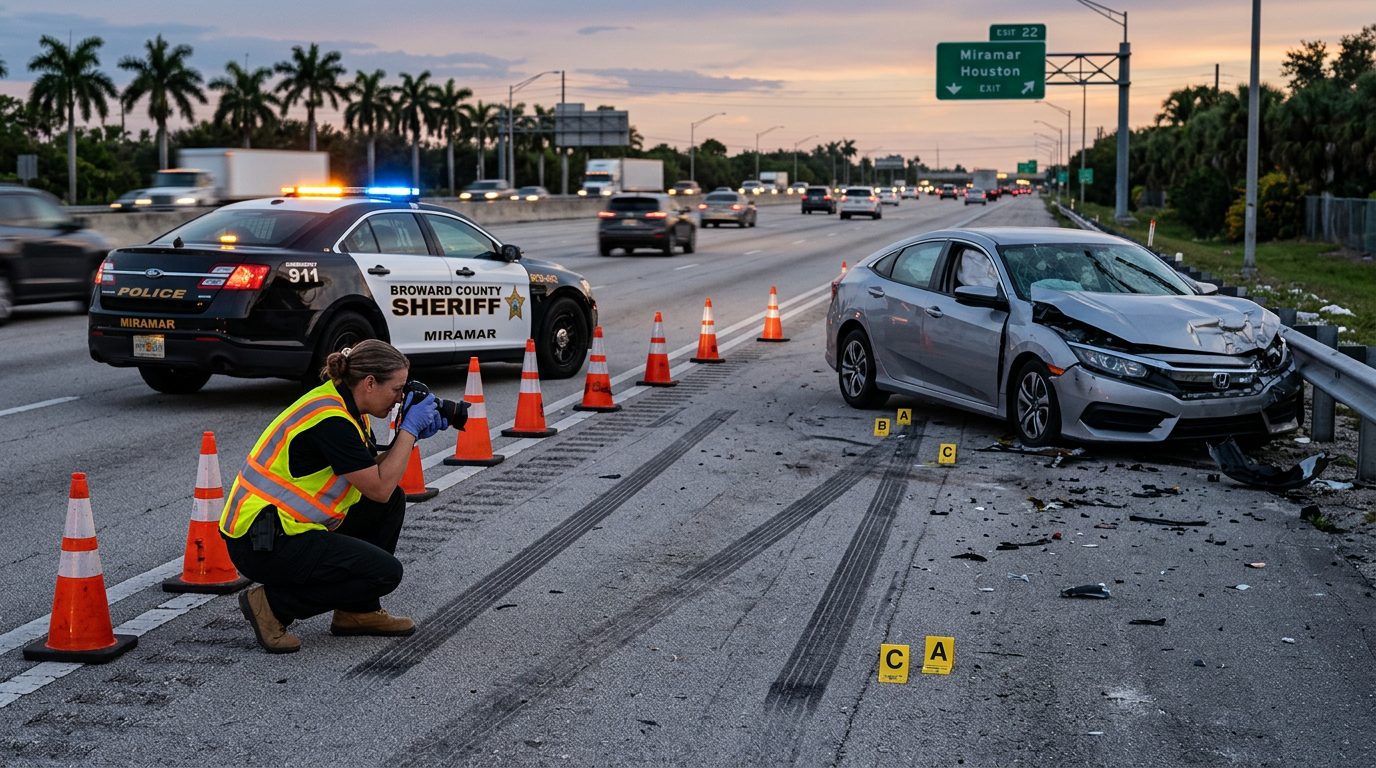
After a crash that causes a death, ask the investigating agency for the crash report promptly. It is one of the first records to request.
Other evidence families should ask about includes:
- 911 call records and dispatch logs.
- Surveillance video from businesses or apartment buildings. This video is often overwritten within days.
- Witness names and contact information.
- Photographs of the scene, vehicles, and injuries.
- Phone records, texts, and vehicle data.
The medical examiner’s report and related records explain the cause of death. These records often matter a great deal to the claim.
Accident reconstruction professionals and other expert witnesses can help explain the evidence.
Families should also keep phone messages, texts, and social media posts about the event. Do not delete anything.
Investigators commonly look at whether impairment played a role in a fatal crash.
Not sure what your next step is?
Talk it through with our team — the first consultation is free, confidential, and carries no obligation.
What Shapes Compensation in a Florida Wrongful Death Claim
Florida law lists specific losses that each survivor and the estate may recover. The value of each claim depends on the facts of that case.
Under Fla. Stat. § 768.21, the categories include:
- Lost support and services. Survivors who depended on your loved one may recover the value of that support. This covers the period from the injury to the death. It also covers future losses, reduced to present value (a lump sum today that accounts for future money).
- Surviving spouse. A spouse may recover loss of companionship and protection. A spouse may also recover mental pain and suffering.
- Minor children. Minor children may recover lost parental companionship, instruction, and guidance. All children may recover these if there is no surviving spouse.
- Minor children, continued. Minor children may also recover mental pain and suffering from the date of injury. All children may do so if there is no surviving spouse. Each parent of a deceased minor child may recover mental pain and suffering.
- Medical and funeral expenses. A survivor who paid these costs may recover them.
- The estate. The decedent’s personal representative may recover for the estate’s lost earnings from the injury to the death. This is less lost support of survivors, excluding contributions in kind, with interest.
Under the Act, a surviving spouse may recover for loss of the decedent’s companionship and protection. Under the Act, a surviving spouse may also recover for loss of the decedent’s companionship and protection and for mental pain and suffering from the date of injury (Ripple v. CBS Corp.).
The surviving spouse may recover for that loss and for mental pain and suffering (Ripple v. CBS Corp.). See Ripple v. CBS Corp., decided by the Supreme Court of Florida in 2024.
While an action is pending, a settlement as to amount or apportionment among beneficiaries that a survivor objects to, or that affects a minor or incompetent survivor, is not effective unless the court approves it.
No figure can be promised here. Each claim turns on several things. These include the survivors, the loved one’s age, earnings, and role in the household, and the facts of the death.
Who Pays Wrongful Death Claims in Florida?
Payment usually comes from the insurance of the party found responsible. The details depend on the facts. Common sources include:
- An at-fault driver’s auto policy.
- A property owner’s liability policy.
- An employer’s commercial policy.
A claim may involve more than one responsible party. Under Fla. Stat. § 768.81, in a negligence action, any party found to be greater than 50 percent at fault for his or her own harm may not recover any damages. This does not apply to an action for personal injury or wrongful death arising out of medical negligence under chapter 766.
Claims are resolved through negotiation or the court process. Timing varies from case to case. Families should plan for a process rather than a fixed date.
Florida Deadlines and What Families Can Do While They Wait
Florida’s general deadline for lawsuits based on negligence is two years. Fla. Stat. § 95.11 sets that period.
Filing deadlines apply to wrongful death claims, but an action for wrongful death against a natural person for an intentional tort resulting in death from acts described in s. 782.04 or s. 782.07 may be commenced at any time. Families should contact the firm promptly.
Deadlines apply, and the rules differ by situation. Claims against government entities can follow different rules. These include notice requirements under Fla. Stat. § 768.28.
Contact a lawyer promptly so deadlines are checked early.
While you wait, you can take some practical steps:
- Keep crash and incident report numbers in one place.
- Write down what witnesses said while the details are fresh.
- Save photos, texts, and records related to the event.
- Keep the medical examiner’s paperwork and funeral records together.
Follow guidance from the medical examiner’s office and your own doctors on any health questions. Before you give a recorded statement to an insurance company, speak with a lawyer first.
Free Consultation with CHG Personal Injury Lawyers in Miramar
CHG Personal Injury Lawyers is a Florida-based personal injury firm. It handles wrongful death claims for families across Florida, including Miramar and Broward County.
Igor Hernandez is the responsible lawyer for this page. Our lawyers and team work on these matters. Our attorneys are licensed in Florida.
CHG charges no attorney’s fees and no case costs unless there is a recovery. The initial consultation is free and confidential. It carries no obligation to continue.
Can you sue for wrongful death in Florida?
Yes. Florida law allows a wrongful death claim when another person’s wrongful act or negligence causes a death. The facts decide whether a given case fits.
Who can file a wrongful death claim in Miramar?
The personal representative files the claim for the survivors and the estate. Survivors include the spouse, children, parents, and certain relatives who depended on the person.
What is the wrongful death deadline in Florida?
Florida’s general deadline for negligence lawsuits is two years (Fla. Stat. § 95.11(5)(a)). Deadlines apply to every case. Contact a lawyer promptly.
Is there ever a longer deadline?
Ask a lawyer whether that exception applies to your case.
If your family is weighing a claim after a fatal crash or attack in Miramar, request a free case evaluation with CHG Personal Injury Lawyers. We can review your situation with you, in confidence.
Why Families Turn to CHG Personal Injury Lawyers
Florida-Based Firm
CHG Personal Injury Lawyers is based in Florida and represents families throughout the state, including Miramar and Broward County.
Licensed Attorneys
Our lawyers are licensed to practice law and are admitted to The Florida Bar. Igor Hernandez is the lawyer responsible for this page.
No Fees Unless There Is a Recovery
CHG charges no attorney's fees and no case costs unless there is a recovery.
Free, Confidential Consultation
Your first consultation is free, confidential, and carries no obligation to continue.
Compassion First
We understand that a family is also grieving. We take the time to listen and explain each option in plain language.
Important: Deadlines Apply
Wrongful death claims are subject to strict legal deadlines under Florida law. Waiting can limit what you are able to do, so contact the firm promptly to discuss your family's situation.
Steps Families Can Take Now
Keep Records
Save the police or crash report, medical and funeral bills, receipts, and any letters or messages about the incident.
Preserve Evidence
Photos, videos, witness names, and any physical items from the scene can be important. Ask us what should be kept and how.
Follow the Care Team's Guidance
Our role is legal, not medical. For questions about a loved one's care, please rely on the doctors and medical team treating your family.
Talk With a Lawyer
A conversation can help you understand who may be able to bring a claim and what steps come next, all at no obligation.