
Slip and Fall Injuries | Florida
Hurt on Someone Else's Property? You Don't Have to Handle the Claim Alone.
CHG Personal Injury Lawyers, a Florida-based firm, helps people injured in slip and fall accidents pursue compensation for medical bills, lost income, and the changes these injuries bring to daily life. Our attorneys are admitted to The Florida Bar, and Igor Hernandez is the responsible attorney for this page.
By CHG Lawyers · Published November 4, 2026
Slip and Fall Injury Compensation in Florida: What to Do First
If you slipped, tripped, or fell on someone else’s property in Florida and were hurt, the steps you take in the first hours and days often decide what records exist later. This guide walks through those steps in order and explains the Florida rules that shape a claim. It does not predict what any claim is worth.
Not sure what your next step is?
Talk it through with our team — the first consultation is free, confidential, and carries no obligation.
Why the First Hours After a Slip and Fall Matter
The first hours after a fall shape the records a later claim may depend on. Many people feel shaken but fine at first. Adrenaline can hide pain, and an injury can seem minor until days pass.
Some people wonder whether a small fall is worth reporting at all. It usually is. A fall that seems minor can turn into a lasting problem, and early records make that easier to show.
This page gives general information. It is not medical advice or legal advice for your specific situation. For the broader picture, read our slip and fall overview.
Step 1: Get Medical Care and Follow Your Doctor’s Plan
See a doctor or urgent care soon after the fall, even if you feel okay. Soft-tissue strains, head injuries, and back or neck injuries can take hours or days to fully appear. A medical record made close to the fall shows what happened and when, and it gives your doctors a starting point.
Keep every follow-up visit and fill prescriptions as directed. Tell your doctor about any symptom that changes or gets worse.
Tell each provider exactly how the fall happened. For example, if you slipped on a wet tile floor at a store entrance and landed on your hip, say so, and list every part of your body that aches. Plain, consistent details make your records easier to follow.
This is general information, not medical advice. Please follow your own doctors’ care.
Step 2: Report the Fall and Ask for the Incident Report
Report the fall to the property owner, manager, or store staff right away. Then ask for a copy of the incident report, the business’s written record of when and where the fall happened. Ask for the report number, and ask the manager on duty for his or her name.
Write down the name of the person who took the report, the date and time, and what was said. Stick to facts. If you slipped on something wet, say so. Do not guess about the cause, and do not blame anyone in writing.
Don’t sign anything you don’t understand. Read every form first. You can ask for time to review it or take it home.
Step 3: Document the Scene, Your Injuries, and Witnesses
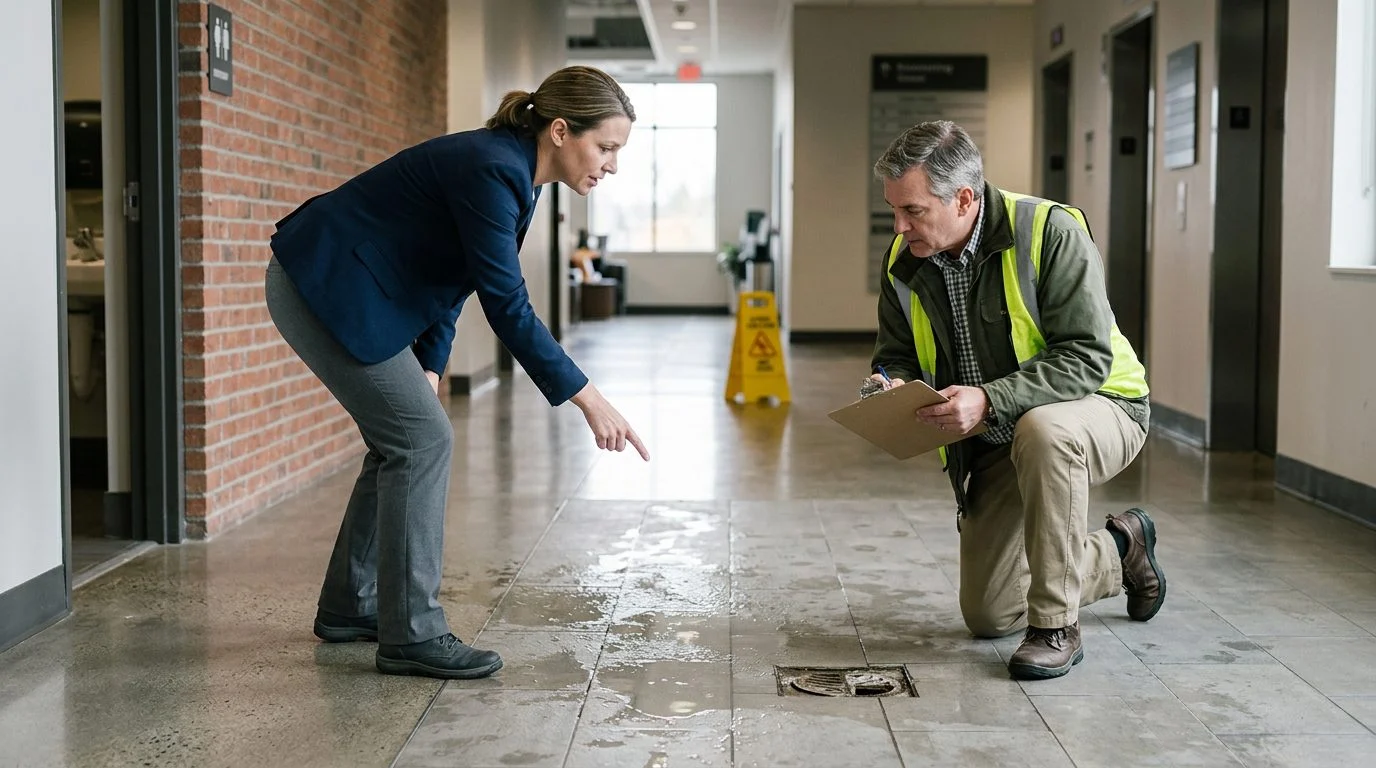
Photograph the scene as soon as you safely can. Conditions can change within hours, such as a spill that gets wiped up. Take wide shots and close-ups of the floor, any spill or debris, and the lighting. Photograph wet-floor signs or the lack of them, handrails, stairs, and uneven areas. Then photograph your injuries over time, such as bruising or swelling.
Keep the shoes and clothing you wore. Don’t wash, repair, or throw them away. They may show slip marks or tears that match the fall.
Collect names and phone numbers from anyone who saw the fall. Note the time of day, the weather if you fell outdoors, and how long the hazard had been there, if you know or can estimate it.
Step 4: Keep Records of Every Cost and Missed Day
Keep every bill, receipt, and record of time lost from work. Save medical bills, prescription receipts, and travel receipts for appointments, along with out-of-pocket costs such as a copay or a ride to therapy. A paper or digital folder works well.
Ask your employer for written confirmation of the days you missed or the hours you lost.
Keep a simple daily journal. Write down your pain level, how you slept, activities you can no longer do, and when family members helped with errands, rides, or meals. Over time, the journal shows the real effects of the injury.
Florida law also limits how medical bills are proven. Under Florida’s medical bill evidence statute, evidence of bills already paid is limited to the amount actually paid, regardless of the source of payment. Some providers treat patients under a letter of protection, which the statute defines as any arrangement in which a health care provider renders treatment in exchange for a promise of payment for the claimant’s medical expenses from any judgment or settlement of a personal injury or wrongful death action. Tell the lawyer you speak with about any such arrangement.
Have questions about what happened?
Ask our team directly. The first conversation is free, confidential, and there is no obligation to continue.
Step 5: Stay Calm and Careful With Insurance Calls
The property owner’s insurance company may contact you quickly, often before you know the full extent of your injuries. It is reasonable to be polite and still careful.
Stick to facts about how the fall happened. Don’t guess about the cause, how long your injuries will last, or when you can return to work. Say “I don’t know” when you don’t know. You can also say that you are still getting medical care and will follow up when you have more information.
Be cautious about signing releases, accepting a quick payment, or agreeing to an exam the insurer arranges. Ask what each document means before you sign it. A release can end your ability to seek more money later.
You can speak with a lawyer before answering detailed questions about the claim. If you have a lawyer, ask the insurer to direct its contact to that lawyer.
Premises Liability and Florida’s Transitory Substance Rule
Premises liability is the legal term for a claim that a property owner or manager is responsible for an injury caused by an unsafe condition on the property. Slip and fall cases often involve wet or slick floors, uneven surfaces, poor lighting, broken stairs, and unmarked spills.
A temporary item on a floor, such as a spill, is called a transitory foreign substance. Under Florida’s transitory substance law, the injured person must prove that the business establishment had actual or constructive knowledge of the dangerous condition and should have taken action to remedy it. Constructive knowledge may be proven by circumstantial evidence showing that the condition existed long enough that, in the exercise of ordinary care, the business should have known of it, or that the condition occurred with regularity and was therefore foreseeable.
Those two paths are where the facts matter. Did staff walk the area recently? Had the same hazard happened before? Your photos, the incident report, and witness names can help answer those questions. The statute also says it does not affect any common-law duty of care owed by a person or entity in possession or control of a business premises.
How Florida’s Comparative Fault Rule and Deadlines Affect Your Claim
Under Florida’s comparative fault statute, in a negligence action, any party found to be greater than 50 percent at fault for his or her own harm may not recover any damages. Fla. Stat. § 768.81 reads: “This subsection does not apply to an action for damages for personal injury or wrongful death arising out of medical negligence pursuant to chapter 766.”
Fault is divided by percentage. The statute provides that the court enters judgment against each liable party on the basis of that party’s percentage of fault, not on the basis of joint and several liability. In plain terms, each party answers for its own share.
Shared fault comes up often in falls. A property owner may argue you weren’t watching your step or were distracted. Those arguments are about percentages, and they can change the outcome. This is why the details you collected in Step 3 matter.
Deadlines matter too. Florida’s limitations statute sets time limits for commencing actions other than for recovery of real property, and it includes a two-year period for an action founded on negligence. Other deadlines may apply. Because deadlines apply, contact a lawyer promptly rather than waiting. For state-level context, see our Florida slip and fall resources.
What Florida Law Counts as Economic Damages
The comparative fault statute defines “economic damages” to include:
- past lost income and future lost income, reduced to present value (future earnings adjusted to what they are worth today)
- medical and funeral expenses
- lost support and services
- replacement value of lost personal property
- loss of appraised fair market value of real property
- costs of construction repairs, including labor, overhead, and profit
- any other economic loss that would not have occurred but for the injury
Not every category fits every fall. A fall that damages a phone or eyeglasses may involve the replacement value of personal property. Help that family members give with errands, rides, or meals may relate to lost support and services, which is why the journal from Step 4 matters.
Harms that have no bill attached, such as pain and changes in how you live, show up in your medical notes and your journal. This page does not place a value on them.
We Do Not Predict Amounts or Outcomes
This page does not list settlement ranges, and no figure here predicts what any claim is worth. No outcome can be promised. Results depend on the facts of the fall, the evidence, and how Florida law applies to those facts. Use the categories above to understand what kinds of losses the law describes and to keep your records organized.
For local context, see our Miami slip and fall page or our Orlando slip and fall page.
Key Takeaways
Five steps help protect your claim after a slip and fall. Get medical care and follow your doctor’s plan. Report the fall and ask for the incident report. Document the scene, your injuries, and any witnesses. Keep records of every cost and missed day. Be careful with insurance calls and recorded statements.
Under Florida’s comparative fault rule, a court enters judgment against each liable party based on that party’s percentage of fault, not on the doctrine of joint and several liability (Fla. Stat. § 768.81(3)). The two-year limit for negligence claims means waiting can narrow your options.
Want to know where you stand?
Tell us what happened and our team will walk you through the options available to you, at no cost.
Talking Through Your Situation With Igor Hernandez
If you’re recovering from a fall and the insurer’s questions feel overwhelming, talking through your options can help. You may have an incident report you don’t understand, or a call from an adjuster you aren’t sure how to answer. It’s normal to still be weighing whether to speak with a lawyer. You don’t have to answer an insurer’s questions by yourself.
CHG Personal Injury Lawyers offers a free first consultation. It is confidential and carries no obligation to continue. Contact CHG Personal Injury Lawyers to start that conversation. CHG charges no attorney’s fees and no case costs unless there is a recovery.
This guide is also available in Spanish. Ask for the Spanish version when you contact us.
Igor Hernandez, responsible lawyer, CHG Personal Injury Lawyers, a Florida-based firm serving people throughout Florida. This page is general information, not medical or legal advice.
Frequently Asked Questions
What kinds of compensation can someone injured in a slip and fall seek?
Florida’s statute describes economic damages such as medical and funeral expenses, past and future lost income, and other economic losses caused by the injury (§ 768.81). Other harms, such as pain and changes in daily life, are documented through medical records and a journal. Every case is different, and no specific result can be promised.
How do I prove a property owner was responsible for my slip and fall in Florida?
For a slip on a transitory foreign substance in a business establishment, you must prove the business had actual or constructive knowledge of the dangerous condition and should have acted to remedy it (§ 768.0755). Photos, incident reports, and witness names can help show this.
How long do I have to file a slip and fall claim in Florida?
Florida’s limitations statute provides two years to commence an action founded on negligence (§ 95.11). Other deadlines may apply, so contact the firm promptly after an injury.
Does Florida’s comparative fault rule affect a slip and fall claim?
Yes. Under § 768.81, a party found greater than 50 percent at fault for its own harm may not recover any damages. Each liable party’s judgment is based on its own percentage of fault.
How We Work With Injured Floridians
We Start With Your Recovery
Your health comes first. We help you document your medical care so your claim reflects what you have been through.
Careful Investigation
We look at what happened, where, and why, including the property's maintenance records, warnings, and cleanup practices.
No Fees Unless There Is a Recovery
CHG charges no attorney's fees and no case costs unless there is a recovery.
Plain-Language Guidance
We explain each step in clear terms, in English or Spanish, so you always know where your case stands.
Keep Track of What Happened
Seek medical care for your injuries, follow your doctor's treatment plan, and keep every bill, prescription receipt, and appointment record. If possible, take photos of the location and note who was present. Contact our office promptly so we can help you preserve important evidence.
Common Slip and Fall Situations We Handle
Wet or Uneven Floors
Spills left unmarked, freshly mopped floors without warning signs, and cracked or uneven walkways in stores, restaurants, and public buildings.
Parking Lots and Walkways
Potholes, ice-free or poorly lit surfaces, and hazards in parking garages that were not repaired or marked.
Stairs and Entryways
Loose handrails, broken steps, poor lighting, and slick entrances that lead to serious falls.
Serious and Long-Term Injuries
Fractures, head injuries, back and neck injuries, and other harms that can affect work, family life, and independence for months or years.