
Florida Hotel Injury Claims
Hurt in a Slip and Fall at a Florida Hotel?
A wet floor, a missing warning sign, or a broken step can change your life in seconds. CHG Personal Injury Lawyers helps injured guests and their families across Florida understand their options and what comes next.
Why Injured Guests Contact Us
Florida
Florida-based firm serving clients throughout the state
Free
Confidential first consultation with no obligation to continue
Licensed
Attorneys admitted to The Florida Bar
By CHG Lawyers · Published October 23, 2026
Slip and Fall at Hotel: What Injured Florida Guests Should Know
A slip and fall at hotel property can give you a claim against the property owner. The key questions are whether the property left a hazard unfixed and whether that hazard caused your fall. This page offers general information about slip-and-fall injuries at hotels and the steps an injured guest may consider next.
Not sure what your next step is?
Talk it through with our team — the first consultation is free, confidential, and carries no obligation.
Yes, a Slip and Fall at Hotel May Support a Claim Against the Property Owner
A guest hurt by a hazard the hotel or motel should have fixed may have a claim against the property owner.
The property owner usually controls the lobby, pool, stairs, and parking areas. That control is why the question often centers on the owner.
A claim depends on proof, not just on the fall itself. Whether a claim is possible depends on the facts of each incident. Whether a claim exists turns on the details of your own case.
You do not need legal words to ask this question. If you slipped in a lobby, tripped on a stairway, or fell by a pool, you can simply ask whether the property was responsible.
Common Hotel and Motel Hazards That Lead to Falls
Most hotel falls involve a hazard that someone could have seen, fixed, or marked. Common examples include:
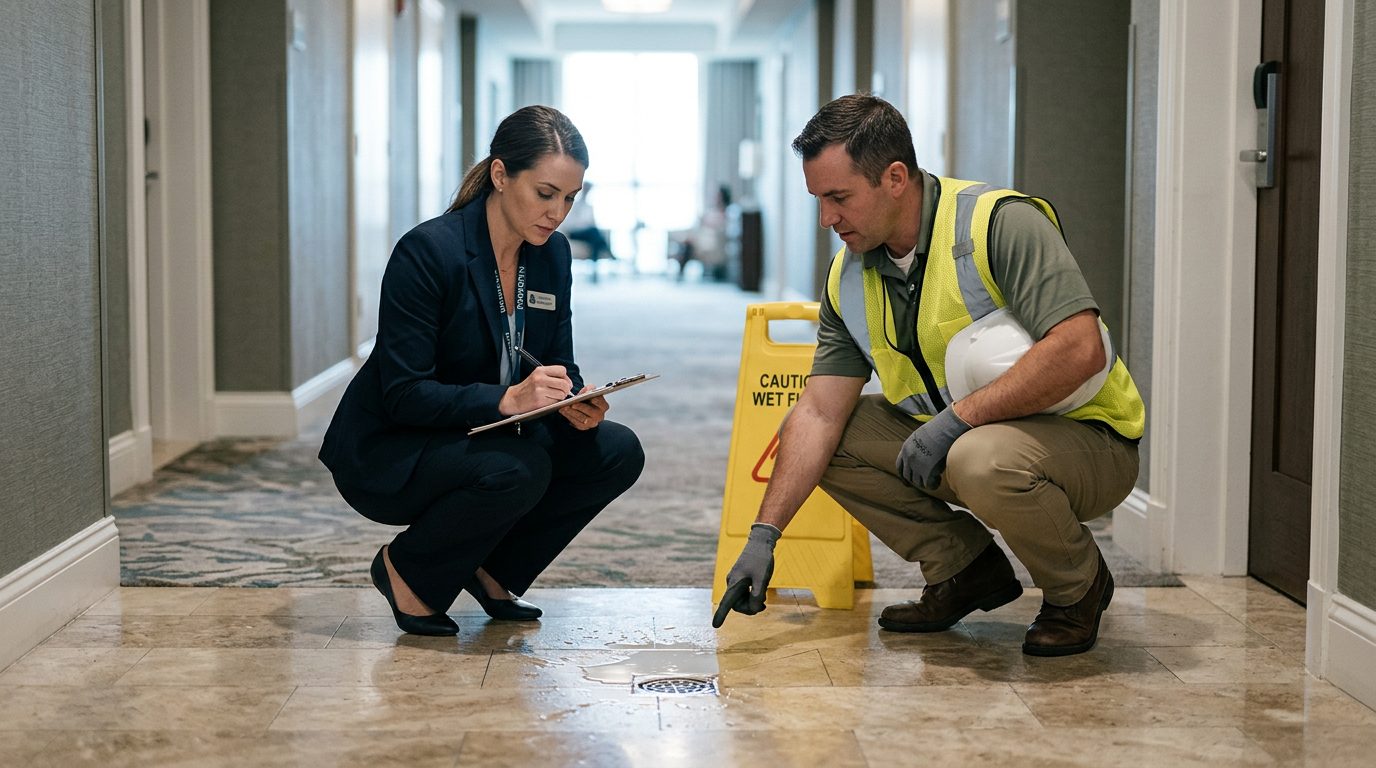
- Wet lobby floors. Freshly mopped tile or a spill near the elevators or breakfast area, with no warning sign or cone.
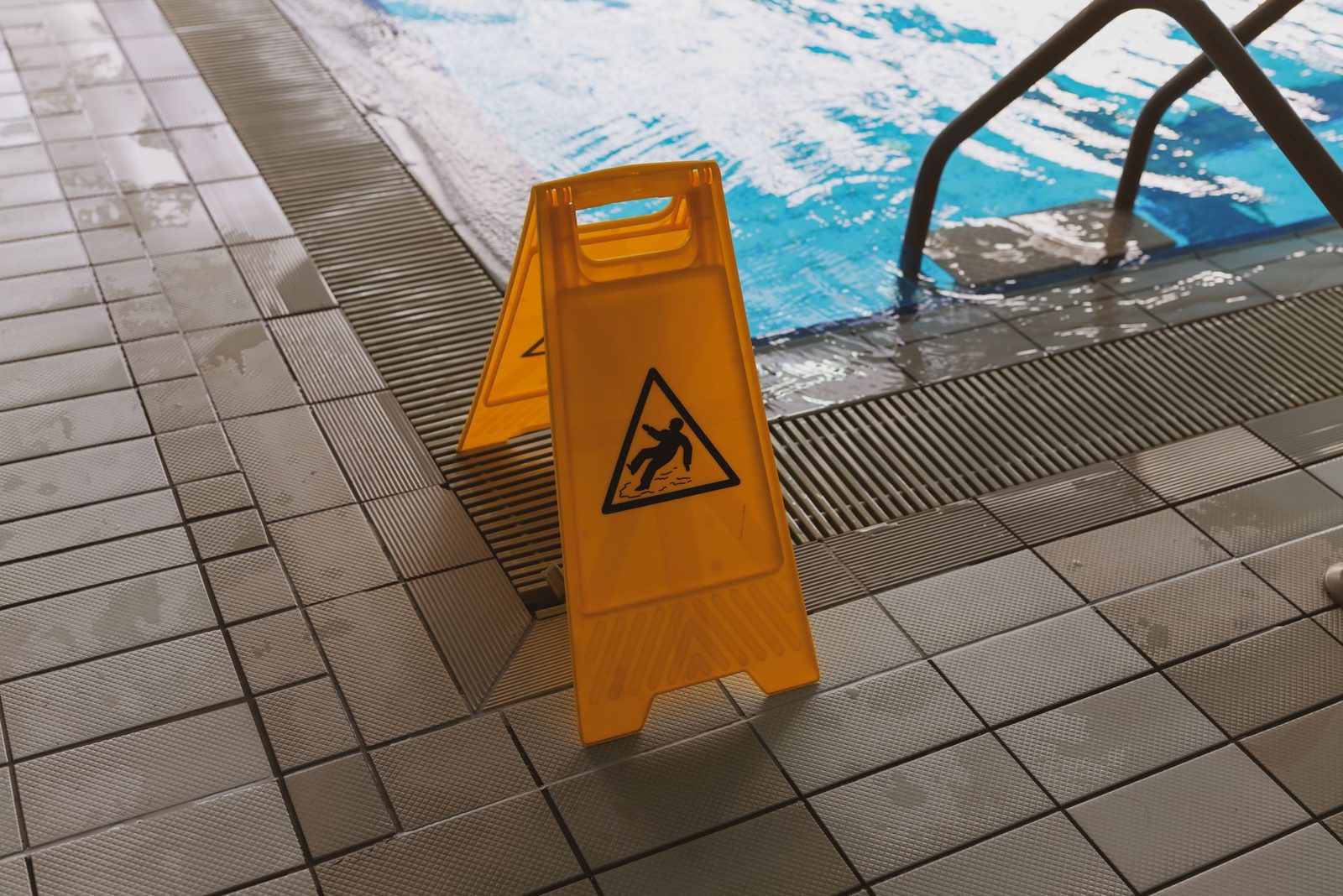
- Broken pool decks. Cracked concrete, damaged pool steps, or wet surfaces around a pool or hot tub.
- Poor lighting. Dim stairwells, hallways, parking garages, and walkways that hide a change in level.
- Loose handrails. Wobbly, missing, or loose rails on stairs, ramps, and balconies.
- Unmarked hazards. Torn carpet, raised thresholds, missing tiles, or debris left in a walkway.
- Bathroom slip risks. Slick tubs or showers in guest rooms when the property knew about a problem and did not address it.
Each hazard raises a basic question. Did the property know, or should it have known, and did it act? The answer often turns on how long the hazard was there and whether staff followed inspection routines.
How Florida Law Treats Spills and Transitory Substances
Florida has a specific rule for slips on a transitory foreign substance. That means a liquid or other material that was on the floor only temporarily. Under Fla. Stat. § 768.0755, the injured person must prove the business had actual or constructive knowledge of the dangerous condition and should have acted to fix it.
Constructive knowledge means the business should have known, even if no one saw the spill. The statute says this can be shown when the condition existed long enough that, with ordinary care, the business should have found it. It can also be shown when the condition occurred often enough to be foreseeable.
In practice, evidence such as how long the spill was present, whether staff followed a cleaning schedule, and whether warning signs were posted can matter a great deal. Your own timeline and photos can help show what happened. The statute also says it does not affect the broader common-law duty of care owed by whoever possesses or controls the business premises.
Have questions about what happened?
Ask our team directly. The first conversation is free, confidential, and there is no obligation to continue.
What You Should Do After a Fall at a Hotel or Motel
Get medical care and follow your doctors’ care plan, even if the injury seems minor at first. Then start a written record of what happened while the details are fresh.
- Report the fall. Tell hotel staff and ask that an incident report be made. Request a copy if one is available.
- Take photos. Capture the hazard, the area around it, the lighting, and any warning signs or the lack of them.
- Write it down. Note the date, time, room or area, the names of staff or witnesses, and what you were doing.
- Keep your bills. Save receipts, medical bills, prescriptions, and records of missed work.
- Be careful with statements. Think before giving a recorded statement or signing a release for the hotel or its insurer.
A lawyer can review any offer or paperwork with you before you respond.
How a Florida Slip and Fall Claim Typically Moves Forward
A slip and fall at hotel property usually moves through a consultation, an investigation, a demand, and, if needed, a lawsuit. Each stage turns on the records available and the details of what happened.
- Free consultation. You describe what happened, where, and what injuries followed. The consultation is confidential and carries no obligation to continue.
- Investigation. The firm may review the incident report, request surveillance video, and look at maintenance and inspection records and witness statements.
- Medical documentation. Your treatment records show your injuries and how they affect your daily life.
- Demand and negotiation. A demand is a written request for payment that lays out your injuries and losses. It may go to the property owner or its insurer.
- Lawsuit, if needed. Florida law sets a deadline for filing a lawsuit, found in Fla. Stat. § 95.11. Other deadlines can apply, so reach out promptly.
Why Injured Hotel Guests Work With CHG Personal Injury Lawyers
CHG Personal Injury Lawyers is a Florida-based personal injury firm. The firm handles slip and fall claims alongside car accidents, truck crashes, and other accidents of every severity. Our team represents people across Florida.
Igor Hernandez is the responsible lawyer for this page. The firm’s lawyers are licensed to practice law in Florida and admitted to The Florida Bar.
Our approach is plain and direct:
- We explain Florida’s rules in everyday words before we discuss strategy.
- We keep you informed at each step.
- We pay attention to your medical and financial stress, not only the legal question.
No outcome can be promised, and each case is judged on its own record.
Slip and Fall at Hotel Claims: Frequently Asked Questions
Can I file a claim if I was partly at fault?
Do I have to report the fall to the hotel first?
Reporting the fall and asking for an incident report creates a record. A lawyer can advise you on what comes next.
What if the hotel says the floor was just cleaned?
Cleaning timing matters. How long the condition existed and whether warnings were posted are part of the evidence.
Does the hotel’s insurer have to pay me?
Insurers review claims on their own process. Speak with a lawyer before you accept an offer or sign a release.
Can I ask about a claim if my injury seems minor?
Yes. Some injuries appear days later, so keep records and follow your doctors’ care.
What does a consultation cost?
The first consultation is free, confidential, and carries no obligation to continue. The firm charges no attorney’s fees or case costs unless there is a recovery.

Want to know where you stand?
Tell us what happened and our team will walk you through the options available to you, at no cost.
Talk With a Florida Lawyer About Your Hotel Fall
If a wet lobby floor, a broken pool deck, or a dark stairwell left you hurt at a hotel, you may have a claim against the property owner. Bring your photos, the incident report, your medical records, and the hotel’s name and address to a free, confidential consultation with CHG Personal Injury Lawyers in Coral Gables. Contact our team to schedule yours. Deadlines apply, so reach out promptly.
If You Have Been Hurt at a Hotel: Steps to Consider
Get Medical Care
Seek treatment right away, even if your injury seems minor at first. Follow your doctors' care and keep every record, bill, and prescription.
Report the Fall
Tell hotel staff what happened and ask that the incident be written up in an incident report. Ask for a copy.
Document the Scene
If you can, photograph the spot, the floor surface, lighting, and any missing or hidden warning signs. Note the time and names of witnesses.
Talk to Our Team
Contact CHG Personal Injury Lawyers early. We can review how the fall happened and explain the steps that may apply to your situation.
How We Support Injured Guests and Families
Plain-Language Guidance
We explain the legal process in clear terms so you know what to expect at every stage.
Evidence Review
We help gather incident reports, surveillance footage, maintenance records, and medical documentation.
Prompt Attention
Injury claims have deadlines under Florida law, so contacting us sooner allows more time to act.
Bilingual Support
We publish educational resources in English and Spanish to help families make informed decisions.
Important: Act Promptly
Florida law sets deadlines for injury claims, and evidence such as video and witness accounts can be lost over time. Contact CHG Personal Injury Lawyers as soon as you can. CHG charges no attorney's fees and no case costs unless there is a recovery.