

Wrongful Death | Short-Term Rental Negligence
When a Short-Term Rental Death Was Preventable
If your loved one died in an Airbnb, VRBO, or other short-term rental due to the owner's failure to maintain the property safely or provide adequate security, you may have a claim. We help families pursue accountability.
By CHG Lawyers · Published September 01, 2026
Wrongful Death at a Short-Term Rental: Legal Help for Families
If your loved one died at an Airbnb, VRBO, or other short-term rental due to unsafe conditions or negligence, you may have a wrongful death claim. A wrongful death claim is a legal action your family can bring when a death results from someone else’s negligence or wrongdoing. It can help you obtain answers, hold the owner accountable, and secure financial recovery during an unimaginably difficult time.
We focus exclusively on catastrophic injury and wrongful death cases, including those arising from short-term rental negligence. We represent families nationwide and understand the weight of your grief. This page explains what wrongful death means, who can file a claim, what damages may be available, and how the process works.
If your loved one died at an Airbnb, VRBO, or other short-term rental due to unsafe conditions or negligence, you may have a wrongful death claim . Talk it through with our team — the first consultation is free, confidential, and carries no obligation.
When a Short-Term Rental Death May Give Your Family a Wrongful Death Claim
A death at a short-term rental caused by unsafe conditions, negligence, or lack of security may give your family the right to sue the property owner or operator. This applies whether the death occurred at an Airbnb, VRBO, Booking.com rental, or any other vacation property.
Specific scenarios that may support a wrongful death claim include:
- Structural failures: balcony or railing collapse; staircase failure; ceiling or roof collapse; gas leaks; carbon monoxide poisoning from faulty appliances
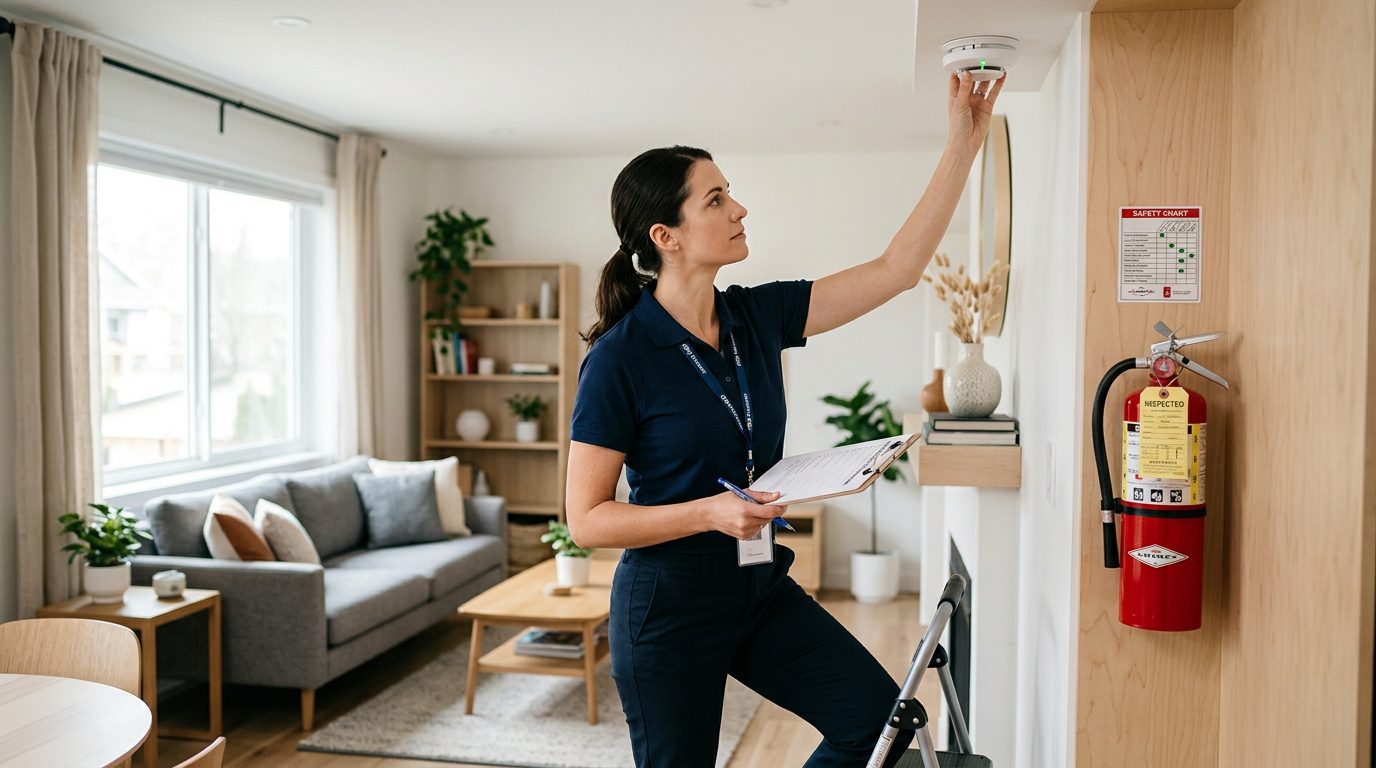
- Fire and smoke hazards: missing or non-functional smoke detectors; blocked emergency exits; faulty electrical wiring; no fire extinguishers
- Negligent security and violent crime: assault, shooting, robbery, or sexual assault because the owner failed to install working locks, adequate lighting, surveillance cameras, or security personnel; failure to screen guests or address prior incidents
- Water-related incidents: unsupervised or improperly maintained pool or hot tub; drowning due to missing safety equipment or failure to post warnings; contaminated water
- Hazardous conditions: exposed electrical wiring; toxic substances; pest infestations or mold; unsafe furniture or equipment
The key legal principle is straightforward: short-term rental owners must keep the property safe. They must disclose known dangers and follow building and safety codes. When they fail and someone dies, your family may have a wrongful death claim.
What Is a Wrongful Death Claim?
A wrongful death claim is a legal action filed by your family to recover money when a death results from someone else’s negligence, recklessness, or intentional wrongdoing. It is not a criminal case; it is a civil lawsuit seeking financial compensation.
To win a wrongful death claim, we must prove four things:
- Duty of care: The owner owed a legal responsibility to keep the property safe and warn guests of known dangers.
- Breach of duty: The owner failed to repair a known hazard, ignored maintenance complaints, failed to install required safety equipment, or failed to provide adequate security.
- Causation: Medical and expert evidence shows the unsafe condition directly caused the death.
- Damages: Your family suffered financial and emotional losses as a result.
Common ways owners breach their duty at short-term rentals:
- Failure to repair or disclose structural hazards
- Failure to install or maintain working smoke detectors, carbon monoxide detectors, or fire extinguishers
- Failure to provide adequate security (working locks, lighting, cameras, or guards)
- Failure to screen for criminal activity or address prior incidents
- Failure to maintain pools, hot tubs, or water features safely
- Failure to disclose prior incidents or hazards
A death is wrongful when it results from negligence or breach of duty. This distinction matters legally. We investigate thoroughly to establish the owner’s responsibility.
Who Can File a Wrongful Death Claim?
Eligible family members include:
- A surviving spouse
- Adult children
- Minor children
- Parents of the deceased
- The estate of the deceased
Typically, the surviving spouse or an adult child brings the claim. The specific rules vary by state.
Timing is critical. Under Florida Statute § 95.11, a wrongful death claim must be filed within a specific time frame called the statute of limitations. In Florida, this is generally 2 years from the date of death. Other states vary, typically ranging from 2 to 4 years.
Why timing matters: If you wait too long, the claim may be barred entirely. You will lose your right to recover. Evidence can fade, witnesses’ memories blur, and the property may be altered. Contact us as soon as possible so we can preserve evidence and meet all deadlines.
What Damages Can a Wrongful Death Claim Recover?
Damages in a wrongful death case fall into three categories:
Economic damages (measurable financial losses): – Medical and funeral expenses – Lost wages and income the deceased would have earned – Loss of financial support to your family
Non-economic damages (emotional and relational losses): – Loss of companionship, guidance, and emotional support – Pain and suffering of your family – Loss of consortium (the spousal relationship)
Punitive damages (in cases of gross negligence or recklessness): – Additional damages awarded to punish the defendant and deter future misconduct – Available only when the owner’s conduct was particularly egregious
Factors that affect the amount of recovery:
- The deceased’s age, health, and earning potential
- The deceased’s role in your family
- The severity of the owner’s negligence
- Whether the death was foreseeable
- State law limits on damages
- Available insurance coverage
We cannot guarantee a specific amount—every case is unique. We work to maximize the compensation available under the law and the facts of your case.
Not sure what your next step is?
Talk it through with our team — the first consultation is free, confidential, and carries no obligation.
How the Wrongful Death Claim Process Works
Step 1 – Initial consultation: You meet with an attorney to discuss the circumstances of the death, the property, and the owner’s conduct. We listen to your story and explain your rights with honesty and compassion.
Step 2 – Investigation: We gather evidence, including property records, maintenance logs, prior complaints, and police reports. We may hire specialists—engineers, fire safety experts, security consultants, or medical examiners—to inspect the property and identify the cause of death.
Step 3 – Demand letter: We send a detailed letter to the property owner and their insurance company. It outlines the negligence, the damages, and our settlement demand.
Step 4 – Negotiation: We negotiate with the owner’s insurance company to reach a fair settlement. Many cases resolve at this stage without litigation.
Step 5 – Litigation (if necessary): If settlement talks fail, we file a lawsuit in court. This involves discovery (exchanging evidence), depositions (questioning witnesses under oath), and potentially a trial before a jury.
Step 6 – Resolution: The case concludes through a settlement agreement, a jury verdict, or a court judgment.
Timeline: Simple cases may resolve in 6–12 months. Complex cases with litigation can take 2–4 years or longer. We keep you informed every step of the way.
Why Choose CHG Personal Injury Lawyers for Your Wrongful Death Claim
- Focused practice: We focus exclusively on catastrophic injury and wrongful death cases, including those arising from short-term rental negligence.
- Nationwide representation: We represent families across the United States, not just in Florida.
- Licensed attorneys: Our team includes Florida Bar-admitted attorneys with deep experience in premises liability, negligent security, and wrongful death law.
- Investigative resources: We have the resources to hire expert witnesses, conduct thorough investigations, and litigate complex cases.
- All sources of recovery: We pursue compensation from the property owner’s insurance, short-term rental platform protection programs (Airbnb, VRBO), and the owner’s personal assets.
- Contingency representation: You pay nothing unless we recover money for you. There are no upfront fees.
Frequently Asked Questions
Q: What are the odds of winning a wrongful death lawsuit?
Every case is different. The strength of your claim depends on the evidence of negligence, the severity of the owner’s breach of duty, and applicable state law. We evaluate each case individually and give you an honest assessment of the likelihood of success.
Q: How much can you sue for wrongful death?
Damages vary widely based on the deceased’s age, earning potential, role in your family, and the circumstances of the death. There is no fixed amount. We work to maximize the compensation available under the law.
Q: What should I tell the attorney?
Be honest with us. Attorney-client privilege protects what you tell us. We need the full picture—including any difficult facts—to represent you effectively. We are here to help, not to judge.
Q: What kind of lawyer do I need?
You need an attorney who focuses on premises liability and wrongful death claims. We focus exclusively on catastrophic injury and wrongful death cases, including those at short-term rentals. See our catastrophic injury cases and premises liability pages for more information.
Q: How long do I have to file a wrongful death claim?
Under Florida Statute § 95.11, the deadline is typically 2 years from the date of death in Florida; other states vary. Do not wait. Contact us as soon as possible so we can preserve evidence and meet all deadlines.
Q: Will my case go to trial?
Many cases settle before trial. However, if the property owner or their insurance company refuses a fair settlement, we are prepared to litigate and take your case to a jury.
Q: Do I have to pay anything upfront?
No. We work on a contingency basis. You pay us only if we recover compensation for you.
Insurance and Liability Coverage
Many short-term rental owners carry liability insurance that covers injuries and deaths on the property. We investigate what coverage is available and pursue all sources of recovery.
Airbnb, VRBO, and other platforms offer limited liability coverage to hosts. This coverage may be insufficient to fully compensate your family. We pursue the owner’s personal insurance, the platform’s protection program, and potentially the owner’s personal assets.
Have questions about what happened?
Ask our team directly. The first conversation is free, confidential, and there is no obligation to continue.
Your Family Deserves Answers and Support
The loss of a loved one at a short-term rental is a tragedy no family should endure. You deserve answers about what happened. You deserve accountability from those responsible. You deserve financial support to help you move forward.
We are here to help. Contact us today for a free, confidential case evaluation. We will listen to your story, answer your questions, and explain your legal options. There is no obligation, and you will not pay anything unless we recover compensation for you.
If your loved one died at a short-term rental because of the owner’s negligence or failure to maintain safe conditions or adequate security, reach out to us now. Families in your situation can contact us. We are ready to fight for you.
Time Matters in Wrongful Death Claims
State law imposes strict time limits on filing a wrongful death lawsuit. The sooner you contact an attorney, the sooner we can investigate the circumstances, preserve evidence, and protect your family's rights.
What We Investigate in Short-Term Rental Deaths
Property Maintenance Failures
Structural hazards, faulty locks, broken windows, unsafe balconies, or dangerous conditions the owner knew about or should have known about and failed to repair.
Inadequate Security
Missing or broken locks, poor lighting, lack of cameras, no security personnel, or failure to screen guests—leaving your loved one vulnerable to assault, robbery, or other violence.
Unsafe Amenities
Malfunctioning hot tubs, pools without proper safety equipment, faulty appliances, or other features that posed a known risk the owner ignored.
Negligent Management
Failure to respond to safety complaints, inadequate cleaning or inspection, or allowing dangerous conditions to persist across multiple bookings.
Why Families Choose CHG Personal Injury Lawyers
Focused on Catastrophic Loss
We focus exclusively on wrongful death and the most serious, life-altering injuries. Short-term rental negligence deaths are our focus—not routine cases.
Thorough Investigation
We dig into property records, maintenance logs, prior complaints, security footage, and the owner's history to build a strong claim on your behalf.
Nationwide Reach
We handle wrongful death claims arising from short-term rentals across the country, wherever the tragedy occurred.
Compassionate Guidance
Losing a loved one is devastating. We handle the legal work so you can grieve, and we explain every step in plain language.
No Attorney’s Fees Unless There Is a Recovery
We work on contingency. You pay nothing upfront, and we only collect a fee if we recover compensation for your family.
Available to Listen
Call us for a free, confidential case evaluation. We'll listen to what happened and tell you honestly what we can do to help.
Common Questions About Wrongful Death Claims
What makes a short-term rental owner liable for a death?
Owners have a duty to maintain their property safely and protect guests from foreseeable harm. If your loved one died because the owner failed to repair a hazard, provide adequate security, or warn of a known danger, that negligence may be the basis for a claim.
Can we sue if the death was caused by another guest's violence?
Yes. If the owner failed to screen guests, secure the property, provide lighting or cameras, or respond to prior safety complaints—and that negligence allowed an assault or attack to happen—the owner may be held responsible.
What damages can a wrongful death claim recover?
Wrongful death claims seek compensation for medical and funeral expenses, lost income and support the deceased would have provided, loss of companionship, and the pain and suffering of the surviving family. Each case is unique, and we evaluate the full scope of your loss.
How long do we have to file a claim?
State law sets strict deadlines for wrongful death lawsuits. These vary by location. Contact us immediately so we can explain the timeline that applies to your situation and ensure your rights are protected.