

Vacation Rental Accidents | Florida
Injured at a Short-Term Rental? We Can Help.
When an Airbnb, VRBO, or other vacation rental causes serious injury, the property owner and platform may be liable. CHG Personal Injury Lawyers focuses exclusively on catastrophic injury claims and holds the property accountable.
By CHG Lawyers · Published September 24, 2026
Catastrophic Injury at a Vacation Rental? You May Have a Claim
You rented what seemed like a safe vacation property. Then an accident happened—a balcony collapse, a drowning, an assault due to poor security, a fire, or a fall from height. Now you’re facing spinal cord injury, paralysis, traumatic brain injury, amputation, severe burns, or worse. Your vacation is over. Your life has changed forever.
If your catastrophic injury at a vacation rental caused permanent harm, the property owner may be liable. CHG focuses exclusively on catastrophic injuries from vacation rental accidents. We do not handle minor sprains, soft-tissue injuries, or routine fractures. If your injury is life-altering, we can help.
If your catastrophic injury at a vacation rental caused permanent harm, the property owner may be liable. Talk it through with our team — the first consultation is free, confidential, and carries no obligation.
When a Vacation Rental Injury Changes Your Life
A catastrophic injury causes permanent impairment or disability. It includes:
- Spinal cord injuries and paralysis (paraplegia and quadriplegia)
- Traumatic brain injuries (TBI)
- Amputations and limb loss
- Severe burns
- Catastrophic back and neck injuries
- Wrongful death
These injuries reshape your body, your independence, your income, and your future.
Vacation rental injuries that cause catastrophic harm often result from the property owner’s negligence. This includes:
- Failure to maintain safe conditions
- Failure to disclose known hazards
- Failure to provide adequate security
- Failure to warn guests of dangers
When an owner’s negligence causes your catastrophic injury at a vacation rental, you may have a legal claim for compensation.
If your injury is catastrophic, read on. If you have questions, contact CHG for a free case evaluation.
What We Handle: Catastrophic Vacation Rental Injuries
CHG focuses exclusively on catastrophic injuries sustained at vacation rental properties. We pursue claims for:
- Spinal cord injuries and paralysis (paraplegia and quadriplegia) from falls, structural collapses, or trauma
- Traumatic brain injuries (TBI) from falls, assaults, or accidents
- Amputations and limb loss from machinery, structural failures, or accidents
- Severe burns from fires, explosions, or chemical exposure
- Catastrophic back and neck injuries causing permanent impairment
- Wrongful death when a vacation rental accident is fatal
We also handle claims arising from specific hazards:
- Structural failures: Balcony collapses, deck failures, stair collapses, and railing failures
- Drowning and water hazards: Unsecured pools, hot tubs without lifeguards, and missing warning signs
- Falls: Broken stairs, inadequate lighting, slippery surfaces, missing railings, and uneven flooring
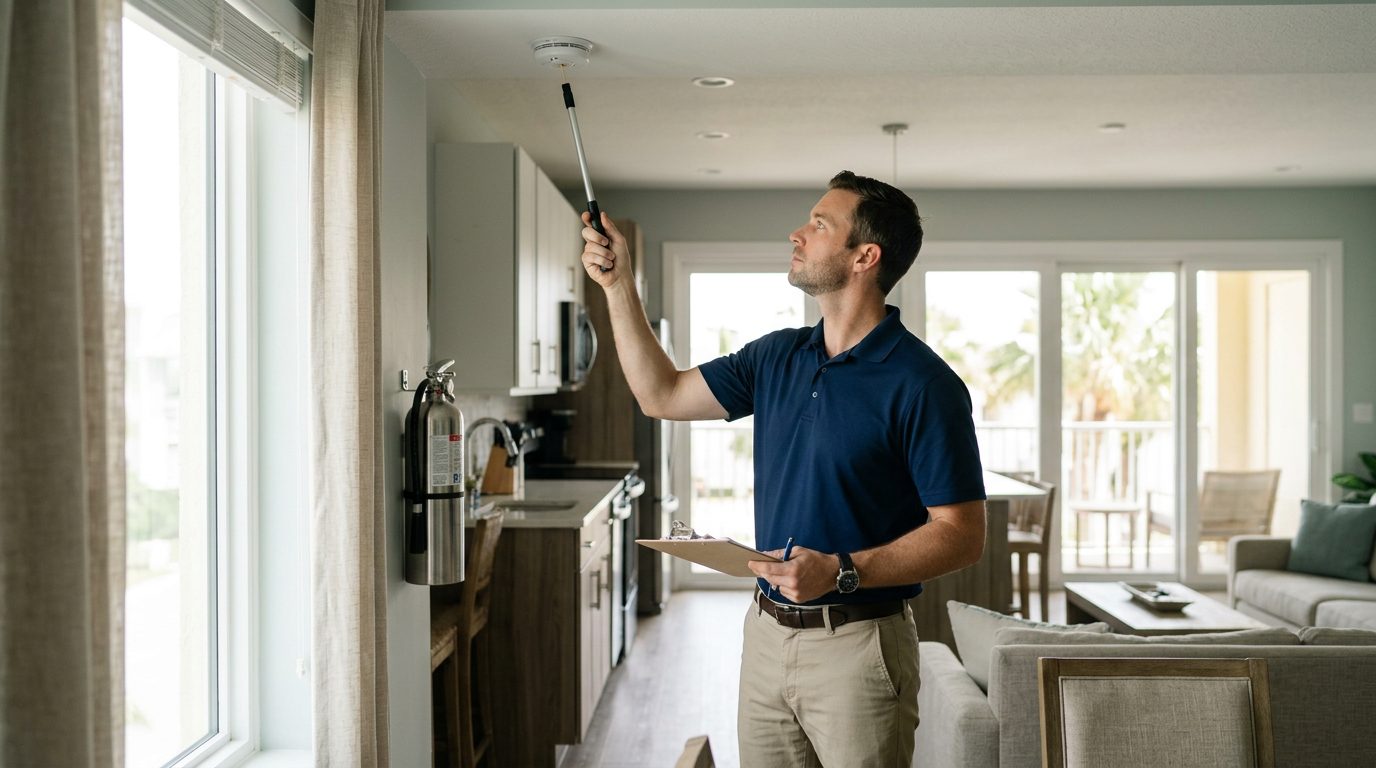
- Fires and smoke hazards: Faulty wiring, missing smoke detectors, blocked exits, and flammable materials
- Inadequate security: Broken locks, missing gates, poor lighting, no cameras, and no security personnel
- Toxic hazards: Mold, carbon monoxide, chemical exposure, and pest infestations
- Failure to disclose: Owners who hide known hazards increase injury risk
We pursue liability claims against property owners, managers, vacation rental platforms (Airbnb, VRBO, etc.), and other responsible parties. We recover compensation from property owner’s liability insurance, platform insurance, and other available sources.
Who Is Liable for Your Vacation Rental Injury?
Property owners and managers have a legal duty of care. They must keep rental properties safe for guests. Under Florida law, they must:
- Maintain the property
- Fix known hazards
- Provide adequate security
- Warn guests of dangers
When they breach that duty and you are injured, they can be held legally liable.
This duty of care applies equally to short-term vacation rentals as to hotels and apartments. Liability can extend to:
- The property owner (individual or company)
- The property manager or management company
- The vacation rental platform (Airbnb, VRBO, etc.) in some cases
- Contractors hired to maintain the property
- Third parties whose negligence contributed to your injury
How Vacation Rental Injury Claims Work: Step-by-Step
Step 1: Get medical care and preserve evidence.
Seek emergency care if needed. Document your injuries with medical records, photographs, and written notes. Preserve evidence from the property—photographs of the hazard, maintenance records, security footage, and witness contact information. Report the incident to the property owner, manager, or platform right away.
Step 2: Talk to a lawyer.
Contact CHG for a free, confidential case evaluation. We review your medical records, the accident circumstances, the property’s maintenance history, and applicable insurance. This consultation is confidential and creates no obligation.
Step 3: Investigation.
We investigate the property’s condition, maintenance records, prior complaints, security measures, and the owner’s knowledge of the hazard. We may hire experts—structural engineers, medical specialists, security experts—to show that the owner’s negligence caused your injury.
Step 4: Demand and negotiation.
We send a detailed demand letter to the property owner’s insurance company. It explains your injury, your damages, and the owner’s liability. We negotiate a settlement. Most cases resolve at this stage.
Step 5: Litigation (if necessary).
If the insurance company does not offer fair compensation, we file a lawsuit in the appropriate Florida court. We prepare your case for trial and handle all discovery, expert reports, and trial preparation.
Step 6: Recovery.
Once a settlement or judgment is reached, we handle payment logistics. We ensure you receive your compensation.
Timeline: How Long Does This Take?
Statute of limitations: In Florida, you generally have two years from the date of injury to file a premises liability lawsuit under Florida Statute § 95.11. Do not wait. Evidence degrades, witnesses move, and memories fade.
Investigation phase: 2–6 months. We gather medical records, property records, maintenance logs, and expert reports.
Demand and negotiation: 2–4 months. We send a demand and negotiate with the insurance company.
Settlement or litigation: If settled, 1–3 months to finalize. If litigated, 1–3 years depending on court schedules and complexity.
Total timeline: Most cases resolve within 1–2 years. Complex cases or those requiring trial may take longer.
If you or a family member suffered a catastrophic injury at a vacation rental, the property owner may be liable. Talk it through with our team — the first consultation is free, confidential, and carries no obligation.
Understanding Comparative Negligence in Florida
Florida follows a comparative negligence rule under Florida Statute § 768.81. If you were partially at fault for your injury, your compensation may be reduced by your percentage of fault. However, if you are found more than 50% at fault, you cannot recover anything.
Example: You were injured in a fall because the stair railing was missing (the owner’s negligence). However, you were also intoxicated and not paying attention (your negligence). A court might find you 20% at fault and the owner 80% at fault. Your compensation would be reduced by 20%, but you would still recover 80% of your damages.
The property owner’s negligence must be the primary cause of your injury. We build a strong case showing that the owner’s failure to maintain the property or provide adequate security was the substantial cause of your catastrophic injury.
Why Waivers Often Do Not Protect Property Owners
Many vacation rental properties ask guests to sign waivers or liability disclaimers before check-in. Guests often assume these waivers are binding. This is a common barrier to action—and it is often incorrect.
Under Florida law, waivers are frequently unenforceable. This is especially true when they attempt to waive liability for gross negligence or willful misconduct. A waiver cannot shield an owner from liability if the owner’s conduct was reckless or intentional.
Examples:
- A waiver cannot excuse an owner who knows a balcony is structurally unsafe and does nothing
- A waiver cannot excuse an owner who disables security cameras or removes locks
- A waiver cannot excuse an owner who fails to warn of a known toxic hazard
We review any waiver you signed to determine whether it affects your claim. In many cases, the waiver is unenforceable, and your right to sue remains intact.
Insurance Coverage and Recovery Options
Most vacation rental properties are covered by liability insurance. This is the primary source of recovery. We also pursue:
- Vacation rental platform insurance: Airbnb, VRBO, and other platforms offer some coverage for guest injuries
- Umbrella or excess policies: Some owners carry additional coverage beyond their primary policy
- Owner’s personal assets: In some cases, we may pursue the owner’s personal assets if insurance is insufficient
- Wrongful-death benefits: If your injury is fatal, surviving family members may recover funeral expenses, lost income, loss of companionship, and pain and suffering
Contingency Fees: How We Work With You
We work on a contingency-fee basis. This means:
- You pay nothing upfront. No retainer, no hourly fees, no costs out of your pocket.
- We advance costs. We pay for investigation, expert reports, court filings, and other expenses.
- We recover a percentage of your settlement or judgment. Our fee is typically 25–40% depending on case complexity and whether litigation is necessary.
- If we do not recover, you owe us nothing. No recovery means no fee.
This model removes financial barriers to pursuing your claim.
Not sure what your next step is?
Talk it through with our team — the first consultation is free, confidential, and carries no obligation.
Frequently Asked Questions
Q: Can I sue Airbnb or VRBO directly?
A: In some cases, yes. The vacation rental platform may be liable if it failed to vet the property, failed to disclose known hazards, or failed to enforce safety standards. We investigate whether the platform bears liability.
Q: What if I signed a waiver when I booked the rental?
A: Waivers are often unenforceable, especially if they attempt to waive liability for gross negligence. We review any waiver you signed to determine whether it affects your claim.
Q: What if the property owner says I assumed the risk?
A: Property owners cannot escape liability for their negligence simply because you chose to rent. The law requires them to maintain safe conditions and disclose known hazards.
Q: How much will this cost me?
A: We work on a contingency-fee basis. You pay nothing upfront. We recover a percentage of your settlement or judgment as our fee. If we do not recover compensation, you owe us nothing.
Q: How long after an accident can I sue?
A: In Florida, you generally have two years from the date of injury to file a lawsuit (Fla. Stat. § 95.11(5)(a)). Do not wait. Evidence degrades, and witnesses become harder to locate.
Q: What if I was partially at fault for my injury?
A: Florida’s comparative negligence rule means your compensation may be reduced by your percentage of fault (Fla. Stat. § 768.81(6)). You can still recover if you are less than 50% at fault.
Q: Can I recover for pain and suffering?
A: Yes. You can recover for medical expenses, lost income, pain and suffering, permanent disability, loss of enjoyment of life, and other damages.

What Happens Next?
If you or a family member suffered a catastrophic injury at a vacation rental, the property owner may be liable. You may be entitled to substantial compensation.
The first step is a free, confidential case evaluation. We will review your injury, the accident circumstances, and the property’s condition. We determine whether you have a viable claim. There is no obligation, and we do not charge for this consultation.
If you suffered a catastrophic injury—spinal cord damage, paralysis, traumatic brain injury, amputation, severe burns, or worse—at a vacation rental, you may have a claim against the property owner. Contact CHG today for a free case evaluation. Our licensed Florida attorneys are ready to listen and help you understand your options.
Why Choose CHG for Your Vacation Rental Claim
We Investigate Property Owners and Platforms
We examine whether the owner failed to maintain the property, disclose hazards, or provide reasonable security—and whether the rental platform failed to vet the property or enforce safety standards.
We Handle Complex Liability Questions
Vacation rental claims often involve multiple parties, waivers, and platform terms of service. We untangle who is responsible and pursue all available claims.
No Attorney’s Fees Unless There Is a Recovery
We work on contingency. You pay nothing upfront, and we cover costs. You owe us only if we recover compensation for you.
We Handle Cases Nationwide
Injured at a rental in Florida or anywhere in the U.S., we can help. Our experience spans vacation rental accidents across the country.
Common Vacation Rental Injuries We Handle
Slip and Fall
Wet floors, broken stairs, uneven surfaces, poor lighting, or missing handrails that cause falls and serious injury.
Negligent Security
Assault, robbery, or attack at the property because the owner failed to provide working locks, gates, lighting, cameras, or security measures.
Structural Defects
Balcony collapses, ceiling failures, mold exposure, faulty plumbing, or electrical hazards that cause injury or illness.
Pool and Water Hazards
Drowning, near-drowning, drain entrapment, or injury from unsafe pool conditions or lack of supervision.
Waivers May Not Bar Your Claim
Many vacation rental platforms include liability waivers in their terms of service. These waivers are often unenforceable, especially when the property owner's negligence or failure to maintain the property caused your injury. Do not assume a waiver prevents you from recovering.
Questions About Your Vacation Rental Injury
Can I sue Airbnb or VRBO directly?
In some cases, yes. The platform may be liable if it failed to vet the property, failed to disclose known hazards, or failed to enforce safety standards. We investigate whether the platform bears liability for your injury.
What if I signed a waiver when I booked?
Waivers are often unenforceable, especially when negligence or a failure to maintain the property caused your injury. We review the waiver and the circumstances to determine your rights.
Who is responsible for my injury?
The property owner, the platform, or both may be liable depending on what caused your injury. We investigate all parties and pursue claims against everyone responsible.
How long do I have to file a claim?
Time limits apply. Contact us as soon as possible so we can preserve evidence, investigate the property, and protect your rights.
Injured at a Vacation Rental? We're Here to Help.
Related practice areas
- Injured at a Short-Term or Vacation Rental? Your Rights When an Airbnb or VRBO Property Fails
- Miami Short-Term Rental Injury Lawyer | Serious & Fatal Accidents
- Vacation Rental Assault Attack Lawyer
- Drowning & Pool Injuries at Vacation Rentals: Holding Owners Accountable
- Spinal Cord Injuries: A Guide for Victims and Families Facing Paralysis
- Paraplegia
- Tetraplegia