

Severe Burn Injuries · Florida & Nationwide
When a Severe Burn Changes Everything, You Deserve Answers
Catastrophic burns bring surgeries, skin grafts, permanent scarring, and a long road of recovery. If someone else's negligence caused your injury, our licensed attorneys can help you understand your options.
Why Families Turn to CHG Personal Injury Lawyers
Nationwide
Catastrophic injury cases accepted
FL Bar
Licensed, admitted Florida attorneys
Bilingual
English & Spanish resources
Free
Confidential case evaluation
By CHG Lawyers · Published August 06, 2026
What Type of Burn Do You Have — and Does It Change Your Case?
If you or someone you love was seriously burned, you probably have one urgent question before any legal question: what kind of burn is this, and does it matter for what comes next? It does. The type and depth of a burn shape three things at once — the medical care you’ll need, who may be legally responsible, and how a claim is built and valued.
Two burns can look almost identical on the skin and still come from completely different failures — a scald from a broken water heater versus an acid splash at a job site. Different causes point to different at-fault parties and require different evidence.
This page keeps two things separate on purpose. First, what doctors know about burns — cited to Johns Hopkins Medicine. Second, what Florida law does with those facts — cited to the statutes themselves, so you can read them and verify what we say. Many law-firm pages blur the two; some quote a hospital for a legal deadline. We don’t. Nothing here is a promise about your case — a licensed attorney has to review your specific facts. For the full picture, see our pillar guide to severe burn injuries.

If you were burned because a property owner failed to keep the premises reasonably safe, you may have a claim against the owner or business responsible. Talk it through with our team — the first consultation is free, confidential, and carries no obligation.
Start with the type: it points to who’s responsible
The source of a burn is the first clue to who may be at fault:
- A scald from a defective water heater may point to a manufacturer.
- An acid or chemical burn at work may point to a safety failure or a third party’s negligence.
- A shock from exposed wiring may point to a property owner or a contractor.
- A fire after a serious crash may point to a negligent driver or trucking company.
The source also drives the medical picture. Chemicals keep damaging tissue after contact. Electricity travels through the body and harms organs you can’t see. Heat causes deep skin loss that often needs surgery. Because the injuries differ, the evidence and the medical experts differ too. Getting the type right early helps protect your claim.
How doctors classify burns — depth is the starting point
Doctors classify burns by depth, and depth largely decides how serious the injury is. Here’s what each level means, per Johns Hopkins Medicine.
- First-degree (superficial): Affects only the outer skin layer (epidermis). Red and painful but usually heals without lasting harm. On its own, rarely catastrophic.
- Second-degree (partial thickness): Reaches the second layer of skin (the dermis) and causes blisters. Can be serious depending on size and location.
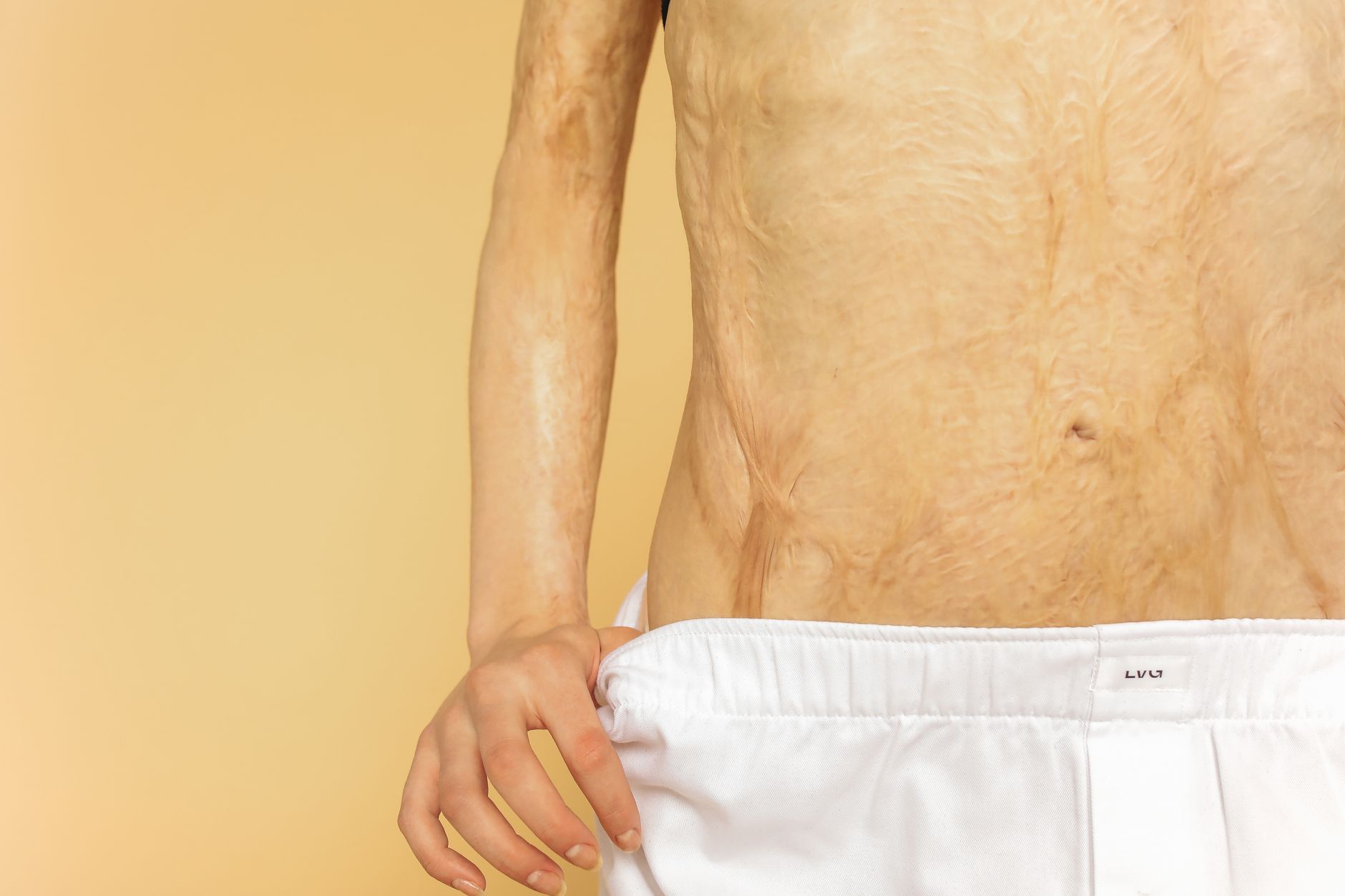
- Third-degree (full thickness): Destroys both skin layers. The area may look white or charred and go numb. Often needs skin grafts and can cause permanent scarring and disability.
- Fourth-degree: Reaches into muscle, tendon, or bone. Among the most catastrophic outcomes and can lead to amputation.
People often search for “the 7 types of burns” or “6 categories of burns.” Those lists usually just mix the depth degrees above with the source categories — thermal, chemical, electrical, and radiation. There is no single official numbered list. What matters clinically is depth plus source.
Why location and size matter as much as depth
Depth isn’t the whole story. Two third-degree burns can change a survivor’s life very differently. A burn to the hand, face, or a joint can destroy function and appearance; a same-size burn on the back might not.
Doctors also measure total body surface area (TBSA) — the percentage of the body a burn covers — often using the “rule of nines,” which assigns 9% (or multiples) to major body regions. Johns Hopkins notes that larger burns raise the risk of infection, fluid loss, and long hospital stays, and that inhalation injury from smoke or steam is its own emergency. All of this drives both the medical seriousness and the legal complexity.
Thermal (heat) burns — fire, steam, scalds, and hot surfaces
Thermal burns come from heat: fire, flames, steam, hot liquids, and hot surfaces. They’re the most common severe burns and become life-altering when they cover a large area or reach deep tissue.
Catastrophic thermal burns usually trace back to a preventable failure — building or vehicle fires, fires that follow a serious truck accident, products that overheat or ignite, and unsafe property conditions. Fault depends on the setting: a property owner, a manufacturer, an employer, or a negligent driver.
Key evidence includes fire and incident reports, scene photos, product records, and complete treatment records. A thermal burn becomes truly life-altering when it demands extensive grafting, carries a high infection risk, or leaves permanent disfigurement and loss of movement.
Chemical burns — the harm that keeps going after contact
Chemical burns come from acids, alkalis, solvents, and other harsh substances, and they can keep damaging tissue long after first contact. That delayed harm is what sets them apart — medically and legally.
Fault often turns on different questions than a heat burn: Was the product labeled with proper warnings? Was the substance stored safely? Did a workplace follow safety rules? Was the property kept in reasonable condition? Depending on the answers, a claim may involve a manufacturer, a third party, or a property owner.
Evidence starts with identifying the exact substance — the product label and the safety data sheet (SDS). The SDS is a standard document required under OSHA’s Hazard Communication Standard (29 C.F.R. § 1910.1200). It lists a chemical’s hazards and first-aid steps. Because some chemical injuries worsen after the first event, early and ongoing medical records matter. A catastrophic chemical burn can cause deep tissue destruction, permanent scarring, vision loss, or breathing harm.
Electrical burns — the wound often hides the worst damage
Electrical burns are uniquely deceptive. The visible wound often hides far worse damage inside the body. Current travels through tissue and can injure the heart, nerves, and muscles along its path. A small mark on the skin can sit above serious internal injury.
They come from contact with live current, arc flash (a burst of energy from a fault), and high-voltage sources. Because the damage is often internal, they’re linked to catastrophic outcomes: cardiac injury, nerve damage, and amputation of a limb. Common causes include unsafe wiring, defective equipment, utility hazards, and poorly maintained property. Responsible parties may include a property owner, a contractor, or an equipment maker.
In the catastrophic cases our attorneys handle, medical experts are often essential in an electrical burn lawsuit — because proving the true extent of hidden internal harm takes cardiac and neurological testing, not a photo of the skin.
Not sure what your next step is?
Talk it through with our team — the first consultation is free, confidential, and carries no obligation.
Does the type change what a case may be worth?
There is no set dollar figure for a burn injury, and any page promising a number isn’t being honest with you. Value depends on the specific injury, the losses, and who was at fault. When people ask “how much can you sue for a burn?”, the honest answer is that it varies widely.
Several categories of damages may apply in a severe burn case:
- Past and future medical bills, including surgeries and grafts
- Long-term and lifetime care needs
- Lost income and reduced earning capacity
- Disfigurement and scarring
- Physical pain and emotional suffering
Fourth-degree, facial, and joint burns usually mean larger, more complex claims because they permanently affect function and appearance. This is exactly why two burns of the same degree are not equal — location, scarring, and loss of function change everything about the real-world impact and the claim.
Insurers know this. They often size up burn severity quickly and may make an early offer before the full harm is clear. A burn’s long-term costs — including future revision and reconstructive surgeries — can far exceed an early estimate. No result is ever guaranteed; every case is decided on its own facts under the law that applies.
Who may be responsible for your burn injury
Responsibility depends on how the burn happened, and more than one party can share fault. Common at-fault parties include negligent drivers (including in truck crashes), product manufacturers, employers, and property owners.
Sometimes a burn happens during a preventable attack on someone else’s property — for example, an assault or arson at an apartment complex, hotel, or business that failed to provide reasonable security like working locks, lighting, or cameras. If that describes what happened to you or a loved one, you may have a claim against the property owner. Lawyers call this negligent security, but you don’t need the term to get help.
When a burn injury is fatal, the family may be able to bring a wrongful death claim. Under Florida’s Wrongful Death Act, Fla. Stat. § 768.21, certain survivors — such as a spouse, children, and parents — may recover for their loss. A death is the most catastrophic outcome there is; these cases are handled with dignity and centered on the family’s next steps.
Two Florida rules you can read for yourself
You don’t have to take our word for the law. Here are the two rules that most often shape a Florida burn claim, in plain language, with links to the statutes.
1. The deadline (statute of limitations). For most negligence-based injury claims in Florida, you generally have two years to file, for causes of action arising on or after March 24, 2023, under Fla. Stat. § 95.11. Miss the deadline and a court can throw the case out no matter how strong it is. Other deadlines can apply depending on who’s at fault, so confirm your exact date early.
2. Shared fault (modified comparative negligence). Florida uses a modified comparative-negligence rule under Fla. Stat. § 768.81. In plain terms: if you’re partly at fault, your recovery is reduced by your share — and a person found more than 50% at fault generally cannot recover at all. This is one big reason to preserve evidence early: it protects against an insurer trying to shift blame onto you.
What to do next
Focus first on medical care — your health comes before any legal step. Once you’re able, start keeping records:
- Photos of the injury and the scene
- Medical bills and treatment records
- Incident or fire reports
- Product labels or safety data sheets (SDS)
- The names of any witnesses
CHG Personal Injury Lawyers handles catastrophic injury cases across Florida — including Miami, Orlando, Tampa, and Jacksonville — and nationwide. A free case evaluation is confidential and comes with no obligation. Catastrophic injury cases are usually handled on a contingency basis, which generally means you don’t pay attorney fees unless there’s a recovery.
To keep learning, read about life after a severe burn injury or return to our severe burn injuries pillar guide.

Have questions about what happened?
Ask our team directly. The first conversation is free, confidential, and there is no obligation to continue.
Frequently asked questions
What are the 7 types of burns?
There’s no single official list. “Types of burns” usually mixes the depth degrees (first through fourth) with the source categories: thermal, chemical, electrical, and radiation burns. Clinically, what matters is depth plus source.
What’s the difference between chemical, electrical, and thermal burns?
Thermal burns come from heat. Chemical burns come from harsh substances that keep damaging tissue after contact. Electrical burns come from current that can harm the body internally, per Johns Hopkins Medicine.
Are electrical burns worse than they look?
Often, yes. Current travels through the body and can injure the heart, nerves, and muscles, so internal harm can be far worse than the visible skin wound.
How much can you sue for a burn injury?
There’s no set amount. Value depends on the injury’s severity, the medical and lost-income losses, permanent scarring, and who was at fault. No outcome can be promised.
How long do I have to file a burn injury claim in Florida?
Most Florida negligence claims must be filed within two years for causes of action arising on or after March 24, 2023, under Fla. Stat. § 95.11. Other deadlines can apply, so confirm your specific date with an attorney.
Understanding the Sources of Severe Burns
Thermal Burns
Caused by contact with fire, flames, steam, hot liquids, or scalding surfaces. In serious cases these penetrate deep layers of skin and require grafts and lengthy reconstruction.
Chemical Burns
Result from exposure to strong acids, alkalis, solvents, or other corrosive substances. Damage can continue after the initial contact, causing deep tissue injury and permanent scarring.
Electrical Burns
Occur when electrical current passes through the body. The visible wound may look small while severe internal damage extends far beyond the surface.
Radiation Burns
Caused by prolonged or intense exposure to radiation sources. These injuries can be deceptively serious and slow to reveal their full extent.
How Burn Depth Affects Severity
First & Second Degree
Affect the outer layers of skin. When extensive or complicated, even these can become life-altering, but the most catastrophic claims typically involve deeper injuries.
Third Degree (Full Thickness)
Destroy the full thickness of skin and nerve endings, often requiring skin grafts, extended hospitalization, and permanent scarring or disability.
Fourth Degree
Extend beyond skin into muscle, tendon, and bone. These catastrophic burns can lead to amputation, disfigurement, and lifelong impairment.
Preserve Evidence Early
Burn cases often depend on proof of what caused the injury: a defective product, an unsafe property, a truck crash, or another party's carelessness. Keep medical records, photographs, and any physical items involved, and speak with an attorney before that evidence disappears.
When Someone Else May Be Responsible
Vehicle & Truck Crashes
Fuel fires and post-collision explosions in serious crashes can cause devastating burns. When a negligent driver or trucking company is at fault, they may be held accountable.
Unsafe Property Conditions
If you were burned because a property owner failed to keep the premises reasonably safe, you may have a claim against the owner or business responsible.
Defective or Dangerous Products
Burns from faulty wiring, flammable materials, or dangerous chemicals may point to a manufacturer's or supplier's responsibility.
Fatal Burn Injuries
When a severe burn takes a loved one's life, surviving family members may be able to bring a wrongful-death claim. We handle these cases with care and dignity.
Speak With a Catastrophic Injury Attorney About Your Burn Case
Related practice areas
- Who Is Liable for a Severe Burn Injury? Proving Fault After a Fire or Explosion
- Attacked or Set Upon at an Unsafe Property? Burn Injuries and Negligent Security
- What to Do After an Amputation Accident: First Steps