


Severe Burn Injuries · Florida & Nationwide
Life After a Severe Burn Injury: What to Expect
A deep burn changes more than skin. Here's an honest, plain-language look at the road ahead — the medical care, the recovery timeline, and the legal help that can protect your family's future.
Focused on catastrophic, life-altering injuries
Free
Confidential case evaluations
Bilingual
English & Spanish resources
Nationwide
Cases accepted across the U.S.
Licensed
Florida Bar–admitted attorneys
By CHG Lawyers · Published July 31, 2026
Life After a Severe Burn Injury: Disfigurement, Scarring, and Emotional Recovery
You are probably reading this months after the emergency room. After the ICU. After the first surgeries. The crisis is over. The phone has stopped ringing. Now you are in the part almost nobody warned you about: the rebuild.
The wound is closing, but your skin feels tight in new ways. You are tired in a way sleep doesn’t fix. You look in the mirror and see a stranger.
That stage is real. It is also the hardest to talk about. So most law-firm pages skip it and jump to a legal pitch. This one doesn’t.
This page is for the survivor who is home now. It is also for the family member sitting up at night doing wound care. It is educational, not medical or legal advice. If you want the full medical overview, start with our severe burn injuries pillar page.

Not sure what your next step is?
Talk it through with our team — the first consultation is free, confidential, and carries no obligation.
What “life after a severe burn injury” really looks like
For a deep burn, healing takes months and years, not weeks. A minor burn fades. A deep burn does not.
A deep partial-thickness or full-thickness burn damages the deeper layers of skin. This means the dermis, and sometimes the fat, muscle, or bone beneath it. That changes how — and whether — the skin can rebuild on its own.
Recovery happens in three lanes at once:
- The physical lane: skin, scars, and function.
- The emotional lane: your mood and mind.
- The social lane: going back to work, being seen in public, reconnecting with people.
Here is the part that helps most people. Progress in one lane does not mean the others are finished. Your skin can close while your sleep and mood are still a mess. That is not you doing recovery wrong. That is just how healing works — it moves in fits and starts.
Scarring and disfigurement: the physical reality
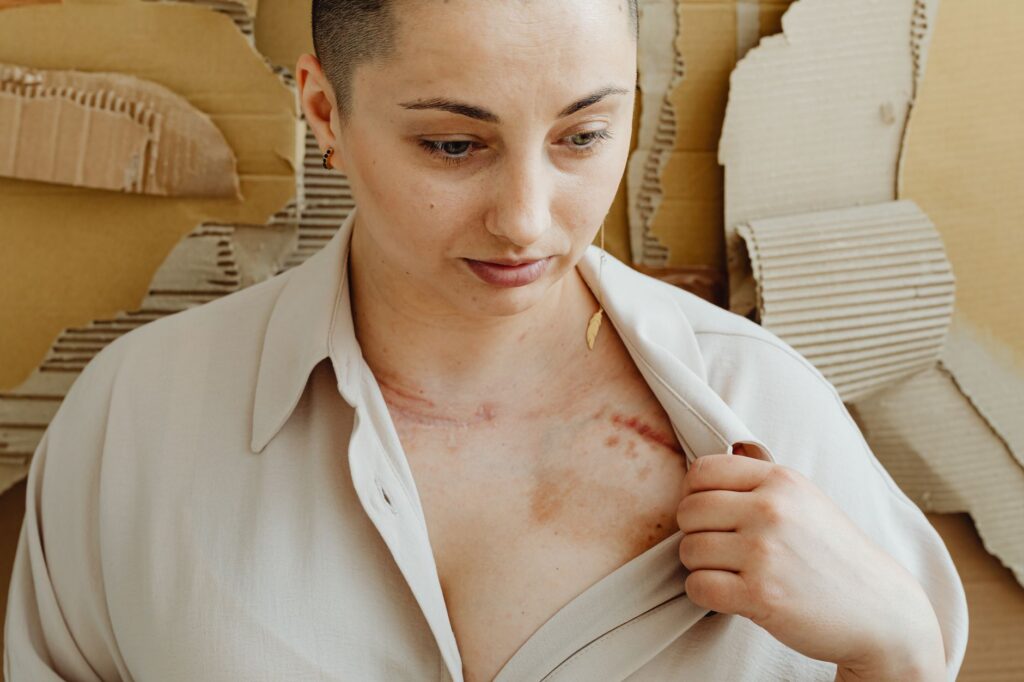
When a burn reaches the deeper skin layers, the body rebuilds with scar tissue. It does not rebuild with ordinary skin.
Scar tissue has less stretchy collagen. So it behaves differently. It is stiffer, more sensitive, and slower to handle heat and cold. Living with burn scars becomes part of daily life. It is not a phase you wait out.
Common scar types after a burn
Two patterns show up often.
- A hypertrophic scar is raised, red, and thick. But it stays inside the edges of the original wound.
- A keloid is also raised. But it grows past the wound’s borders into skin that was never burned.
Both can feel tight, itchy, or tender for a long time. Both tend to be more common on darker skin.
These scars change over time. Most go through a red, raised, “active” phase for about the first year to eighteen months. Then they slowly flatten and pale as they mature. Many soften with treatment. But deep burn scars usually leave permanent changes in how skin looks and feels. We won’t pretend otherwise.
Scar contractures and lost movement
A scar contracture happens when healing scar tissue tightens and pulls. It does this because it doesn’t stretch the way normal skin does.
When a contracture crosses a joint — an elbow, hand, knee, armpit, or neck — it can quietly steal your range of motion. This is why therapists push movement early, even when it hurts. Severe contractures sometimes need a surgical “release.” A surgeon cuts the tight band and fills the gap with a graft or flap to restore motion.
Grafted skin behaves differently for good. Its color and texture may not match. The area may sweat less. It may feel numb or overly sensitive. It may struggle with heat and cold. Sun protection becomes a daily habit, because grafted and scarred skin burns faster and can darken for good.
Visible disfigurement to the face or hands carries its own weight. It changes how you see yourself and how strangers react. That is not vanity. It is a real part of the injury, and it deserves care.
The long road of treatment and rehabilitation
Treatment often continues for years after the wound closes. The first hospital stay is the beginning, not the end.
You may need reconstructive and revision surgeries spread over several years. These can include:
- More skin grafts.
- Tissue expansion. A doctor places a balloon-like device under healthy skin. They slowly inflate it to grow extra skin for reconstruction.
- Laser treatments to soften and flatten scars.
Every plan is different. Only your burn team can decide what is right for you.
Physical and occupational therapy matter as much as surgery. Therapy protects your range of motion. It also rebuilds your independence — dressing, cooking, driving, working. Skip it, and contractures can set in and undo your surgical progress.
Long-term scar management is a daily job. Common tools include:
- Pressure garments — custom, tight-fitting sleeves or vests. You may wear them up to 23 hours a day for a year or more, to help flatten and soften scars.
- Silicone sheets or gel to hydrate and calm active scars.
- Splints to hold joints in a stretched position and fight contractures.
- Scar massage to keep tissue moving and reduce itch.
Pain, itching, and nerve sensitivity often outlast the visible wound. Damaged nerves can fire strange signals — burning, tingling, phantom itch — for months or years. This is real. It has a medical name: neuropathic pain (nerve pain). And it responds to treatment. Don’t suffer it in silence.
Did your burn come with smoke or airway injury? Our page on burn inhalation injury and complications covers what that can mean for recovery.
Have questions about what happened?
Ask our team directly. The first conversation is free, confidential, and there is no obligation to continue.
Emotional and psychological recovery
Emotional recovery is a normal, expected part of healing after a severe burn. It is not a weakness. In the catastrophic-injury cases our attorneys handle, families tell us the emotional toll was the part they were least ready for.
Many survivors grieve. They grieve for their old appearance, old abilities, or the ordinary life they had before the accident. Depression and anxiety are common. So is post-traumatic stress tied to the event that caused the burn.
Signs it may help to talk to a professional
Trauma shows up in the body and the mind. Watch for:
- Trouble sleeping, or nightmares about what happened.
- Flashbacks, or reliving the event.
- Avoiding places, people, or reminders of the accident.
- Feeling numb, hopeless, or constantly on edge.
Do these last more than a few weeks? Do they get in the way of daily life? That is a reason to reach out. Trauma-informed counseling and peer support with other burn survivors help many people. If you are having thoughts of harming yourself, call or text 988 (the U.S. Suicide & Crisis Lifeline) now.
Body image and self-esteem take real hits, especially with visible scarring. Going back into public — the stares, the questions from strangers — can feel overwhelming at first. For most people, with time and support, that fear eases.
Families and caregivers are affected too. Watching someone you love in pain is hard. Carrying new caregiving duties on top of it is exhausting. Your steadiness helps the survivor heal. That is exactly why your own support matters.
Rebuilding daily life, work, and relationships
Rebuilding is possible. But it usually means adjusting your routines, work, and relationships. It rarely means snapping back to how things were.
Returning to work depends on the burn. Are your hands, mobility, or endurance affected? Then your old job may need changes. Vocational rehabilitation services can help you retrain or find new work.
Here is an honest truth other pages avoid: sometimes a return to the same job isn’t possible. Naming that early lets you and your family plan around it, instead of being blindsided by it.
Home life shifts too. You may need to keep indoor temperatures steady for comfort. You may need to shield scarred skin from the sun. And you may need to build wound care into your daily routine.
Reconnecting with partners, children, and friends takes patience. Many survivors find one short, calm, ready answer helps with the questions and stares. It puts you back in control of the conversation. Set realistic goals. And remember: a hard week doesn’t erase your progress.
Finding support and community
The strongest support usually combines three things: your burn center’s aftercare team, mental-health professionals, and other survivors.
Start with your burn center. Many have aftercare and social work teams. They connect patients to counseling, financial help, and local resources. Ask them directly what is near you.
Then look into:
- Burn survivor organizations that run peer-support programs, camps, and events.
- Mental-health professionals trained in trauma and chronic pain.
- Vocational rehabilitation services for returning to work or retraining.
Talking with someone who has lived a similar recovery is powerful. It proves the hard parts are survivable. We won’t promise any specific path. But many survivors do rebuild full, meaningful lives, and that possibility is real.
The lifelong costs of a severe burn — and when someone else is responsible
Severe burns carry real lifelong costs. Recovery isn’t just painful. It is expensive. And the long-term total is often far larger than the first hospital bill. Think future surgeries, ongoing therapy, mental-health care, lost income, and a lower quality of life for years.
When another party may be at fault
Sometimes a burn happens because someone else failed to act safely. Common examples:
- A defective product that overheated or caught fire.
- An unsafe workplace or missing safety equipment.
- A landlord who ignored broken smoke alarms or known fire hazards.
- A truck or vehicle crash that caused a fire (truck accident claims).
There is one more situation people rarely realize is a claim. Say you were attacked, or a fire was set, on someone else’s poorly secured property. That could be an apartment complex, a parking garage, a hotel, a gas station, or a store.
Did the owner fail to provide reasonable security? That means things like working locks and gates, lighting, cameras, or guards. If so, you may have a claim against that property owner. Lawyers call this negligent security, a type of premises liability (a property owner’s legal duty to keep people safe). Our negligent security claims page explains it in plain language.
Florida deadlines and shared fault
Florida sets a time limit to file. For most negligence-based injury claims that start on or after March 24, 2023, the deadline is generally two years under Fla. Stat. §95.11. Deadlines vary by situation. So early legal guidance protects your options.
Florida also uses a modified comparative-negligence rule under Fla. Stat. §768.81. In plain terms: shared fault can reduce what you recover. And a claimant found more than 50% at fault generally recovers nothing.
To understand what a claim may cover, see catastrophic injury damages. For a practical checklist, read steps after a catastrophic burn injury.
Did someone else’s negligence cause your burn? Our licensed attorneys offer a free case evaluation. We serve clients in Miami, Orlando, Tampa, Jacksonville, across Florida, and nationwide — in English and Spanish. You shouldn’t have to explain the hardest year of your life in your second language. This page is general information, not legal advice, and no outcome is ever guaranteed.
Want to know where you stand?
Tell us what happened and our team will walk you through the options available to you, at no cost.
Frequently asked questions
How long does it take to recover from a severe burn injury?
Recovery from a deep burn usually takes months to years, not weeks. Scars stay “active” for about a year to eighteen months before they mature. Scar management often continues well after the wound closes.
Do burn scars ever fully go away?
Deep burn scars usually don’t disappear completely. But laser therapy, pressure garments, silicone, and massage can soften, flatten, and improve them over time.
Is it normal to have PTSD or depression after a burn injury?
Yes. PTSD, anxiety, and depression are common after a severe burn. Trauma-informed counseling and peer support help many survivors. If you are in crisis, call or text 988.
What are scar contractures, and why do they need surgery?
Scar contractures are tight bands of scar tissue that pull across a joint and limit movement. Therapy and splinting prevent many. Severe cases may need a surgical release to restore motion.
Can I file a claim if someone else caused my burn injury in Florida?
Possibly. If a person or company’s negligence caused your burn, you may have a claim. Florida’s deadline is generally two years, so seek legal guidance early.
Where can I find a burn survivor support group?
Ask your burn center’s aftercare or social work team. Also look into burn survivor organizations that run peer-support programs and events in your area.
Common questions about severe burn recovery
How long does recovery take?
Recovery from a deep burn usually takes months to years, not weeks. Scars stay "active" for roughly a year to eighteen months before they mature, and scar management often continues well after the wound itself has closed.
Do burn scars ever fully go away?
Deep burn scars usually don't disappear completely. Treatments like laser therapy, pressure garments, and reconstructive surgery can improve their appearance and flexibility, but they are typically part of long-term care rather than a quick fix.
Why the future cost matters
Severe burns can require repeated surgeries, therapy, and adaptive care for years. A claim should account for future medical needs, lost earning ability, and the impact on daily life — not just today's bills.
What lasting burn injuries can affect
Physical function
Deep burns can limit mobility, damage nerves, and require ongoing therapy to preserve range of motion and reduce contractures.
Family and daily life
Recovery often reshapes work, caregiving, and routines for the entire household — not only the injured person.
Long-term costs
Reconstructive surgery, scar management, and adaptive equipment can continue for years after the initial hospital stay.
Your legal rights
When someone else's negligence caused the fire, explosion, or unsafe condition, you may have a claim for those long-term needs.
Don't settle before you know the full picture
Burn scars stay active for a year or longer, and future surgeries may not be clear at first. Settling too early can leave your family paying for care later. Talk with a lawyer before accepting any offer from an insurer.