

Motorcycle Accidents: Causes, Catastrophic Injuries & Legal Claims
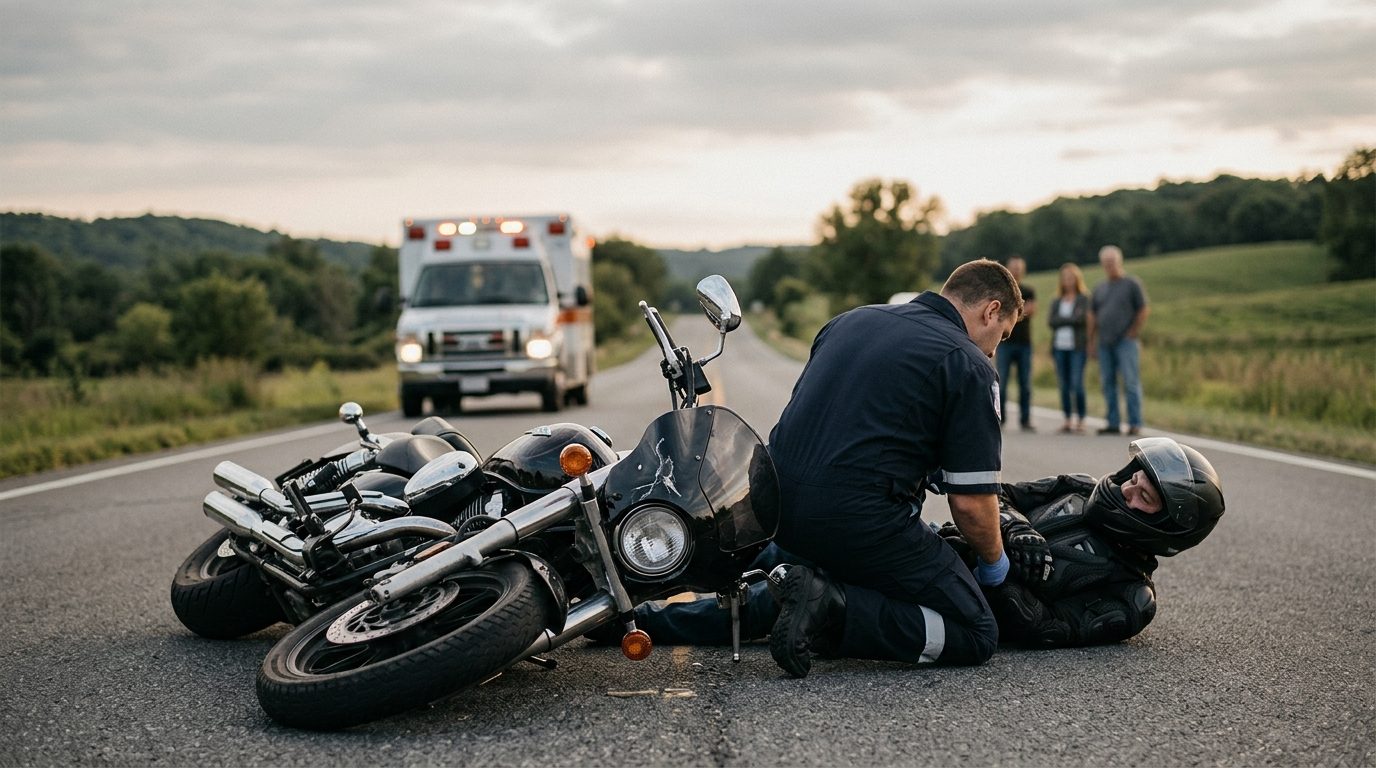
Motorcycle accidents carry a much higher risk of catastrophic, life-altering injury compared to other vehicle crashes. In 2024, 6,228 motorcyclists were killed in traffic crashes—16% of all traffic fatalities—even though motorcycles represent only a small fraction of registered vehicles. Motorcycle riders face approximately 29 times higher fatality risk per mile traveled compared to passenger vehicle occupants. This page explains what causes serious motorcycle accidents, the catastrophic injuries that result, and when negligence or unsafe conditions create a legal claim.
How Many Motorcyclists Are Killed Each Year?
In 2024, 6,228 motorcyclists died in traffic crashes across the United States. That’s one person every 84 minutes. Each number represents a rider—someone’s spouse, parent, child, or friend—and a family left behind to grieve and rebuild.
The fatality rate per mile traveled for motorcyclists is 29 times higher than for passenger vehicle occupants. This difference reflects the fundamental vulnerability of motorcycles: they offer no protective frame, no airbags, no crumple zones. When a motorcycle collides with another vehicle or the road, the rider’s body absorbs the full force of impact.
Riders over 50 account for 37% of all motorcycle fatalities. This reflects both increased ridership in this age group and the compounding effects of age on injury recovery. Fatal motorcycle crashes are the most catastrophic outcome there is. When a crash is fatal, the family of the deceased may pursue a wrongful-death claim against any party whose negligence caused the accident.
If you've suffered a catastrophic injury in a motorcycle accident, we can help you understand your legal options. Talk it through with our team — the first consultation is free, confidential, and carries no obligation.
What Is the Most Common Cause of Motorcycle Accidents?
The leading causes of motorcycle accidents include operator error (inattention, speeding, impaired driving), road hazards, adverse weather, and mechanical failure. However, many serious crashes involve negligence by someone other than the rider.
Common negligence scenarios include:
- Left-turn collisions: A driver fails to see an oncoming motorcycle and turns left directly into its path. Nearly 50% of all fatal crashes involving a car and a motorcycle occur when a car is turning left.
- Rear-end crashes: A driver follows too closely, fails to maintain safe distance, or isn’t paying attention and strikes the motorcycle from behind.
- Unsafe road conditions: Potholes, debris, poor maintenance, inadequate lighting, or missing signage cause a rider to lose control. A municipality or property owner may be liable for failure to maintain the roadway.
- Distracted or impaired driving: A driver texting, speeding, or driving under the influence collides with a motorcycle.
- Unsafe lane changes: A driver merges or changes lanes without checking blind spots, striking a motorcycle.
- Defective motorcycle parts: A manufacturing defect, design flaw, or failure to warn causes injury.
- Negligent security: A rider is assaulted, shot, or attacked at an unsafe property (parking lot, gas station, bar, hotel) where the owner failed to provide reasonable security (working locks, lighting, cameras, or guards).
Even if a rider bears some responsibility for an accident, the other party’s negligence may still create a legal claim. Florida law applies modified comparative negligence: if you’re 50% or less at fault, you can recover damages reduced by your percentage of fault.
What Is the Leading Cause of a Motorcycle Accident?
Speeding is a major factor in fatal motorcycle crashes. However, “leading cause” often conflates operator error with negligence by others. Many riders who were speeding were also struck by a distracted or impaired driver, hit by a vehicle that failed to yield, or injured on an unsafe road.
For legal purposes, the key question is whether the accident was caused solely by the rider’s own conduct or whether another party’s negligence contributed. If another driver, a property owner, a manufacturer, or a municipality bears responsibility, you may have a claim.
What Is the 12-Second Rule on a Motorcycle?
The 12-second following distance rule recommends maintaining at least 12 seconds of space between your motorcycle and the vehicle ahead. This gives you time to perceive a hazard, react, and brake safely—especially critical on a motorcycle, where braking distance and stability differ significantly from four-wheel vehicles.
While this is a safety guideline rather than a legal requirement, a driver who fails to maintain safe following distance and rear-ends a motorcycle may be liable for injuries. If another driver violates this principle and causes a crash, that negligence can support a claim for damages.
Types of Catastrophic Injuries in Motorcycle Accidents
Motorcycle accidents often result in life-altering injuries that require lifelong medical care, rehabilitation, and adaptive equipment.
Spinal Cord Injury and Paralysis
A spinal cord injury (SCI) occurs when trauma damages nerve fibers in the spine, interrupting signals between the brain and the body. Paraplegia (paralysis of the lower body) and quadriplegia (paralysis of all four limbs) are permanent conditions. Riders with SCI face lifelong mobility limitations, chronic pain, bowel and bladder dysfunction, sexual dysfunction, respiratory complications, and increased risk of pressure ulcers and infections. Lifetime care costs for catastrophic SCI can exceed $1 million.
Traumatic Brain Injury (TBI)
A traumatic brain injury results from a blow or jolt to the head that disrupts normal brain function. Moderate to severe TBI can cause permanent cognitive impairment (memory loss, difficulty concentrating, impaired judgment), physical disability (paralysis, loss of balance, chronic pain), behavioral changes (irritability, depression, personality changes), and loss of independence. Many riders with severe TBI require ongoing supervision and care.
Amputation and Limb Loss
A motorcycle accident can result in partial or complete loss of a limb due to crushing injury, severe laceration, or traumatic amputation. Amputation creates immediate and lifelong challenges: phantom limb pain, loss of function, need for prosthetics and adaptive equipment, psychological trauma, and reduced earning capacity. Riders face years of rehabilitation and may never return to their previous level of activity.
Severe Burns
Motorcycle accidents involving fire or fuel ignition cause severe thermal burns. Deep burns destroy skin, subcutaneous tissue, and muscle. Survivors face repeated surgical procedures, infection risk, permanent scarring, contractures (loss of joint mobility), and disfigurement. Severe burns often result in loss of function, chronic pain, and significant psychological impact.
Catastrophic Back and Neck Injuries
Blunt-force trauma to the spine can cause severe disc herniation, vertebral fracture, ligament rupture, or nerve root compression without complete spinal cord injury. These injuries cause chronic pain, loss of mobility, numbness or tingling, and permanent nerve damage. Many riders develop chronic regional pain syndrome or require spinal fusion surgery, leaving them with permanent functional limitations.
Wrongful Death
When a motorcycle accident is fatal, the family of the deceased may pursue a wrongful-death claim against any party whose negligence caused the crash. Wrongful-death claims seek compensation for the family’s loss of companionship, support, and guidance, as well as funeral and medical expenses incurred before death.
Why Are Motorcycle Accidents So Severe?
Motorcycles are inherently vulnerable in traffic. Unlike cars, motorcycles have no protective enclosure, no airbags, and no crumple zones to absorb impact energy. When a collision occurs, the rider’s body absorbs the full force. Riders are often ejected from the motorcycle at high speed, tumbling through the air and striking other vehicles, roadway infrastructure, or the ground. The resulting injuries—head trauma, spinal cord damage, crush injuries, road rash (abrasion injuries from sliding on asphalt)—are often catastrophic.
Additionally, motorcycles are harder for other drivers to see. They occupy less visual space than cars and can disappear into a driver’s blind spot. This visibility gap contributes to left-turn collisions, rear-end crashes, and failure-to-yield accidents where a driver simply didn’t see the motorcycle until it was too late.
If you were injured on someone else's property due to unsafe conditions or inadequate security, the property owner may be liable. Talk it through with our team — the first consultation is free, confidential, and carries no obligation.
Motorcycle Accident Causes: When Negligence Creates a Legal Claim
Not all motorcycle accidents are the rider’s fault. Many result from negligence by others.
Other Driver Negligence
A distracted driver texting, a speeding driver, a driver impaired by alcohol or drugs, or a driver who fails to yield can collide with a motorcycle with catastrophic results. If another driver’s negligence caused your accident, you may have a claim for damages.
Unsafe Road Conditions
Potholes, debris, poor pavement maintenance, inadequate signage, or insufficient lighting can cause a rider to lose control. A municipality, county, or property owner may be liable for failure to maintain the roadway or warn of hazards.
Defective Motorcycle or Safety Equipment
A manufacturing defect, design flaw, or failure to warn in a motorcycle or safety gear (helmet, jacket, gloves) can contribute to injury. The manufacturer may be liable under product liability law.
Negligent Security
A rider attacked or assaulted at an unsafe property—a parking lot, gas station, bar, hotel, or other business—may have a claim against the property owner if the owner failed to provide reasonable security. Reasonable security includes working locks and gates, adequate lighting, security cameras, or security personnel. If an owner knew or should have known that violent crime was occurring on the property and failed to take steps to prevent it, the owner may be liable for injuries resulting from that attack.
Rideshare or Taxi Collision
An Uber, Lyft, or taxi driver whose negligence causes a collision with a motorcycle may be liable for injuries. Rideshare companies carry commercial liability insurance, and claims against them often exceed the coverage limits of ordinary drivers.
Unsafe Conditions at Short-Term Rentals
If you were staying at a short-term rental property (Airbnb, VRBO, vacation home) and were injured due to unsafe conditions or negligent security, the property owner may be liable.
Motorcycle Safety Tips
While no amount of caution can protect you from another driver’s negligence, these practices reduce your risk:
- Wear a DOT-approved helmet and protective gear (jacket, gloves, boots, padded pants). Helmets reduce the risk of head injury by 37% and death by 42%.
- Maintain safe following distance (at least 12 seconds behind the vehicle ahead).
- Ride at a safe speed for conditions.
- Stay visible: use your headlight, wear bright colors, avoid other vehicles’ blind spots.
- Perform a pre-ride inspection: check brakes, tires, lights, and fluid levels.
- Avoid riding in adverse weather or while impaired.
- Take a motorcycle safety course to improve your skills.
Even with perfect safety practices, you can be injured by negligence of others. If another party’s negligence caused your accident, you have legal recourse.
Motorcycle Accidents in Florida, Orlando, Tampa, and Jacksonville
Florida’s warm climate and year-round riding season drive high motorcycle ridership and accident rates. Tourists, seasonal residents, and local riders share Florida roads, and the combination of heavy traffic, construction zones, and distracted drivers creates significant risk.
CHG Personal Injury Lawyers handles motorcycle accident claims throughout Florida—including Miami, Orlando, Tampa, and Jacksonville—and nationwide. If you’ve suffered a catastrophic injury in a motorcycle accident, we can help you understand your legal options.
What to Do After a Serious Motorcycle Accident
Immediate steps:
- Seek emergency medical attention, even if injuries seem minor. Catastrophic injuries (spinal cord damage, internal bleeding, head trauma) may not be immediately apparent.
- Call police and request a written accident report. Obtain the report number.
- Document the scene: take photos of the motorcycle, the other vehicle(s), road conditions, traffic signs, and lighting.
- Collect contact information from witnesses, other drivers, and property owners.
- Do not admit fault or sign documents without legal review.
- Report the accident to your insurance company, but limit your statement to factual details (date, time, location, vehicles involved). Do not describe how the accident happened or accept blame.
- Preserve evidence: keep the motorcycle and your gear; don’t repair or discard them. Preserve medical records, communications with insurance, and any other documents related to the accident.
- Consult an attorney experienced in catastrophic motorcycle injury claims before accepting any settlement offer from the other driver’s insurance company.
Legal Claims After a Motorcycle Accident
Negligence Claim
To establish negligence, you must show that another party owed you a duty of care, breached that duty, and caused your injury. For example, a driver owes you the duty to drive safely and obey traffic laws. If that driver was texting and struck your motorcycle, the driver breached that duty and is liable for your injuries.
Product Liability
If a defective motorcycle part or safety equipment contributed to your injury, the manufacturer may be liable.
Premises Liability and Negligent Security
If you were injured on someone else’s property due to unsafe conditions or inadequate security, the property owner may be liable.
Wrongful Death
If a motorcycle accident was fatal, the family of the deceased may pursue a wrongful-death claim.
Damages
In a successful motorcycle accident claim, you may recover:
- Medical expenses (emergency care, hospitalization, surgery, rehabilitation, ongoing treatment)
- Lost wages and loss of earning capacity
- Pain and suffering
- Permanent disability and loss of enjoyment of life
- Adaptive equipment and home modifications
- In wrongful-death cases: loss of companionship, support, and guidance; funeral expenses
Florida Statute §95.11 establishes a 2-year statute of limitations for personal-injury negligence claims. This means you must file a lawsuit within 2 years of the accident or lose your right to recover. Don’t wait to consult an attorney.
Not sure what your next step is?
Talk it through with our team — the first consultation is free, confidential, and carries no obligation.
Why You Need an Attorney for a Catastrophic Motorcycle Injury
Catastrophic motorcycle injuries are complex. They require expert medical testimony, life-care planning, and sophisticated calculations of lifetime damages. Insurance companies often undervalue claims involving permanent disability or wrongful death, hoping you’ll accept a low offer without legal representation.
An experienced attorney can:
- Investigate the accident thoroughly and identify all liable parties
- Retain medical experts to document the severity of your injury and long-term care needs
- Calculate lifetime damages accurately
- Negotiate with insurance companies or pursue litigation
CHG Personal Injury Lawyers focuses exclusively on catastrophic injury claims, including motorcycle accidents resulting in spinal cord injury, paralysis, traumatic brain injury, amputation, severe burns, and catastrophic back and neck injury. Our attorneys are licensed in Florida and handle cases nationwide.
Frequently Asked Questions
Can I recover damages if I was partially at fault for the motorcycle accident?
Yes. Florida Statute §768.81 applies modified comparative negligence: if you’re 50% or less at fault, you can recover damages reduced by your percentage of fault. If you’re more than 50% at fault, you generally recover nothing.
How long do I have to file a motorcycle accident claim in Florida?
Florida Statute §95.11 establishes a 2-year statute of limitations for personal-injury negligence claims. You must file a lawsuit within 2 years of the accident or lose your right to recover.
What if the other driver was uninsured or underinsured?
Your own motorcycle insurance policy may include uninsured/underinsured motorist (UM/UIM) coverage, which allows you to recover from your own insurer if the at-fault driver has no insurance or insufficient coverage. An attorney can help you pursue this claim.
How much is my motorcycle accident claim worth?
The value depends on the severity of your injury, the extent of medical treatment and ongoing care, your lost wages and earning capacity, and the strength of the liability evidence. Catastrophic injuries often result in settlements or verdicts in the hundreds of thousands or millions of dollars. An attorney can evaluate your claim and provide an estimate.
Should I accept a settlement offer from the insurance company?
Do not accept any settlement offer without consulting an attorney. Insurance companies often make low initial offers, hoping you’ll accept without legal review. An attorney can evaluate whether the offer is fair and negotiate for higher compensation if warranted.
If you or a loved one has suffered a catastrophic injury—spinal cord injury, paralysis, traumatic brain injury, amputation, severe burns, or catastrophic back or neck injury—in a motorcycle accident, you may have a claim against a negligent driver, property owner, or manufacturer. Many people in your situation contact us for a free case evaluation to understand their legal options and next steps. Reach out today to speak with an attorney who focuses exclusively on catastrophic injury cases.