

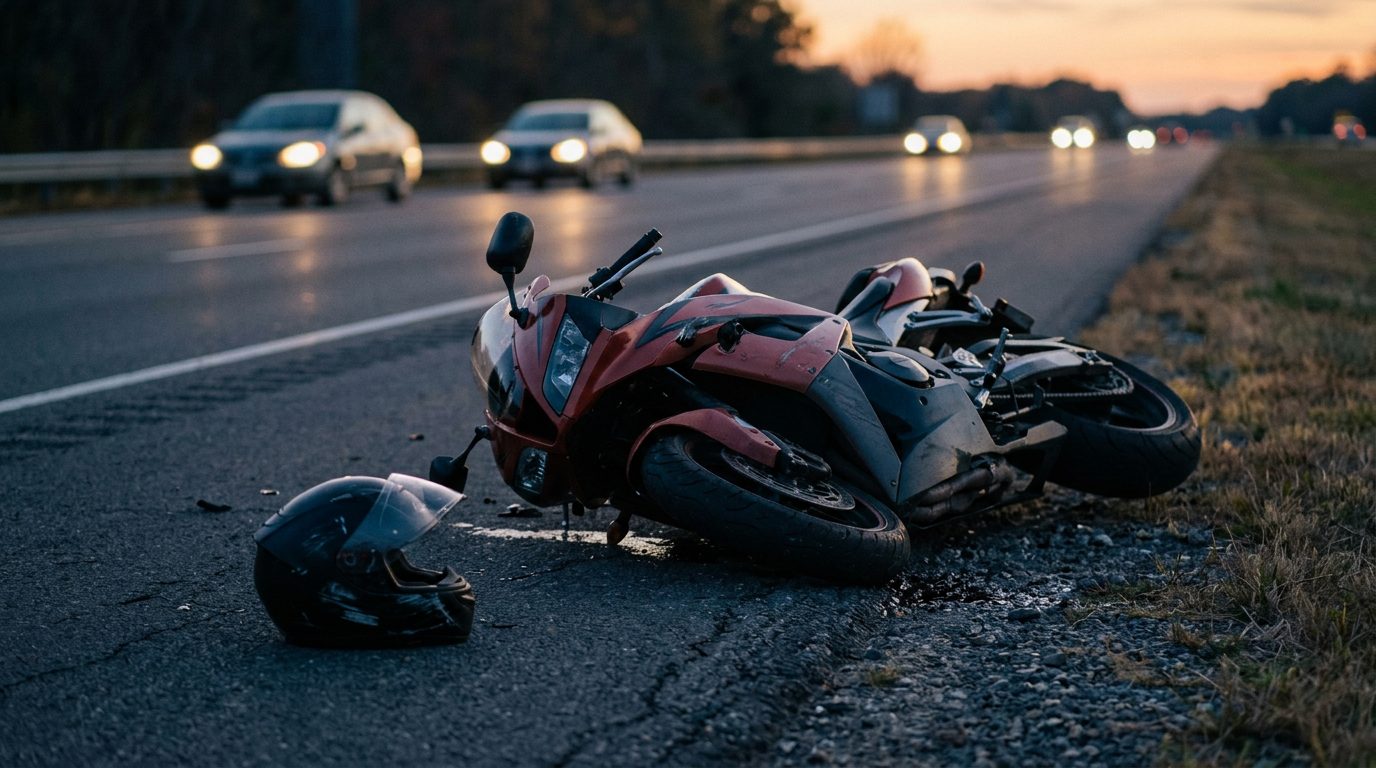
Motorcycle Safety & Accident Prevention
What Causes Most Motorcycle Accidents?
Understanding the leading causes of serious motorcycle crashes—and what happens when another driver's negligence leaves you catastrophically injured.
By CHG Lawyers · Published August 26, 2026
Most Common Cause of Motorcycle Accidents & Catastrophic Injuries
The most common cause of motorcycle accidents is simple: a driver doesn’t see the motorcycle. This usually happens at intersections or during lane changes. According to the National Safety Council, more than half of fatal motorcycle accidents involve another vehicle. Motorcycles have a smaller profile and easily vanish into blind spots. This visibility failure is the leading cause of multi-vehicle motorcycle accidents.
When a driver doesn’t see you on a motorcycle, the results are often catastrophic. Unlike car occupants, motorcyclists have no protective shell, airbags, or crumple zones. Impact forces hit your body directly. Even moderate-speed collisions become life-altering events.

Not sure what your next step is?
Talk it through with our team — the first consultation is free, confidential, and carries no obligation.
Why Drivers Fail to See Motorcycles
Driver inattention is the leading cause of multi-vehicle motorcycle accidents. Research from Smarter USA shows that left-turning drivers fail to notice oncoming motorcyclists until too late. This causes the most common collisions.
Motorcycles are harder to spot than cars. Their narrow profile disappears into blind spots. They blend into traffic. At intersections, drivers often misjudge how fast a motorcycle is moving.
Visibility failures account for most serious crashes. The National Safety Council reports that 65% of motorcyclist fatalities occur on urban roads, 94% happen in good weather, and 49% occur during daytime hours. You’d expect drivers to see better in daylight and good weather. The problem isn’t darkness or rain. It’s driver error and inattention.
Left Turns at Intersections: The Highest-Risk Scenario
Left-turn collisions are among the most severe and most common motorcycle accidents. An oncoming vehicle turns left in front of a motorcycle. This creates a high-speed, head-on or broadside impact.
The motorcyclist often has no time to brake or swerve. The driver turning left misjudges the motorcycle’s speed or simply doesn’t see it.
These crashes frequently result in catastrophic injuries. Spinal cord damage, traumatic brain injury, amputation, and severe burns are common outcomes. The liability typically falls on the driver who turned left. That driver had a legal duty to ensure the intersection was clear before turning.
Other Leading Causes of Motorcycle Accidents
While visibility failures dominate, other factors also cause serious crashes:
- Distracted driving by other drivers (phones, eating, adjusting controls)
- Unsafe lane changes without checking mirrors or blind spots
- Speeding by either the motorcyclist or other vehicles—speeding was a factor in 33% of fatal motorcycle accidents according to NHTSA data
- Driving under the influence (alcohol or drugs)
- Inexperience or lack of training, particularly among riders
- Lane splitting in heavy traffic (legal in some states, illegal in Florida)
Research published by the NIH found that car-and-motorcycle collisions account for 68% of motorcycle injury cases. Pedestrian-motorcycle collisions account for 22%. This shows that most serious motorcycle injuries involve another vehicle or person.
Have questions about what happened?
Ask our team directly. The first conversation is free, confidential, and there is no obligation to continue.
Who Is at Fault in Most Motorcycle Accidents?
In multi-vehicle accidents, the other driver is at fault in most cases. Single-vehicle accidents (where the rider loses control) place liability on the rider. Determining fault depends on specific circumstances: traffic laws, visibility, road conditions, and driver conduct.
Insurance companies and courts examine evidence, witness statements, and accident reconstruction. In Florida, the law follows a modified comparative-negligence rule. Under Florida Statute §768.81, a claimant who is more than 50% at fault generally recovers nothing.
If you were 40% at fault and the other driver was 60% at fault, you can recover 60% of your damages. This matters because even partial responsibility doesn’t eliminate your claim.
Why Motorcycle Accidents Result in Catastrophic Injuries
Motorcyclists have no protective shell, airbags, or crumple zones. Impact forces are transmitted directly to the rider’s body. Road rash and broken bones are common. But catastrophic injuries—the kind that permanently alter a person’s life—are tragically common too.
These include:
- Spinal cord injury and paralysis (paraplegia or quadriplegia)
- Traumatic brain injury (TBI)
- Amputation and limb loss
- Severe burns (from friction, fuel fires, or explosions)
- Catastrophic back and neck injuries
Even crashes that would be minor in a car can be life-altering for a motorcyclist. A 30-mph side-impact collision might dent a car door. For a motorcyclist, it can mean permanent spinal cord damage and paralysis from the waist down. Learn more about motorcycle injury claims and your legal options.
What to Do After a Motorcycle Accident
Seek immediate medical attention, even if injuries seem minor. Some catastrophic injuries—like internal bleeding or spinal cord damage—aren’t always obvious at first.
Document the scene: Take photos of the vehicles, road conditions, traffic signals, and road markings. Get names and phone numbers of witnesses. Note the police report number.
Report the accident to your insurance company as soon as possible.
Do not admit fault or sign anything (except the police report) without legal review. Even a casual comment can be used against you later.
Understand that you may have a claim against the at-fault driver’s insurance or the driver directly. In Florida, you have two years from the accident date to file a negligence lawsuit, per Florida Statute §95.11. This deadline is strict. Once it passes, you lose the right to sue. Learn what to do after a motorcycle accident to protect your claim.
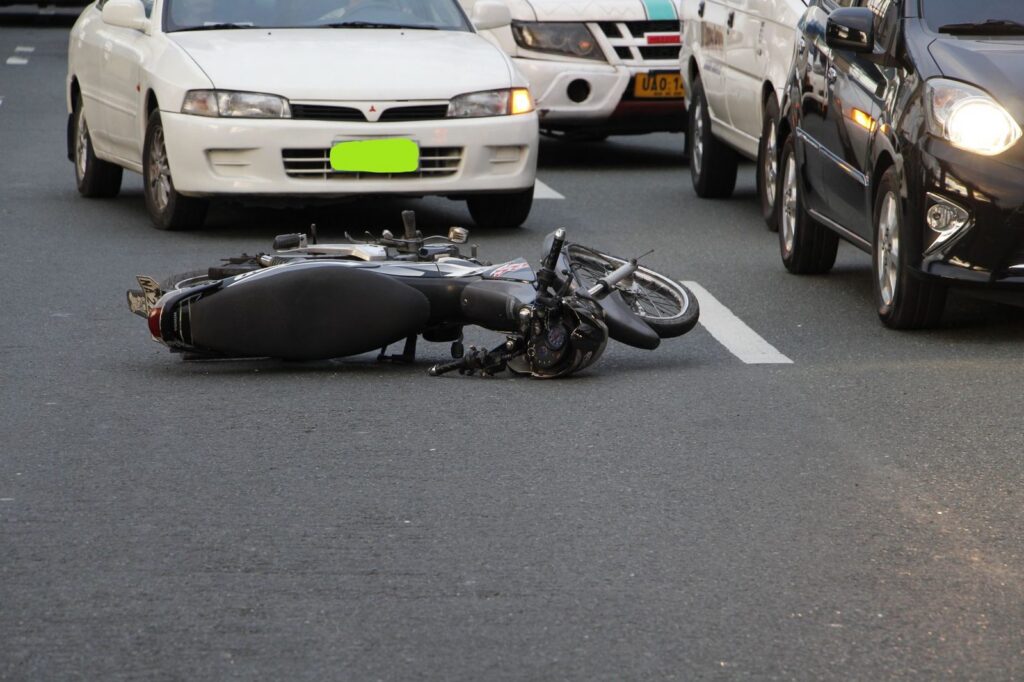
Want to know where you stand?
Tell us what happened and our team will walk you through the options available to you, at no cost.
Frequently Asked Questions
What is the 12-second rule for motorcycles?
The 12-second rule refers to maintaining a safe following distance behind other vehicles. At highway speeds, stay at least 12 seconds behind the vehicle ahead. This gives you time to react and brake safely.
Who is responsible if a driver didn’t see my motorcycle?
The driver who failed to see you is responsible. Drivers have a legal duty to keep a proper lookout. Failing to do so is negligence, and you may have a claim for damages.
Can I recover damages if I was partially at fault?
Yes, if you were 50% or less at fault in Florida (Fla. Stat. § 768.81(6)). You’ll recover a percentage of damages equal to the other driver’s share of fault.
What if the other driver’s insurance denies my claim?
You can still pursue a lawsuit against the driver directly. This is where having legal representation becomes critical.
If you’ve been catastrophically injured in a motorcycle accident—whether it’s a spinal cord injury, brain trauma, amputation, or severe burns—you’re facing decisions about medical care, recovery, and your legal rights. Many people in your situation reach out to discuss what happened and to understand whether they have a claim.
For a free case evaluation, contact us today. Call 787-651-4283 or fill out our contact form. The consultation is free, confidential, and carries no obligation.
The Most Common Causes of Motorcycle Accidents
Other Drivers Failing to See You
The leading cause of motorcycle crashes is driver inattention. Cars and trucks fail to notice motorcycles in blind spots, during lane changes, or at intersections. These 'left-turn' and 'failure to see' collisions often result in catastrophic injuries because motorcycles offer no protective shell.
Speeding & Loss of Control
Excessive speed reduces a rider's ability to brake and maneuver safely, especially on curves. When a motorcycle operator loses control due to speed, the consequences are severe—spinal cord injuries, traumatic brain injuries, amputations, and severe burns are common outcomes.
Road Hazards & Unsafe Conditions
Potholes, debris, loose gravel, and poor road maintenance force riders to swerve or brake suddenly. A construction zone accident or a negligently maintained roadway can trigger a catastrophic crash that leaves a rider permanently disabled.
Impaired or Reckless Driving
Alcohol and drug impairment slow reaction times for all drivers. When an impaired driver collides with a motorcycle, the rider bears the brunt of the impact—resulting in life-altering spinal cord injuries, paralysis, traumatic brain injury, or death.
Motorcycles Offer No Protection
Unlike cars, motorcycles have no airbags, crumple zones, or protective frame. A collision that might cause minor injuries in a car can cause permanent paralysis, amputation, severe burns, or death on a motorcycle. If another driver's negligence caused your crash, you may have a claim for compensation.
Why Your Motorcycle Accident Claim Matters
We Focus Exclusively on Catastrophic Injuries
Spinal cord injuries, paralysis, traumatic brain injuries, amputations, severe burns, and catastrophic back or neck injuries require dedicated legal representation. We handle cases nationwide.
We Understand the Impact
A catastrophic motorcycle injury changes everything—your ability to work, care for your family, and live independently. We approach every case with the seriousness it deserves.
Bilingual Support
We publish educational content and provide representation in English and Spanish to serve our community fully.
No Attorney’s Fees Unless There Is a Recovery
We handle catastrophic injury cases on a contingent fee basis, so you pay nothing upfront while we work to build your claim.