

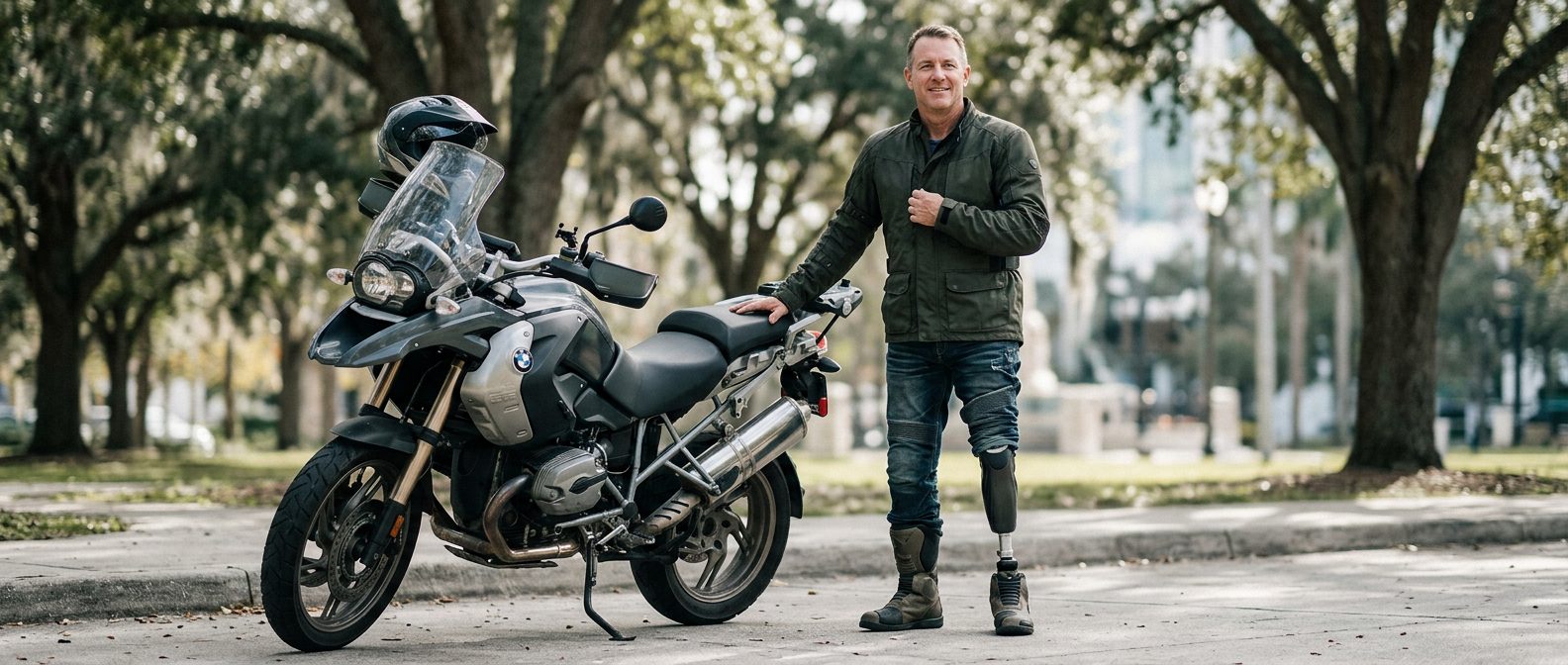
Motorcycle Accidents Orlando
Catastrophic Motorcycle Crash? You Need Legal Help Now
When a motorcycle accident leaves you with spinal cord injury, paralysis, traumatic brain injury, amputation, or severe burns, the road ahead is overwhelming. CHG Personal Injury Lawyers focuses exclusively on catastrophic injuries. We're here to help.
By CHG Lawyers · Published August 24, 2026
Motorcycle Accidents in Orlando: Catastrophic Injury & Legal Claims
If you or someone you care about suffered a catastrophic motorcycle accident in Orlando, your life has changed. A serious motorcycle crash causes permanent spinal cord injury, traumatic brain injury, amputation, severe burns, or death. This is not a minor fender-bender. It’s a life-altering event that demands immediate medical care, careful documentation, and legal action.
This page is for riders and families in the Orlando area who experienced a catastrophic motorcycle collision. It explains what happens in serious crashes, what to do right now, and how to pursue a claim.
If you or a loved one suffered catastrophic injury in a motorcycle accident in Orlando, you may have a claim. Contact us for a free case evaluation.
Get a free consultation
Get a free consultation
If you or a loved one suffered catastrophic injury in a motorcycle accident in Orlando, you may have a claim. Talk it through with our team — the first consultation is free, confidential, and carries no obligation.
Why Motorcycle Accidents in Orlando Cause Catastrophic Injury
Orlando’s highways and local roads see motorcycle accidents regularly. Many result in catastrophic injury or death. Riders navigate I-4, US-17/92, Orange Avenue, and countless other routes where collisions happen every week.
Motorcycle riders face a vulnerability that car occupants do not. You have no protective shell, no frame, no airbags. In a collision, you absorb direct impact with the road, other vehicles, and debris. This exposure means motorcycle accidents frequently cause spinal cord injury, traumatic brain injury, amputation, severe burns, and fatal outcomes.
When a motorcycle collides with a car or truck, the rider’s body absorbs the force. That’s why serious motorcycle accidents in the Orlando area result in permanent paralysis, cognitive impairment, limb loss, or death—not just broken bones or soft-tissue injuries.
Common Motorcycle Accident Scenarios in Orlando
Understanding how serious motorcycle crashes happen helps you recognize the dangers.
Rear-end collisions with trucks. A motorcycle struck from behind by a car, truck, or semi-trailer often results in the rider being thrown forward with tremendous force. The rider may suffer spinal cord injury, head trauma, or fatal impact. The weight and speed of a commercial truck make the outcome almost always catastrophic.
Highway and interstate crashes. I-4, US-17/92, and Orange Avenue see high-speed collisions involving motorcycles and larger vehicles. A rider traveling at highway speed who is struck or forced off the road may suffer multiple injuries at once—spinal damage, head trauma, and severe burns.
Head-on and side-impact crashes. Collisions at intersections or on two-lane roads cause traumatic brain injury, spinal cord damage, and limb loss. A rider broadsided by a vehicle turning left may be ejected or crushed.
Overturn and rollover. A motorcycle that overturns can trap the rider, causing crush injuries, severe burns if fuel ignites, or fatal trauma. Rollovers often occur when a rider swerves to avoid another vehicle.
Catastrophic Injuries from Motorcycle Accidents
The injuries caused by serious motorcycle crashes are permanent and life-altering.
Spinal cord injury and paralysis. A rider struck from behind or in a high-impact collision may suffer permanent paralysis. Paraplegia means loss of function in the lower body. Quadriplegia means loss of function in all four limbs. According to the Mayo Clinic, spinal cord injuries can result in permanent loss of strength, sensation, and function below the level of injury. These injuries require lifelong medical care, adaptive equipment, home modifications, and personal assistance.
Traumatic brain injury (TBI). Head impact—even with a helmet—can cause permanent cognitive, physical, and emotional impairment. A rider may suffer memory loss, difficulty concentrating, mood changes, or loss of motor control. Recovery is often incomplete.
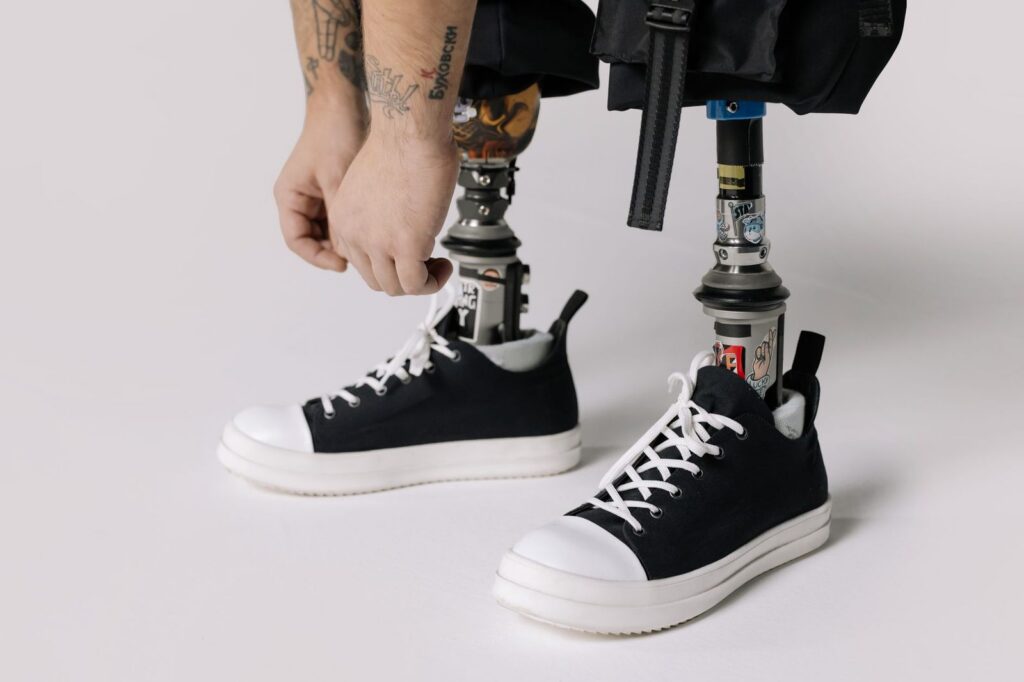
Amputation and limb loss. Crush injuries or severe lacerations can result in permanent limb loss. Amputation means permanent disability, phantom pain, and the need for prosthetics and rehabilitation.
Severe burns. Fuel ignition or contact with hot engine parts can cause third-degree burns covering large areas. Severe burns require extensive hospitalization, skin grafts, and lifelong scar management.
Catastrophic back and neck injuries. Impact in a motorcycle crash often involves fractures, disc herniation with nerve damage, or ligament tears that cause permanent disability.
Wrongful death. Fatal motorcycle accidents leave families to grieve and face financial hardship. Families may have legal claims against the at-fault driver.
What to Do Immediately After a Serious Motorcycle Accident
Your actions in the first minutes and hours protect your health and strengthen any legal claim.
Call 911. Get emergency medical help immediately. Do not assume you are uninjured. Catastrophic injuries may not be immediately obvious. Spinal cord damage, internal bleeding, and brain injury can develop over hours or days. Always accept transport to a hospital.
Stay at the scene (if safe). Provide your information to police. Do not admit fault or apologize. Speak only to police and medical personnel. Do not discuss the crash with the other driver or their insurance company without legal counsel.
Document the scene. If you are able, take photos of vehicle damage, road conditions, traffic signals, and weather. Note the names and contact information of witnesses. Ask police for the case number and investigating officer’s name.
Seek medical attention. Go to the hospital or urgent care. Get a full evaluation and keep all medical records. Describe your symptoms honestly and completely to doctors.
Report to your insurance company. Notify them of the accident. Do not give a recorded statement without legal counsel. Stick to the facts: date, time, location, and the other vehicle’s information.
Preserve evidence. Keep all medical records, police reports, photos, communications, and receipts. Do not repair or dispose of your motorcycle until an attorney has reviewed it.
Who Is Liable in a Motorcycle Accident?
Determining liability—who is legally responsible—is essential to pursuing a claim.
The driver of the other vehicle may be liable if they were negligent. Negligence means they failed to exercise reasonable care. Examples include speeding, distracted driving, failing to yield, following too closely, or driving under the influence.
A commercial truck driver or trucking company may be liable if the driver was fatigued, improperly trained, or the vehicle was poorly maintained.
A property owner or business may be liable if a defective road condition, poor lighting, or debris in the roadway contributed to the crash.
Multiple parties may share liability. Determining fault requires investigation of police reports, witness statements, vehicle data, electronic records, and scene evidence. Accident reconstruction experts help establish how the crash occurred and who caused it.
Not sure what your next step is?
Talk it through with our team. The first consultation is free, confidential, and carries no obligation.
Get a free consultation
Get a free consultation
Not sure what your next step is?
Talk it through with our team — the first consultation is free, confidential, and carries no obligation.
Why Motorcycle Accidents Are More Severe Than Car Accidents
Motorcycle accidents result in more catastrophic injuries than car accidents for fundamental reasons.
No protective structure. A car has a frame, airbags, crumple zones, and a roof. A motorcycle rider is exposed to direct impact. Your body absorbs the force of the collision.
Weight and speed. Even at moderate speeds, a motorcycle accident can result in the rider being ejected at high velocity. A 200-pound motorcycle traveling at 40 miles per hour has tremendous kinetic energy.
Visibility. Motorcycles are smaller and easier to miss. Drivers may fail to see a rider, leading to dangerous collisions—especially at intersections or when changing lanes.
Injury patterns. Motorcycle accidents frequently cause spinal cord injury, head trauma, and limb loss. These are catastrophic outcomes, not minor soft-tissue injuries.
Legal Options After a Catastrophic Motorcycle Accident
If another party’s negligence caused your crash, you have legal rights and options to pursue compensation.
Personal injury claim. You may file a claim against the at-fault driver’s insurance or pursue a lawsuit in court. You must prove the other driver was negligent and that their negligence caused your injury.
Wrongful death claim. If a rider was killed, the family may bring a wrongful death claim against the at-fault party. Under Florida law, a personal injury claim must be filed within two years from the date the injury occurred. This deadline is strict. If you miss it, you lose your right to sue.
Uninsured or underinsured motorist claim. If the at-fault driver has no insurance or insufficient coverage, your own motorcycle or auto insurance policy may provide recovery through uninsured motorist (UM) or underinsured motorist (UIM) coverage.
Product liability claim. If a defect in the motorcycle, helmet, or safety equipment contributed to the injury, the manufacturer may be liable.
Comparative negligence. Florida follows a comparative negligence rule: if you are found to be more than 50% at fault, you recover nothing. If you are 50% or less at fault, you may recover damages reduced by your percentage of fault. For example, if you are 20% at fault and your damages are $100,000, you recover $80,000.
Damages may include: – Medical expenses (emergency care, surgery, hospitalization, rehabilitation, ongoing treatment) – Lost wages and lost earning capacity – Pain and suffering – Permanent disability and disfigurement – In fatal cases, loss of companionship and support
Motorcycle Accident Statistics in Florida
According to the National Highway Traffic Safety Administration (NHTSA), Florida consistently ranks among the states with the highest number of motorcycle fatalities. Factors include year-round warm weather (more riders on the road), high traffic volume, and highway speeds. Orlando and the surrounding region see significant motorcycle traffic and corresponding accident rates.
Next Steps: Getting Help After a Serious Motorcycle Accident
If you or a loved one suffered a catastrophic injury in a motorcycle accident in Orlando, you have legal rights and options. An attorney can investigate the crash, identify liable parties, gather evidence, and pursue compensation for your injuries and losses.
Time matters. Florida law sets strict deadlines for filing claims and lawsuits. Evidence can be lost if not preserved quickly. Insurance companies will contact you. Do not give a recorded statement without legal counsel.
Many feel overwhelmed, uncertain about what to do next, and unsure whether they have a legal claim.
If you were struck from behind by a truck, broadsided at an intersection, or hit by a driver who fled the scene, and you now face permanent spinal injury, brain damage, amputation, or the loss of a loved one, contact us for a free case evaluation. We’ll listen to what happened, explain your legal options, and help you understand what comes next.

Have questions about what happened?
Ask our team directly. The first conversation is free, confidential, and there is no obligation to continue.
Frequently Asked Questions
What should I do after a serious motorcycle crash in Orlando?
If you or a loved one suffered a catastrophic injury, get emergency medical care first. Then report the crash to police so there is an official record. Keep any evidence and photos. Consider speaking with an attorney before giving a recorded statement to an insurance company.
What kinds of motorcycle accident injuries are considered catastrophic?
Catastrophic injuries are permanent, life-altering harms such as spinal cord injuries and paralysis, traumatic brain injuries, amputation or limb loss, severe burns, and catastrophic back or neck injuries. These injuries often require lifelong medical care. The most catastrophic outcome is a fatal crash that leaves a family behind.
Can my family file a claim if a loved one died in an Orlando motorcycle crash?
Yes. When a motorcycle crash caused by someone else’s negligence results in death, Florida law allows certain surviving family members to bring a wrongful death claim to seek compensation for their loss.
How long do I have to file a motorcycle accident claim in Florida?
Florida sets legal deadlines, called statutes of limitations, that limit how long you have to bring a claim. These deadlines can vary by case type. Missing a deadline can end your right to recover. Contact us for a free case evaluation as soon as possible.
Act Quickly After a Crash
If you or a loved one suffered a catastrophic injury in a motorcycle accident, seek emergency medical care first. Then report the crash to police to create an official record. Preserve any evidence, photos, and witness information. Before giving any recorded statement to an insurance company, speak with an attorney—what you say can affect your claim.
What Counts as a Catastrophic Motorcycle Injury?
Spinal Cord Injury & Paralysis
Damage to the spine can cause paraplegia (lower-body paralysis) or quadriplegia (full-body paralysis), permanently altering your life and requiring lifelong care.
Traumatic Brain Injury
A blow to the head can cause lasting cognitive, physical, and emotional changes—affecting memory, speech, movement, and personality.
Amputation & Limb Loss
Loss of a limb or digit demands surgical care, prosthetics, rehabilitation, and lifelong adaptation—with enormous medical and personal costs.
Severe Burns & Catastrophic Back/Neck Injury
Severe thermal injuries and major spine trauma cause permanent scarring, pain, mobility loss, and often require multiple surgeries and ongoing treatment.
Why CHG Personal Injury Lawyers
Licensed Florida Attorneys
Our team is admitted to the Florida Bar and focuses exclusively on catastrophic injury cases—we understand the medical, financial, and personal stakes.
Empathetic, Plain-Language Guidance
We explain your rights and options in clear terms, never legal jargon. Your recovery and your family's future are our priority.
Comprehensive Case Investigation
We gather evidence, consult medical specialists, and build a thorough record of your injuries and losses—no detail is too small.
No Attorney’s Fees Unless There Is a Recovery
You pay nothing upfront. We work on contingency, so our incentive is aligned with yours: securing fair compensation for your injuries.
What Happens Next
Free Case Evaluation
Contact us to discuss your motorcycle accident, your injuries, and what you've lost. We'll listen and explain how we can help.
Investigation & Evidence Gathering
We obtain the crash report, medical records, witness statements, and expert analysis to build a strong foundation for your claim.
Negotiation & Advocacy
We handle all communication with insurance companies and opposing parties, fighting for fair compensation while you focus on healing.
Resolution
Whether through settlement or court, we pursue the resources you need for medical care, lost income, pain and suffering, and long-term support.
Your Catastrophic Injury Deserves Serious Legal Representation
Related practice areas
- Motorcycle Accidents in Tampa
- Spinal Cord Injuries: A Guide for Victims and Families Facing Paralysis
- Tetraplegia