

Spinal Cord Injury
What Is the Cause of Tetraplegia? Cervical Spinal Cord Injury Explained
Tetraplegia (also called quadriplegia) results from injury or disease affecting the cervical spine. Understanding the cause is the first step toward knowing your options.
By CHG Lawyers · Published September 27, 2026
Tetraplegia (Quadriplegia): What It Means When All Four Limbs Are Paralyzed
If you or a family member suddenly cannot move your arms or legs after an accident, you may have tetraplegia—a permanent condition where all four limbs lose function because the cervical (neck) spinal cord is damaged. Motor vehicle crashes, falls, and diving accidents are the most common causes. Understanding what tetraplegia is, how it happens, and what legal options exist is the first step toward recovery and protecting your family’s future.
Important: Florida law gives you only two years from the date of injury to file a personal injury claim. If negligence caused your tetraplegia, waiting costs you the right to compensation.

Not sure what your next step is?
Talk it through with our team — the first consultation is free, confidential, and carries no obligation.
What Is Tetraplegia? Plain Language First
Tetraplegia means you cannot move or feel all four limbs—both arms and both legs. The clinical term is also called quadriplegia (they mean the same thing).
Here’s what happens inside your body: Your spinal cord is a bundle of nerve fibers running from your brain down through your spine. It carries signals that tell your muscles to move and allow you to feel touch, temperature, and pain. When the cervical spinal cord is damaged—usually from a violent impact, a fall, or a diving accident—those signals cannot cross the injury site. Everything below the injury loses function. You cannot move those limbs, and you cannot feel them.
This is different from paraplegia, which affects only the lower body (legs and lower trunk). Paraplegia results from injury lower in the spine—in the thoracic (mid-back) or lumbar (lower-back) regions.
How the Cervical Spine Works and Why Injury Level Matters
The cervical spine has eight levels of vertebrae and nerve roots, labeled C1 through C8. Because the cervical spinal cord controls signals to the arms, hands, legs, and feet, any injury at any cervical level causes tetraplegia.
Injury level determines how severe paralysis will be:
- C1–C4 injuries (high cervical): These cause extensive paralysis. A C1 or C2 injury often requires a ventilator (breathing machine) because the nerve roots that control breathing are damaged. People with these injuries typically have no arm or leg movement.
- C5–C8 injuries (lower cervical): These may preserve some arm and hand function. A person with a C5 injury may regain some shoulder and arm movement, allowing greater independence with adaptive equipment.
How complete the injury is also matters:
- A complete injury means no nerve signals cross the damage site. Paralysis is total below the injury level, and recovery of movement is unlikely.
- An incomplete injury preserves some nerve signal transmission. Partial recovery of movement or sensation is possible with intensive rehabilitation, and recovery can continue for months or years.
How Accidents Cause Tetraplegia
Motor vehicle crashes are the leading cause of traumatic spinal cord injury. According to the National Spinal Cord Injury Statistical Center (NSCISC), vehicle crashes account for approximately 38% of all spinal cord injuries. High-impact collisions create violent forces that fracture cervical vertebrae, dislocate them, or tear spinal cord tissue. Even without broken bones, the force of impact can permanently damage nerve fibers.
Falls are the second leading cause of spinal cord injury overall. Falls from height—off ladders, scaffolding, or roofs—cause severe cervical spine trauma. Falls down stairs and falls in the home or workplace are also common. Older adults with degenerative bone disease face higher risk because their cervical vertebrae are already weakened.
Diving accidents cause tetraplegia in younger people. Diving into shallow water forces the head and neck into sudden, violent bending. This fractures cervical vertebrae. A single dive into unexpectedly shallow water causes permanent paralysis.
Motorcycle and ATV accidents involve high-speed impacts and ejection. Riders often land head-first or on their backs, causing direct cervical spine trauma.
Workplace and construction accidents include falls from heights, being struck by equipment or falling objects, and crush injuries to the spine.
Sports injuries from contact sports, gymnastics, skiing, and snowboarding cause cervical spine fractures and spinal cord damage.
Non-Traumatic Causes: When Disease Causes Tetraplegia
Not all tetraplegia results from accidents. Spinal cord disease and degenerative conditions cause progressive or sudden paralysis without any traumatic event.
Transverse myelitis is inflammation of the spinal cord that damages nerve fibers across the entire cord width. It may follow a viral infection or develop as part of an autoimmune condition. Symptoms appear suddenly and can cause complete or incomplete tetraplegia. The National Institute of Neurological Disorders and Stroke (NINDS) estimates it affects 1 to 8 people per million per year.
Syringomyelia is a condition where a fluid-filled cavity forms within the spinal cord. It expands and damages nerve fibers over time, causing progressive weakness and paralysis.
Degenerative disc disease and cervical spondylosis occur when discs between cervical vertebrae break down. Bone spurs form, and the spinal canal narrows. Severe narrowing compresses the spinal cord and causes progressive paralysis.
Spinal cord tumors grow and compress or invade spinal cord tissue, causing paralysis.
Infections affecting the spinal cord—such as meningitis or spinal abscess—cause inflammation and nerve damage.
Vascular events like spinal cord stroke occur when blood supply to the spinal cord is interrupted.
Medical negligence or surgical complications can damage the spinal cord during surgery or result from improper diagnosis or treatment.
What Recovery Looks Like: The Medical Reality
Recovery depends on whether the injury is complete or incomplete and how quickly treatment begins.
Incomplete injuries may preserve some nerve signal transmission. With immediate medical intervention, intensive rehabilitation, and adaptive equipment, people with incomplete tetraplegia often regain some movement and sensation. Recovery can continue for months or years after the injury.
Complete injuries result in total loss of function below the injury site. Current medical science cannot fully restore function after a complete spinal cord injury. Rehabilitation maximizes remaining abilities and independence. Emerging therapies—stem cell research, electrical stimulation, and robotic-assisted rehabilitation—show promise in clinical research but are not yet standard treatment.
Early intervention is critical. Immediate medical stabilization, imaging, and focused spinal cord injury care at a dedicated trauma center reduce secondary damage and improve long-term outcomes.
Have questions about what happened?
Ask our team directly. The first conversation is free, confidential, and there is no obligation to continue.
Life Expectancy and Long-Term Outlook
Modern medical care has dramatically improved life expectancy for people with tetraplegia. According to the Christopher & Dana Reeve Foundation, life expectancy for people with high tetraplegia (C1–C4) now exceeds 40 years. For lower tetraplegia (C5–C8), it exceeds 50 years.
Factors affecting longevity include age at injury, injury completeness, injury level, overall health, access to quality medical care, and prevention of secondary complications.
Secondary complications—respiratory infections, pressure injuries, blood clots, and urinary tract infections—are manageable with proper care and skilled nursing. Many people with tetraplegia live full, meaningful lives with appropriate support and adaptive equipment.
Medical Assessment and Classification
Immediately after a spinal cord injury, medical teams stabilize the spine. They assess injury severity using imaging (MRI, CT scan) and neurological examination. The ASIA Impairment Scale (AIS) classifies the injury as complete or incomplete and predicts recovery potential.
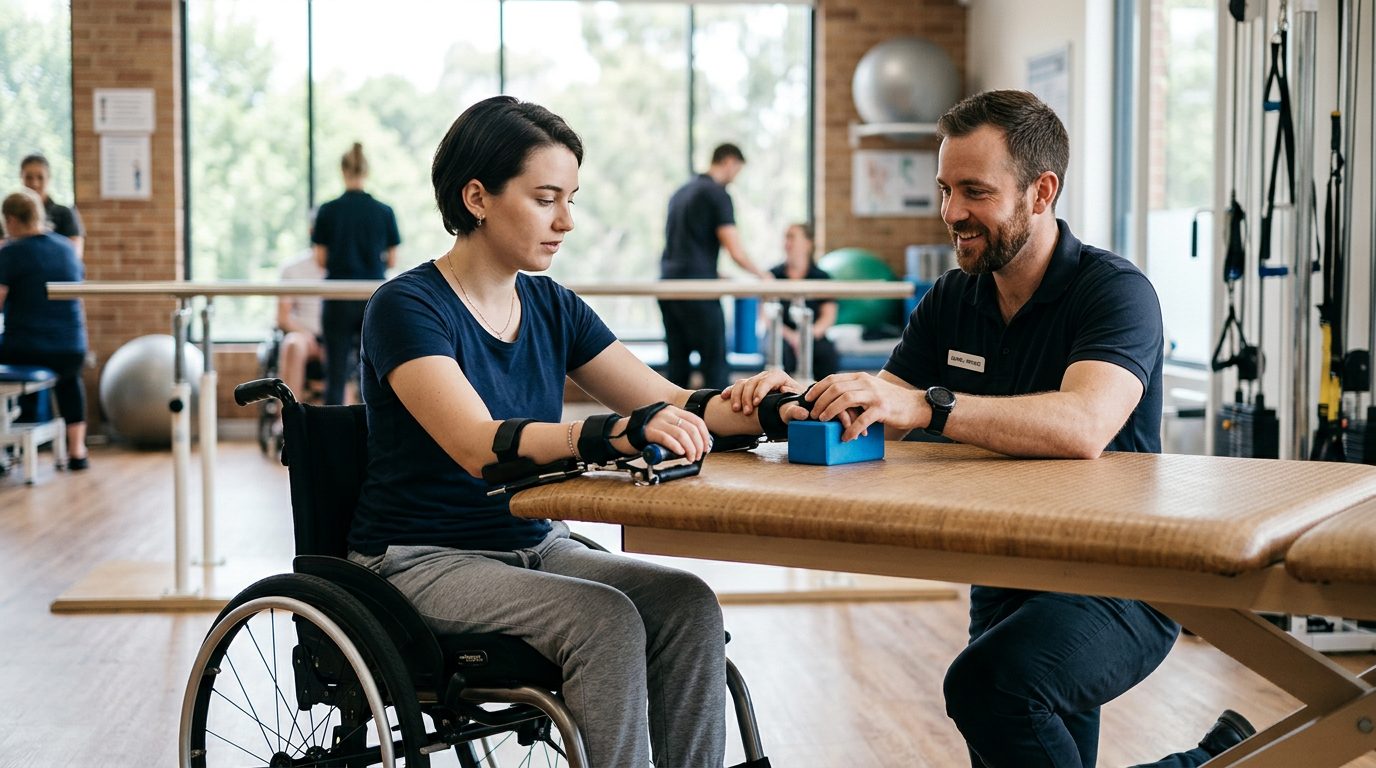
Rehabilitation begins early and continues for months or years. Physical therapy, occupational therapy, and adaptive equipment help maximize remaining function and independence. Psychological support addresses the emotional impact of catastrophic injury.
Long-term planning includes home modifications, adaptive equipment (wheelchairs, accessible vehicles, communication devices), ongoing medical care, and financial planning for lifetime care costs.
If Negligence or an Accident Caused Your Tetraplegia
If tetraplegia developed after an accident or due to someone else’s negligence, you may have legal rights to compensation. Time is critical.
Motor vehicle crashes caused by another driver’s recklessness, distraction, or traffic law violation create liability. Florida’s comparative fault law (Fla. Stat. § 768.81) allows you to recover damages even if you bear partial responsibility, as long as you’re not more than 50% at fault.
Unsafe property conditions that caused a fall—broken stairs, inadequate lighting, missing handrails, or negligent security—may create liability for the property owner.
Workplace failures—lack of safety equipment, inadequate training, failure to maintain equipment, or violation of safety standards—can result in workers’ compensation claims or third-party liability claims.
Negligent security occurs when a property owner fails to provide reasonable security (working locks, lighting, cameras, or guards). If you were assaulted, shot, or attacked on the property because the owner failed to prevent foreseeable violence, you may have a claim against the property owner.
Medical negligence during surgery, diagnosis, or treatment can damage the spinal cord and result in tetraplegia.
Damages in spinal cord injury cases typically include medical expenses (past and future), lost wages, pain and suffering, loss of enjoyment of life, and the cost of long-term care and adaptive equipment.
The Florida Statute of Limitations: Your Two-Year Deadline
Florida law sets a two-year deadline to file a personal injury claim (Fla. Stat. § 95.11). This deadline runs from the date of your injury. If you miss it, you lose the right to sue and recover compensation, no matter how strong your case is.
Do not wait. Contact a personal injury attorney immediately to protect your rights.
Frequently Asked Questions
What’s the difference between tetraplegia and paraplegia?
Tetraplegia affects all four limbs and results from cervical spinal cord injury. Paraplegia affects only the lower body and results from injury lower in the spine (thoracic or lumbar).
Can tetraplegia be caused by disease rather than injury?
Yes. Spinal cord disease, degenerative disc disease, tumors, infections, and vascular events all cause tetraplegia without any traumatic accident.
What is the most common cause of tetraplegia?
Motor vehicle crashes are the leading cause of traumatic tetraplegia, followed by falls and diving accidents.
How quickly do symptoms of tetraplegia appear?
Traumatic tetraplegia appears immediately after the injury. Non-traumatic tetraplegia may develop gradually (as in degenerative disease) or suddenly (as in spinal cord stroke or transverse myelitis).
Is there any cure for tetraplegia?
Current medical science cannot fully restore function after a complete spinal cord injury. Rehabilitation maximizes remaining abilities, and emerging therapies show promise in research settings.
What is the deadline to file a lawsuit in Florida?
You have two years from the date of injury to file a personal injury claim in Florida (Fla. Stat. § 95.11(5)(a)). Missing this deadline means you lose your right to compensation.

Want to know where you stand?
Tell us what happened and our team will walk you through the options available to you, at no cost.
Contact CHG Personal Injury Lawyers for a Free Case Evaluation
If an accident changed your life or your family’s life, you’re not alone. Families and injured individuals in your situation can contact our firm. They want to understand what happened, what recovery looks like, and whether they have legal rights.
We listen and help you navigate both the medical and legal aspects of a catastrophic spinal cord injury. We handle tetraplegia cases throughout Florida and nationwide. Reach out for a free case evaluation. There’s no obligation, and we can answer your questions about your specific circumstances and the two-year deadline that applies to your claim.
Tetraplegia vs. Paraplegia: What's the Difference?
Tetraplegia (Quadriplegia)
Affects all four limbs—both arms and legs—and results from injury or disease in the cervical (neck) spine. The higher the injury, the more function may be lost.
Paraplegia
Affects only the lower body—the legs and lower trunk—and results from injury or disease lower in the spine (thoracic or lumbar region).
Common Causes of Cervical Spinal Cord Injury
Traumatic Injury
Accidents that cause sudden, severe impact or trauma to the neck and upper spine—including truck crashes, car accidents, motorcycle accidents, falls, and diving accidents into shallow water.
Disease and Degeneration
Spinal cord disease, degenerative disc disease, tumors, infections, or other medical conditions that damage the cervical spine over time.
Medical Negligence
Errors during surgery, improper handling during medical procedures, or failure to diagnose a serious spinal condition can cause or worsen cervical spinal cord injury.
Violence and Assault
Gunshot wounds, stabbings, and other violent attacks can cause cervical spinal cord injury and permanent paralysis.
If Your Injury Was Caused by Someone Else's Negligence or Wrongdoing
You may have the right to pursue a claim for compensation. An accident, medical error, or failure to provide adequate security that resulted in your tetraplegia may create legal liability for the person or business responsible.
What Happens After a Cervical Spinal Cord Injury?
Immediate Medical Care
Emergency stabilization and imaging (MRI, CT scan) to assess the extent of damage. Early intervention can sometimes limit further injury.
Long-Term Recovery and Rehabilitation
Physical therapy, occupational therapy, and adaptive equipment to maximize remaining function and independence. Recovery varies widely depending on the severity and level of injury.
Lifetime Care and Support
Ongoing medical care, home modifications, mobility aids, and personal assistance may be necessary. The costs can be substantial and lifelong.
Legal Action
If negligence, wrongdoing, or an unsafe condition caused the injury, you may be entitled to pursue a claim against the responsible party to help cover medical expenses and other damages.
Why CHG Personal Injury Lawyers
Experience with Catastrophic Spinal Cord Injuries
We focus exclusively on severe and catastrophic personal injury cases, including tetraplegia and other spinal cord injuries. We understand the medical, financial, and personal impact of these life-altering conditions.
Compassionate, Plain-Language Guidance
We explain your options clearly, without legal jargon, and treat your case with the dignity and urgency it deserves.
No Attorney’s Fees Unless There Is a Recovery
We work on a contingency basis, so you pay nothing upfront. Our fee comes only if we recover compensation for you.