
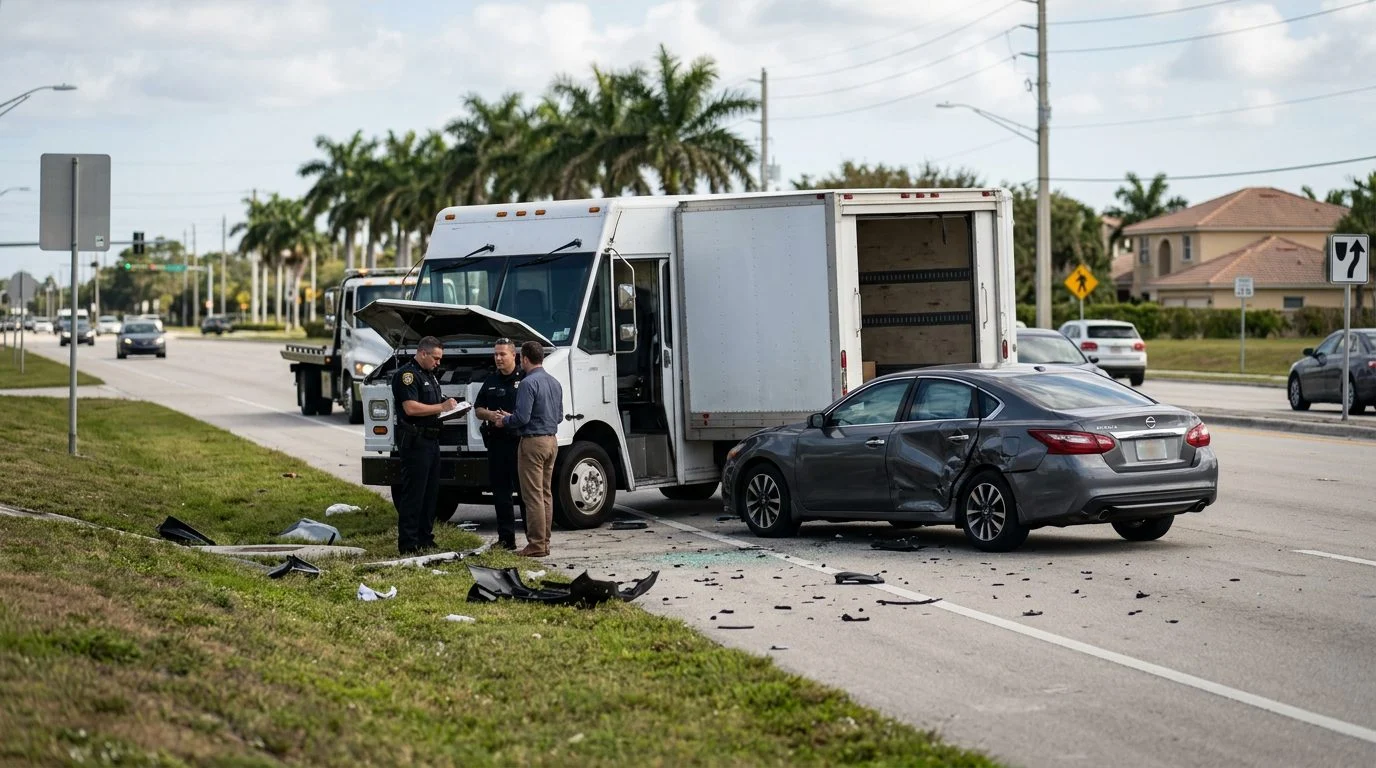
FedEx Truck Accidents | Serving Florida
FedEx Truck Accident: Should I Talk to the Adjuster?
A insurance representative may call within days of a crash, often sounding friendly and in a hurry. Here is how to protect yourself while you focus on getting better.
Why Florida Families Call CHG
Florida
Florida-based personal injury firm serving clients throughout the state
Licensed
Attorneys admitted to The Florida Bar
Free
Confidential first consultation with no obligation to continue
By CHG Lawyers · Published November 13, 2026
A FedEx insurance adjuster has called, and you’re still hurting from a crash with a FedEx truck. Before you speak with an insurance company after a crash, it helps to know what to say and what to hold back.
Florida’s deadlines and crash-report rules shape how you should respond when an insurance adjuster calls about your crash, and what you are generally expected to say. If a family member is taking these calls for you, the same advice applies. Feeling rushed or confused is a normal reaction, and you don’t have to sort it all out in one phone call.
Why a FedEx Insurance Adjuster Is Calling You So Soon
An adjuster calls because the insurance company covering the truck or its driver wants to resolve the claim. The adjuster works for that insurer, not for you. The company’s job is to protect its own money.
Calls often come within days of a crash. That timing can feel like pressure. Many people haven’t seen a doctor yet, or they don’t know whether the pain in their back or neck will last. An early call can arrive before anyone knows the full extent of an injury.
A call does not mean you did anything wrong. It means a claim has opened. Insurers contact the people involved in a crash, including people who were hit.
If you’re handling these calls for a parent, spouse, or child, you may be carrying the load alone. Write down the adjuster’s name, the company, and the callback number before you hang up. That simple step keeps the family’s records straight.
If an adjuster is calling while you're still healing, you don't have to sort out your options alone; reach out to CHG Personal Injury Lawyers for a free, confidential first consultation. Talk it through with our team — the first consultation is free, confidential, and carries no obligation.

Are You Required to Talk to the Adjuster?
You can confirm your name and contact details, describe the basic facts of the crash, and say that a lawyer will handle further questions.
A recorded statement can be used later. An adjuster may ask about your speed, where you were looking, or how you felt right after the crash. A few words taken out of context can be used to question your injuries or your version of events.
You can say you’re still getting medical evaluation and will follow up in writing. That answer is honest. It keeps the conversation open without locking you into details you don’t yet know.
You can also ask for information in writing. Florida law lets a claimant request a sworn statement from the liability insurer. It lists the insurer’s name, each insured, the coverage limits, and a copy of the policy. The insurer must provide it within 30 days of your written request, under Fla. Stat. § 627.4137.
What to Say and What to Avoid on the Phone
Stick to facts you know for certain: the date, the place, and what you saw and felt at the time. Short, accurate answers protect you better than long, guessed ones.
Avoid guessing. Don’t estimate speed or distance, and don’t say who was at fault. A guess can sound like a fact when someone quotes it back to you later.
Don’t say you’re fine or that you weren’t hurt. You may not know the full extent of an injury right away. Early statements can be used against your later account of how you feel.
Don’t sign medical authorizations, releases, or settlement papers before a lawyer reviews them. A signed release can end your ability to ask for more money later.
Don’t accept an early offer until you know the full extent of your injuries. A fast check may not cover future care, follow-up visits, or time away from work.
Keep a written log of every call. Record the adjuster’s name, the date and time, the phone number, and what was discussed. Ask for any follow-up in writing so you have a paper trail.
Which FedEx Company Insures the Truck: Express, Ground, or Freight
The FedEx operation behind the truck can affect who is responsible, so it helps to know which one it is.
FedEx does business under several names, including FedEx Express, FedEx Ground, and FedEx Freight. The logo, the truck’s markings, and the paperwork can point to which one is involved. Write down what you saw. Take a photo of the markings if it’s safe to do so.
Federal law directs regulations that require motor carriers to carry minimum levels of financial responsibility for public liability and property damage. Those rules are set under 49 U.S.C. § 31139.
The crash report is the next useful source. Under Fla. Stat. § 316.066, for a crash that resulted in death, personal injury, or any indication of complaints of pain or discomfort, or that involved a commercial motor vehicle, the officer’s Long Form report must be submitted to the department within 10 days after the investigation ends. It lists the insurance company for each party. Which operation is involved, and who is responsible, depends on the facts of your crash.
What Happens If You Don’t Report the Accident to Your Own Insurer?
You should tell your own auto insurer about the crash promptly. Late notice can cause problems with your own coverage.
Your own auto policy generally requires prompt notice of a crash. Delay can make it harder to get benefits you already pay for, and an insurer may raise late notice as a reason to limit a claim. Under Fla. Stat. § 627.736, personal injury protection (PIP) benefits paid under the section are overdue if not paid within 30 days after the insurer is furnished written notice of the fact of a covered loss and of the amount of the loss, and the section’s exclusions and conditions still apply, including the exclusion for being injured while committing a felony.
Reporting to your own insurer is not the same as giving a recorded statement to the other side. You can report the crash, your policy number, and your injuries without speaking to the other side’s adjuster.
Its traffic crash reports page covers these rules and how to get crash details.
Florida’s deadlines apply, so don’t wait to act on these steps.
What Happens If a FedEx Driver Hits Your Car?
Usually you make a claim against the at-fault driver’s insurer, and your own policy may also provide coverage.
Rear-end crashes are common with large trucks. Fault is decided by the facts, such as braking, following distance, and what witnesses and video show. Florida measures fault by percentages. Under Fla. Stat. § 768.81, in a negligence action, a court enters judgment against each liable party based on that party’s percentage of fault, not on joint and several liability.
Florida also has a modified comparative fault rule (Fla. Stat. § 768.81(6)). Under the same statute, any party found more than 50 percent at fault for his or her own harm may not recover any damages. Under Ch. 2023-15, Laws of Florida, the act applies to causes of action filed after its effective date, except as otherwise expressly provided in the act.
Under Florida law, an injured person who is not an insured under the at-fault driver’s policy cannot sue or join the driver’s liability insurer until first obtaining a settlement or verdict against the insured driver.
Florida’s dangerous instrumentality doctrine can make a vehicle’s owner liable when a driver the owner voluntarily entrusted with the vehicle causes injury. That can matter when the truck’s owner and its driver are different parties. See Aurbach v. Gallina.
Claims can include property damage, a rental car, medical bills, lost income, and future care. Keep every bill, photo, and repair estimate. These records show what the crash has cost you.
Not sure what your next step is?
Talk it through with our team — the first consultation is free, confidential, and carries no obligation.
Protecting Your Claim While You Decide What to Do
The most protective step is to get medical evaluation promptly and follow your doctors’ care. This page is general information, not medical advice.
Collect the crash report, photos of the scene and vehicles, witness names, and any dashcam or nearby camera footage. Video can be erased on a schedule, so ask for it early. Commercial truck data can also be lost if it isn’t preserved, so raise that early too.
Florida’s general negligence deadline is two years. Florida law requires that an action founded on negligence be commenced within two years. Under Ch. 2023-15, the amendments the act makes to s. 95.11, Florida Statutes, apply to causes of action accruing after the act’s effective date.
If a loved one died in the crash, the family may have a wrongful death claim. Florida lists wrongful death among the two-year actions in § 95.11, so the family should act promptly. Deadlines apply and vary by claim.
Frequently Asked Questions About Talking to a FedEx Adjuster
Should I talk to a FedEx insurance adjuster after a truck accident?
Before giving a recorded statement to an insurance company, it can help to speak with a lawyer first. Keep early calls brief, and don’t sign anything until a lawyer has reviewed it.
What should I say to an insurance adjuster?
Give your name and contact details, describe the basic facts, and say you’re still getting medical evaluation. Ask for any follow-up in writing.
What happens if I don’t tell my insurance company about the accident?
Late notice can cause problems with your own coverage. Report the crash promptly, as explained above.
What happens if a FedEx driver hits your car?
The claim usually goes to the at-fault driver’s insurer, and your own policy may also apply. Fault depends on the facts of the crash.
Can a lawyer handle the adjuster for me?
Yes. A lawyer can handle communications with the insurance adjuster on your behalf.

Talk With Our Team Before You Speak With the Adjuster Again
If an adjuster has called while you’re still in treatment, you may feel stuck between answering and waiting. A short conversation can help you decide what to say next and what to put in writing.
CHG Personal Injury Lawyers is a Florida-based firm that serves clients throughout Florida. Igor Hernandez is the responsible lawyer for this page. Our lawyers handle truck accident claims, including those involving FedEx trucks, and our team is ready to help you review your situation.
Our free, confidential first consultation comes with no obligation to continue. CHG charges no attorney’s fees and no case costs unless there is a recovery.
If an adjuster is calling while you heal, you don’t have to decide alone what to say. Contact CHG Personal Injury Lawyers for a free, confidential first consultation, and act promptly because Florida’s deadlines apply.
Important: Pause Before You Give a Recorded Statement
An adjuster may ask you to describe the crash on a recorded line, sometimes within hours. Your words can be used later to evaluate your claim. Before you agree, speak with a lawyer, and never sign a release or settlement paper without review.
Steps to Take When an Adjuster Calls
Take Down Their Details
Write down the adjuster's name, company, phone number, and claim number before ending any call.
Keep Early Calls Short
You can say you are not ready to discuss the crash and will follow up later. You do not have to answer every question on the spot.
Hold Off on Signing
Do not sign medical authorizations, releases, or settlement forms until a lawyer has reviewed them.
Document Your Injuries
Keep copies of medical records, bills, photos, and notes about how the injury affects your daily life, and follow your doctors' care.
How CHG Helps After a FedEx Truck Crash
Handling the Insurance Company
Our lawyers can communicate with the adjuster so you do not have to answer questions alone.
Reviewing the Paperwork
We review any forms, releases, or offers before you respond to them.
Focused on Your Family
We keep you informed in plain language, so you always know where your claim stands.
No Fees Unless There Is a Recovery
CHG charges no attorney's fees and no case costs unless there is a recovery.