
Florida Personal Injury Guide
What Evidence Shows Someone Else Was Entirely at Fault?
After a serious accident, the proof you gather early can shape how fault is understood. Here is how to think about it and where to start.
Serving injured people across Florida
Florida
Florida-based personal injury firm
Free
Confidential first consultation with no obligation
Licensed
Attorneys admitted to The Florida Bar
By CHG Lawyers · Published November 13, 2026
You were hurt in a crash with a delivery truck. Now the bills and insurance letters keep coming. Many people first ask whether they can prove the other side was entirely to blame.
The answer depends on how the injury happened. It also depends on how Florida law divides fault.
Proving 100% liability takes more than one document. You need a record that ties each step of the event to the other side’s conduct. You also need an honest look at your own part.
What “100% Liability” Really Asks
Full liability means the other side caused the incident. It means you contributed nothing.
Many cases do not fit that picture cleanly. So a more useful question is how fault is divided among everyone whose conduct played a role.
Florida law divides fault by percentage. In a negligence case, the court enters judgment against each liable party. The judgment is based on that party’s percentage of fault. It does not rely on joint and several liability, a rule that can make one party pay the full amount (§ 768.81).
Fault in an accident can sometimes be shared among several people or companies, and how it is divided can affect a case. Nonparties are people who are not in the lawsuit.
The same statute says a defendant who wants to blame a nonparty must plead it. “Plead” means formally state it in the court filing. To put that nonparty on the verdict form for apportioning damages, the defendant must also prove at trial, by a preponderance of the evidence, that nonparty’s fault in causing the plaintiff’s injuries. The standard is “preponderance of the evidence,” which means “more likely than not” (§ 768.81).
In a products liability case alleging that injuries were enhanced by a defective product, the trier of fact must consider the fault of all persons who contributed to the accident, so the evidence must account for each of them. That includes more than the driver or property owner in front of you.
Your own share matters. Florida law has a specific rule for impairment.
- At the time of the injury, the plaintiff was under the influence of alcohol or a drug to the extent that normal faculties were impaired. Or the plaintiff had a blood or breath alcohol level of 0.08 percent or higher.
“Trier of fact” means the judge or jury deciding the facts.
Your evidence should cover your own conduct too. That includes speed, signals, attention, and sobriety at the time.
No percentage can be promised. Outcomes depend on the facts of each case. For an overview of delivery-truck crash claims, see our FedEx truck accident guide.
Not sure what your next step is?
Talk it through with our team — the first consultation is free, confidential, and carries no obligation.
Evidence Organized by How the Injury Happened
Different injuries need different proof. The sections below group evidence by how the harm occurred.
Car and Truck Crashes
Start with the crash report. Request a copy early. Check the date, time, location, vehicles, and names for errors.
Then photograph:
- the vehicles where they came to rest
- skid marks
- the road surface
- the lighting
- traffic signs
Write down each witness’s name and phone number. Witnesses move on quickly.
Video can settle timing questions. Dashcam footage, nearby business video, and traffic camera recordings may show speed, signal timing, or distraction. Many recordings are overwritten on a schedule, so ask for them early. Phone records can show when calls or texts happened.
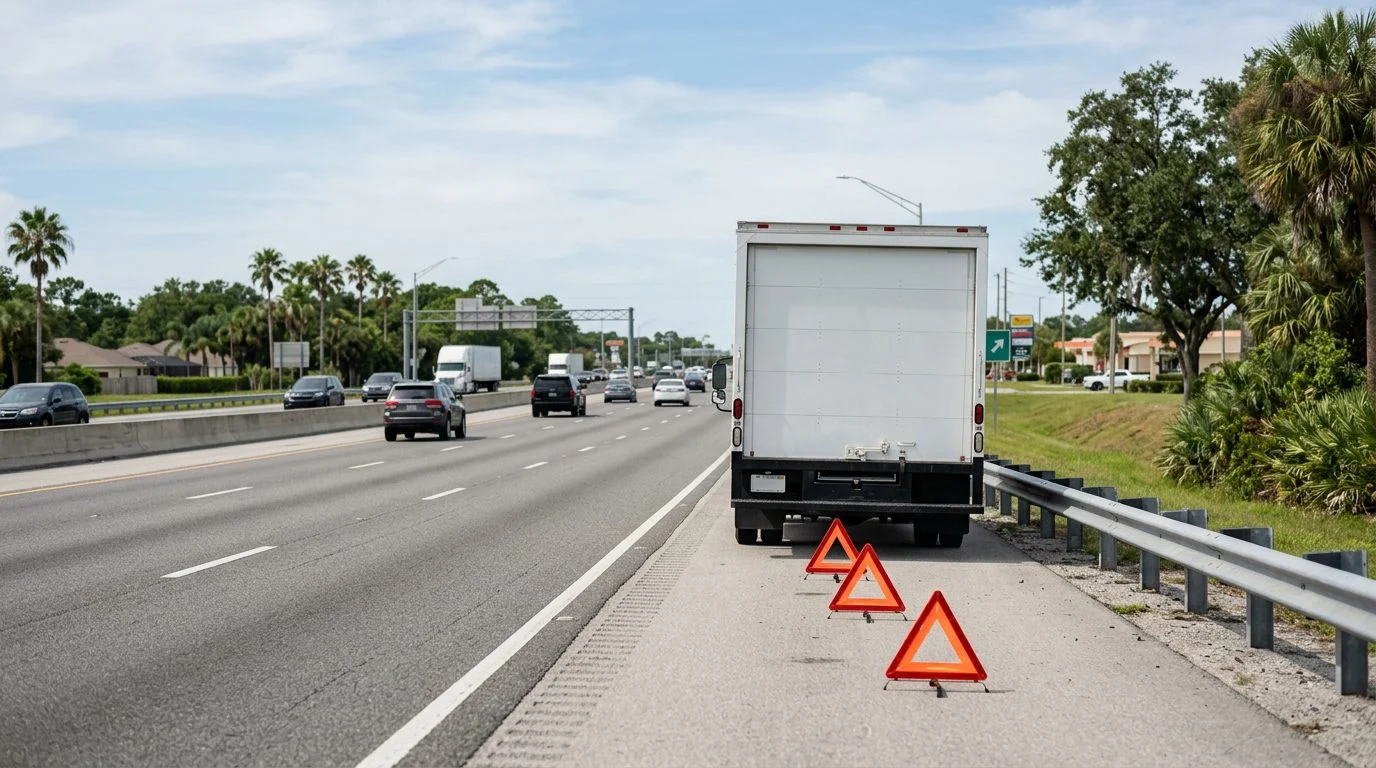
In a truck crash, the trucking company’s records matter most. Ask for driving time and duty status logs. These show whether the schedule was realistic.
Driver qualification and training files show what the company required before the driver hit the road. Many large trucks have onboard systems. These may record speed, braking, and throttle in the seconds before a crash.
Dispatch messages, delivery schedules, and route information can show time pressure on the driver.
Send a written preservation request as soon as possible. This is a written demand that the company keep its records. Company records are not kept forever.
Slip and Fall
In a Florida slip-and-fall case involving a temporary substance in a business, the injured person must prove two things:
- For a slip and fall on a transitory foreign substance in a business establishment, the injured person must prove the business had actual or constructive knowledge of the dangerous condition. “Actual knowledge” means the business knew. “Constructive knowledge” may be shown by circumstantial evidence, such as the condition lasting long enough that the business should have known of it, or the condition occurring with regularity.
- The business should have acted to fix it.
Constructive knowledge can be shown with circumstantial evidence. This is indirect proof. For example, the condition may have existed long enough that the business should have found it. Or the condition may have happened so often that it was foreseeable, meaning the danger could have been expected (§ 768.0755).
That makes timing evidence critical. Photograph the spot right away. Include any puddle, residue, or hazard, and what surrounds it.
Note the time of day. Write down who was nearby, including employees.
Ask for store cleaning and inspection logs, incident reports, and video. Prior falls at the same spot can show the condition was foreseeable.
Negligent Security
If someone attacked, shot, robbed, or assaulted you on another person’s property, you may have a claim. The property could be an apartment complex, parking garage, hotel, bar, gas station, or store. The attack may have happened because the owner did not provide reasonable protection. In legal terms, this kind of claim is often called a negligent security claim.
Florida sorts people on property into categories. Invitees, meaning people the owner invites onto the property, are owed the highest duty. That duty is reasonable care (Ruiz v. Wendy’s Trucking, LLC).
Proof usually centers on the security the owner did or did not provide. Useful evidence includes:
- whether lights were working
- whether gates and locks functioned
- what camera coverage existed, and whether footage was saved
- whether guards were posted
Maintenance requests about broken locks or lights can show what the owner knew. So can police call records for the property.
Wrongful Death
After a fatal crash or injury, families face a loss and a lot of paperwork at once. The records described above still apply. These include the crash report, photos, witness information, and any video.
Keep copies of everything. It can also help to write down, in your own words, who your loved one was. Note the role they played in your family’s daily life.
Our firm approaches these cases with the family in mind. Deadlines apply, so the most helpful step is to speak with our office promptly. We can explain what the next steps look like for your family.
Medical Evidence That Links the Injury to the Crash
Medical records that tie the injury to the event are the core proof of damages. “Damages” means the money losses and harm caused by the injury.
Proving the event caused the injury is a separate task from proving fault. You need both.
Key records include:
- emergency room and urgent care notes
- X-rays and MRIs
- specialist and therapy notes
- prescriptions
A treatment timeline that matches what you describe makes the connection easier to follow.
Follow your doctors’ care. Your health comes first. Treatment should not wait on a legal question.
Gaps in care give the other side room to argue the injury came from something else. Keep bills, pay stubs, and a simple log. The log should show how the injury affects work and home life.
How Insurers and Courts Decide Fault
Insurers look at the crash report, recorded statements, damage patterns, photos, vehicle data, and medical records. Each piece can point toward one party or another.
Adjusters often make early fault calls before all records arrive. A first offer is not a final assessment of your claim.
Request coverage information in writing and keep a copy of your request. Be careful with recorded statements. Do not sign a release, a document that gives up your right to sue, until you understand what it says.
Keep a written log of every call. Include the date, the caller’s name, and what was said.
Mistakes That Weaken Proof
The most common problems include:
- delayed medical care
- social media posts about the event or your activities
- lost phones or photos
- repaired or discarded vehicles
- deleted messages
Each one gives the other side an opening.
Preserve evidence early. Deadlines apply to injury claims in Florida. Missing one can end a claim, so securing evidence sooner is better.
Keep one folder with the crash report number, photos, bills, witness names and numbers, and copies of every letter.
Key Takeaways
Proving 100% liability means showing two things. First, the other side’s conduct caused the injury. Second, your own share of fault was zero.
In a negligence action, Florida divides fault by percentage among liable parties, and the court enters judgment against each party on the basis of that party’s percentage of fault. Fault can be assigned to nonparties if it is pleaded and proven (§ 768.81).
The key evidence falls into four groups:
- scene and property evidence
- company or owner records
- medical proof
- insurer disclosures
The right mix depends on how the injury happened.
Igor Hernandez is the responsible lawyer for this page at CHG Personal Injury Lawyers, a Florida-based personal injury firm. Our team serves clients throughout Florida.
Not sure what your next step is?
Talk it through with our team — the first consultation is free, confidential, and carries no obligation.
Talk With CHG Personal Injury Lawyers About Your Case
If you are collecting police reports, medical bills, and insurance letters while caring for someone, that is a lot to carry at once.
Our initial consultation is free, confidential, and comes with no obligation to continue. You can ask how the evidence in your case would be gathered and preserved.
CHG charges no attorney’s fees and no case costs unless there is a recovery.
Contact CHG Personal Injury Lawyers to talk through the evidence in your case.

Frequently Asked Questions
What does “100% liability” mean in a personal injury case?
It means the other party caused the incident, and none of the fault belongs to the injured person. Few cases are this clear-cut. So evidence is often needed to show how fault is divided.
What evidence helps show that someone else was entirely at fault?
The useful evidence depends on the type of case. It can include:
- the crash or police report
- photos and video of the scene
- dash-cam or surveillance footage
- witness information
- medical records that link the injuries to the event
- maintenance, inspection, or company records
Does a police report prove who was at fault?
No. A police report is important evidence, but it is not final proof of fault. The other side can dispute its conclusions. Other evidence can support or challenge what the report says.
How does Florida’s fault rule affect a claim where I may share some blame?
In a negligence action under Florida’s comparative fault statute, your own share of fault reduces your award proportionately, and if you are found more than 50 percent at fault for your own harm you may not recover any damages, although this bar does not apply to personal injury or wrongful death claims arising out of medical negligence under chapter 766; the court enters judgment against each liable party based on that party’s percentage of fault (§ 768.81). The judgment is based on that party’s percentage of fault (§ 768.81).
Every case is different. Contact our office for a free, confidential, no-obligation consultation. We can review the facts of your situation.
Why Strong Evidence Matters
Facts Are Recorded Early
Scenes change quickly. Photos, reports, and statements gathered soon after an accident help preserve what happened.
Fault Is Shown, Not Assumed
Insurers and opposing parties often dispute who was responsible. Clear documentation helps replace guesswork with facts.
Injuries Are Documented
Medical records connect the accident to the harm it caused, which matters for both recovery and the family's future.
Families Are Not Left Alone
Our team helps injured people and their loved ones organize records and understand each step of the process.
Act Promptly
Keep every record you have, and contact the firm promptly so the facts can be preserved.
Evidence That Often Matters Most
Photos and Video
Images of the scene, vehicles, road conditions, lighting, and visible injuries can capture details that memory later loses.
Police and Crash Reports
Official reports record the officers' observations, parties involved, and initial findings about how the incident occurred.
Witness Statements
Statements from people who saw what happened can confirm the sequence of events and point to who acted carefully.
Medical Records
Treatment records, imaging, and doctors' notes document the injuries and link them to the incident. Follow your doctors' care at all times.
Surveillance and Business Records
Security footage, maintenance logs, and inspection records can show what was done, or not done, before an incident.
Reconstruction Analysis
In some cases, accident reconstruction professionals review the physical evidence and explain how the incident most likely unfolded.