
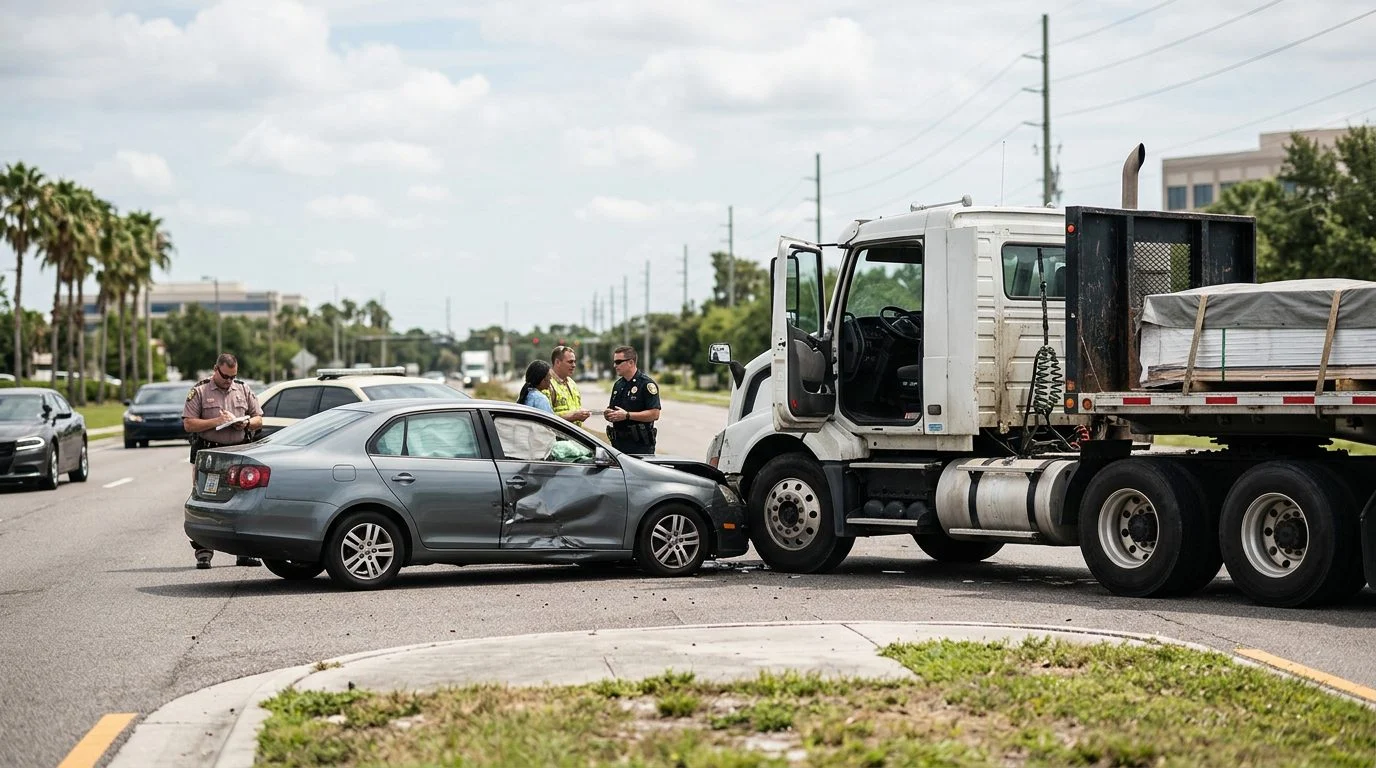
Tampa | Semi Truck Accidents | Florida
Hurt in a Semi Truck Crash in Tampa? Protect Your Claim From the Start
Trucking companies move quickly after a crash, often with their own lawyers, adjusters and records. Here is how to protect your position while you focus on getting better.
Why Florida Families Call CHG
Florida
Florida-based firm serving Tampa and communities throughout Florida
Licensed
Attorneys admitted to The Florida Bar
Free
Confidential first consultation with no obligation to continue
No Fees
No attorney's fees or case costs unless there is a recovery
By CHG Lawyers · Published November 13, 2026
Many people who search for a Tampa semi truck accident lawyer start with one question: do I have a claim at all? In short, people hurt in a truck crash in Florida may be able to bring a claim against the parties responsible. The facts of the crash decide the rest.
This guide explains what a claim can cover. It also explains why truck cases differ from ordinary car accidents, which evidence matters most, and which Florida deadlines apply.
Hurt in a Crash With a Semi or Delivery Truck? Start Here
A truck crash claim asks the people and companies responsible for your harm to pay for it. Semi-trucks, tractor-trailers, big rigs, and delivery vans can all fall under this kind of claim.
This page is written for:
- Injured drivers and passengers
- Bicyclists and motorists struck by a large truck
- Family members of someone who was killed
Many readers are going through this between medical appointments. Others are acting for a parent, spouse, or friend. You don’t need legal training to follow this guide.
CHG Personal Injury Lawyers is a Florida-based firm. We handle personal-injury cases of every severity. That includes everyday crashes and catastrophic or fatal ones. The sections below cover the basics in order, so you can jump to the question on your mind.
If a truck crash has left you or your family dealing with medical bills, missed work, or an insurance claim you don't understand, we can talk through what it could mean for you. The call is free and comes with no obligation. Talk it through with our team — the first consultation is free, confidential, and carries no obligation.

What a Truck Crash Claim Can Cover
A truck crash claim can seek payment for losses you already have. It can also seek payment for losses you will face later. The amounts depend on your injuries, your work, and your family’s situation. Common losses include:
- Medical costs: emergency care, surgery, hospital stays, rehabilitation, and future treatment your doctors say you need.
- Lost wages: pay you missed, and any drop in your ability to earn in the future.
- Pain and suffering: physical pain, emotional distress, and loss of the activities you enjoyed.
- Property damage: vehicle repair or replacement, and out-of-pocket costs tied to the crash.
Catastrophic injuries change the picture. Spinal cord injuries, paralysis, traumatic brain injuries, amputations, and severe burns can require lifelong care. They may also require home changes and adaptive equipment (devices that help with daily tasks). Planning for these future needs takes care. It helps to record them early.
Florida’s wrongful-death rules are explained below.
Why Truck Crashes Involve More Parties
A truck crash often involves several parties. More than one may share responsibility.
- The driver, whose actions behind the wheel may be at issue.
- The trucking or delivery company that employs or dispatches the driver.
- The vehicle owner. Florida’s dangerous instrumentality doctrine (a legal rule holding some vehicle owners responsible for others’ driving) can make an owner who voluntarily lets someone else drive strictly and vicariously liable for that person’s negligent driving. Adopted in 1920, Florida’s dangerous instrumentality doctrine imposes strict vicarious liability upon the owner of a motor vehicle who voluntarily entrusts that motor vehicle to an individual whose negligent operation causes damage to another, as described in Aurbach v. Gallina.
- Contractors or maintenance providers, depending on the facts.
Federal safety rules apply to commercial trucks. The Federal Motor Carrier Safety Administration (FMCSA) sets rules on driver hours, vehicle maintenance, and driver qualifications. These rules create records. Those records often become key evidence.
Delivery trucks, including FedEx and Amazon vehicles, may be driven by contracted drivers. Who is named in a claim depends on three things. Who employed the driver, who owned the vehicle, and the other facts of the crash all matter.
Trucking insurers often contact injured people quickly. Their adjusters (insurance claim workers) work for the trucking side, not for you.
Evidence That Can Disappear Quickly, and First Steps
The most useful evidence in a truck case is often held by the trucking company. Companies keep records on set schedules. That is why early requests matter.
- Electronic logging device (ELD) records. Carriers must use ELDs to record a driver’s duty status, except that they may require manual records where an exception applies, such as on not more than 8 days within any 30-day period. No one may tamper with them so they fail to record required data, per 49 C.F.R. § 395.8.
- Hours-of-service limits. A driver may not drive after 14 consecutive hours on duty that follow 10 consecutive hours off. The driver may drive a total of 11 hours in that period, per 49 C.F.R. § 395.3.
- Maintenance and inspection records. Carriers must keep them for 1 year where the vehicle is housed or maintained. They must keep them for 6 months after the vehicle leaves their control, per 49 C.F.R. § 396.3.
- Driver qualification files. These are kept while the driver is employed and for three years after, except that certain records, such as medical examiner certificates and annual review notes, may be removed three years after their execution, per 49 C.F.R. § 391.51.
- Truck data and video. Dash-camera footage, event data recorders (the truck’s “black box”), and telematics (GPS and vehicle tracking systems) can show speed, braking, and location.
- Scene evidence. Photos of vehicle damage and road conditions help. So do nearby cameras and witness names.
Get medical care and follow your doctors’ care. Keep every appointment, bill, and receipt. Write down what you remember while it’s fresh. Be careful with recorded statements and quick settlement offers. Keep a written record of every call.
How a Truck Crash Claim Typically Unfolds
Most truck claims move through the same stages. They start with the first call. They may end in negotiation or, if needed, a lawsuit.
- Initial consultation. You share what happened. The team reviews who may be involved and what options exist.
- Preserve evidence. Letters can ask trucking companies to keep logs, footage, and maintenance records.
- Investigate. This may include accident reconstruction professionals and a review of the truck’s data.
- Document losses. Medical records and treating doctors’ notes help show current and future needs.
- Negotiate. A demand package presents the claim to the insurer.
- File suit if needed. If a fair resolution isn’t reached, the case may be filed in the proper Florida court. Many claims resolve before trial.
Timelines vary. A claim with a clear record and steady recovery can move differently. A catastrophic case that needs years of follow-up care may take longer.
Florida Deadlines and Fault Rules That Shape Your Claim
In Florida, a lawsuit based on negligence (carelessness that causes harm) generally must be started within two years. Wrongful-death actions are also on the two-year list in that statute. Before that change, the statute listed an action founded on negligence among the actions that had to be brought within two years.
Deadlines apply, and waiting can cost you options. Contact a lawyer promptly, even while you’re still deciding what to do.
Florida also uses comparative fault (shared fault). Under Fla. Stat. § 768.81, a person found more than 50 percent at fault for their own harm may not recover any damages in a negligence action, except personal injury or wrongful death actions arising out of medical negligence under chapter 766. Your share of fault matters. That is why the facts of the crash need a careful review.
Not sure what your next step is?
Talk it through with our team — the first consultation is free, confidential, and carries no obligation.
Why CHG Personal Injury Lawyers Handles These Cases
CHG Personal Injury Lawyers is a Florida-based personal-injury firm. We serve people throughout Florida, including the Tampa area.
- Licensed attorneys. Our attorneys are licensed and admitted to The Florida Bar. Igor Hernandez is the responsible lawyer for this page.
- Case types. The firm’s practice focuses on car and truck crashes, FedEx and Amazon truck accidents, catastrophic injury claims, and wrongful death.
- Every severity. We handle personal-injury cases, from everyday crashes to catastrophic and fatal ones.
- Language. The firm publishes educational content in English and Spanish.
- First step. The first consultation is free and confidential. It comes with no obligation to continue.

Frequently Asked Questions About Semi-Truck Crash Claims
Can you sue if a semi truck hits you in Florida?
Often, yes. Injured people may bring claims against the parties responsible. Whether you have one depends on the facts.
What should I avoid saying to an insurer?
Stick to facts you know. Avoid guessing about speed, fault, or injuries. Talk with a lawyer before you give a recorded statement to a trucking insurer.
How much does a lawyer take from a truck accident settlement?
CHG charges no attorney’s fees and no case costs unless there is a recovery. Your fee terms are explained at your free, confidential consultation.
Do you handle FedEx or Amazon truck accidents?
Yes, the firm handles those case types. The responsible parties depend on who employed the driver and who owned the vehicle.
How long do I have to file?
Florida’s general negligence deadline is two years under Fla. Stat. § 95.11. Deadlines apply, so contact the firm promptly.
What if the crash caused a death?
The decedent’s personal representative (the person legally authorized to act for the person who died) brings the wrongful-death action. The action is for the survivors and the estate, under Fla. Stat. § 768.20. Florida law lets eligible family members seek losses such as lost support and mental pain and suffering, under Fla. Stat. § 768.21.
If you’re still sorting out what happened after a truck crash, you don’t have to do it alone. Reach CHG Personal Injury Lawyers through our contact page for a free, confidential consultation.
What Sets a Semi Truck Crash Apart
Larger Vehicles, Larger Harm
The weight and size of a commercial truck often lead to more serious injuries, even in crashes that seem minor at first.
Records That Disappear
Driver logs, maintenance files, dashcam footage and electronic data can be overwritten or lost if they are not requested in time.
Several Parties Involved
A driver, a carrier, a cargo company or a vehicle maker may each play a role, and each may have its own insurer.
Care Comes First
Your health matters most. Follow your doctors' care and keep every record, bill and note about your recovery.
No Fees Unless There Is a Recovery
CHG charges no attorney's fees and no case costs unless there is a recovery, so you can ask your questions without added worry.
Be Careful With the Trucking Company's Insurer
Stick to facts you know. Avoid guessing about speed, fault, or injuries. Talk with a lawyer before you give a recorded statement to a trucking insurer.
Steps to Take After a Tampa Semi Truck Crash
Get Medical Care
See a doctor as soon as you can, even if you feel you have only minor pain. Keep every appointment and follow your doctors' care.
Document the Scene
If it is safe, take photos, note the truck's company name and number, and write down names and contact details for any witnesses.
Preserve Evidence
Trucking companies may keep logs, dashcam footage and maintenance records. A lawyer can help request and protect this evidence promptly.
Talk With a Lawyer
A free, confidential consultation can help you understand your situation. There is no obligation to continue after the first conversation.