

Truck Accidents | Serving Florida
When a Truck Crash Leaves You Paralyzed, Your Family Deserves Answers
CHG Personal Injury Lawyers helps Florida families facing paraplegia and quadriplegia after commercial truck collisions understand their options and pursue the compensation their lives now require.
By CHG Lawyers · Published November 3, 2026
A traumatic brain injury (TBI) is damage to the brain. It can happen from a hard blow or a violent jolt. It can also happen when an object breaks through the skull.
After a truck crash, a brain injury can be serious. This is true even when the person seems alert at the scene.
This page is for families who are looking for help with a quadriplegia or paraplegia injury from a truck accident. It explains what a brain injury means. It shows how a brain injury can overlap with paraplegia and quadriplegia. It also covers who may be responsible and what a claim can include in Florida.
This is general information, not medical advice. Please follow the care your doctors recommend.
What a Traumatic Brain Injury Means After a Truck Crash
A traumatic brain injury happens when crash forces move or strike the head. The force can hurt the brain.
Injuries range from mild concussions to severe injuries. Severe injuries can change how a person thinks, moves, and feels.
Commercial trucks are much heavier than passenger cars. A loaded 18-wheeler carries large force into a collision.
Rollovers, jackknifes, and underride crashes can all cause head injuries. (A jackknife is when the trailer swings around and folds toward the cab. In an underride crash, a car slides beneath a trailer.)
Families often notice changes first. Common signs include:
- Headaches that do not fade
- Memory and focus problems
- Mood swings, irritability, or anxiety
- Sleep changes or dizziness
Some symptoms appear days or weeks after the crash. A person who seemed fine at the scene can still be hurt.
Tell the treating doctors about any change. Then follow their care.
If you are at a bedside or reading discharge papers, you do not have to sort out the next steps alone. Talk it through with our team — the first consultation is free, confidential, and carries no obligation.

Quadriplegia and Paraplegia Injury From a Truck Accident: When Brain and Spinal Cord Injuries Happen Together
A severe truck crash can injure both the brain and the spinal cord. Each injury needs its own care and its own planning.
Paraplegia means paralysis (loss of movement) of the legs and lower body. Quadriplegia, also called tetraplegia, means paralysis that affects the arms, legs, and torso.
Both come from damage to the spinal cord. The spinal cord is separate from the brain.
When injuries overlap, a claim can account for all of them. That includes the brain injury, the spinal cord injury, and the long-term care each one may need.
To learn more, read our spinal cord injury overview.
Who Can Be Held Responsible for a Quadriplegia and Paraplegia Injury From a Truck Accident?
More than one person or company can share responsibility. It depends on the facts.
Every accident case turns on its own facts. The next step is a conversation with our team. We can review how the details of your situation may apply. When a failure causes harm, the person or company may be responsible.
Possible responsible parties include:
- The truck driver
- The trucking company that employs the driver
- A contracted carrier or subcontractor
- Companies that load cargo or maintain the truck
- A parts maker, if a defect played a role
Delivery trucks, including Amazon and FedEx contracted vehicles, often involve several companies. Identifying each one early matters. Each may hold insurance and records.
Florida divides fault by percentage. If the injured person shares some blame, that share reduces the amount they can recover. It does not automatically block recovery. The 50 percent rule still applies to negligence actions to which the statute applies: a person found greater than 50 percent at fault for their own harm may not recover any damages, except for personal injury or wrongful death arising out of medical negligence under chapter 766.
Federal law can also matter.
Crashes involving government vehicles or roads can follow different procedures. Tell the firm early.
Building a Brain Injury Claim: Evidence and Timing
A strong claim rests on early, consistent records of the crash and the injury. Brain injuries do not always show up on standard scans. That is why the record matters.
Doctors’ notes, imaging (pictures of the inside of the body), and neurological and neuropsychological testing (tests of brain function and thinking skills) all help show the injury. A steady log of symptoms also carries weight.
Helpful evidence includes:
- Emergency, hospital, and follow-up medical records
- Imaging and testing results
- Work attendance and pay records
- Photos of the scene and vehicles
- Family notes on daily changes
Federal rules shape which trucking records exist. These rules limit how long commercial drivers may work. For example, a driver of a property-carrying commercial motor vehicle may not drive after a period of 14 consecutive hours after coming on duty following 10 consecutive hours off duty (49 CFR 395.3).
After certain truck crashes, the employer must test the driver for alcohol; if that alcohol test is not given within two hours of the accident, the employer must keep a record of the reasons (49 CFR 382.303).
Dashcam video and electronic logs are often digital. Ask early that they be preserved.
Losses a Brain Injury Claim May Cover
A claim may seek money for medical costs, lost income, and everyday changes the injury causes. Losses vary from person to person.
Possible categories include:
- Past medical bills and future care, such as rehabilitation, cognitive therapy, medications, and follow-up visits
- Lost wages now, and lost ability to earn later if work becomes limited
- Help at home, transportation to appointments, and changes to a home or vehicle
- Emotional distress and the loss of activities and relationships
A wrongful death claim is a case brought by family members after a death. Families who face this loss can talk with our team about what may apply.
Grieving families do not have to face these questions alone.
How the Process Works in Florida
The process usually starts with a free consultation. It then moves through investigation, medical documentation, settlement talks, and, if needed, a lawsuit.
- Free, confidential consultation. You describe what happened and the medical care received so far. There is no obligation to continue.
- Investigation and evidence preservation. The firm can send letters asking that trucking records, video, and maintenance files be kept.
- Medical documentation. Your treating doctors decide your course of care. Records are gathered to show the injury and its effects.
- Settlement talks or a lawsuit. Negotiations can take time. If a fair resolution is not reached, a lawsuit may be filed.
Florida sets time limits for filing injury lawsuits. The limits can vary by type of claim (Fla. Stat. § 95.11).
Missing a deadline can end a claim. Contact the firm promptly.
CHG charges no attorney’s fees and no case costs unless there is a recovery.
Not sure what your next step is?
Talk it through with our team — the first consultation is free, confidential, and carries no obligation.
Why Choose CHG Personal Injury Lawyers
CHG Personal Injury Lawyers is a Florida-based firm. It serves people throughout Florida, including Miami, Orlando, Tampa, and Jacksonville.
- Our attorneys are licensed and admitted to The Florida Bar.
- Igor Hernandez is the responsible attorney for this page.
- The firm focuses on truck accidents and catastrophic injuries. These include brain injuries, spinal cord injuries, paralysis, and wrongful death.
- The firm also handles personal injury cases of every severity.
- We publish educational content in English and Spanish. Spanish-speaking families can read these guides in their own language.
Frequently Asked Questions
Can I still file if my symptoms started weeks after the crash?
Some brain injury symptoms appear days or weeks later. Florida’s filing deadlines still apply. Contact the firm promptly.
What if I was partly at fault?
Florida divides fault by percentage. In a negligence action, your share of fault reduces what you recover. If you are found more than 50 percent at fault for your own harm, you may not recover any damages. An exception applies to personal injury or wrongful death cases arising out of medical negligence under chapter 766 (Fla. Stat. § 768.81). Describe the whole event at your consultation.
Do I have to go to court?
Many claims are resolved through settlement talks. If a fair resolution is not reached, a lawsuit may be needed. The firm talks through your options before any decision.
Can a family member contact the firm for a loved one who cannot make decisions?
Yes. A family member may reach out on the injured person’s behalf. The consultation is confidential.
What does the free consultation involve?
It is a free, confidential first conversation. You talk about what happened and your medical care. There is no obligation to continue.
Talk With Our Team About Your Situation
Talking through a truck crash claim is a sensible step when a loved one is hurt. The road ahead can feel unclear.
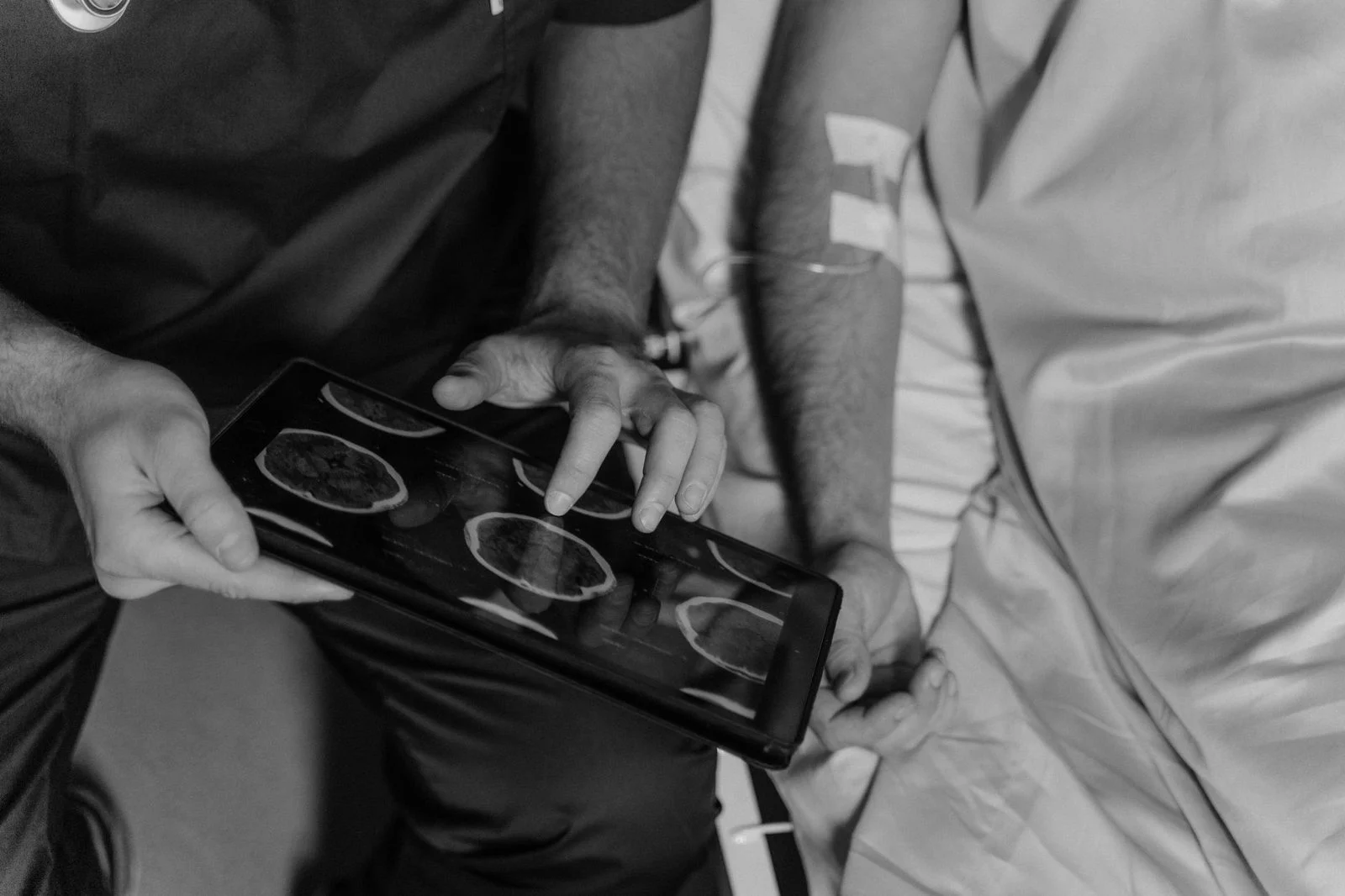
If you are at a bedside or reading discharge papers, you do not have to sort out the next steps alone. Our team can talk through what happened, the care received so far, and what comes next in Florida.
Start with a free, confidential consultation, with no obligation to continue.
Understanding Paraplegia and Quadriplegia After a Truck Crash
What Paraplegia Means
Paraplegia generally refers to paralysis affecting the lower body, including the legs and often the trunk. How it affects a person depends on where the spinal cord was injured.
What Quadriplegia Means
Quadriplegia, also called tetraplegia, generally refers to paralysis affecting all four limbs. It usually results from an injury higher in the spinal cord, in the neck.
Why Truck Crashes Are So Serious
The size and weight of commercial trucks mean a collision can transfer tremendous force to the people in smaller vehicles, even at moderate speeds.
Needs That Can Last a Lifetime
Injuries like these can require ongoing medical care, adapted equipment, home modifications and daily support for the whole family.
How We Can Help Your Family
Thorough Investigation
We look into the trucking company, the driver, maintenance records and other factors behind the collision.
Plain-Language Guidance
We explain each step in clear terms so you can make decisions with your family, not feel lost in paperwork.
Focus on Recovery
We work to keep the legal process from pulling your attention away from rehabilitation and time with loved ones.
Support for the Whole Family
Spouses, parents and children all feel the impact of a catastrophic injury. We listen to everyone affected.
No Fees Unless There Is a Recovery
CHG charges no attorney's fees and no case costs unless there is a recovery.
Important: Protect Your Medical Care and Records
Spinal cord and brain injuries can change quickly. Follow your doctors' care, keep records of treatment, bills and time missed from work, and speak with an attorney before giving a recorded statement to an insurance company.