

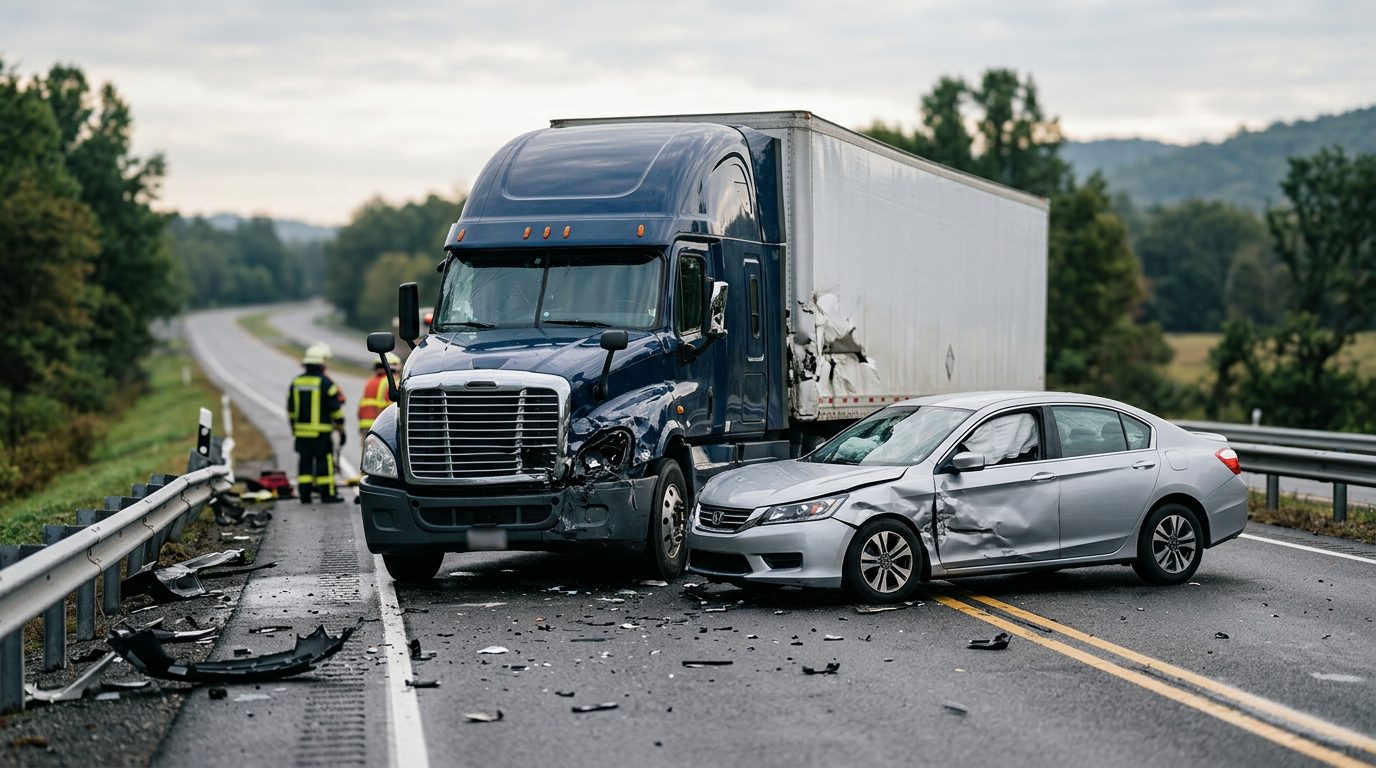
Truck Accident Wrongful Death · Florida & Nationwide
When a Truck Crash Takes the Person You Love
A commercial truck can weigh 20 times more than a passenger car. When a crash is fatal, your family is left with grief, questions, and pressure to make decisions no one should have to make alone. CHG Personal Injury Lawyers stands with families after catastrophic and fatal truck collisions.
Standing With Families After the Unthinkable
Nationwide
Cases handled across the U.S.
Florida Bar
Licensed, admitted attorneys
Catastrophic
Our sole focus is serious injury & loss
Bilingual
English & Spanish resources
By CHG Lawyers · Published August 17, 2026
Truck Accident Wrongful Death Claims: A Guide for Grieving Families
Did your family lose someone in a crash with a commercial truck? You are living through one of the hardest weeks of your life. This page is not a sales pitch. It is not here to shock you with billboard numbers. It exists to answer the questions families ask us most. We use plain language, so you can make a clear decision when you are ready.
A wrongful death claim is a civil case brought for the survivors. At its core, it does two things. It holds the responsible party accountable. And it seeks money for the people the person who died supported and loved.
Not sure what your next step is?
Talk it through with our team — the first consultation is free, confidential, and carries no obligation.
First, if you’re in shock, that’s normal
Right now you may be planning a funeral. You may be calling family. You are facing questions you never expected. Legal deadlines feel impossible to think about. And they should not be your first concern this week.
Here is the one thing worth knowing early. Some evidence in a truck crash disappears fast. And some legal deadlines are firm. You do not have to decide anything today. But a short, free talk can protect your options while you focus on your family. There is no obligation. We handle these cases on a contingency fee. That means you pay no attorney’s fee unless we recover money for you.
This page covers crashes with semi-trucks, 18-wheelers, and box trucks. It also covers delivery vehicles, dump trucks, and other large commercial vehicles. This is general guidance, not legal advice about your case. Only a lawyer who reviews your facts can advise you properly.
Why we won’t quote you an “average settlement” or your “odds of winning”
These are two of the most-searched questions grieving families ask. You deserve an honest answer instead of a marketing number.
We will not give you an “average settlement” figure. There is no honest one. A claim’s value turns on the specific facts of your loved one’s life. That includes their age, their earning history, and how many people depended on them. It also includes the medical and funeral costs, and the closeness of the family bonds lost.
A widely quoted “average” mixes very different cases together. It might lump a minimum-coverage crash in with a huge multi-vehicle wreck. Those two cases have nothing in common. Repeating that average would tell you nothing true about your family. It could also set a false hope you would later regret.
We also will not promise “odds of winning.” Florida Bar advertising rules bar lawyers from making unverifiable predictions of results. There is a good reason for this. No one can honestly forecast a jury or an insurer before the evidence is in. Any firm that hands a grieving family a percentage is selling certainty that does not exist.
Here is what we can do. Once we understand your case, we can explain the types of loss the law recognizes. We can also explain the real factors that affect value. That is the honest version of the answer.
Who can file a truck accident wrongful death claim in Florida
Florida does not let survivors sue on their own, one by one. Under the Florida Wrongful Death Act (Fla. Stat. §§ 768.16–768.26), one personal representative brings the claim. This person acts for the estate and all eligible survivors.
The personal representative is usually the executor named in a will. If there is no will, the probate court appoints someone. This surprises many families. There is a single, court-recognized point person, not a free-for-all.
Under Fla. Stat. § 768.18, the survivors who may recover generally include:
- The surviving spouse
- Children (and adult children in some cases)
- Parents (including of an adult child in some cases)
- Certain blood relatives and adoptive siblings who depended on the person for support or services
A key note for families outside Florida: we take cases nationwide, and these rules are not the same everywhere. Who may serve as personal representative changes from state to state. So does which survivors are eligible, and how damages are grouped. The state where the crash happened usually controls. If you’re unsure whether your family can file, ask. Many families assume they don’t qualify when they actually do.
What a wrongful death claim can recover
Florida law separates what the survivors may recover from what the estate may recover:
- Survivors’ losses — lost support and services the person provided. This also covers loss of companionship, guidance, and protection, plus the survivors’ mental pain and suffering. A surviving spouse, minor children, and (in some cases) parents may claim these.
- Estate losses — lost earnings and savings the estate would have received. This also covers medical and funeral costs paid by the estate or a survivor.
The real driver of value is the individual facts. What did your loved one earn, and what would they have earned? Who relied on them? How deep were the relationships that ended? That is exactly why a blanket “average” is meaningless.
Have questions about what happened?
Ask our team directly. The first conversation is free, confidential, and there is no obligation to continue.
This crash sits within a larger catastrophic-injury reality
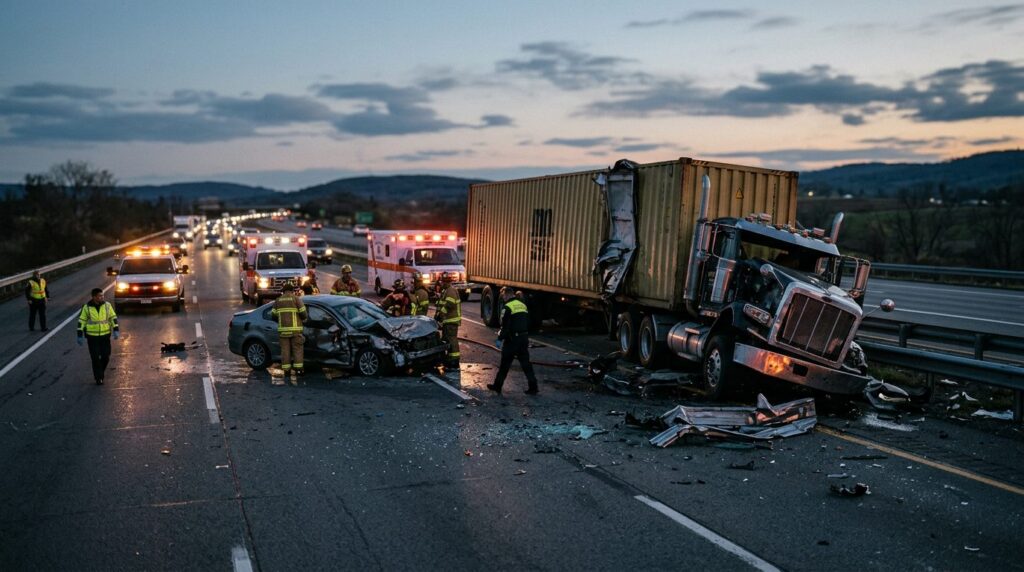
A fatal truck crash is the worst outcome of one type of collision. That same type also leaves survivors with life-altering spinal cord injuries, brain injuries, and amputations. The physics are unforgiving. A loaded combination truck can weigh up to 80,000 pounds under federal limits. That is about 20 times a typical passenger car.
Federal data documents the scale of this risk, not us:
- The National Highway Traffic Safety Administration runs the Fatality Analysis Reporting System (FARS). It records U.S. traffic deaths and is the authoritative public dataset on fatal crashes. You can view it at NHTSA’s FARS portal.
- The Federal Motor Carrier Safety Administration (FMCSA) publishes large-truck crash statistics. It also enforces the safety rules discussed below. See its Large Truck and Bus Crash Facts series.
We cite these so you can check the scope of the problem yourself. We do not cite them as somewhere to send your case.
Who may be responsible, and who actually pays
In a fatal truck crash, more than the driver is often at fault:
- The trucking company (motor carrier) that hired or dispatched the driver
- The truck or trailer owner, if different from the carrier
- A maintenance contractor who failed to service brakes, tires, or other systems
- A cargo shipper or loader who overloaded or poorly secured the load
- A parts manufacturer, if a defective part played a role
- An employer who negligently hired, trained, or supervised the driver
Commercial carriers must follow the Federal Motor Carrier Safety Regulations (49 C.F.R. Parts 300–399). These set limits on driver hours. They require inspection and maintenance. And they require driver qualification files.
Interstate carriers must also carry minimum liability coverage. This is often $750,000 or more under 49 C.F.R. § 387.9. That is far larger than most personal auto policies. The at-fault party’s insurer usually pays. Where several parties share fault, several insurers may contribute.
Why acting early protects the evidence
Truck evidence has a short shelf life. Some federal records must be kept only for limited periods. For example, hours-of-service supporting documents are generally kept for six months. A truck can also be repaired or put back in service before anyone examines it. Saving the following often decides a case:
- Electronic control module (ECM) “black box” data — speed, braking, and engine data around the crash
- Hours-of-service logs and ELD records — how long the driver had been working
- Driver qualification file — licensing, training, and safety history
- Maintenance and inspection records — known defects and service history
- Dashcam, telematics, and GPS data
- Cargo weight and loading documents
A spoliation letter is a formal demand that the company preserve this evidence. Sent quickly after the crash, it can stop the evidence from being lost, whether by routine deletion or otherwise. A qualified expert can then rebuild how the crash actually happened.
How the process works
1. A free conversation. We listen, explain your options, and answer questions. No pressure, no obligation.
2. Preservation and investigation. We notify the carrier and insurers. We issue a spoliation letter. We gather the crash report, ECM data, driver and maintenance files, and medical and funeral records.
3. Liability and damages. We work with accident reconstruction experts, medical experts, and economists. Together we show who was at fault and document the family’s full losses. We coordinate with the probate court and personal representative.
4. Resolution. We present the claim and negotiate with insurers. We prepare for trial if no fair offer comes.
Timeline and deadline. These cases commonly take one to three years. It depends on how complex the case is and whether it goes to court. Deadlines vary by state. In Florida, a wrongful death action must generally be filed within two years of the death under Fla. Stat. § 95.11. Contacting a lawyer early protects that deadline.
Want to know where you stand?
Tell us what happened and our team will walk you through the options available to you, at no cost.
Frequently asked questions
What is a fair settlement for a truck accident wrongful death?
There is no honest single number. Value depends on your loved one’s earnings and dependents, the medical and funeral costs, and the relationships lost. Be careful of any source quoting an “average.” It cannot describe your family.
Should we just settle with the insurance company ourselves?
The insurer wants to close the claim for as little as possible. It usually will not explain the types of loss you may be owed. Understanding the full value before you sign anything protects your family.
Does a wrongful death claim always go to court?
Many resolve through negotiation. We prepare every case as if it will be tried. That is often what makes a fair settlement possible.
The police report seems to blame our loved one. Is that the end of it?
No. Florida uses a modified comparative negligence rule under Fla. Stat. § 768.81. A crash report is an early opinion, not a verdict. Independent reconstruction often reveals facts the report missed.
What does it cost?
We work on a contingency fee. There is no upfront cost, and an attorney’s fee only if we recover money. No result is ever guaranteed.

Talk with us when you’re ready
You lost a spouse, a parent, or a child in a crash with a commercial truck. Now you are trying to decide what to do next. Did negligence cause it? That could be a driver’s error, a carrier’s failure to maintain the truck, poor training, or another party’s wrongdoing. If so, your family may have a wrongful death claim.
When you’re ready, reach out for a free, no-obligation case evaluation. You will speak with a licensed attorney admitted to the Florida Bar. We offer guidance in English and Spanish, and we’re here to listen first.
Before You Speak With the Trucking Company's Insurer
In the days after a fatal crash, an adjuster or investigator may contact you asking for a recorded statement or offering a quick settlement. You are under no obligation to answer their questions or accept anything. Talk to us first so your family's rights are protected before critical evidence disappears.
Why Families Turn to CHG
We handle loss with dignity
A fatal crash is the most catastrophic outcome there is. We treat your family's story with respect, never as a case number.
Evidence disappears fast
Trucking logs, dashcam footage, and electronic data can be overwritten in weeks. Acting early helps preserve what matters.
We know the rules trucks must follow
Federal and state regulations govern driver hours, maintenance, and cargo. We investigate whether any were ignored.
We work with your family, not around it
You will always understand where your claim stands and what comes next, in plain language.
Common Questions From Grieving Families
What is a fair settlement for a wrongful death?
There is no honest single number. Value depends on your loved one's earnings and dependents, medical and funeral costs, and the relationships lost. Be careful of any source quoting an 'average' — it cannot describe your family.
Should we settle with the insurer ourselves?
Insurance companies negotiate these claims for a living. An early offer may be far less than what your family's loss represents. Understand your rights before signing anything that closes your claim for good.
Who can bring a wrongful death claim?
Florida law defines which surviving family members and the personal representative of the estate may pursue a claim. We can explain how these rules apply to your specific situation.
What does it cost to talk to us?
Your case evaluation is free and confidential. There is no pressure and no obligation — just clear answers about your options.