
Truck Accidents | Serving Florida
Hurt in a Truck Accident? Here Is What to Do Right Away
The steps you take in the first hours and days can affect your health and your ability to recover. Here is a plain-language guide from CHG Personal Injury Lawyers, a Florida-based firm.
By CHG Lawyers · Published November 1, 2026
What to Do Immediately After a Truck Accident in Florida: A Timeline
If you were hurt in a truck crash in Florida, the first days affect what proof you will have later. Medical records, crash reports, photos, and witness names are easiest to collect while they are still fresh.
This guide follows the order that usually matters most:
- The first minutes at the scene
- The first 24 hours
- The first two weeks
- The weeks that follow
This is general information. It is not medical or legal advice for any one person. Follow your doctors’ care.
CHG Personal Injury Lawyers is a Florida-based personal injury firm. We serve people throughout Florida. Igor Hernandez is the responsible lawyer for this page.
Not sure what your next step is?
Talk it through with our team — the first consultation is free, confidential, and carries no obligation.
Why a Truck Crash Is Different From Other Crashes
A truck crash involves more people and companies than a crash between two cars. The driver, the trucking company, the owner of the trailer or cargo, and each company’s insurer may all play a role.
Truck crashes also create more paperwork. Some records can be lost if no one asks for them early.
A commercial truck may have electronic logs, maintenance files, and driver qualification files. The trucking company keeps these records. You usually cannot pull them from the truck yourself.
The First Minutes at the Scene
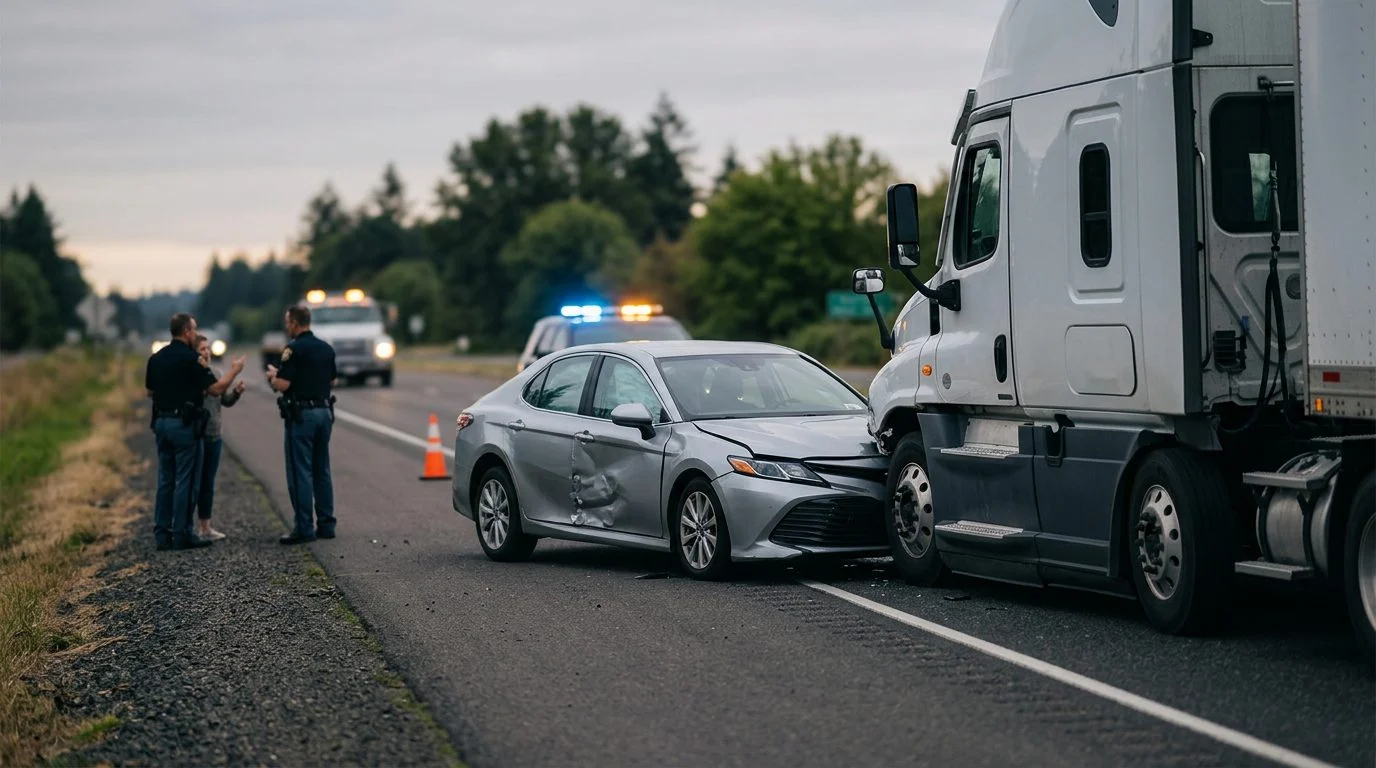
Protect yourself and others, then call 911. Check everyone for injuries. If you can move your vehicle safely, pull it out of traffic and turn on your hazard lights. If you cannot, stay inside with your seat belt on. The exception is when staying inside is more dangerous.
Stay away from traffic. People who stand near the road or walk along the shoulder after a crash are often hit by a second vehicle. Move well away from the lanes if you can.
Tell the dispatcher where you are and whether anyone is hurt. Florida law requires the driver in a crash that causes injury to stop at the scene, or as close as possible. The driver must stay until the requirements of s. 316.062 are met (Fla. Stat. § 316.027).
Florida law defines “serious bodily injury” as an injury that creates a substantial risk of death, serious personal disfigurement, or long-lasting loss or impairment of the function of a body part or organ (same statute).
Watch for a stopped truck. Federal rules require a commercial truck driver who stops on the traveled part of a highway or its shoulder to turn on the hazard flashers right away. This applies unless the stop is a necessary traffic stop (49 C.F.R. § 392.22). If the truck’s flashers are not on, note it in your photos and notes.
Exchange basic information, and say less than you think. From the truck driver, write down:
- Full name, phone number, and address
- Insurance company and policy number
- Driver’s license number
- Trucking company name, phone number, and DOT number (the U.S. Department of Transportation number shown on the truck)
- Truck and trailer license plate numbers
Collect the same details from any other driver and every passenger. Ask witnesses for their names and phone numbers. Note where each one was standing.
Do not apologize, admit fault, or say you are fine when you are not. Those words can be repeated later. Fault depends on the facts of each crash. The crash report and the evidence should show what happened.
Take photos before anything is moved, if it is safe. Photograph:
- The position of the vehicles
- Skid marks, traffic signals, and road and weather conditions
- Debris
- The truck’s company name, unit number, and any side or rear guards
An underride guard is a bar on the back or side of a trailer. It keeps a smaller vehicle from sliding underneath. If the guard is damaged or missing, photograph that too.
The First 24 Hours
See a doctor the same day, even if you feel fine. Adrenaline can hide pain. Some serious injuries take hours or days to show symptoms. A person may seem fine after a hard blow to the head. Later, headaches, confusion, or memory trouble can appear.
The Brain Injury Association of America publishes research comparing brain injuries from vehicle crashes with those from other causes. Symptoms that appear late are a reason to keep up with medical follow-up.
Tell every provider exactly how the crash happened. Say where you were sitting. List every place you feel pain, numbness, or weakness. Be specific. Writing these details in your phone the same day helps.
Understand the driver testing timeline. Federal rules require the employer to test a surviving commercial driver for alcohol as soon as possible in certain crashes. These include crashes that involve a loss of human life.
- If the test is not given within two hours, the employer must keep a record of why.
- If the test is not given within eight hours, the employer must stop trying to give it (same section).
- A driver who must be tested may not use alcohol for eight hours after the accident, or until tested, whichever comes first (49 C.F.R. § 382.209).
These are the kinds of facts that disappear if no one asks for them early.
Start a written record. Write down what you remember while it is fresh. Include the time, the direction of travel, lane positions, what you saw and heard, and what the driver said. Date your notes.
The First Two Weeks
Get initial medical care within 14 days if you are eligible for Florida PIP benefits. PIP stands for personal injury protection. It is auto insurance coverage for medical care after a crash.
These include prosthetic devices and nursing services. To qualify for medical benefits, the person must receive initial services and care from a licensed provider (such as a physician, dentist, chiropractor, or advanced practice registered nurse, or in a hospital) within 14 days after the motor vehicle accident (Fla. Stat. § 627.736). Ask your provider about the timing. Keep every bill and receipt.
Find the crash report number. A law enforcement officer must submit the Florida Traffic Crash Report within 10 days after finishing an investigation. This applies to a crash that caused death, personal injury, or any complaint of pain or discomfort (Fla. Stat. § 316.066). Ask the officer for the report number and how to check on it.
Expect a 60-day confidentiality period. Under Fla. Stat. § 316.066, crash reports may be made immediately available to the parties involved in the crash and their legal representatives. Do not be surprised if the full report is not available right away. A lawyer can help you track it.
Ask the trucking company to preserve its records. A written request asks the company not to destroy records that may matter to a claim. This is often called a preservation letter. Relevant records can include electronic logging device data, driver logs, maintenance files, and post-crash test results.
Leave the truck’s onboard data and the carrier’s files to a lawyer’s request. Do not try to reach them yourself.
Be careful with insurance calls. An insurance adjuster is the insurer’s claims representative. An adjuster may call quickly and ask many questions.
- It is reasonable to ask for time before giving a recorded statement.
- Early offers can be lower than the full cost of a serious injury.
- Symptoms may still be developing.
- Do not sign medical authorizations, releases, or settlement papers until you understand your injuries and the terms.
Keep copies of everything. Record the date, the adjuster’s name, and what was said on every call.
Have questions about what happened?
Ask our team directly. The first conversation is free, confidential, and there is no obligation to continue.
The Weeks That Follow
Follow your doctors’ care plan. Attend follow-up visits. Fill prescriptions as directed. Keep every referral. Doctors decide treatment and recovery time. No web page can predict how a person’s recovery will go.
Keep a daily journal. Note pain, sleep, missed work, and tasks you cannot do. Save receipts for medicine, rides to appointments, and help at home. Photograph bruises each day, since they often change over several days. These records show how the crash changed your daily life.
Understand how fault is handled. Many people worry they will be blamed for a crash. This is called comparative fault (Fla. Stat. § 768.81).
Whether anyone is found at fault depends on the evidence. No one can tell you the outcome in advance. That is one more reason to protect evidence early.
Know who else may be responsible. A claim may involve more than the driver.
A lawyer can look at who selected, owned, loaded, or maintained the truck.
Ask about medical bills and letters of protection. Some providers treat patients under a “letter of protection.” This is a promise of payment from any future judgment or settlement.
Florida law sets rules for how evidence of medical expenses is admitted in personal injury and wrongful death cases (Fla. Stat. § 768.0427). Tell your lawyer about any such arrangement.
Know the Florida deadlines. Florida sets time limits for filing a lawsuit. These limits can be strict. The general time limits are in Fla. Stat. § 95.11.
Missing a deadline can end a claim. Waiting is a real risk.
When a Truck Crash Is Fatal: What the Family Can Do Next
Losing someone in a truck crash is one of the hardest things a family can face. Your loved one’s death is not only a legal matter. It is a loss for the people who depended on them, who shared their days, and who are now left with questions.
If your loved one died in a truck crash, the first days may bring many calls. They may come from police, hospitals, insurers, and the trucking company. You do not have to answer every question alone or on the same day.
Keep these items:
- The crash report number
- The names of the officers and hospital staff you spoke with
- Any letters or calls from insurers
Federal rules require employers to test for alcohol each surviving driver who was performing safety-sensitive functions with respect to a commercial motor vehicle involved in a crash that caused a loss of human life, as described above (49 C.F.R. § 382.303).
Florida law recognizes that families may have claims after a death. Wrongful-death claims are one of the areas our firm handles. These are claims a family brings when a death is caused by another person’s wrongful conduct.
Our team can help a family understand its options. We can request and preserve records and speak with insurers. That way, the family can focus on each other. If you are grieving a loved one lost in a truck crash, contact CHG Personal Injury Lawyers to talk through your next steps.
When to Talk With a Lawyer, and How CHG Can Help
A lawyer can handle tasks that are hard to manage while you are hurt or grieving. These include:
- Requesting records
- Sending preservation letters
- Communicating with insurers
- Reviewing the crash report
- Tracking deadlines
CHG charges no attorney’s fees and no case costs unless there is a recovery.
CHG Personal Injury Lawyers offers a free, confidential initial consultation with no obligation to continue. You can contact CHG Personal Injury Lawyers to start the conversation.
Depending on the facts, a matter may be referred to, or handled together with, another law firm. If that happens, we will tell you.
Our lawyers are admitted to The Florida Bar. Igor Hernandez is the responsible lawyer for this page. For related reading, see our main guide on catastrophic truck accident injuries, our page on PTSD after a truck accident, and our Florida and Orlando truck accident pages.

Frequently Asked Questions
Should I call 911 after a truck accident in Florida?
Yes. Call 911 right away, especially if anyone is hurt. Police can respond and create an official crash report. Move to a safe spot if you can. Do not leave the scene before the steps required by Florida law are done.
What information should I collect at the scene of a truck accident?
Get the truck driver’s name, phone number, and insurance details. Also get the trucking company’s name and DOT number if you can see them. Take photos of the vehicles, the road, injuries, skid marks, and debris. Write down witness names and contact information.
Should I see a doctor after a truck accident if I feel fine?
Yes. Some serious injuries, including back, neck, and brain injuries, may not cause symptoms right away. Get checked and follow your doctor’s care plan. A medical record also documents your injuries if you later pursue a claim.
Should I talk to the trucking company’s insurance adjuster?
It is best to speak with a lawyer first. Do this before giving a recorded statement or signing any paperwork. Insurers may act quickly to limit what they pay. Florida has strict deadlines for injury claims. Contact CHG Personal Injury Lawyers promptly for a free, confidential initial consultation with no obligation to continue.
Your First Steps After a Truck Accident
1. Call 911 and Get Medical Care
Call 911 right away, especially if anyone is hurt. Police can respond and create an official crash report. Get medical care even if you feel fine, because some serious injuries, including brain and spinal injuries, may not show symptoms right away. Follow your doctors' care.
2. Document the Scene
If you can do so safely, take photos and video of the vehicles, the road, traffic signs, skid marks, weather, and your injuries. Write down the time and location of the crash.
3. Collect Key Information
Get the truck driver's name, phone number, insurance information, and the trucking company's name and DOT number if visible. Also record the truck's license plate and the names and contact details of any witnesses.
4. Keep Your Records
Save the crash report, medical bills, prescriptions, receipts for expenses, and any letters from insurance companies. Keep a simple daily journal of your pain, symptoms, and how the injury affects your work and family life.
Want to know where you stand?
Tell us what happened and our team will walk you through the options available to you, at no cost.
How CHG Personal Injury Lawyers Can Help
Protecting Your Claim
Our lawyers work to preserve evidence, including truck logs, maintenance records, and black-box data, before it can be lost.
Handling the Insurance Companies
We communicate with trucking companies and their insurers so you can focus on your recovery instead of their questions.
Focus on Catastrophic Injuries
Our practice focuses on serious and life-altering injuries, from spinal cord injuries and amputations to traumatic brain injuries and wrongful death claims.
Serving Florida
CHG Personal Injury Lawyers is a Florida-based firm representing people injured across the state, from Miami and Orlando to Tampa and Jacksonville.
No Fees Unless There Is a Recovery
CHG charges no attorney's fees and no case costs unless there is a recovery.
Be Careful With Recorded Statements
An insurance adjuster for the trucking company may call you soon after the crash and ask for a recorded statement. Before you give one, consider speaking with a lawyer. Anything you say can be used to evaluate your claim.