

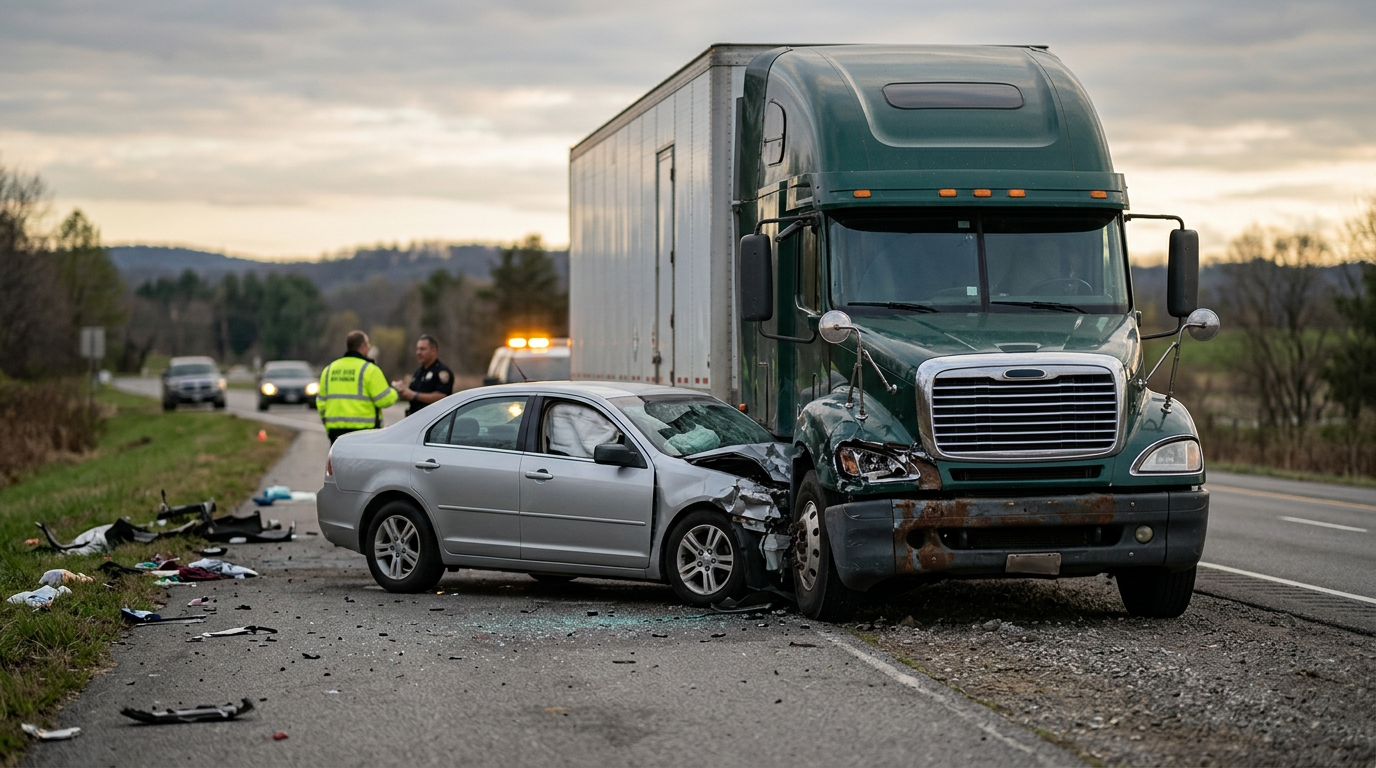
Truck Accidents & Traumatic Brain Injury
When a Truck Crash Leaves Your Loved One in a Coma
A coma after a serious truck accident usually means a severe traumatic brain injury. This guide explains what a coma is, what a claim may involve, and the steps your family can take right now.
Catastrophic injury advocates for families
TBI
Focused on traumatic brain injury cases
Nationwide
We take catastrophic cases across the country
Bilingual
English & Spanish support for families
Licensed
Florida Bar–admitted attorneys
By CHG Lawyers · Published July 30, 2026
Do You Have a Claim If Your Loved One Is in a Coma After a Truck Crash?

Not sure what your next step is?
Talk it through with our team — the first consultation is free, confidential, and carries no obligation.
If you’re reading this at 2 a.m., start here
Maybe you’re in a hospital waiting room. Maybe you’re in a chair pulled up to a bed. You hear machines. You’re trying to make sense of words a doctor said fast, then walked away. Coma. TBI. Intracranial pressure. Prognosis. Nobody has told you what happens next. And the internet keeps trying to sell you a lawyer.
We wrote this page differently. First, we answer the medical questions you are actually searching right now. Then — only then — we explain your legal rights to protect your loved one. Both matter. But not in that order at 2 a.m.
This is general information, not legal advice. It does not replace anything the care team tells you. Every case and every brain is different.
Why would someone be in a coma after a truck crash?
A coma is a long, deep state of unconsciousness. The person can’t be woken up. They don’t respond normally to sound, light, or touch. After a crash, the most common cause is a serious traumatic brain injury (TBI) — a serious injury to the brain.
The Mayo Clinic explains that traumatic brain injury is one of the most common causes of a coma. A coma is a medical emergency that needs fast care.
In a large-truck crash, the brain can be hurt in more than one way at once:
- Direct impact to the head during the crash.
- Brain swelling that raises pressure inside the skull. Doctors may call this raised intracranial pressure.
- Bleeding in or around the brain.
- Oxygen loss if breathing or blood flow stopped, even for a moment.
Truck crashes cause these injuries so often because of simple physics. Federal limits let most fully loaded tractor-trailers weigh up to 80,000 pounds, per the Federal Highway Administration. That’s about 20 to 30 times the weight of a typical car. This huge difference is why a crash that a car passenger might have survived can turn life-altering.
For the bigger picture, see our pillar page on catastrophic truck accident injuries.
How long can a person be in a coma after an accident?
There is no single answer. Be wary of anyone — including a website — who gives you one. A coma may last days, weeks, or longer. Only the care team can speak to your loved one’s outlook. And even they will speak in ranges, not promises.
You’ll hear other terms in these first days. Here’s what they mean:
- Medically induced coma: the team uses medicine on purpose to keep the patient unconscious. This often protects a swollen brain and lets it rest. It is a treatment, not a decline.
- Minimally conscious state: the person shows some awareness, but only briefly or off and on.
- Persistent vegetative state: there are sleep-wake cycles, but no clear signs of awareness.
The team measures consciousness over time using the Glasgow Coma Scale. It scores eye, verbal, and movement responses. A score of 8 or below is generally called a coma. You’ll hear this number a lot. Write down each day’s score so you can see the trend, up or down.
We won’t predict any outcome, and no honest source will. But this very uncertainty is why families are wise to learn their legal options early. A recovery that turns out to be long or lifelong brings costs that early insurance offers rarely expect.
What are the signs of brain damage after an accident?
While a person is in a coma, the team watches for physical signs:
- Little or no response to touch, sound, or light.
- Seizures.
- Changes in pupil size or reaction.
- Stiff or abnormal posture of the limbs.
As consciousness returns — if it does — other signs can appear:
- Trouble speaking, understanding, or finding words.
- Memory gaps and confusion.
- Changes in personality, mood, or self-control.
- Weakness or trouble moving parts of the body.
Here’s one thing few other pages tell you: brain injuries can be “invisible.” A CT or MRI scan does not always show the full damage. Early estimates sometimes understate how serious things are. So keep a simple daily log. Note symptoms, scores, and what each doctor said and when. These notes help the care team. Later, they help show what your loved one has really lost.
Can you file a claim for someone who can’t speak for themselves?
Yes. When an adult can’t make decisions because of a catastrophic injury, the law gives a family member a way to act for them.
A Florida court can appoint a guardian — often a spouse, parent, or adult child. A guardian can make legal and financial decisions, including bringing a claim. Florida’s guardianship rules are set out in Chapter 744 of the Florida Statutes. Other states have their own steps. An attorney can tell you who has authority in your situation.
The key point: your loved one is still the claimant. You simply act for them, to protect their rights, care, and future.
If your loved one does not survive
We won’t step around this. Families searching at 2 a.m. sometimes face the hardest possibility. If the injuries prove fatal, the path doesn’t end — it changes. Florida’s Wrongful Death Act (Fla. Stat. §§ 768.16–768.26) lets a personal representative bring a claim for surviving family members. A death is the most catastrophic outcome there is. It deserves to be handled with dignity — centered on the family left behind and what they can do next.
Have questions about what happened?
Ask our team directly. The first conversation is free, confidential, and there is no obligation to continue.
What does a coma-after-truck-crash claim try to recover?
A claim seeks the costs and losses caused by the crash — both now and across the injured person’s life. Value depends fully on the facts. No lawyer can honestly promise an amount.
Common categories:
- Medical care: ICU stays, brain surgery, rehab, skilled nursing, and long-term care.
- Lost income and lost earning power: wages the person can no longer earn.
- Future care needs: home changes, special equipment, and daily care for a person with permanent impairment.
- The human losses: the physical and emotional toll on the injured person and the family.
The Christopher & Dana Reeve Foundation shows that catastrophic neurological injuries can carry lifetime costs reaching into the millions. Most of that comes from decades of ongoing care. That is exactly why a rushed early settlement is dangerous. It is figured out before anyone knows what a lifetime of care will cost.
To learn more, see our pages on traumatic brain injury claims and catastrophic injury claims.
Who may be responsible after a truck crash?
In truck cases, fault is usually broader than one driver. Finding everyone involved matters.
Possible responsible parties include:
- The truck driver.
- The trucking company that employed or dispatched the driver.
- Maintenance contractors who serviced the truck or its brakes.
- Cargo loaders, if unbalanced or loose freight played a role.
- Broker or leasing companies that helped put the truck on the road.
Interstate trucking follows the Federal Motor Carrier Safety Regulations. These set rules on driver hours, vehicle inspection and upkeep, and driver qualifications (see the FMCSA regulations). When a company breaks those rules, that violation can point toward fault.
Why find every party? Because each may carry its own insurance. More responsible parties can mean more coverage to pay for a lifetime of care. That can be the difference between a settlement that runs out and one that lasts.
Why acting early matters when someone is comatose
Key evidence can disappear within days. The trucking company’s insurer and rapid-response team often start investigating within hours of the crash. Sometimes before the family has even left the hospital.
Evidence that can vanish:
- The truck’s electronic control module (the “black box”), which can record speed and braking before impact.
- The driver’s logs and inspection records.
- Dashcam or nearby business security video, which is often erased in days.
- The truck itself, before it is repaired, reloaded, or sold.
You deserve someone protecting your loved one’s interests as fast as the other side protects its own.
Deadlines apply too. In Florida, the general deadline to file a negligence injury lawsuit is two years for claims that arose on or after March 24, 2023, under Fla. Stat. § 95.11. Deadlines differ from state to state and by situation. Confirm yours early.
Florida also follows a modified comparative-negligence rule. This means fault is shared based on who was to blame. Under Fla. Stat. § 768.81, a person found more than 50% at fault generally cannot recover damages. That’s one more reason to save evidence before it disappears.
An attorney can handle the investigation while you stay where you should be: at the bedside.
How to start while you’re still at the hospital
You don’t need to do anything complicated. Just protect a few simple things:
- Keep medical records and bills as they arrive.
- Save crash documents — the crash report, names, and photos.
- Be careful with insurers. Don’t give a recorded statement without advice.
- Don’t sign a settlement or release before an attorney reviews it.
A fast settlement offer can feel like relief when you’re overwhelmed. But once you sign a release, the claim is usually closed for good. That’s true even if your loved one’s care ends up costing far more than anyone guessed that week.
Most catastrophic-injury cases work on a contingency fee basis. This means you generally pay no attorney fees upfront. The fee comes out of any recovery. Ask any lawyer to explain their fee in writing.
CHG Personal Injury Lawyers is a Florida-based firm. Our attorneys serve Miami, Orlando, Tampa, and Jacksonville, and they are admitted to the Florida Bar. We take catastrophic cases nationwide. We speak with families in English and Spanish. Whether you’re in Florida or elsewhere in the U.S., you can reach us for a free case evaluation.
Contact CHG Personal Injury Lawyers for a free case evaluation. No pressure — we’ll listen first.
Want to know where you stand?
Tell us what happened and our team will walk you through the options available to you, at no cost.
Frequently asked questions
How long can a person be in a coma after a truck accident?
A coma may last from a few days to several weeks or longer. Only the care team can speak to your loved one’s outlook. Reliable answers come as ranges, not promises.
Why would someone be in a coma after a crash?
A coma usually follows a serious traumatic brain injury. It can come from impact, swelling, bleeding, or oxygen loss. The Mayo Clinic lists traumatic brain injury among the leading causes.
What are the signs of brain damage after an accident?
During a coma: no response, seizures, pupil changes, and abnormal posture. After waking: memory loss, confusion, speech trouble, and personality changes. Keep a daily record of every symptom.
Can I make medical and legal decisions for my comatose adult relative?
Often yes, through a court-appointed guardianship under Florida’s Chapter 744 (or your state’s version). A spouse, parent, or adult child may be appointed to act for the injured person.
Is there a deadline to file a claim in Florida?
Yes — generally two years for negligence injury claims that arose on or after March 24, 2023, under Fla. Stat. § 95.11. Deadlines vary by state and situation, so confirm yours early.
What if my loved one does not survive their injuries?
The family may pursue a wrongful-death claim under Florida’s Wrongful Death Act. It is handled with dignity, centered on the surviving family and their future.

Related resources and local help
Start with our pillar page on catastrophic truck accident injuries. You may also find these helpful:
- Traumatic brain injury claims
- Spinal cord injuries
- Catastrophic injury claims
Whether your family is facing this in Florida or anywhere in the U.S., you don’t have to carry it alone. When you’re ready, reach out for a free, no-pressure case evaluation.
What a coma after a truck accident often means
A serious brain injury
A coma usually follows a severe traumatic brain injury caused by impact, bleeding, or dangerous swelling inside the skull.
An uncertain timeline
A coma may last days, weeks, or longer. Only the care team can speak to your loved one's outlook, and honest answers come as ranges, not promises.
A family suddenly in charge
Loved ones often make medical and financial decisions while the injured person cannot. You do not have to carry that alone.
A long road of care
Severe TBI can mean months of hospital care, rehabilitation, and lasting support — costs a claim may help address.
Preserve evidence early
In truck crash cases, critical proof — the truck's data, driver logs, and vehicle condition — can disappear quickly. Acting early helps protect your family's ability to bring a claim later.
Steps a family can take now
Focus on care first
Your loved one's medical treatment comes first. Keep a simple record of doctors, diagnoses, and hospitals as things happen.
Keep the documents
Save the crash report, hospital paperwork, and any bills or insurance letters in one place. These become important later.
Be careful with insurers
You do not have to give a recorded statement or accept an early offer. A claim for a severe brain injury should account for a lifetime of needs.
Ask questions early
A free case review can help you understand your options — including who may be responsible and what a claim could cover — with no obligation.