

Truck Accidents · Florida & Nationwide
When a Truck Crash Changes Everything
Collisions with large commercial trucks can cause the most severe, permanent injuries on the road. We help victims and families understand what happened and what they can do next.
Focused on the Injuries That Change Lives
20x
A loaded truck can outweigh a car by up to twenty times
Nationwide
Catastrophic injury cases handled across the country
FL Bar
Licensed attorneys admitted to the Florida Bar
Bilingual
Guidance available in English and Spanish
By CHG Lawyers · Published August 13, 2026
Common Catastrophic Injuries in Truck Accidents Explained
Some truck injuries change a life for good. These include traumatic brain injury, spinal cord damage and paralysis, amputation, severe burns, and catastrophic back and neck injuries. They all share one cause. A fully loaded truck hits with force that a passenger car was never built to survive.
This page is for people living with that reality. It is also for families who lost someone. It explains why these crashes are different. It explains what each injury really means. And it explains the one clear step you can take next.
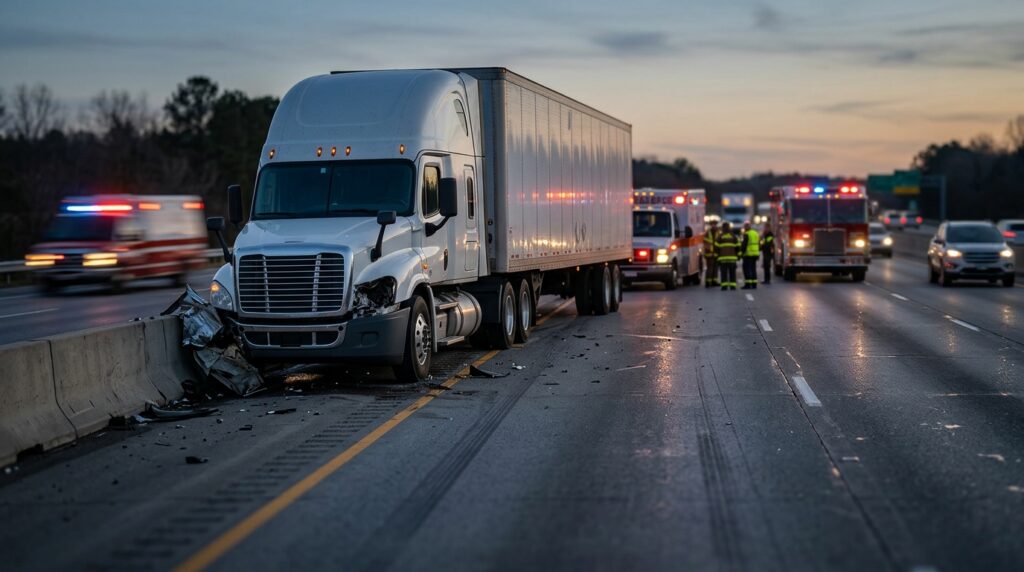
If you or a loved one suffered a serious injury in a truck crash, reaching out promptly helps protect the evidence your case may depend on. Talk it through with our team — the first consultation is free, confidential, and carries no obligation.
Why truck crashes cause catastrophic injuries: the physics
Most pages just list injuries. The real story is force. It comes down to three things.
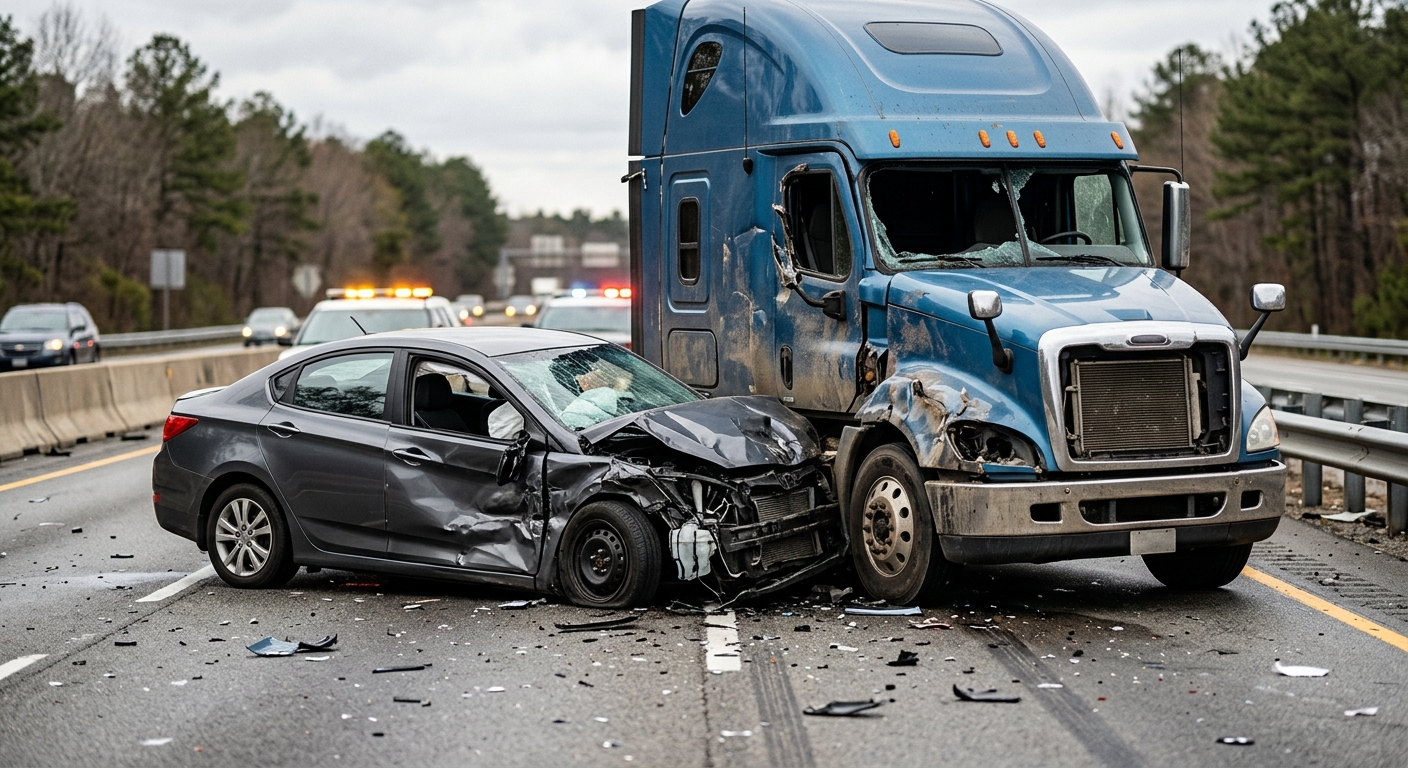
Mass. A fully loaded tractor-trailer can weigh up to 80,000 pounds on the Interstate System. That limit is set by 23 U.S.C. §127. A typical car weighs about 4,000 pounds. When a vehicle 20 times heavier hits yours, your body absorbs the energy — not the truck. Crash energy grows fast with speed. So even a small speed difference can multiply the harm.
Height mismatch. A trailer’s rear and sides sit much higher than a car’s bumper and crumple zones. In an underride crash, the car slides under the trailer. The impact then hits at head and chest level. It skips the very parts built to protect you. The National Highway Traffic Safety Administration has rules on rear impact guards that address this danger. Underride is why a crash can look survivable but still cause brain and spinal injuries.
Cargo. Trucks carry hundreds of gallons of diesel. Many also carry hazardous materials. A ruptured fuel tank can catch fire. A chemical load can burn or poison. A rollover can crush the passenger area. These are the things that turn a crash into a catastrophe.
That is our focus here. Not bruises or a sprain that heals. We mean the permanent injuries that need surgery, lifelong care, and a new way of living.
What “catastrophic” means — and who this page is for
A catastrophic injury usually means permanent harm. It can mean loss of a body function, major disfigurement, or a condition that changes daily life for good. In plain terms, it’s harm you don’t fully recover from.
This matters for a simple reason. If your injury is healing and you expect to feel normal again, this page isn’t about your situation. And that’s genuinely good news.
What follows is for people facing lifelong costs. That can mean repeated surgeries, rehab, adaptive equipment, home changes, lost income, and daily care. Naming what you’re facing is the first step to planning for it.
Traumatic brain injuries (TBI)
A TBI happens when a sudden blow or jolt disrupts brain function. In a crash, the head hits an object, or the brain slams against the inside of the skull. The Mayo Clinic notes that moderate to severe injuries can cause lasting problems with memory, focus, mood, and behavior. They can also trigger seizures.
One point saves lives: symptoms can be delayed. You may feel “okay” at the scene. Then you may get worse over hours or days as swelling or bleeding builds. Get checked right away, even if you feel fine. Learn more on our traumatic brain injuries page.
Spinal cord injuries and paralysis
The spinal cord carries signals between your brain and body. Crash forces can damage the cord or the bones (vertebrae) around it. When that happens, those signals can stop. That often means paralysis. Vehicle crashes are a leading cause of spinal cord injury in the U.S., according to the Mayo Clinic.
Two terms come up a lot. Paraplegia affects the trunk and legs. Quadriplegia (also called tetraplegia) affects the arms, trunk, legs, and pelvic organs. As a rule, the higher the injury on the spine, the more of the body it affects.
Doctors also grade injuries as complete or incomplete. Complete means total loss of function below the injury. Incomplete means some function remains. They use the ASIA Impairment Scale, published by the American Spinal Injury Association. This grading shapes the outlook and the lifetime care plan.
The effects last a lifetime. They include loss of movement and feeling, changes to bladder and bowel control, chronic pain, and breathing problems, the Mayo Clinic explains. National data on how often this happens, and on outcomes, is compiled by the National Spinal Cord Injury Statistical Center. The Christopher & Dana Reeve Foundation offers practical support for daily living. Read more on our spinal cord injuries page.
Catastrophic back and neck injuries
This is where readers place themselves. A strain or a simple ache is not what we mean here. A back or neck injury becomes catastrophic when it crushes or shifts vertebrae, causes serious nerve damage, or leaves the spine unstable. This is the kind of harm that threatens permanent function.
In the crashes our attorneys handle, these injuries often need surgery. Sometimes they need several, with hardware placed to steady the spine. Even with excellent care, many people live with chronic pain and permanent limits on movement. If lasting disability is your reality, our catastrophic back and neck injuries page explains more.
Not sure what your next step is?
Talk it through with our team — the first consultation is free, confidential, and carries no obligation.
Amputation and limb loss
Amputation means losing a limb. It can happen in the crash itself. Or it can happen in surgery, when a crush injury is too severe to save the arm, leg, hand, or foot.
Survivors often need prosthetics, long rehab, and help relearning daily tasks. Many must change careers or leave work entirely. The costs stretch across a lifetime. The toll isn’t only physical. Grief, frustration, and struggles with identity are common and real. Our amputation injuries page covers this in depth.
Severe burn injuries
Severe burns happen when a fuel tank ruptures and catches fire, cargo explodes, or chemicals spill. Third- and fourth-degree burns destroy skin and deeper tissue. They often need skin grafts and repeated surgeries. Survivors may face permanent scarring and disfigurement. Infection is a serious ongoing risk during recovery.
The recovery is long and painful. The emotional wounds run as deep as the physical ones. Our severe burn injuries page explains what these cases involve.
Internal organ damage and internal bleeding
Blunt force to the chest and belly can tear organs like the spleen, liver, or lungs. There may be no cut or bruise on the outside. That’s the danger. A person can walk away from the scene, feel alright, then collapse hours later. Internal bleeding is a medical emergency. It’s one more reason to get checked right away. For some survivors, organ damage becomes permanent. That means ongoing treatment and lasting limits on daily life.
The emotional and psychological aftermath
Catastrophic injuries carry a mental-health toll as real as the physical one. Many survivors develop post-traumatic stress disorder (PTSD), anxiety, or depression after a serious crash. This is part of the injury, not a separate weakness. Families feel it too. That’s often true when someone becomes a caregiver overnight. We encourage survivors and families to seek professional mental-health care along with medical treatment.
When a truck crash is fatal: the family left behind
A death is the most catastrophic outcome of any crash. It leaves a family to carry the loss. If this is your reality, we’re deeply sorry.
Federal crash-death records are tracked in NHTSA’s Fatality Analysis Reporting System (FARS). This is the national dataset that counts lives lost in traffic crashes each year. Behind each number is a real person and a real family.
When negligence causes a death, surviving family members may be able to bring a wrongful-death claim. This is a case that can help cover funeral costs, lost financial support, and the value of a life taken too soon. In Florida, the rules say who may bring such a claim and what damages are available. They are set out in the Florida Wrongful Death Act, Fla. Stat. §§768.16–768.26. A licensed attorney can explain whether it applies to your situation.
What to do after a catastrophic truck accident injury
Get complete medical care and follow through on it. Keep every record. That means diagnoses, imaging, bills, and treatment notes. These documents tell the story of your injury and recovery.
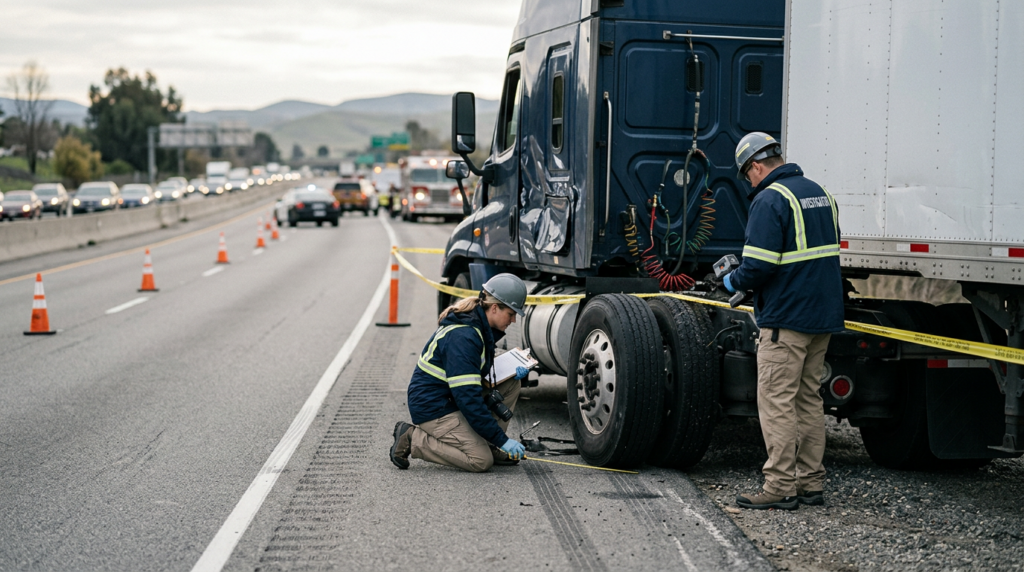
Understand who’s on the other side. Trucking cases involve companies and commercial insurers with large policies and their own legal teams. Those insurers move quickly to limit what they pay. Key evidence can disappear if it isn’t saved early. This includes the truck’s electronic logging device data, the driver’s hours-of-service records required under 49 CFR Part 395, and maintenance files.
Florida law also sets deadlines. For many negligence claims that arise on or after March 24, 2023, you generally have two years to file suit under Fla. Stat. §95.11. Florida also follows modified comparative negligence. If you’re found more than 50% at fault, you generally recover nothing, under Fla. Stat. §768.81.
The clearest next step is to talk with a lawyer who handles these cases. Our attorneys are admitted to the Florida Bar. We offer a free case evaluation. We can’t promise a result. But we can explain your options in plain language — in English or Spanish.
Have questions about what happened?
Ask our team directly. The first conversation is free, confidential, and there is no obligation to continue.
Related resources
Start with our main guide on catastrophic truck accident injuries in Florida. It ties these injury types together and explains how truck cases work. You can also read our spinal cord injuries, traumatic brain injuries, amputation injuries, and severe burn injuries pages.
Frequently asked questions
Why are truck accident injuries so much worse than car accident injuries?
It comes down to physics. A loaded truck can outweigh a car by 20 times. It sits far higher, and it often carries fuel or hazardous cargo. In underride crashes, the car slides under the trailer. So the impact skips the vehicle’s safety structures and strikes at head and chest level.
What is considered a catastrophic injury?
A catastrophic injury usually means permanent harm. It can mean loss of a body function, major disfigurement, or a condition that changes daily life for good. Minor injuries heal. Catastrophic ones don’t.
What’s the difference between paraplegia and quadriplegia?
Paraplegia affects the trunk and legs. Quadriplegia (tetraplegia) affects the arms, trunk, legs, and pelvic organs. Quadriplegia comes from injuries higher on the spine.
Can brain injury symptoms be delayed after a truck crash?
Yes. TBI symptoms can appear hours or days later as swelling or bleeding develops. So get medical care right away, even if you feel fine at the scene.
Can my family file a claim if a loved one died in a truck accident?
Yes. When negligence causes a death, surviving family members may be able to bring a wrongful-death claim under Florida’s Wrongful Death Act. A licensed attorney can explain whether it applies to your situation.
How long do I have to file a truck accident injury claim in Florida?
For many negligence claims that arise on or after March 24, 2023, the deadline is generally two years under Fla. Stat. §95.11. Deadlines vary, so ask an attorney promptly.
Act Before Critical Evidence Disappears
Trucking companies preserve crash data, driver logs, and maintenance records under their own rules — and some can be overwritten or destroyed within days. If you or a loved one suffered a serious injury in a truck crash, reaching out promptly helps protect the evidence your case may depend on.
Catastrophic Injuries We See in Truck Crashes
Spinal Cord Injuries & Paralysis
The force of an underride or high-impact truck collision can damage the spinal cord, leading to paraplegia, quadriplegia, or permanent loss of function.
Traumatic Brain Injuries
Because a truck strikes at head and chest level, TBIs are common and can permanently affect memory, movement, speech, and independence.
Amputation & Limb Loss
Crushing forces can cause traumatic amputation or injuries so severe that a limb cannot be saved.
Severe Burns & Fatal Injuries
Trucks often carry fuel or hazardous cargo, raising the risk of severe burns. When a crash is fatal, families may pursue a wrongful-death claim.
Why Truck Injuries Are So Severe
Overwhelming Weight
A fully loaded commercial truck can weigh many times more than a passenger vehicle, multiplying the force of any collision.
Height Mismatch
Trucks sit far higher than cars. In underride crashes, a car slides beneath the trailer, bypassing the vehicle's safety structures.
Hazardous Cargo
Fuel, chemicals, and other dangerous loads can turn a crash into a fire or explosion, adding severe burn risk.
Complex Liability
The driver, trucking company, cargo loader, and maintenance provider may all share responsibility — which is why these cases require careful investigation.