

Catastrophic Injury Claims · Florida
Quemaduras Graves: Cuando una Lesión por Quemadura Cambia Todo
Las quemaduras de tercer y cuarto grado dejan cicatrices permanentes, daño nervioso y años de cirugía. Si la negligencia de otra persona causó su quemadura grave, hablemos sobre sus derechos — sin costo y sin compromiso.
Por Qué las Familias Confían en CHG
Bilingüe
Servicio en Español e Inglés
EE.UU.
Casos aceptados en todo el país
Florida Bar
Abogados licenciados y admitidos
Sin costo
Evaluación inicial gratuita
By CHG Lawyers · Published August 06, 2026
Severe Burn Injuries in Florida: Catastrophic Injury Claims, Recovery, and Legal Options
If you or someone you love is facing a severe burn in Florida, the first hours feel overwhelming. There are surgeries and dressing changes. You may not know whether the skin will heal. You may be dreading what comes next. Before we talk about the law, here is the practical part.
What helps right now:
- Follow the burn team’s plan. Keep every appointment, even the small ones.
- Ask the hospital for a copy of your records and treatment summary. You have a right to them.
- Photograph the injuries as they heal. Keep a simple daily note about pain, movement, and mood.
- Save everything about how the burn happened — the product, its packaging, incident or fire reports, and the names of anyone who was there.
- Do not give a recorded statement to an insurer, and do not sign anything until you have had time to think it through.
This page is for people facing serious, life-changing burns. If your burn healed on its own in a few days, this is not the page for you. But if you are facing skin grafts, a stay in a burn center, or permanent damage, keep reading. Florida law gives you real options.
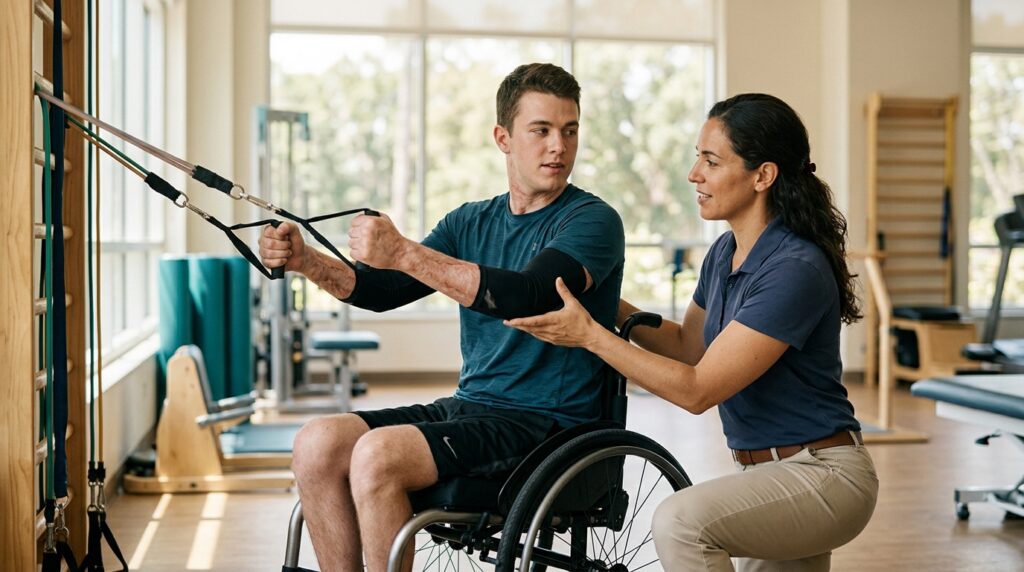
If your burn came with other harm, we also handle amputation injuries , spinal cord injuries , and broader catastrophic-injury claims . Talk it through with our team — the first consultation is free, confidential, and carries no obligation.
What makes a burn “catastrophic” — and what does not
A catastrophic injury is one that causes permanent impairment or long-term disability — the kind of harm that changes how you live, work, and care for yourself for the rest of your life. That is a different category from routine injuries. A minor first-degree burn, a small blister, or a sunburn is not what this page is about. A catastrophic burn is deep or extensive enough to require specialized care and leave lasting damage.
Doctors classify serious burns a few ways:
- Third-degree (full-thickness) burns destroy the entire thickness of the skin.
- Fourth-degree burns reach past the skin into muscle, tendon, or bone.
- Large second-degree burns cover a wide area and often need skin grafts.
- Burns requiring hospital care, burn-center care, or surgery.
- Burns that leave permanent scarring, disfigurement (a lasting change in your appearance), nerve damage, or amputation.
Florida has only a handful of verified adult burn centers. They include the Kearny Center for Burn Care at Jackson Memorial in Miami, UF Health Shands in Gainesville, Orlando Regional Medical Center, and Tampa General. These centers meet the American Burn Association’s burn-center verification standards. If your care was transferred to one of these, that transfer alone signals how serious the injury is.
How severe burns happen in Florida
The cause matters. It points to who may be legally responsible.
- Truck and vehicle crashes. A truck accident can rupture a fuel tank and start a fire or explosion. Victims trapped near burning fuel can suffer some of the worst burns we see.
- Workplace and industrial incidents. Construction sites, commercial kitchens, utilities, and chemical plants all carry burn risks.
- Defective products. Lithium-ion batteries can ignite without warning — you find them in e-bikes, scooters, and phones. Space heaters and flammable goods can also catch fire.
- Electrical and chemical burns. Contact with live wires or industrial chemicals can cause deep, permanent damage.
- Fires on unsafe property. Some fires start because a landlord ignored faulty wiring. Others happen when an owner fails to maintain the smoke alarms Florida law requires, or leaves known hazards in place.
A plain-language example. Say you were burned in an apartment fire. Maybe the smoke detectors did not work, the wiring was dangerous, or an exit was blocked — and the landlord knew about the problem but did nothing. In Florida, a property owner must keep the property reasonably safe. When they fail and someone is seriously hurt, the injured person may have a claim against the owner. Lawyers call this premises liability. You do not need to know the term to know something was wrong.
Sadly, some burn injuries are fatal. When a family loses a loved one this way, Florida’s Wrongful Death Act (Fla. Stat. §§768.16–768.26) lets certain family members bring a claim. A death is the most catastrophic outcome there is, and we handle these cases with care, always centered on the family left behind.
The medical reality of catastrophic burns
Doctors measure burns two ways. The first is degree, or how deep. The second is total body surface area (TBSA), or how much of the body is injured. Deeper, larger burns bring more danger — greater risk of infection, organ stress, and long hospital stays.
Treatment at a Florida burn center can include:
- Skin grafts, in which doctors move healthy skin to cover the wound.
- Reconstructive surgery to restore how the body works and looks.
- Infection control, because burns remove the skin’s natural barrier.
- Physical and occupational rehabilitation to rebuild strength and movement. This often takes months.
The effects do not stop when the wounds close. Many survivors live with chronic pain and permanent scarring. Scar tissue can tighten and limit movement — a complication called contracture. Emotional trauma is common too, including anxiety, depression, and PTSD. As the Mayo Clinic notes, deep burns can damage the tissue below the skin and cause lasting problems that continue well beyond the hospital.
Sometimes a burn also damages nerves or the spinal cord, or leads to amputation. Then the harm multiplies. In those cases, doctors may use the same tools they rely on for other catastrophic injuries — for example, the ASIA Impairment Scale (ISNCSCI) for spinal cord injury. Lifelong care can be expensive, and those future costs are a real part of a claim.
Not sure what your next step is?
Talk it through with our team — the first consultation is free, confidential, and carries no obligation.
Your legal options and catastrophic-injury claims in Florida
If another person or company caused your burn through negligence, you may be able to bring a claim. Who is responsible depends on how the burn happened:
- Drivers and trucking companies in fuel-fire crashes.
- Employers or third parties in workplace or industrial burns.
- Manufacturers of defective products that ignited or leaked chemicals.
- Property owners who failed to fix known fire hazards or provide reasonable security.
Under Florida law, a burn claim can seek several kinds of damages: medical bills, future care costs, lost income, and lost earning power. A claim can also seek compensation for pain and suffering and for disfigurement. When a family loses someone to fatal burns, a wrongful-death claim can seek support for the family’s losses.
Every case is different, and no lawyer can promise a specific result. But facing an insurer alone is hard. A licensed attorney can investigate what happened, preserve evidence before it disappears, work with your doctors and life-care planners to document future costs, and explain your options clearly.
Florida deadlines and rules you should know
Florida sets strict time limits. Missing one can end your case before it starts.
The filing deadline. For most Florida negligence claims that accrue on or after March 24, 2023, the general deadline to file suit is two years, under Fla. Stat. §95.11. Before that date, the deadline was four years. That change is one reason to confirm your exact deadline with a licensed Florida attorney rather than assume — the answer depends on your specific facts.
Shared fault. Florida follows a modified comparative-negligence rule that shares fault among the parties. Under Fla. Stat. §768.81, if you are found more than 50% at fault for your own harm, you generally cannot recover damages. If you are partly at fault but 50% or less, your recovery is reduced by your share. For example, if a jury finds you 20% at fault, your award is reduced by 20%.
Evidence fades fast. After a burn, physical proof disappears quickly. A defective product gets thrown out. A landlord fixes the wiring. So save your medical records, fire or incident reports, and photos — and keep the product itself if a defect caused the fire. Insurers move fast to protect their money. You do not have to face that alone.
Serving burn survivors across Florida
We represent survivors of severe burns and their families statewide — including Miami, Orlando, Tampa, and Jacksonville — and we take catastrophic-injury cases nationwide from our Florida base.
Our team offers bilingual support in English and Spanish, so language never stands between your family and clear answers. We are licensed attorneys admitted to The Florida Bar, and we focus on catastrophic, life-changing injuries.
If your burn came with other harm, we also handle amputation injuries, spinal cord injuries, and broader catastrophic-injury claims. You can also visit our main severe burn injury resource hub.
Talk with a Florida burn injury lawyer — free case evaluation
You can talk with a Florida burn injury lawyer at no cost and with no pressure. A free case evaluation is private, with no obligation to move forward.
When you reach out, it helps to share a few basics: how and where the burn happened, the medical care so far, and any reports or photos you have. Do not have everything? That is okay — we can help you find what is missing.
We know this is one of the hardest times of your life. Our job is to listen, answer honestly, and explain what comes next. When you are ready, contact us.
Have questions about what happened?
Ask our team directly. The first conversation is free, confidential, and there is no obligation to continue.
Frequently asked questions
What counts as a severe or catastrophic burn injury?
A third- or fourth-degree burn, or a large second-degree burn. These need skin grafts, hospital care, or burn-center care. They often cause permanent scarring, nerve damage, or amputation — harm that lasts a lifetime.
How long do I have to file a burn injury lawsuit in Florida?
For most negligence claims that accrue on or after March 24, 2023, Florida generally gives you two years to file under Fla. Stat. §95.11. Deadlines vary by case, so confirm yours with a licensed Florida attorney.
Can I sue a landlord if I was burned in an apartment fire?
Possibly. It may apply if the landlord failed to keep the property reasonably safe — for example, by ignoring known faulty wiring or missing smoke detectors. In Florida this falls under premises liability.
What if I was partly at fault?
Under Fla. Stat. §768.81, if you are 50% or less at fault, your recovery is reduced by your share. If you are more than 50% at fault, you generally cannot recover.
Can my family bring a claim if a loved one died from burns?
Yes. Florida’s Wrongful Death Act lets certain family members bring a claim after fatal burn injuries. A licensed attorney can explain who may file and what the claim can seek.
Cómo Ayudamos en Casos de Quemaduras Catastróficas
Investigamos la Causa
Reunimos reportes, evidencia y peritaje para demostrar quién fue responsable — sea un accidente de camión, un incendio, una explosión o una propiedad insegura.
Entendemos el Impacto de por Vida
Las quemaduras graves requieren injertos de piel, cirugías repetidas y cuidado en centros especializados. Documentamos el costo total, presente y futuro.
Representamos a Toda la Familia
Cuando una quemadura causa la muerte, acompañamos a los familiares en un reclamo por muerte por negligencia con dignidad y respeto.
Abogados con Licencia
Nuestro trabajo lo dirigen abogados admitidos en el Florida Bar que manejan lesiones catastróficas.
El Tiempo para Actuar es Limitado
Florida tiene un plazo legal (statute of limitations) para presentar reclamos por negligencia. Si espera demasiado, podría perder su derecho a recuperar compensación. Consulte con un abogado lo antes posible.
Preguntas Frecuentes
¿Qué se considera una quemadura grave o catastrófica?
Una quemadura de tercer o cuarto grado, o una quemadura extensa de segundo grado. Requieren injertos de piel, hospitalización o cuidado en un centro de quemados, y a menudo causan cicatrices permanentes, daño nervioso o amputación.
¿Cuánto tiempo tengo para presentar una demanda en Florida?
La mayoría de los reclamos por negligencia tienen un plazo legal para presentarse. Ese plazo varía según los detalles de su caso, por lo que es importante consultar con un abogado sin demora.
¿Cómo pudo causarse la quemadura?
Muchas quemaduras graves provienen de accidentes de camión, incendios, explosiones, productos defectuosos o propiedades inseguras. Investigamos la causa para identificar a los responsables.
¿Cuánto cuesta hablar con ustedes?
La evaluación inicial de su caso es gratuita. Le explicamos sus opciones en lenguaje claro, en español o inglés, sin ninguna obligación.