


Catastrophic Back & Neck Injuries
When a Herniated Disc Crosses the Line Into a Life-Altering Injury
Most disc injuries heal or improve. But when a disc damages the spinal cord or crushes critical nerves, the harm can be permanent — and that changes everything about your case.
Why Families Trust CHG
Nationwide
Catastrophic injury cases accepted
Bilingual
English & Spanish resources
Florida Bar
Licensed, admitted attorneys
Free
Case evaluations
By CHG Lawyers · Published August 05, 2026
Is a Herniated Disc a Catastrophic Injury? When Back Damage Turns Permanent
Most herniated discs are painful and disruptive. But on their own, they are not catastrophic injuries. A herniated disc only becomes catastrophic when it harms your spinal cord or the nerve bundle at the base of your spine. That harm has to cause permanent loss of function, paralysis, or lifelong disability.
That difference matters, both medically and legally. A herniated disc can hurt a lot and still heal with time and treatment. But a few specific complications cross a hard line into permanent, life-altering harm. Some of them are true emergencies, where hours matter.
This article explains where that line is, in plain language. It also gives you a symptom checklist. That way, you know when to stop reading and call 911.
One thing up front: we handle catastrophic-injury cases. We are not the right firm for a herniated disc that heals, and we’ll tell you so honestly. But if your back or neck injury may be permanent, the warning signs below could protect both your health and your rights.

Not sure what your next step is?
Talk it through with our team — the first consultation is free, confidential, and carries no obligation.
The short answer: usually no, sometimes yes
Usually, a herniated disc is not a catastrophic injury. It becomes one when it causes permanent nerve or spinal cord damage.
“Catastrophic” has a specific meaning in injury law. It means an injury that causes permanent impairment, permanent loss of function, or lifelong disability. A disc that gets better with rest, therapy, injections, or routine surgery does not meet that definition — no matter how much it hurts along the way.
Some disc injuries do meet it. A herniation can press on the spinal cord or the cauda equina (the nerve roots below the cord). When that happens, the harm can become permanent. In the cases our attorneys handle, the dividing line almost always comes down to one question: do the nerves and cord recover, or is the damage here to stay?
What a herniated disc actually is
Your spine is a stack of bones called vertebrae. Between them sit rubbery cushions called discs. Sometimes a disc’s soft center pushes through its tough outer wall. Doctors call this a herniated, slipped, bulging, or ruptured disc. These terms overlap and often mean the same thing.
Sudden trauma is a common cause. Truck and car crashes, falls, and hard blows to the back or neck can all force a disc out of place. The Mayo Clinic notes that crashes and falls are also leading causes of more serious spinal cord injuries. The difference is how far the damage reaches.
Typical herniated-disc symptoms include:
- Back or neck pain near the injured disc
- Pain running down an arm or leg (often called sciatica)
- Numbness or tingling in a limb
- Muscle weakness
Many herniated discs improve. That is exactly why most of them, painful as they are, don’t count as catastrophic.
Red-flag symptoms: get emergency care before you think about a claim
Some symptoms are not “wait and see.” They can signal a spinal cord injury or cauda equina syndrome. That is a known surgical emergency, where a herniation crushes the nerve bundle at the base of the spine. Surgeons usually treat it as urgent. They act fast to lower the risk of permanent paralysis and loss of bladder and bowel control.
Call 911 or get to an emergency room now if you have any of these:
- [ ] Loss of bladder or bowel control (new trouble holding it, or trouble going)
- [ ] Numbness around the groin, buttocks, or inner thighs (“saddle” numbness)
- [ ] Sudden, severe weakness in one or both legs
- [ ] Numbness or weakness that is spreading or getting worse
- [ ] Any sign of paralysis, or loss of feeling below a point on your body
Your health comes first — always, without exception. A claim can wait; your spinal cord cannot. Fast treatment is what protects the function you still have.
There’s a second benefit worth knowing. Getting care right away creates a medical record dated to your injury. That matters later if you bring a claim. But it is a distant second to the medical reason. Go.
This article is general information, not medical advice. Only a doctor can diagnose your injury.
Have questions about what happened?
Ask our team directly. The first conversation is free, confidential, and there is no obligation to continue.
When a herniated disc becomes catastrophic
A disc injury turns catastrophic when it damages the cord or nerves in a way that doesn’t recover. Watch for these:
- Spinal cord compression or injury. If the herniation presses on or injures the cord, it can cause partial or complete paralysis below that level. The Mayo Clinic explains that cord injury can cause lasting loss of movement and feeling.
- Cauda equina syndrome. The emergency described above. Left untreated, it can leave permanent bladder, bowel, and sexual problems, plus leg weakness.
- Permanent nerve damage. Weakness, numbness, or loss of function that does not recover with treatment.
- Failed or high-level fusion. Damage at several levels, surgeries that don’t fix symptoms, or a fusion that permanently limits movement.
- Chronic disabling pain that permanently stops a return to work or daily life.
Doctors don’t just eyeball how bad it is. They classify it. For spinal cord injuries, they often use the ASIA Impairment Scale (from the American Spinal Injury Association). It grades an injury from A (complete — no movement or feeling below the level) through E (normal).
Where an injury sits on that scale matters a lot. So does whether it is “complete” or “incomplete.” This tells you both the medical outlook and the lifelong needs behind a claim. When a disc herniation causes an injury that a doctor grades on this scale, it is no longer “just” a herniated disc.
Herniated disc vs. catastrophic spine injury
The core difference is permanence.
A routine herniated disc: – Pain, numbness, or tingling – Often improves with therapy, injections, or surgery – Usually allows a return to most daily activities – Does not, by itself, damage the spinal cord
A catastrophic back or neck injury: – Spinal cord injury or paralysis (paraplegia or quadriplegia) – Fractured or crushed vertebrae – Permanent nerve damage – Lifelong disability, ongoing care, and major life changes
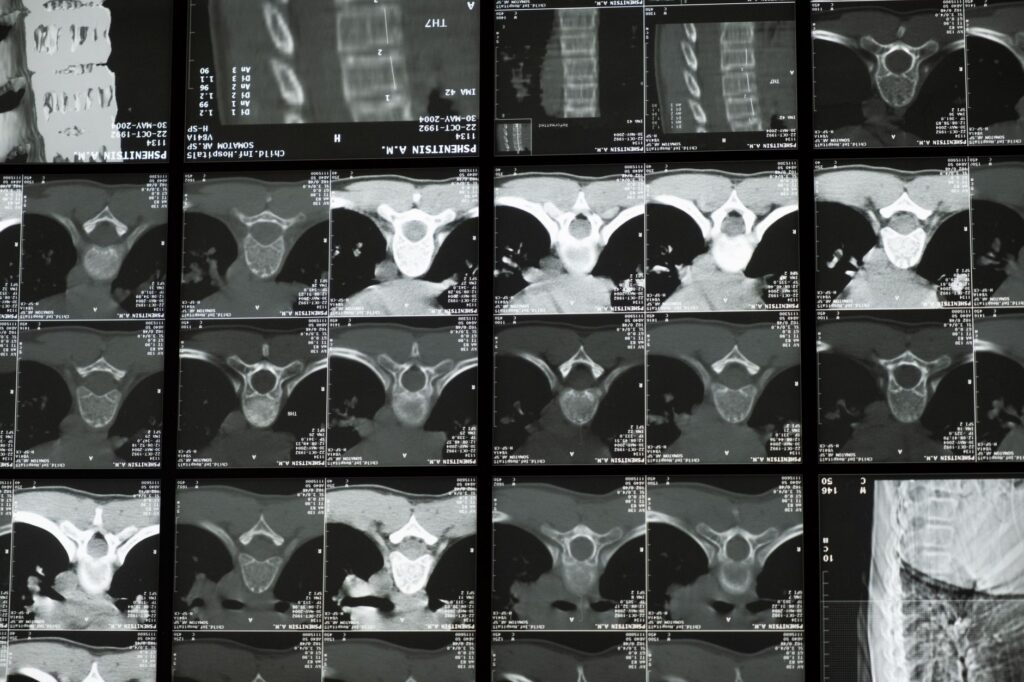
The same crash can cause both. A truck collision might herniate one disc while crushing a vertebra at another level. That is why imaging matters. An MRI shows soft tissue, discs, and cord compression far better than an X-ray alone.
For the full picture, see our pillar page on catastrophic back and neck injuries.
Proving the injury came from the accident
Insurers often argue that a disc injury started before the crash. Strong evidence answers that:
- Proper imaging. An MRI can show whether the disc is pressing on nerves or the cord — not just that a disc has moved.
- A tight treatment timeline. Seeing a doctor soon after the crash links the injury to the event.
- Consistent symptom records. Steady notes about pain, numbness, and weakness support your account.
Two things weaken a claim. One is a long gap in treatment. The other is a past back condition that was never documented. A gap lets the insurer say the injury wasn’t serious. A past condition raises questions about the cause. Good records help with both. And a treating doctor can often explain how a crash made an existing condition worse. That is itself something you can be compensated for.
Only a doctor can diagnose the injury. And only your own attorney can review your specific case.
Why severity drives the value of a claim — and why we won’t quote you a number
A disc that heals carries limited long-term cost. A catastrophic spine injury is a whole different world: surgery, lifelong medical care, lost earning power, home changes, and a permanently altered life.
The scale of that is well documented. The National Spinal Cord Injury Statistical Center tracks the large lifetime costs of spinal cord injuries. The Christopher & Dana Reeve Foundation estimates that about 1 in 50 Americans lives with some form of paralysis.
You have probably seen pages advertising an “average payout” for a herniated disc. We will not publish those figures, and you should be wary of any firm that does. Under the Florida Bar’s advertising rules, a lawyer may not make misleading or unproven claims, or promise a certain result. And an “average” tells you nothing about your case. The value of a claim depends on the exact injury, the treatment and care needed, and the lifelong impact. No honest lawyer can promise a number or a result. Anyone who does is selling, not advising.
Florida law also shapes what you can recover. Under Fla. Stat. §768.81, the state follows a modified comparative-negligence rule. Someone found more than 50% at fault generally cannot recover. And under Fla. Stat. §95.11, you usually have two years to file most injury claims that arise on or after March 24, 2023.
Want to know where you stand?
Tell us what happened and our team will walk you through the options available to you, at no cost.
Talk to a catastrophic injury lawyer
If you’re not sure how serious your injury is, get a medical evaluation first. A legal one can follow.
CHG Personal Injury Lawyers focuses on catastrophic, life-altering spine injuries — spinal cord injuries, paralysis, and permanent nerve damage from serious crashes like truck accidents. We are licensed in Florida and take cases nationwide.
We’ll be straight with you: we don’t take cases we aren’t built for, and a herniated disc that heals isn’t one we can help with. But if your back or neck injury may be permanent, we’re here to listen and explain your options.
Request a free case evaluation to talk through what happened and what you can do next.
Frequently asked questions
Is a herniated disc considered a serious injury?
It’s a real injury that can cause severe pain. But it’s usually not catastrophic — unless it damages the spinal cord or causes permanent nerve harm.
When is a herniated disc a catastrophic injury?
When it presses on the spinal cord, causes cauda equina syndrome, or leaves permanent paralysis or nerve damage that doesn’t recover.
Can a herniated disc cause paralysis?
Yes. If a herniation presses hard on the spinal cord, it can cause partial or complete paralysis below the injury level. This is a medical emergency that needs immediate care.
What is the average payout for a herniated disc?
There isn’t a meaningful “average,” and we won’t publish one. Florida Bar rules bar misleading claims. And value depends entirely on your specific injury, care needs, and long-term impact.
How long do I have to file a back injury claim in Florida?
For most injury claims that arise on or after March 24, 2023, Florida gives you two years under Fla. Stat. §95.11.
Warning: Sudden Symptoms Are a Medical Emergency
Loss of bladder or bowel control, numbness in the groin or inner thighs, or rapidly worsening weakness in the legs can signal cauda equina syndrome. This is a true emergency — delays in treatment can cause permanent paralysis. Get to an emergency room immediately.
When a Herniated Disc May Be Catastrophic
Spinal Cord Compression
When a disc pushes into the spinal cord itself, it can cause permanent loss of movement or sensation — including paraplegia or quadriplegia.
Cauda Equina Syndrome
A severe compression of the nerve bundle at the base of the spine that, untreated, can leave lasting paralysis and loss of bladder and bowel function.
Permanent Nerve Damage
When nerve harm doesn't resolve with treatment and leaves lasting weakness, numbness, or chronic disabling pain.
Loss of Function
When the injury permanently prevents you from working, walking, or living independently the way you did before.
What Sets These Cases Apart
Routine Disc Injury
Pain, limited motion, and symptoms that improve with rest, therapy, or minor treatment. Serious, but not usually catastrophic — and outside the scope of a catastrophic-injury claim.
Catastrophic Disc Injury
Damage to the spinal cord or critical nerves that causes permanent impairment: paralysis, loss of function, or lasting disability that reshapes your life.
How Cause Matters
Catastrophic back and neck injuries often follow truck crashes or other violent collisions. If someone else's negligence caused the harm, you may have a claim.
Why Medical Records Are Key
Whether a herniated disc rises to catastrophic often turns on imaging, specialist opinions, and documented permanent loss. These records build the foundation of a strong claim.