

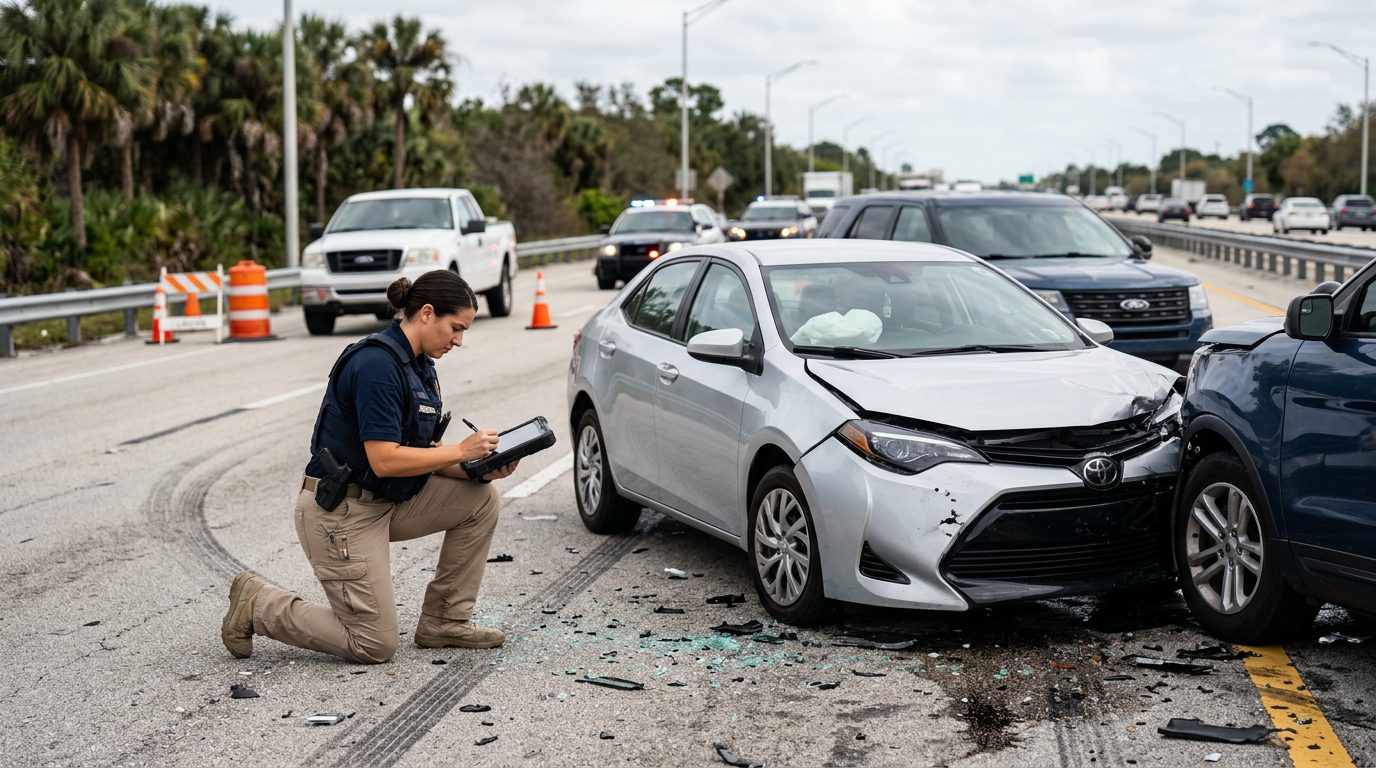
Car Accidents in Florida
Which Florida City Has the Most Car Accidents?
Understanding crash patterns across Florida and what to do if you're injured.
The Scale of Florida's Traffic Crisis
366,300
Traffic crashes in Florida (2025)
Nationwide leader
Among highest-accident states
By CHG Lawyers · Published September 16, 2026
Which Florida Cities Have the Most Car Accidents? Data and Your Rights
Jacksonville has the most car accidents in Florida by total number. Miami-Dade County and Tampa also rank very high. The answer depends on what you measure: total accidents (bigger cities have more) or accident rate per person (a different picture). If you’ve been injured in a car accident anywhere in Florida, you have legal rights and options.

Not sure what your next step is?
Talk it through with our team — the first consultation is free, confidential, and carries no obligation.
Which Florida Cities Have the Most Car Accidents?
Several Florida cities see high numbers of car accidents.
Tampa and Hillsborough County also rank among the top. The Fort Lauderdale and Broward County region sees high numbers too.
Florida recorded 366,300 traffic crashes in 2025, according to the Florida Department of Highway Safety and Motor Vehicles (FLHSMV). Orlando is another major high-accident city. Tourism and congestion on Interstate 4 drive these numbers.
Here’s an important point: Jacksonville may have the most total car accidents because it’s a large city with heavy traffic. But when researchers look at accident rate per 100,000 residents—a fairer way to compare cities of different sizes—the ranking can shift. Smaller cities with concentrated traffic problems may show higher crash rates per person.
Why Do These Florida Cities Have So Many Car Accidents?
Large population and dense traffic. More drivers on the road means more chances for collisions. Jacksonville, Miami, Tampa, and Orlando all have millions of residents and visitors daily.
Tourism and unfamiliar drivers. Orlando sees seasonal spikes because of theme parks and vacation travel. Miami Beach, Fort Lauderdale, and coastal cities attract rental-car drivers unfamiliar with local roads. Rental vehicles sometimes lack proper maintenance, adding risk.
Weather is a major factor. Florida’s sudden, heavy downpours create hydroplaning on wet pavement. Visibility drops fast from rain or fog. Drivers on I-95, I-75, or I-4 traveling at highway speeds may not have time to react.
Road infrastructure challenges. Aging pavement, construction zones, and confusing intersections all play a role. Interstate 4 sees constant construction and high-speed merging traffic.
Driver behavior. Distracted driving—phones, navigation systems, passenger distractions—remains a leading cause. Speeding, aggressive lane changes, tailgating, and ignoring traffic signals are common. Impaired driving (alcohol and drugs) contributes significantly to crash severity and fatality rates.
What Is the Deadliest Road in Florida?
Interstate 4 is frequently cited as one of Florida’s most dangerous corridors. High speed, heavy truck traffic, and sudden weather changes create hazardous conditions. Drivers often travel 70+ mph on I-4, and a sudden rainstorm or lane merge can trigger multi-vehicle pileups.
US Route 19 in Pinellas County has historically high fatality rates. US Route 441 and other state roads also see significant crash and fatality numbers.
A road can have fewer total car accidents but higher fatality rates. Daytona Beach, for example, had the most fatal car accidents in Florida per 100,000 residents and ranked second nationwide for traffic fatalities. High-speed corridors and intersections with poor visibility tend to produce more severe outcomes.
The FLHSMV publishes annual fatality data by roadway segment. You can see which specific roads and intersections have the worst safety records.
Have questions about what happened?
Ask our team directly. The first conversation is free, confidential, and there is no obligation to continue.
Common Causes of Car Accidents in Florida Cities
Distracted driving remains the leading cause across Florida. Speeding and aggressive driving contribute significantly to crash severity.
Weather-related factors—sudden downpours, fog, and reduced visibility—cause many car accidents, especially on interstates.
Impaired driving (alcohol and drug-related crashes) remains a persistent problem.
Failure to yield and traffic signal violations cause collisions at intersections.
Unsafe lane changes and merging, particularly on busy highways, result in side-impact and rear-end crashes.
Fatigue and drowsy driving on long interstate stretches lead to single-vehicle crashes and collisions.
How Do Population and Tourism Affect Car Accident Rates?
Florida’s largest cities have the highest total car accident numbers simply because they have more people and vehicles. Jacksonville, Miami, Tampa, and Orlando all see millions of vehicle trips annually.
Tourism hotspots experience seasonal spikes. Winter residents in South Florida, spring-break travelers in Orlando and Daytona, and summer vacation traffic all increase accident risk during peak periods. Rental-car drivers unfamiliar with local roads contribute to car accidents. Congestion on major routes during peak travel times—morning and evening rush hours, holiday weekends—raises collision likelihood.
What Should You Do If You’ve Been in a Car Accident in Florida?
Seek medical attention immediately, even if injuries seem minor. Some injuries—spinal cord damage, internal bleeding, traumatic brain injury—don’t show symptoms right away. Getting checked by a doctor creates a medical record tied to the accident.
Document the scene. Take photos of vehicle damage, road conditions, traffic signals, and street signs. Get the names, phone numbers, and insurance information of other drivers and witnesses. Ask police for the accident report number.
Notify your insurance company as soon as possible.
Keep detailed records of all medical treatment, lost wages, vehicle repair costs, and out-of-pocket expenses. These documents support any claim you file.
Remember that injuries can develop over days or weeks after the crash. Don’t assume you’re fine just because you feel okay immediately after the accident.
Understanding Your Rights After a Car Accident
Florida is a no-fault insurance state. Your own auto insurance covers your medical expenses and lost wages up to your policy limits, regardless of who caused the accident. This is called Personal Injury Protection (PIP). PIP pays 80% of reasonable medical expenses and 60% of lost income, up to the $10,000 policy limit, if you get initial care within 14 days of the crash (Fla. Stat. § 627.736).
Wrongful death claims can be brought by family members if a car accident results in a fatality. These claims seek compensation for funeral expenses, lost financial support, and the loss of companionship.
Under Florida Statutes § 95.11, you generally have two years from the date of the accident to file a lawsuit for personal injury.
Florida follows modified comparative fault (Fla. Stat. § 768.81). You can recover compensation even if you were partially at fault, as long as you were 50% or less at fault for the accident. If you were 30% at fault, for example, you can recover 70% of your damages.
Want to know where you stand?
Tell us what happened and our team will walk you through the options available to you, at no cost.
When Should You Contact a Personal Injury Attorney?
If you’ve suffered a serious or permanent injury from a car accident, an attorney can help you understand your options and protect your rights.
Contact an attorney if:
- Medical bills exceed your insurance coverage. You may have a claim against the at-fault driver’s insurance.
- You’re unable to work and facing lost income. Compensation for lost wages is part of a personal injury claim.
- The at-fault driver’s insurance company is disputing your claim or offering an inadequate settlement.
- The accident involved a truck, rideshare vehicle, or commercial driver. Liability and insurance rules are more complex in these cases.
- A family member was killed in the accident. A wrongful-death claim requires legal guidance.
Early consultation can help you avoid mistakes that hurt your claim. Insurance adjusters often try to settle quickly for less than your case is worth. An attorney who focuses on car accident claims can negotiate on your behalf and, if necessary, file a lawsuit.

FAQ
How many car accidents happen in Florida each year?
Florida’s roads carry a high volume of traffic every day.
Can I sue if I was partially at fault for a car accident in Florida?
Yes. Under Florida’s modified comparative-fault rule, you can recover compensation as long as you were not more than 50% at fault (Fla. Stat. § 768.81(6)). Your recovery is reduced by your percentage of fault.
What is the time limit to file a car accident lawsuit in Florida?
You have two years from the date of the accident to file a personal injury lawsuit under Florida Statutes § 95.11.
Is Jacksonville really the most dangerous city for car accidents in Florida?
Jacksonville consistently ranks highest in total car accident volume because of its large population and heavy traffic. However, smaller cities may have higher accident rates per capita.
What makes Interstate 4 so dangerous?
I-4 sees high-speed traffic, frequent weather changes, heavy truck volume, and constant construction. All of these increase the risk of serious multi-vehicle crashes.
If you’ve been hurt in a car accident in Jacksonville, Miami, Tampa, Orlando, Fort Lauderdale, or anywhere else in Florida—especially if the injury is serious or permanent—reach out to understand what comes next and what you may be entitled to recover. Get a free case evaluation from our team.
High-Accident Areas Across Florida
Miami-Dade County
Urban density, heavy commuter traffic, and complex intersections create frequent crash conditions. Accidents range from minor fender-benders to severe multi-vehicle collisions.
Broward County
I-95 corridor and local roads see consistent accident volume. Highway merges, distracted driving, and speed-related crashes are common.
Hillsborough County (Tampa Area)
Interstate 4 and local thoroughfares experience high crash rates. Weather, congestion, and truck traffic contribute to accident frequency.
Orange County (Orlando Area)
Tourism, theme-park traffic, and interstate corridors create unpredictable driving conditions and frequent collisions.
If You've Been in a Crash
Even minor-seeming accidents can cause hidden injuries. Some symptoms—neck pain, headaches, numbness—appear hours or days later. Don't wait to get medical attention or legal guidance.
What Happens After a Car Accident
Seek Medical Care First
Your health is the priority. Even if you feel fine, a medical professional can identify injuries that aren't immediately obvious.
Document the Scene
Take photos of vehicle damage, road conditions, traffic signs, and the other driver's information. Get contact details from witnesses.
Report to Your Insurer
Notify your insurance company promptly. Stick to the facts and avoid admitting fault or speculating about what happened.
Talk to a Personal Injury Attorney
An attorney can protect your rights, handle communications with insurers, and pursue fair compensation for your injuries and losses.
Common Questions About Florida Car Accidents
Can I recover compensation if I was partially at fault?
Yes. Florida's modified comparative-fault rule allows you to recover damages as long as you were not more than 50% responsible for the crash (Fla. Stat. § 768.81(6)). Your award is reduced by your percentage of fault.
What if the other driver was uninsured?
Your own uninsured motorist coverage can help pay for medical bills and other losses. An attorney can help you navigate this claim and explore other recovery options.
How long do I have to file a claim?
Time limits apply to personal injury claims in Florida. The sooner you contact an attorney, the sooner we can protect your rights and begin gathering evidence.
What if my injuries are severe or permanent?
Catastrophic injuries—spinal cord damage, traumatic brain injury, amputation, or severe burns—may entitle you to substantial compensation for lifetime medical care, lost wages, and pain and suffering.