
Florida Car Accident Report
Read Your Florida Crash Report, Then Take the Next Steps for Your Neck
Plain-language guidance for drivers and families after a Florida car accident that left them with whiplash or ongoing neck pain.
If you were hurt in a crash and your neck now aches, a Florida car accident report can be one of your first useful documents. It is the official written record of the crash. You can request it through the state’s crash records system, and you’ll want it for the insurance and medical steps ahead. This guide explains what the report is, how to look it up, and what else you should record so your neck injury is documented clearly.
Why Neck Pain After a Crash Deserves Attention Right Away
Tell a doctor about neck pain soon after a crash, even if you felt fine at the scene. Whiplash describes a neck injury caused by a sudden back-and-forth movement of the head. It can happen in rear-end and side-impact crashes.
Symptoms such as stiffness, headaches, shoulder pain, or dizziness can appear hours or days after a crash. Timing varies from person to person. A late start doesn’t make an injury less real, but it does make your records more important.
Follow the care plan your doctor gives you and keep every appointment. This page is general information and does not replace medical advice.
Start a written timeline now. Write down when the pain began, what you were doing, and what you told the officer and the other driver. Note any missed work, chores you can’t finish, and nights of poor sleep. Details fade fast, and a clear timeline helps your doctors and anyone reviewing your case.

Not sure what your next step is?
Talk it through with our team — the first consultation is free, confidential, and carries no obligation.
What a Florida Car Accident Report Is and Who Prepares It
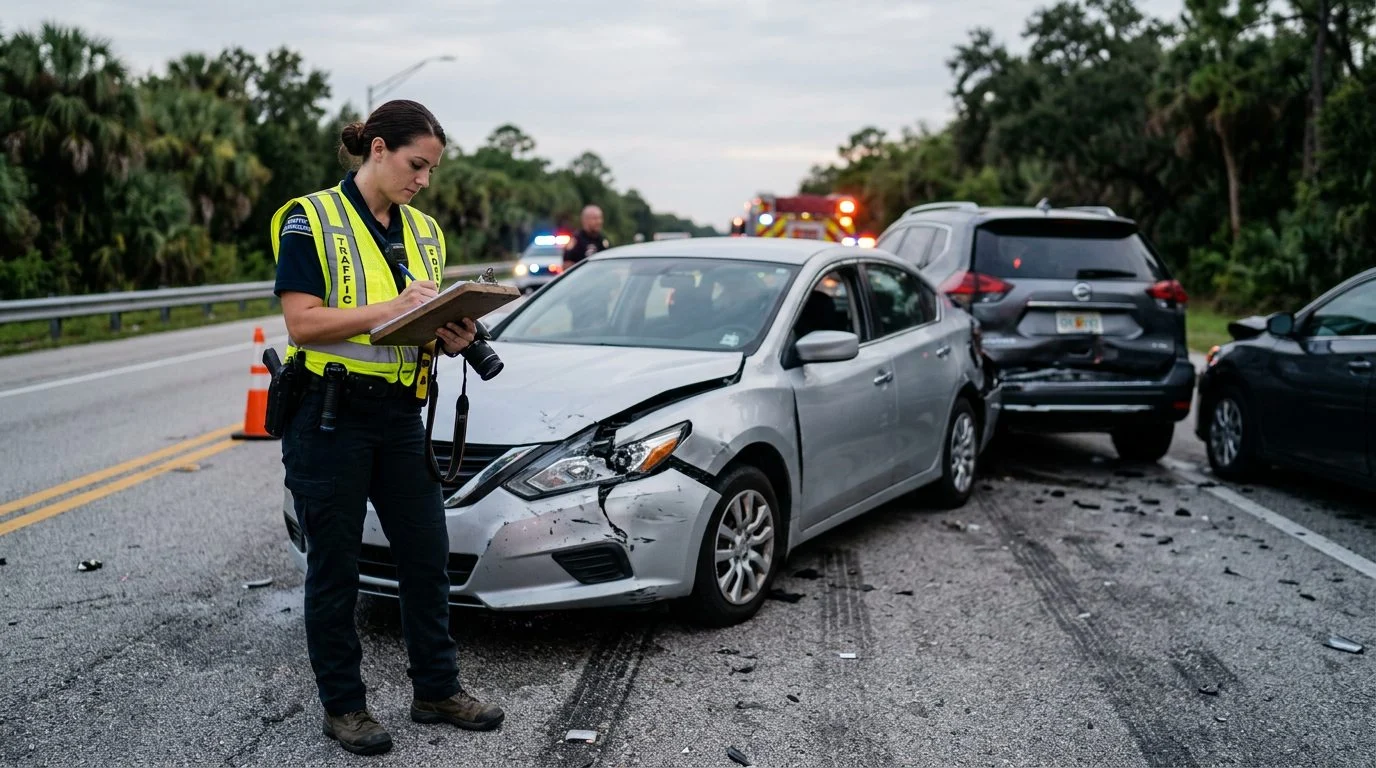
A Florida car accident report is the official written record of a crash, prepared by the law enforcement agency that investigated it. That agency may be the Florida Highway Patrol, a city police department, or a sheriff’s office.
A report can record the date, time, and location of the crash. It can also list the drivers and vehicles, witness information, and the officer’s observations. Some reports include a diagram or a narrative of what happened.
The Florida Department of Highway Safety and Motor Vehicles (FLHSMV) explains crash-reporting requirements on its traffic crash reports page. That page covers when law enforcement must be notified and how involved parties can obtain crash details.
Keep the limits in mind. The report records what the officer saw and heard. It does not, by itself, prove that a crash caused your neck injury. A report that lists no injuries at the scene also doesn’t settle a later neck problem. Your medical records do much of that work.
How to Look Up a Florida Crash Report Online
You can request a Florida crash report online, and the FLHSMV traffic crash reports page is a good place to see how the process works. Have a few details ready before you search.
Gather these items first:
- The crash date and the county where it happened
- The names of the drivers involved
- The crash or report number, if you have one
Search the Florida Crash Portal with these details. Choose the report that matches your crash. Check the amount shown on the portal before you pay, and keep a record of your payment.
A report may take time to appear after a crash. If your search finds nothing, try again later and keep your search details. Save a copy as soon as you receive the report, so you always have it on hand.
Getting the Report From the Police or Highway Patrol Instead
If the online search doesn’t find your report, ask the agency that investigated the crash for it directly. Contact the agency’s records office with the details you already have.
Prepare these items before you reach out:
- The name of the agency, such as the Florida Highway Patrol
- The date and location of the crash
- The names of the people involved
- Any report number the officer gave you at the scene
Each agency sets its own request process and fee, so confirm the steps with that agency before you send payment. A report may be requested in person or by mail. Whichever route you take, keep a copy of your request and any receipt. Those papers show when you asked, which helps if a delay becomes an issue.
Have questions about what happened?
Ask our team directly. The first conversation is free, confidential, and there is no obligation to continue.
When the Report Becomes Available and Who Can Get It
Access to a crash report can depend on timing and on who asks for it. The FLHSMV traffic crash reports page explains how and when involved parties can obtain crash details, so review it before you request a copy.
Keep record access separate from your claim deadlines. Access rules control who can see the report and when. Insurance claims and lawsuits follow their own timelines, which are covered below.
If you are helping an injured family member, you can help most by collecting the details, keeping copies, and bringing them to medical visits. Ask the agency which access rules apply to you. If you’re unsure who may receive a copy, ask the records office directly rather than guessing.
Florida’s rules can change, so confirm the current steps with FLHSMV or the agency. Keep a dated log of every request, call, and email you make.
Documenting Your Neck Injury Beyond the Crash Report
Your medical records document your diagnosis and treatment. The crash report does not. Keep everything related to your neck care in one folder.
- Every medical record, imaging result, referral, and prescription
- Every bill for neck care, with the dates of service
- Photos of vehicle damage, the scene, and any visible injuries
- Names and phone numbers of witnesses
Request copies of records from each provider. Keep a simple daily journal of pain levels, sleep, work limits, and activities you can’t do. The journal can show how the injury affects your daily life, and it gives your doctors a clearer picture too.
In some personal injury and wrongful death actions, Florida law also limits evidence of past medical treatment costs. Under Fla. Stat. § 768.0427, evidence offered to prove damages for past medical treatment or services that have been satisfied is limited to the amount actually paid, regardless of the source of payment, in personal injury and wrongful death actions filed after March 24, 2023. That same statute defines a letter of protection. Ask about any letter of protection before you sign anything.
Florida Options After a Whiplash Injury: PIP, Insurance Claims, and Deadlines
Whether an injured person may pursue a civil action against the at-fault driver depends on the facts of the crash and applicable Florida law, including the § 627.737 threshold. For background on crash insurance, see the FLHSMV crash insurance guidance. Florida’s car insurance rules also shape the options. Under Fla. Stat. § 627.736, personal injury protection (PIP) benefits are subject to conditions and limits, including that initial services and care must be received within 14 days after the crash, and percentage and dollar limits apply.
Under Florida Statutes § 627.737(2), the injury categories are significant and permanent loss of an important bodily function; permanent injury within a reasonable degree of medical probability, other than scarring or disfigurement; significant and permanent scarring or disfigurement; and death. Whether a particular injury fits one of them depends on the facts of the case, the medical records, and applicable Florida law. Section 627.737(2) sets this threshold for a tort claim seeking damages for pain, suffering, mental anguish, and inconvenience from the owner or operator of a motor vehicle covered by Florida’s required PIP security. It is not a test that every injury claim must meet. Whether a specific neck injury satisfies it is a legal question that depends on the facts and applicable Florida law, and medical records play a central role in that analysis.
For negligence causes of action that accrued after March 24, 2023, the general deadline is two years under Fla. Stat. § 95.11. Claims that accrued earlier fall under the prior four-year period, and exceptions apply. The statute includes exceptions, so don’t assume you have time. Under Fla. Stat. § 95.031, a cause of action accrues when the last element of the claim occurs. Deadlines apply, so contact CHG Personal Injury Lawyers promptly.
Under Florida law, an insurer may be required to respond to a written request for policy information that meets the requirements of § 627.4137, depending on the facts. Under Fla. Stat. § 627.4137, an insurer must provide a sworn statement within 30 days of a written request. Under Fla. Stat. § 627.4137, for each known policy, including excess or umbrella insurance, the sworn statement must set out the name of the insurer, the name of each insured, the limits of the liability coverage, a statement of any policy or coverage defense the insurer reasonably believes is available to it at the time of filing the statement, and a copy of the policy. Before you give a recorded statement to any insurer, understand your rights. Keep copies of every letter and email.

Talking With a Florida Personal Injury Lawyer About Your Crash
If you’re deciding whether to speak with an insurer or get legal guidance, a short conversation can help you sort out your next steps.
The practice focuses on serious injury and crash claims, including car accidents and neck injuries tied to crashes.
CHG offers a free first consultation that is confidential and carries no obligation to continue. CHG charges no attorney’s fees and no case costs unless there is a recovery.
Common Questions About Florida Car Accident Reports
Can I look up a Florida car accident report online?
Yes. The FLHSMV traffic crash reports page explains how and when involved parties can obtain crash details.
Does a crash report prove my neck injury?
No. A report records the officer’s observations and does not, by itself, show that a crash caused an injury.
How long do I have to file a Florida car accident claim?
For negligence claims that accrued after March 24, 2023, the general deadline under Fla. Stat. § 95.11 is two years, and exceptions apply. Contact CHG Personal Injury Lawyers promptly.
If neck pain is keeping you up at night and insurance calls keep coming, you don’t have to sort through the crash report, the medical paperwork, and the insurer questions alone. Reach out to CHG Personal Injury Lawyers through our contact page to talk through what comes next.
Next Steps After a Florida Car Accident
See your doctor and follow the care plan
Symptoms of whiplash can appear hours or days after a crash. Follow your doctors' care and tell them about every symptom you notice.
Keep your records together
Save medical bills, appointment notes, prescriptions, photos, and any letters from insurers in one place so the full picture is easy to review.
Talk with a Florida injury lawyer
A lawyer can review your crash report alongside your medical records and explain how Florida law may apply to your situation.
Want to know where you stand?
Tell us what happened and our team will walk you through the options available to you, at no cost.
What a Crash Report Can and Cannot Tell You
It records the officer's observations
A report describes what the officer saw and recorded at the scene, including vehicle positions, statements, and the information gathered that day.
It does not prove an injury on its own
A report does not, by itself, show that a crash caused a neck injury. Whether an injury is connected to a crash depends on the facts and your medical records.
Your medical records tell your health story
Doctors' notes, imaging, and treatment records document your symptoms and care over time.
Your rights depend on your facts
Whether you have a claim depends on the facts of your case and applicable Florida law. A lawyer can explain how these rules may apply to you.
Do Not Wait to Get Checked
Neck pain or stiffness after a crash should be evaluated by a medical professional. This page does not provide medical advice. Follow your doctors' care, and keep your appointments.