
Florida Car Accidents
Record It Right: What Your Car Accident App Should Capture After a Florida Crash
In the confusion after a crash, a few careful notes, photos, and saved records can make a real difference later. Here is what to capture and why it matters.
About CHG Personal Injury Lawyers
Florida
Florida-based personal injury firm serving people across the state
Licensed
Attorneys admitted to The Florida Bar
By CHG Lawyers · Published October 22, 2026
A car accident app can help you record what happened after a crash. But the record matters more than the app. Photos, dated notes, witness names, and medical records tell the story clearly. This guide explains what to capture in Florida and why each item can matter. Igor Hernandez, one of the firm’s lawyers, is the responsible lawyer for this page. CHG Personal Injury Lawyers represents people hurt in crashes throughout Florida.
Why What You Record After a Crash Matters
Keeping good records after a crash helps you explain what happened later. Your hands may be shaking. Traffic may still be moving. Other people may be talking at once. Remembering details in that moment is hard, even for careful people.
Scenes change quickly. Cars get towed. Skid marks fade. Witnesses leave before anyone asks them for a name. Details captured early are usually the easiest to rely on later.
Florida drivers carry personal injury protection (PIP) as part of their car insurance. The rules for those benefits, including which benefits are required and how claims work, are set out in Fla. Stat. § 627.736. Your records show what happened and what care you needed.
Use this checklist in order. Start with safety. Then move to the crash report, photos and video, written notes, the other people involved, phone tools, and medical records.
Not sure what your next step is?
Talk it through with our team — the first consultation is free, confidential, and carries no obligation.
Safety First, Then the Crash Report
Your first job is safety, and the crash report comes after that. If you can, move to a safe spot away from traffic. Check everyone for injuries. Call 911 if anyone is hurt.
Next, write down the name and badge or unit number of any responding officer. Ask for the report number before you leave the scene. Keep that number somewhere you can find it later.
Afterward, ask the agency that responded for a copy of the crash report. Read it closely. If something is wrong, write down the error and why you believe it’s wrong. Keep the report with your other records.
Don’t sign documents at the scene that you don’t understand. Take a moment to read them, and ask questions first.
Photos and Video: What to Capture at the Scene
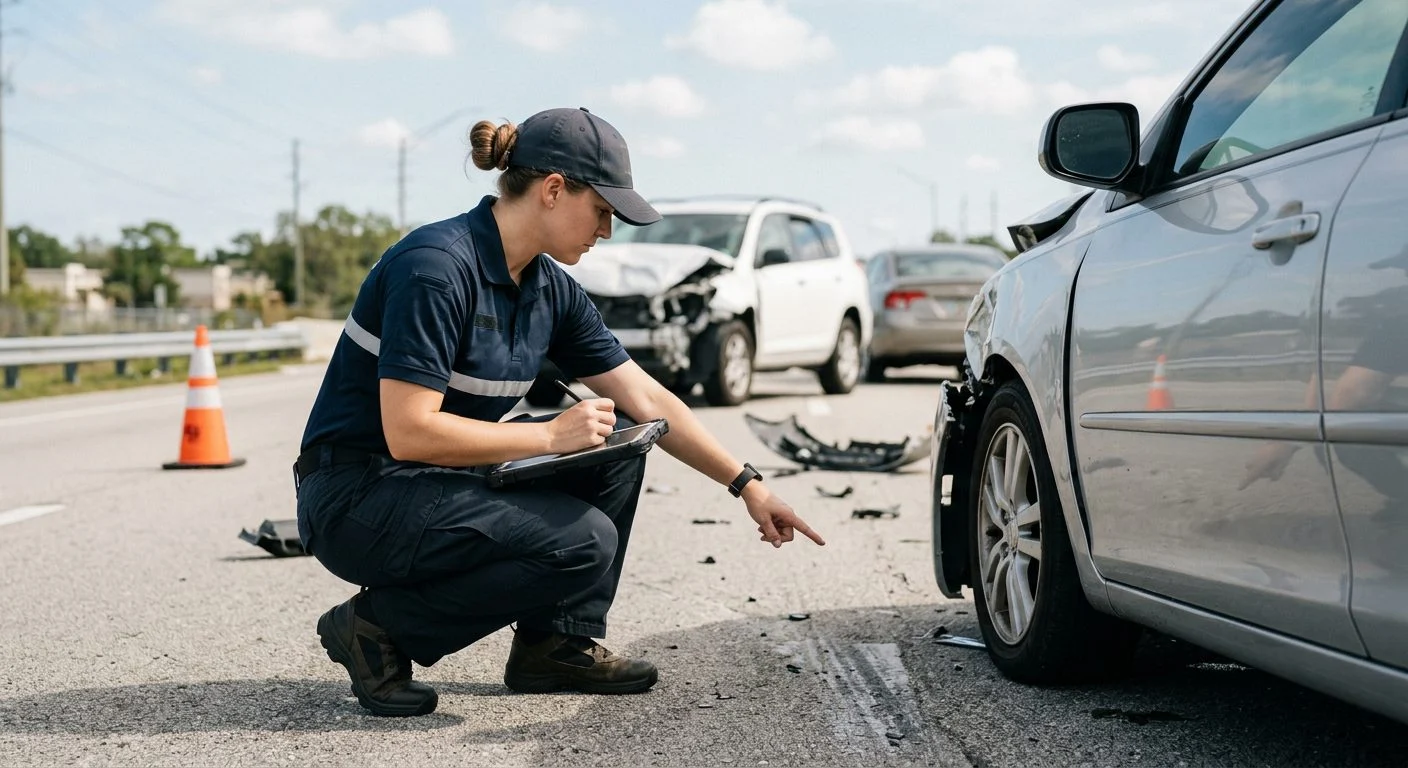
Take wide photos of the road first, then close-ups of the damage. Wide shots help show how the crash happened. Close-ups help show how hard the impact was.
Wide shots should include the intersection or roadway, the lanes, traffic signals, stop signs, lighting, weather, and road conditions. Photograph each vehicle from several angles, including the undamaged areas. Capture where the cars came to rest, along with skid marks, debris, fluid, and broken glass.
Photograph license plates. Photograph visible injuries only with the injured person’s consent.
Note whether everyone was wearing a seat belt, and photograph it if you can. Florida’s Safety Belt Law says a violation is not automatically negligence. It can still be considered as evidence of comparative negligence (shared fault) in a civil case under Fla. Stat. § 316.614. See Fla. Stat. § 316.614.
Record a slow walk-around video of the scene. If you have a dashcam, save the file right away so it isn’t recorded over. Many dashcams and security systems overwrite old footage on a loop.
Written Notes: Your Account While It Is Fresh
Write your account of the crash as soon as you can, while the details are still clear. Notes made close to the event are easier to explain later.
Start with the basics: the date, time, exact location, direction of travel, and weather. Then describe in your own words how the crash happened. Write what you saw and heard, and what each driver said at the scene.
Record who was in each vehicle and where each person sat. Note the speed you believe each car was traveling, and any phone use or other distraction you noticed. Date and time each note when you write it.
Symptoms can appear days after a crash. Keep a running log of pain, stiffness, headaches, sleep problems, or confusion, with dates. Share these changes with your doctor, and follow your doctor’s care.
Other Drivers, Passengers, and Witnesses
Get the other driver’s full details and the names of anyone who saw the crash. These details are easy to forget and hard to recover later.
Collect the other driver’s full name, phone number, address, insurance company, policy number, license plate, and vehicle details. Ask passengers and bystanders for their names and phone numbers. Note which people saw the crash itself, and which arrived afterward.
Memories fade quickly. With permission, write down what each witness tells you, and date the note. A short voice memo can work too, if the witness agrees.
Insurance information matters as well. Under Fla. Stat. § 627.736, PIP benefits are overdue if the insurer does not pay them within 30 days after it receives written notice of the covered loss and its amount, and a separate statute, Fla. Stat. § 627.4137, requires each insurer that does or may provide liability coverage for the claim to give the claimant a sworn statement of certain policy information within 30 days of the claimant’s written request. That includes policy limits and a copy of the policy. See Fla. Stat. § 627.4137. Make your request in writing so you have a record of it.
Keep your own statements short and factual. Don’t guess about speed or who was at fault. Stick to what you saw and heard.
Have questions about what happened?
Ask our team directly. The first conversation is free, confidential, and there is no obligation to continue.
Using Your Phone and Apps to Document the Crash
Yes, some phones and smartwatches can detect a crash. Availability and settings vary by device and carrier.
Check your phone’s safety and emergency settings now, before you need them. Find any crash detection feature, and learn how to turn it on. Know where your emergency contacts are saved.
A camera app keeps photos with date and time stamps. A notes app keeps your timeline in one place. Cloud backup can save both, so a dropped or damaged phone doesn’t erase them.
A car accident app works best when it keeps original files. Keep the unedited originals. Don’t crop, filter, or delete photos, even ones that look poor. If you want to share a version, save an edited copy separately.
Keep details about the crash off social media. Posts can be seen by insurers and by other people involved, and they can be read out of context.
Medical Records, Bills, and Insurance Letters
Get medical care after a crash, and keep every record of it. This page isn’t medical advice. Follow your doctor’s care, and tell your doctor about all your symptoms, even minor ones.
Keep every bill, prescription receipt, and statement from your health providers. Keep a mileage log of trips to appointments. Note any time you missed from work and the reason.
Save every letter from your insurer. Include the claim number, the adjuster’s name, and the adjuster’s phone number. Write the date you received each letter.
If a medical provider treated you under a letter of protection (a promise to be paid from any settlement or judgment), Florida law sets required disclosures. See Fla. Stat. § 768.0427. Keep that paperwork with the rest of your file.
Florida Deadlines and Why Timing Matters
Under Florida law, most negligence lawsuits generally must be filed within two years. Other deadlines can apply, depending on the facts. Don’t wait to learn which ones apply to you.
Filing deadlines are set by statute. See Fla. Stat. § 95.11. Acting early gives you more time to gather records while they’re still easy to find.
Florida also uses modified comparative fault (shared fault). Under Fla. Stat. § 768.81, in a negligence action, a party found greater than 50 percent at fault for his or her own harm may not recover any damages; this does not apply to actions for personal injury or wrongful death arising out of medical negligence under chapter 766. That is why clear records of how the crash happened matter.
Florida also limits pain-and-suffering claims in many car crash cases. The injury generally must involve significant and permanent loss of an important bodily function, permanent injury, significant and permanent scarring or disfigurement, or death. See Fla. Stat. § 627.737. Medical records that document lasting injury matter for this reason.
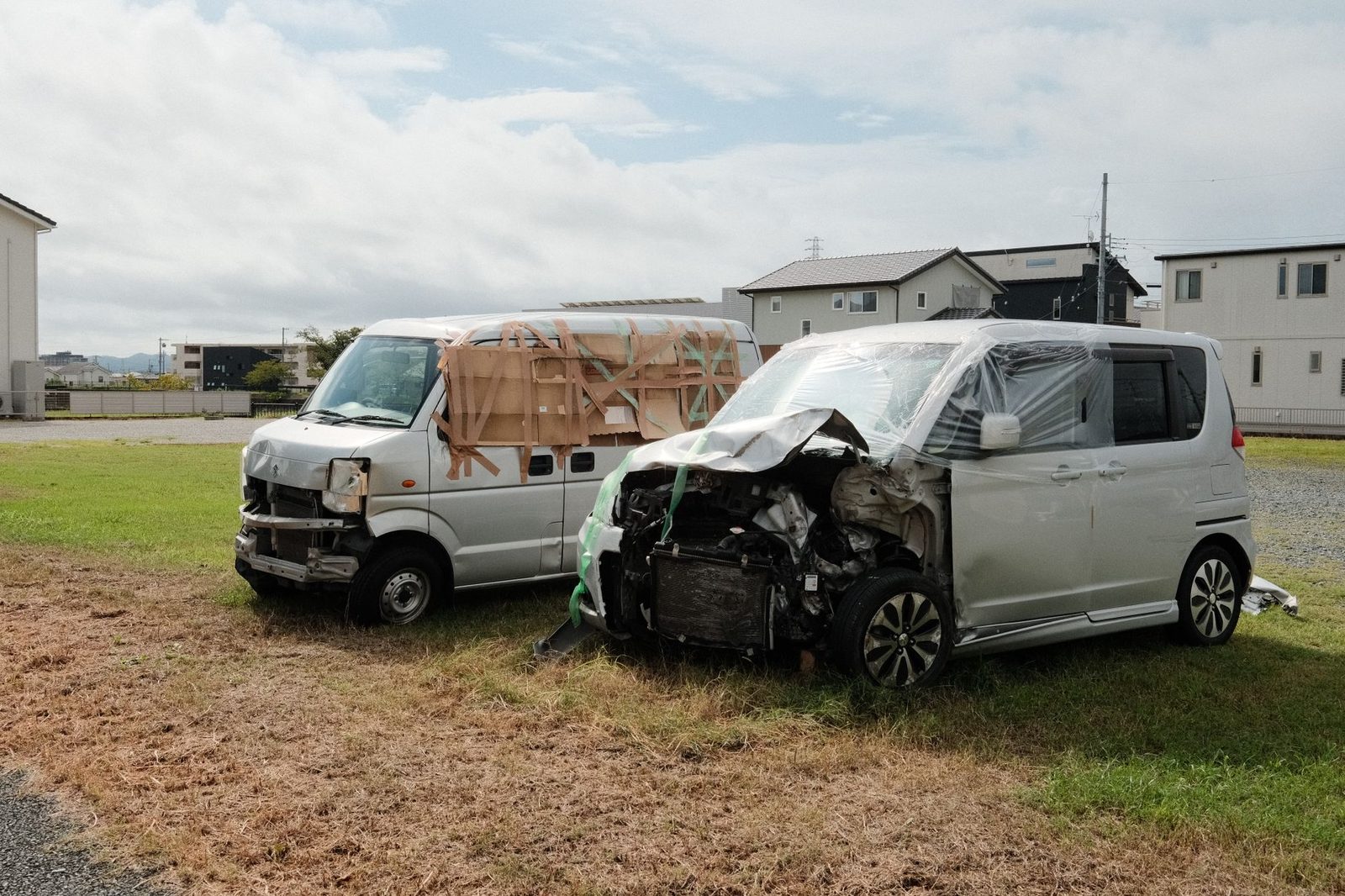
Evidence can disappear. Video can be erased on a schedule, and damaged vehicles are often repaired or sold. Save what you have now.

If You Are Gathering Details for Someone Else
If you’re gathering details for someone else, the first steps are simple. Collect the photos, the report number, and the medical paperwork.
Maybe you’re researching for a parent, spouse, child, or friend who was hurt. They may still be recovering, and you may be handling this alone. Take the photos from your phone and save them in one folder. Ask the injured person what they remember, and write it down in their words.
Keep a list of appointments, missed work, and bills. Ask the responding agency for the report number, and save any letters from insurers.
CHG Personal Injury Lawyers charges no attorney’s fees and no case costs unless there is a recovery.
Can my phone detect a car crash?
Some smartphones and smartwatches include crash detection. Settings vary by device and carrier, so check yours now.
Is a car accident app enough to protect my claim?
A car accident app can store photos and notes. The original files and complete records matter most.
Does not wearing a seat belt affect a Florida claim?
A seat-belt violation is not automatically negligence in Florida. It can still be considered as evidence of comparative negligence. See Fla. Stat. § 316.614.
Gathering these details for someone you love, or for yourself, can feel like a lot at once, and our team at CHG Personal Injury Lawyers offers a free, confidential first consultation with no obligation to continue.
What to Record at the Scene
Photos and Video
Capture the vehicles from several angles, the damage to each car, the intersection or road layout, traffic signals, skid marks, weather, and lighting. Take wide shots and close-ups, and keep the original files.
Other Drivers and Vehicles
Note each driver's name, phone number, insurance company and policy number, license plate, and vehicle make, model, and color. A photo of the other driver's insurance card and license can help you avoid transcription errors.
Witnesses and Police
Write down names and contact details for anyone who saw the crash. Record the responding officer's name and badge number, and the report number, so the official report can be requested later.
Your Symptoms and Medical Care
Describe how you feel, including pain, numbness, dizziness, or headaches, even if they seem minor. Log every doctor visit, test, and prescription, and follow your doctors' instructions for care.
Want to know where you stand?
Tell us what happened and our team will walk you through the options available to you, at no cost.
Why Your Records Matter
Details fade quickly
Memories of a crash change over time. Notes and time-stamped photos capture what you saw while it was fresh.
Original files are key
Keep the original photos, videos, and messages on your device and in a backup. Edited or cropped copies can raise questions later.
Health records tell the story
A consistent record of your symptoms and treatment helps your doctors and your family understand your recovery.
Family can help
Loved ones can help gather information, keep a daily log, and track appointments while you focus on healing.
Be Careful What You Share
Avoid posting about the crash on social media, and do not discuss fault with the other driver or insurance representatives before speaking with a lawyer. Your app notes and photos should be kept private and shared only with your attorney or medical providers.