

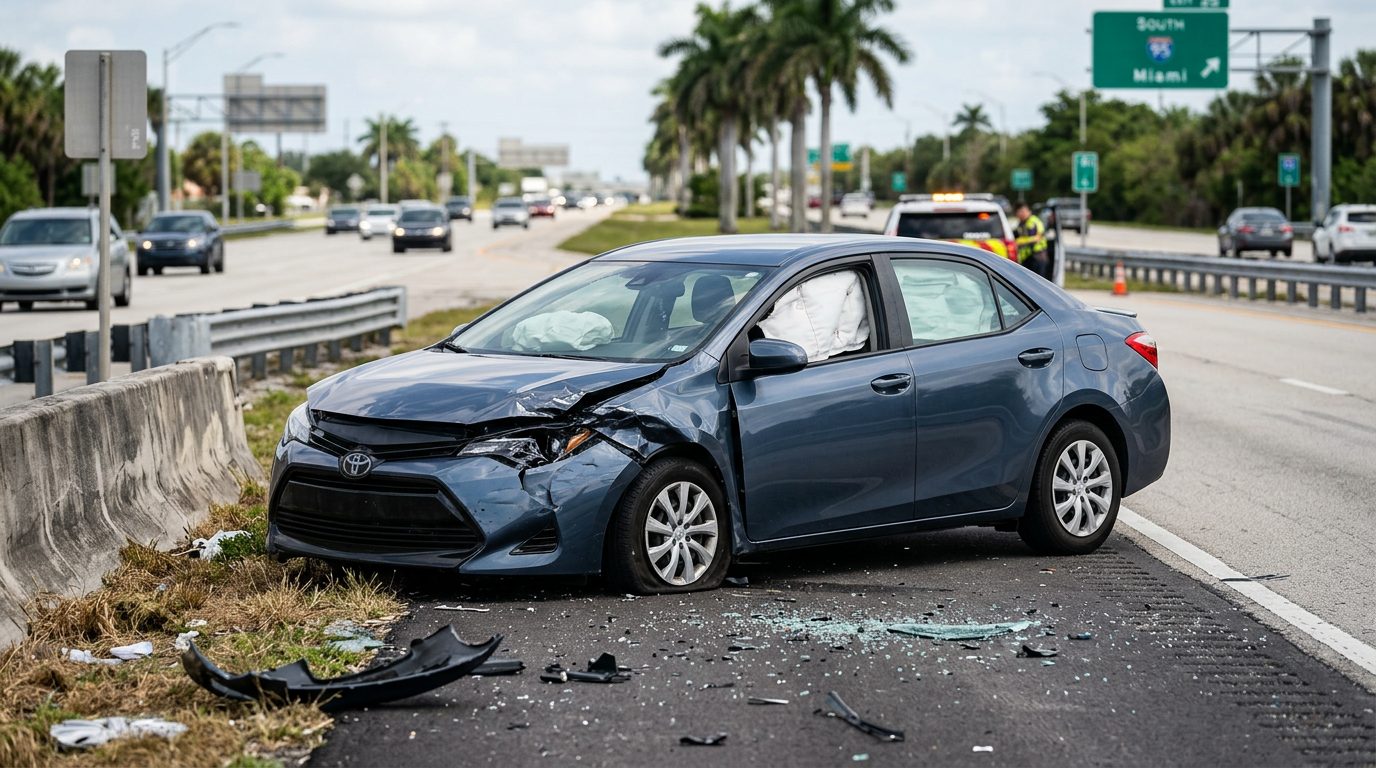
By Igor Hernandez, CHG Lawyers, Coral Gables, Florida
Some injuries do not show up clearly on the first scan. Learn why documentation matters, what can make an injury harder to document, and how CHG Personal Injury Lawyers can help you understand your situation in Florida.
What Is the Hardest Injury to Prove After a Car Accident?
By Igor Hernandez, CHG Lawyers, Coral Gables, Florida
What is the hardest injury to prove after a car accident? After a crash, one question may keep coming back: will my injury be hard to prove? The short answer is that no single injury is always the hardest to prove. How any injury is evaluated depends on the facts of each case and the medical records. Each claim depends on its own medical records and facts. This page is general education, not legal advice.
Short answer: no single injury is always the hardest to prove
No single injury is always the hardest to prove. Proof depends on the medical records, the facts of the crash, and the specific dispute.
Some injuries are harder to show on a test. These include soft-tissue injuries, mild concussions, chronic pain, and symptoms that start days or weeks later. These injuries may not show clearly on a scan. Because of this, insurers may question them.
Another way to think about it is objective versus subjective proof. Objective proof is something a test can show. Subjective proof is what a person feels and reports.
Some injuries show up on imaging, such as X-rays, CT scans, or MRI scans. Others are documented mainly through exam findings, symptoms, and the history a person gives. Neither type is automatically stronger. Whether the medical record tells a clear, consistent story over time may be relevant, depending on the facts of each case.
What is the hardest injury to prove? Why some are harder to document
Injuries are harder to document when the proof rests mostly on what a person feels. It is harder when there is no measurable finding. Questions about what imaging shows should be directed to your doctors. A sore neck or foggy thinking after a crash may not. At least, it may not show up on the first test. That gap is why these claims draw questions.
Whether a scan shows an injury depends on three things. These are the injury, the type of scan, and when the scan was done. Doctors choose which tests to order based on symptoms and exam findings.
A normal scan does not mean a person was not hurt. A clear scan does not decide a case on its own. Your doctor is the right person to explain which tests fit your condition.
When you talk with your medical providers, describe every symptom, even small ones. Say when each one started and how it has changed. An accurate record may be relevant to a claim, depending on the facts of each case.
Soft-tissue injuries: whiplash, sprains, and strains
Soft-tissue injuries can be disputed. Your doctors can explain which conditions they are evaluating and what testing is appropriate for you. Sprains and strains in the back, shoulders, and hips can work the same way.
Records that may be relevant include:
- an early medical evaluation
- consistent treatment visits
- detailed notes about pain and movement limits
- imaging, when a doctor orders it
A pain log can show how the injury affects work and daily tasks. Following your doctors’ recommended care is important, and how your medical records read may be relevant to a claim, depending on the facts of your case.
Outcomes depend on your doctors, your body, and the facts of the crash. No one can say in advance how your records will be read.
Concussions and mild traumatic brain injuries
Concussions and mild traumatic brain injuries can be hard to prove. Questions about brain injury testing and results should be directed to your doctors. Each case is different. Your medical team should explain what applies to you.
Documentation that may be relevant includes:
- a neurological exam
- a written symptom log covering headaches, memory, focus, sleep, and mood
- neuropsychological testing, when a doctor orders it
Work records, school records, and notes about changes in daily life may also help. Statements from people who know you well can describe changes that a short clinic visit might miss.
Chronic pain and delayed-onset symptoms
Symptoms that begin days or weeks after a crash can lead insurers to ask whether the crash caused them. A delay is not automatically a problem. But it does need a clear explanation in your records. If you first noticed symptoms later, tell your doctor when you noticed them and what changed.
Prompt and continuing medical care may be relevant as documented loss. Ongoing pain can also be tracked over time through treatment notes and symptom logs. A diagnosis or the length of your symptoms may be relevant to a claim. But neither one promises any particular result.
How Florida law and insurance rules affect proof
Whether pain, suffering, mental anguish, and inconvenience may be recoverable in a Florida motor-vehicle claim depends on the facts of each case and on applicable Florida law, including the permanency threshold in § 627.737(2), Florida Statutes. The conditions include:
- significant and permanent loss of an important bodily function
- permanent injury within a reasonable degree of medical probability (other than scarring or disfigurement)
- significant and permanent scarring or disfigurement
- death
Comparative fault may also limit recovery, depending on the facts of each case, as described below (Fla. Stat. § 768.81(6)).
Florida’s no-fault system uses personal injury protection (PIP). PIP benefits are described in Fla. Stat. § 627.736. Under that statute, an injured party generally may not recover damages for which PIP benefits are paid or payable. Results depend on the facts of each case.
Comparative fault (shared fault) also matters. Under Fla. Stat. § 768.81, for negligence actions filed after March 24, 2023, a plaintiff whose fault is greater than 50 percent may be barred from recovering damages, and how that rule applies depends on the facts of each case, the statute’s other requirements, and its exceptions. That subsection does not apply to medical negligence claims under chapter 766.
Florida sets filing deadlines for different types of claims in Fla. Stat. § 95.11. Deadlines depend on the type of claim, and exceptions may apply. Each case depends on its own facts, so the deadline for your situation should be reviewed promptly.
How insurers may dispute injuries they cannot see
Insurers may question an injury for two main reasons. They may doubt the crash caused it, or the records may raise questions. Topics that may come up include pre-existing conditions, gaps in treatment, and differences between what you told different providers.
Medical bills follow their own rules. Under Fla. Stat. § 768.0427, for causes of action filed after March 24, 2023, evidence of damages for past medical treatment that has been satisfied may be limited to the amount actually paid, regardless of the source of payment, and how that rule applies depends on the facts of each case and the statute’s other requirements. The statute has conditions and exceptions, and each case depends on its own facts.
Medical records, consistent reporting, and a clear treatment history may be relevant to these questions. Insurer positions and outcomes vary. They cannot be predicted.
Steps that may help document an injury after a crash
Early, consistent documentation may help answer questions later. These steps may help:
- See a medical provider promptly. Follow the treatment plan your doctor recommends.
- Keep a daily symptom and limitation journal.
- Take photos of visible injuries and vehicle damage, if you can do so safely.
- Keep records of missed work, lost activities, and out-of-pocket costs.
- Keep the crash report, witness names, and contact details.
- Be careful with recorded statements. Ask questions first. Understand what you are agreeing to.
These steps are general. Your situation depends on your facts and on the law that applies to it.
Talk with CHG Personal Injury Lawyers about your situation
You may be reading this for a parent, spouse, or friend. You may also be managing pain, appointments, and insurance calls. If you are trying to decide whether an injury that does not show on a scan can be documented, you do not have to work through it alone. You can also ask what Florida’s rules may mean for your situation, since whether a claim exists depends on the facts, the medical records, and the applicable law.
CHG Personal Injury Lawyers is a Florida firm. It represents people hurt in accidents throughout Florida. Igor Hernandez, an attorney admitted in Florida as a member of The Florida Bar, is the responsible lawyer for this page. The firm’s office is in Coral Gables, Florida.
CHG charges no attorney’s fees and no case costs unless there is a recovery. If you have questions about your situation, contact CHG. CHG charges no attorney’s fees and no case costs unless there is a recovery.

Frequently Asked Questions
Which injuries can be harder to prove after a car accident?
Injuries that do not show up clearly on standard scans may be harder to document than broken bones. Examples include some soft-tissue, neck, back, and concussion-related injuries. How hard an injury is to prove depends on the medical records, the treatment history, and the facts of each case.
Why can some injuries be harder to prove than broken bones?
Some injuries may not appear on X-rays or other imaging. So proof often relies more on medical evaluations, symptom records, and treatment notes. Every injury and every case is different. Results are not guaranteed.
Does a Florida car accident claim for pain and suffering require a permanent injury?
Under Florida Statute § 627.737(2), pain and suffering damages in many motor vehicle claims generally require a permanent injury. The injury must be within a reasonable degree of medical probability. Another qualifying condition listed in the statute may also apply. Comparative fault may also limit recovery. How the statute applies depends on the facts of each case.
What kinds of evidence may help document an injury after a car accident?
Prompt medical evaluation, consistent follow-up care, and complete medical records may be relevant. Photos of the scene and injuries, and the police report, may also help. CHG can review which evidence may apply to your situation, depending on the facts. CHG charges no attorney’s fees and no case costs unless there is a recovery.
How CHG Works With You
Florida-Based Office
CHG Personal Injury Lawyers has its office in Coral Gables, Florida, and represents people throughout Florida.
Igor Hernandez, Responsible Lawyer
Igor Hernandez is a member of The Florida Bar and leads each matter handled by our team.
Careful Record-Keeping
We help you organize medical records, bills and accident details so the facts of your case are clear.
Plain-Language Guidance
We explain the legal process in everyday terms, so you understand each step before you decide what to do next.
Injuries That Can Be Harder to Document
Soft-Tissue Injuries
Concussion-Related Symptoms
Delayed Symptoms
Next Steps
Follow your doctors' care, keep your appointments, and contact CHG Personal Injury Lawyers to discuss how the facts of your case may be reviewed.
Keep Your Records
Save every medical record, bill, prescription receipt and photo related to the crash. Write down symptoms and how they change over time. These records may be relevant to your case, but whether a claim exists depends on the facts, the medical records and the applicable Florida law.