

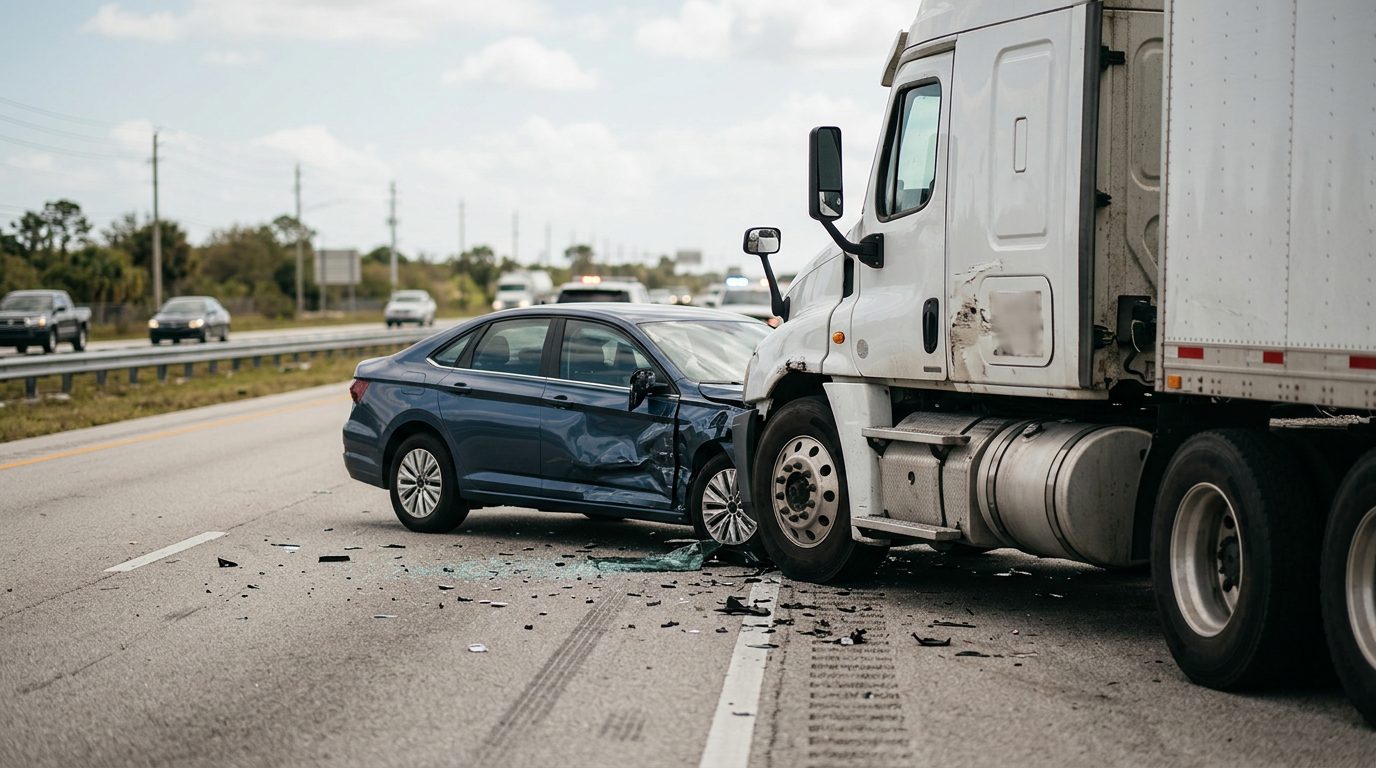
Florida Truck and Car Accident Guide
Truck Accident Cases vs. Car Accidents: What Florida Families Should Know
A crash with a commercial truck can raise different questions than an everyday car accident. This plain-language guide explains how the two can differ and how CHG Personal Injury Lawyers can help you understand your options.
By CHG Lawyers · Published October 14, 2026
How a Truck Crash Differs From a Car Crash
A truck crash case is different from a car crash case. A commercial truck is usually run by a company. That company also follows federal rules and keeps records.
These facts can change who may be responsible. They can also change what evidence exists.
Imagine you are driving on I-95 near Jacksonville. A tractor-trailer changes lanes and hits your car. You may wonder if it is just like any other wreck. In many ways, it is not.
A car crash claim often centers on one driver. A truck crash can involve a company, federal rules, and a paper trail. These differences matter early. They shape who you may need to identify. They also shape which records may need to be requested.
This guide is for injured Floridians and their families in Miami, Orlando, Tampa, Jacksonville, and nearby communities. It explains these issues in plain words. It does not predict results. Each case depends on its own facts. No particular result is promised.
If a semi or box truck was part of your Florida crash, you may be wondering who is responsible and what to say to an insurer, and our team can talk it through with you. Talk it through with our team — the first consultation is free, confidential, and carries no obligation.

Commercial Trucking Rules May Apply
Trucking companies and drivers are generally subject to federal safety rules. Those rules can matter in a truck case. Passenger car drivers usually do not work under the same schedules or record-keeping duties.
Federal hours-of-service rules limit how long drivers may work and drive. They generally require a driver to take 10 consecutive hours off duty before driving. Under § 395.3, a driver may drive a total of 11 hours during the period specified in paragraph (a)(2) of this section. § 395.3 provides that, except as otherwise provided in § 395.1, no motor carrier shall permit or require any driver used by it to drive a property-carrying commercial motor vehicle, unless the driver complies with the listed requirements. This includes a 30-minute break after more than 8 hours of driving.
Federal rules also place duties on the motor carrier. A motor carrier is the company that operates the trucks. § 390.11 provides that whenever a duty is prescribed for a driver or a prohibition is imposed upon the driver, it shall be the duty of the motor carrier to require observance of such duty or prohibition. § 396.3 provides that every motor carrier and intermodal equipment provider must systematically inspect, repair, and maintain, or cause to be systematically inspected, repaired, and maintained, all motor vehicles and intermodal equipment subject to its control.
Whether a violation matters depends on the facts of each case.
Florida also has its own rules for commercial vehicles. How they apply depends on the vehicle, the route, and the trip.
More Than One Party May Be Responsible
In a car crash, the question is often about the driver. In a truck crash, more parties may need to be identified. This depends on the facts. These parties can include:
- The driver
- The trucking company or the driver’s employer
- A freight broker that arranged the load and chose the carrier
- A company that loaded or secured the cargo
- A maintenance contractor or a parts maker
Florida law may also hold an employer responsible in some situations. A company’s hiring, training, and supervision of a driver may also be examined. Whether any of these claims applies depends on the facts.
Not every party named in a claim is ultimately responsible. Identifying the right parties early can help you understand your options.
Why Truck Crash Evidence Needs Prompt Attention
Truck crashes can produce more records than car crashes. Many of those records are held by companies, not by the injured person. Examples include:
- Electronic logging device data showing driving and rest hours
- Engine control module data, which can record speed and braking
- Dash camera video
- Dispatch and messaging records
- Driver logs, inspection reports, and maintenance files
- Shipping papers, called bills of lading
§ 396.3 provides that the records required by this section shall be retained where the vehicle is either housed or maintained for a period of 1 year. Those records must also be kept for 6 months after the vehicle leaves their control. It does not set a schedule for every record in a truck crash.
A preservation letter is a written request. It asks a company to keep relevant records. Sending one promptly may help protect records. No letter can ensure that every record survives.
Outside accident reconstruction professionals may study vehicle data, speed, and stopping distance. Their conclusions depend on the data that is available.
Insurance Coverage Is Layered and Different
Commercial carriers must carry federal financial responsibility. This means they must prove they have insurance. § 387.7 provides that no motor carrier shall operate a motor vehicle until the motor carrier has obtained and has in effect the minimum levels of financial responsibility as set forth in § 387.9 of this subpart. This guide does not state those amounts.
Florida’s no-fault system uses personal injury protection (PIP) benefits. Fla. Stat. § 627.736 governs those benefits.
Under Fla. Stat. § 627.737, a claim for pain and suffering in a motor vehicle case is allowed only if the injury consists in whole or in part of:
- Significant and permanent loss of an important bodily function
- Permanent injury within a reasonable degree of medical probability, other than scarring or disfigurement
- Significant and permanent scarring or disfigurement
- Death
Comparative fault may also limit recovery. Comparative fault means each person’s share of blame is weighed. Under Fla. Stat. § 768.81, a party found more than 50 percent at fault for his or her own harm may not recover damages in a covered negligence action. That subsection does not apply to medical negligence actions.
An insurance company is not the same as the person who caused the crash. A claim against an insurer follows its own rules. Ask how these rules apply to your facts.
Catastrophic Injuries and Wrongful Death in Truck Crashes
Truck crashes can cause catastrophic injuries and deaths. Florida law may allow families to pursue a wrongful death claim in some cases.
Crashes with large vehicles can involve severe forces. Injuries may include spinal cord injuries, traumatic brain injuries, amputations, severe burns, and other life-changing harm. Outcomes vary. They depend on each person’s medical care and doctors.
A claim may address documented losses. These can include medical care, rehabilitation, adaptive equipment, lost income, and changes to daily life. Whether each loss is recoverable depends on the facts and the law.
When a death results from another’s wrongful act or negligence, Fla. Stat. § 768.19 says the party who would have been liable had death not occurred remains liable for damages. Fla. Stat. § 768.21 lists categories of damages survivors may recover. The statute lists categories.
Families facing this kind of loss have important choices. A conversation about the facts can help them see what may come next.
Not sure what your next step is?
Talk it through with our team — the first consultation is free, confidential, and carries no obligation.
Frequently Asked Questions
What should I not tell my insurance company?
Be careful with recorded statements. You may ask to speak with a lawyer first. You should not sign a release you do not understand.
What makes a truck accident case different?
Each case depends on its own facts, and how Florida law applies depends on those facts. The parties and evidence are often different.
How long do I have to file?
Deadlines depend on the claim and the filing date. Filing deadlines for Florida personal injury claims depend on the type of claim, when it arose, and the facts of each case, so it is important to speak with a lawyer promptly. Exceptions apply.
Is there a cost to talk with a lawyer?
The initial consultation is free, confidential, and without obligation. CHG charges no attorney’s fees and no case costs unless there is a recovery.
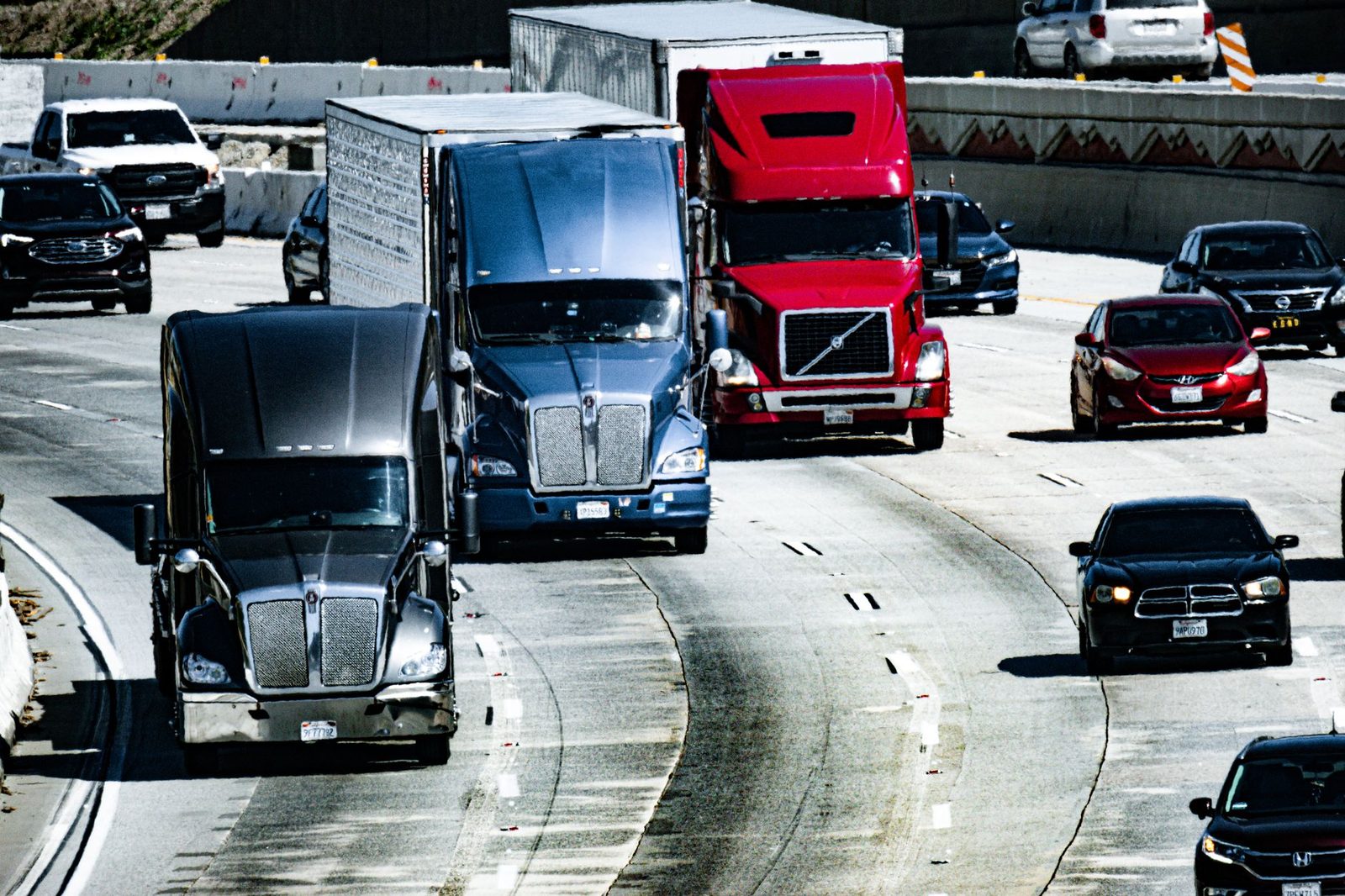
What to Expect When You Contact Our Firm
You can start with a confidential conversation. You can talk about your crash, your injuries, and the records that may exist.
- Contact the firm. Share the basic facts. Include when and where the crash happened. Say whether a commercial truck was involved.
- Review the facts. The firm discusses the crash, your injuries, and your treatment in plain terms.
- Identify parties and evidence. The team discusses who may be responsible and what records may exist.
- Explain your options. The lawyer explains possible next steps and what each may involve.
Our team can help gather records, send preservation letters, and coordinate with medical providers. We do not promise timing or any particular result.
The firm focuses on truck accidents, car accidents, and catastrophic injury claims.
If a commercial truck was part of your crash, you may be asking who is responsible. You may also be asking whether to speak with an insurer. You do not have to sort that out alone. Contact CHG Personal Injury Lawyers for a free, confidential consultation.
How Truck and Car Accident Cases Can Differ
More parties may be involved
A truck crash can involve more than one driver, such as the company that operates the truck, a shipper, or a contractor. Who may be responsible depends on the facts of each case.
Federal safety rules may apply
Commercial trucks are generally subject to federal and state safety regulations. Whether a rule applies, and whether it matters to a claim, depends on the facts.
Evidence may be held by the trucking company
Logs, maintenance records, and dispatch data may be kept by the trucking company rather than the other driver. Acting early to preserve evidence may matter, and every case is different.
Injuries can be catastrophic
Large trucks can cause serious, life-altering injuries, including spinal cord injuries, brain injuries, and amputations. CHG focuses on personal injury cases of every severity.
Be Careful With Recorded Statements
An insurance representative may ask you for a recorded statement soon after a crash. You may ask to speak with a lawyer first, and you should not sign any release you do not understand.
Practical Steps After Any Serious Crash
Get medical care
Seek evaluation from a doctor even if you feel you can wait. Documented medical care may be relevant to a claim, and outcomes depend on your own health and your doctors' advice.
Document the scene
Photos, the names of drivers and witnesses, and notes about the road and weather may be helpful later. Keep copies of every bill and report.
Keep your records
Save police reports, insurance correspondence, and records of lost work and travel. Ask before you sign anything from an insurer or a trucking company.
Talk with a lawyer
A free first consultation is confidential and carries no obligation to continue. Each case depends on its own facts, and no result can be guaranteed.