

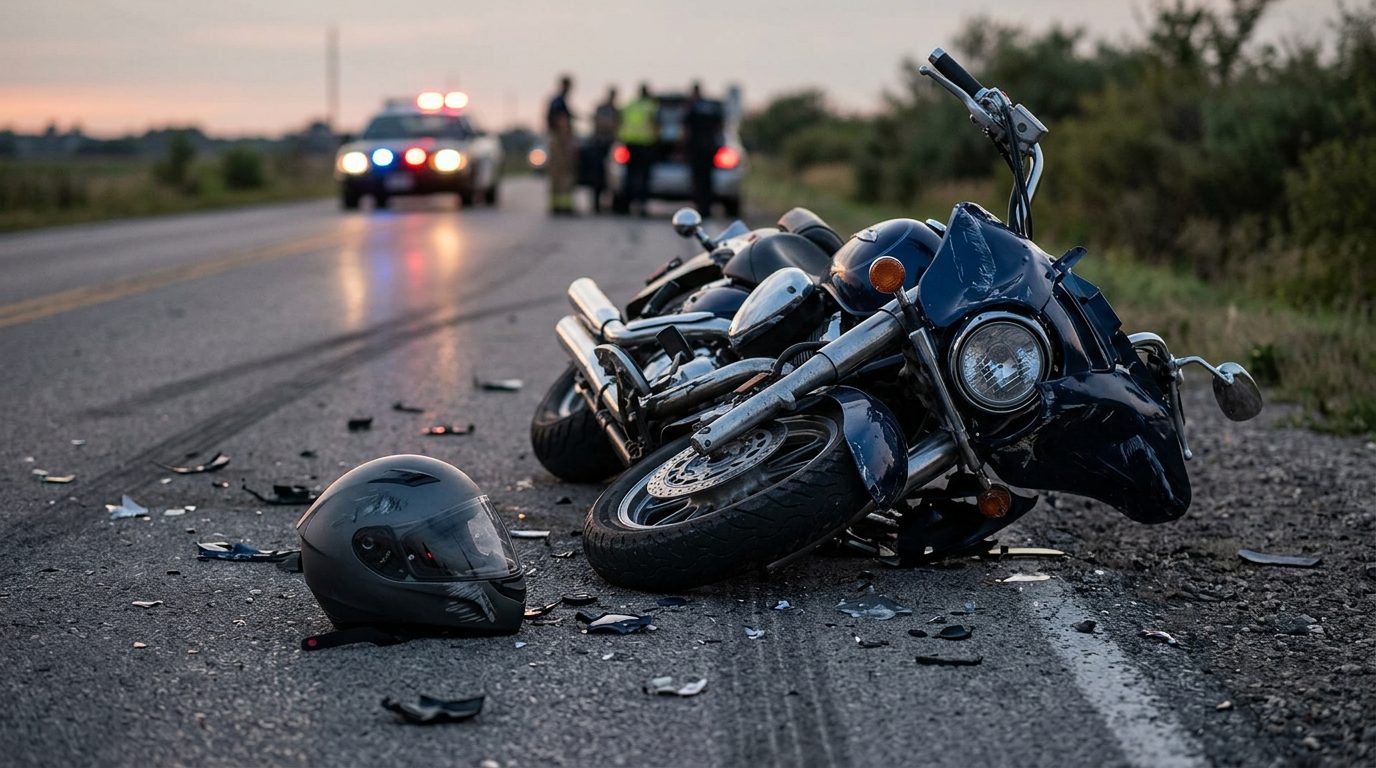
Motorcycle Accidents
Most Common Cause of Death in Motorcycle Accidents
Traumatic brain injury is the leading fatal outcome. Understanding the risks and your legal options after a catastrophic motorcycle crash.
By CHG Lawyers · Published October 02, 2026
Most Common Cause of Death in Motorcycle Accidents
Every year, thousands of families lose a loved one in a motorcycle crash. In 2022 alone, the National Highway Traffic Safety Administration (NHTSA) recorded 5,579 motorcycle fatalities—a rate reflecting not just statistics, but permanent absence at dinner tables and unanswered phone calls.
Traumatic brain injury is the most common cause of death in motorcycle accidents. Riders suffer direct impact forces that car occupants are protected against.
For those left behind, one question often surfaces: Could this have been prevented? Often, the answer is yes. Many fatal motorcycle accidents result from another driver’s negligence, recklessness, or failure to see the rider. When that happens, families have legal options and a path forward.

If you've lost a family member or suffered catastrophic injuries in a motorcycle crash caused by another driver's negligence, you may have a legal claim. Talk it through with our team — the first consultation is free, confidential, and carries no obligation.
Why Motorcycle Fatalities Are So Much Higher Than Car Deaths
The reason is simple: structure. Motorcyclists have no protective shell. Car occupants are surrounded by steel frames, crumple zones designed to absorb impact, airbags, and seat belts. Motorcyclists have a helmet, protective gear, and nothing else between them and the road.
This exposure means crash force transfers directly to the rider’s body. Motorcyclists are approximately 28 times more likely to die in a crash than car occupants, and 5 times more likely to be injured.
Head-on collisions show this difference clearly. Motorcycles colliding with fixed objects account for 25% of motorcyclist deaths, compared to 18% of car crash deaths. This gap reflects how exposed the rider is.
Traumatic Brain Injury: The Leading Cause of Motorcycle Fatalities
Traumatic brain injury (TBI) is the most common cause of death in fatal motorcycle crashes. When a rider’s head strikes pavement, another vehicle, or a fixed object at high speed, the brain suffers catastrophic damage.
A DOT-approved helmet reduces the risk of death by approximately 37%, according to NHTSA. That protection is real and substantial—but not absolute. Even helmeted riders can suffer fatal or permanently disabling brain injuries in high-speed crashes or impacts at certain angles.
The severity of TBI depends on impact force, the rider’s speed, and what they strike. Traumatic brain injury can range from mild concussion to severe diffuse axonal injury, where the brain’s nerve fibers tear and cause permanent neurological damage. In fatal crashes, damage is often too extensive for recovery.
Other Fatal Injuries in Motorcycle Crashes
While traumatic brain injury leads, motorcycle crashes cause multiple catastrophic injuries:
- Spinal cord injuries and paralysis from impact or ejection can leave a rider permanently paralyzed (paraplegia or quadriplegia).
- Internal bleeding and organ damage from blunt-force trauma can be fatal even when external injuries appear minor.
- Severe burns from fuel ignition or contact with hot engine parts cause permanent scarring, disability, and death.
- Amputation and limb loss from crushing, road friction, or entanglement with the motorcycle.
- Multiple trauma from high-speed impact or collisions involving multiple vehicles can overwhelm the body’s ability to survive.
Riders who survive the initial crash often face permanent disability—loss of limb, paralysis, or cognitive impairment from brain injury. These outcomes are life-altering and require immediate legal and medical attention.
If you've suffered a catastrophic injury or lost a loved one, you may have a claim against the at-fault driver or other responsible parties. Talk it through with our team — the first consultation is free, confidential, and carries no obligation.
The Most Common Causes of Fatal Motorcycle Crashes
Left-turn collisions are the leading type of motorcycle accident. A driver turning left and failing to notice an oncoming motorcyclist until too late is the most common cause of motorcycle collisions. The driver often doesn’t see the motorcycle because it’s smaller and harder to spot, or because the driver is distracted. These crashes are often fatal because the motorcyclist has no time to brake or swerve.
Distracted driving by the other driver—texting, eating, adjusting the radio, or looking away—accounts for many motorcycle crashes. A distracted driver may not see a motorcycle until impact is imminent.
Speeding by the rider or the other driver reduces reaction time and increases impact force. Loss of control on curves or in poor conditions often involves excessive speed.
Impaired driving (alcohol or drugs) by either party impairs judgment, reaction time, and vehicle control. Impaired riders are more likely to speed, lose control, or misjudge hazards. Impaired drivers are more likely to hit a motorcycle they didn’t see.
Poor road conditions—potholes, gravel, debris, or standing water—destabilize a motorcycle much more easily than a car. A rider may lose control and crash, or may swerve and be struck by another vehicle.
Weather hazards like rain, wind, or fog reduce visibility and traction. Motorcycles are especially vulnerable to crosswinds or hydroplaning on wet roads.
Lane splitting (riding between lanes of traffic) is illegal in most states and increases collision risk. Drivers may not expect a motorcycle there.
Mechanical failure—faulty brakes, tire failure, or steering problems—can cause a rider to lose control.
Notably, two-thirds of multi-vehicle motorcycle accidents are caused by the other driver, not the motorcyclist. In the majority of fatal crashes involving another vehicle, the rider did not cause the accident—but paid the price with their life.
What Riders Can Do to Reduce Risk
Riders can significantly reduce their risk of fatal injury through deliberate choices:
- Wear a DOT-approved helmet on every ride. Helmets are the single most effective protection against fatal head injury.
- Wear protective gear: a jacket, gloves, pants, and boots rated for motorcycle use. This gear reduces road rash, burns, and abrasions that can be fatal or permanently disfiguring.
- Ride defensively. Assume other drivers do not see you. Avoid riding in blind spots. Use your headlight and wear bright colors.
- Avoid speeding. Adjust your speed for road and weather conditions. High speed increases impact force and reduces your ability to react.
- Never ride impaired. Do not ride after consuming alcohol or drugs.
- Maintain your motorcycle. Check brakes, tires, lights, and fluid levels before every ride. Mechanical failure can be fatal.
- Take a motorcycle safety course. Professional training improves your skills, awareness, and decision-making on the road.
These steps significantly reduce your risk. But they cannot eliminate it entirely—because you cannot control other drivers. When another driver’s negligence causes a crash, the rider should not bear the cost alone.
When a Motorcycle Accident Is Someone Else’s Fault
If a crash was caused by another driver’s negligence, distraction, or recklessness, the injured rider—or the family of a rider killed—may have a legal claim.
Negligence can include:
- Failing to see the motorcycle and turning left in front of it
- Speeding or driving recklessly
- Driving while impaired by alcohol or drugs
- Violating traffic laws (running a red light, failing to yield)
- Distracted driving (texting, eating, or looking away from the road)
Property owners may also be liable if poor road maintenance, hazardous conditions, or lack of repair contributed to the crash. Manufacturers may be liable if a defective motorcycle or vehicle part caused or contributed to the accident.
Families of riders killed in fatal crashes may pursue a wrongful-death claim against the at-fault party. A wrongful-death claim seeks to recover damages for the loss of the rider’s life. This includes funeral expenses, lost wages and earning potential, loss of companionship, and pain and suffering of the family.
Under Florida Statutes §768.81, Florida follows a modified comparative-fault rule. If you were partially at fault for the crash, your recovery is reduced by your percentage of fault—but only if you were 50% or less at fault. If you were more than 50% at fault, you generally cannot recover.
What to Do After a Fatal or Catastrophic Motorcycle Accident
In the immediate aftermath of a crash, take these steps:
-
Seek immediate medical attention for any injuries, even if they seem minor. Some injuries (like internal bleeding or brain injury) may not be immediately obvious.
-
Report the crash to police and obtain a copy of the accident report. The police report documents the scene, the other driver’s information, and the officer’s initial assessment of fault.
-
Document the scene with photos of vehicle damage, road conditions, skid marks, and traffic signals if it is safe to do so.
-
Gather witness contact information. Witnesses can corroborate what happened and may be crucial to your claim.
-
Do not admit fault or discuss the accident with the other driver’s insurance company without legal counsel. Anything you say can be used against you.
-
Preserve evidence: the motorcycle, the other vehicle, medical records, photos, and any video footage from traffic cameras or dashcams.
-
Contact an attorney who focuses on motorcycle accident cases and catastrophic injuries. An attorney can protect your rights, investigate the crash, and help you understand your legal options.
Not sure what your next step is?
Talk it through with our team — the first consultation is free, confidential, and carries no obligation.
Frequently Asked Questions
What is the most common cause of death in a motorcycle accident?
Traumatic brain injury from direct impact to the head is the most common cause of death. Motorcycle riders lack the protective frame and airbags that car occupants have, leaving the head and brain exposed to direct trauma.
How much does a helmet reduce the risk of death in a motorcycle accident?
A DOT-approved helmet reduces the risk of death by approximately 37%, according to NHTSA.
Can I recover damages if I was partially at fault in a motorcycle accident in Florida?
Yes, under Florida’s modified comparative-fault rule, you can recover damages if you were 50% or less at fault. Your recovery is reduced by your percentage of fault.
How long do I have to file a lawsuit after a motorcycle accident in Florida?
Under Florida Statutes §95.11, you generally have two years from the date of injury to file a negligence claim. This deadline is critical; missing it bars your claim.
What is a wrongful-death claim?
A wrongful-death claim is a lawsuit brought by the family of someone killed due to another party’s negligence or wrongdoing. It seeks to recover damages for the loss of life, including funeral expenses, lost wages, and loss of companionship.
Who can be held liable in a motorcycle accident?
The at-fault driver is liable. Property owners may be liable if poor road conditions contributed to the crash. Manufacturers may be liable if a defective vehicle or motorcycle part caused the accident.
If you’ve lost a family member or suffered catastrophic injuries in a motorcycle crash caused by another driver’s negligence, you may have a legal claim. Many families in your situation reach out to discuss what happened and what comes next. Contact us for a free case evaluation today.
Helmets Save Lives
Wearing a DOT-approved motorcycle helmet reduces the risk of death by approximately 37% and the risk of head injury by 69%, according to the National Highway Traffic Safety Administration (NHTSA). A helmet is your most critical defense against traumatic brain injury.
Why Motorcycle Riders Face Greater Risk
No Protective Frame
Unlike car occupants, motorcycle riders have no metal frame or cabin structure to absorb impact energy or shield them from collision forces.
No Airbags or Restraints
Cars deploy airbags and seatbelts to protect occupants. Motorcycles offer no such passive safety systems—the rider's body absorbs the full force of impact.
Direct Head Exposure
The head and brain are exposed to direct trauma from road surfaces, vehicles, objects, and debris during a crash.
Ejection and Secondary Impact
Motorcycle riders are often ejected from their bikes, leading to multiple impacts with the road, other vehicles, or fixed objects.
What You Should Know About Motorcycle Crash Injuries
Traumatic Brain Injury (TBI) Is the Leading Cause of Death
Direct impact to the head causes the majority of fatal motorcycle accidents. Even helmeted riders can suffer severe TBI if the impact is forceful enough. Symptoms range from loss of consciousness to permanent cognitive, physical, and behavioral changes.
Spinal Cord and Neck Injuries Are Common
High-speed crashes often result in spinal cord injuries, paralysis (paraplegia or quadriplegia), and catastrophic back and neck injuries. These injuries cause permanent impairment and require lifelong care.
Amputation and Severe Burns Occur
Motorcycle riders may suffer limb loss from crushing forces or contact with the road and vehicles. Friction burns and fuel-related fires cause severe burn injuries.
Speed and Road Conditions Increase Severity
Higher speeds, poor road conditions, and collisions with larger vehicles (trucks, cars) dramatically increase the likelihood of fatal or catastrophic injury.
If You've Been Injured in a Motorcycle Accident
Seek Immediate Medical Care
Even if you feel okay, get evaluated by a medical professional. Head injuries, spinal injuries, and internal trauma may not be immediately apparent.
Document the Scene and Your Injuries
Photograph the accident scene, your motorcycle, road conditions, and any visible injuries. Obtain contact information from witnesses and the other driver.
Report the Accident
File a police report and notify your insurance company. Keep copies of all medical records, treatment bills, and correspondence.
Consult a Personal Injury Attorney
If you've suffered a catastrophic injury or lost a loved one, you may have a claim against the at-fault driver or other responsible parties. An attorney can help you understand your options.