
North Miami Beach | Car Accidents
Hurt in a North Miami Beach Car Crash? Start With Three Steps.
Get medical care, record what happened, and learn the Florida rules that may apply to your situation. CHG Personal Injury Lawyers helps injured people and their families across Florida understand their options.
What Our Team Can Help You Sort Out
Your Questions, Answered Plainly
Crashes bring confusing paperwork, insurance calls, and deadlines. We explain what is happening in everyday language so you can make informed decisions.
Dealing With Insurance Companies
Insurance adjusters may contact you quickly.
Serious Injuries, Serious Attention
Whether your injuries are a broken bone or a lasting impairment, we take the time to understand how the crash affects your health, work, and family.
Not sure what your next step is?
Talk it through with our team — the first consultation is free, confidential, and carries no obligation.
If You Were Hurt in a Car Crash in North Miami Beach, Start Here
Start with three steps. Get medical care. Record what happened. Learn the Florida rules that may apply to your situation.
Whether any claim exists depends on the facts of the crash, your medical records, and applicable Florida law.
Picture a weekday drive near Oleta River State Park. A car cuts into your lane on NE 163rd Street. You are sore and shaken. Your phone starts buzzing with calls from an insurance company you have never heard of. The police report is not finished, and bills are already arriving.
CHG is a Florida-based firm that focuses on personal injury claims, including car accidents.
Going up against an insurer alone can feel like paddling a river against the current with no map. The steps below walk through what to do, in plain order.

The First Steps After a Crash in North Miami Beach
Call 911 right away if anyone is hurt. The agency that responds may be the North Miami Beach Police Department, the Miami-Dade Sheriff’s Office, or the Florida Highway Patrol. It depends on where the crash happened.
Before you leave the scene, ask for the officer’s name and the report number. Write down the other driver’s name, phone number, insurance company, and policy number. Also get the names and phone numbers of any witnesses.
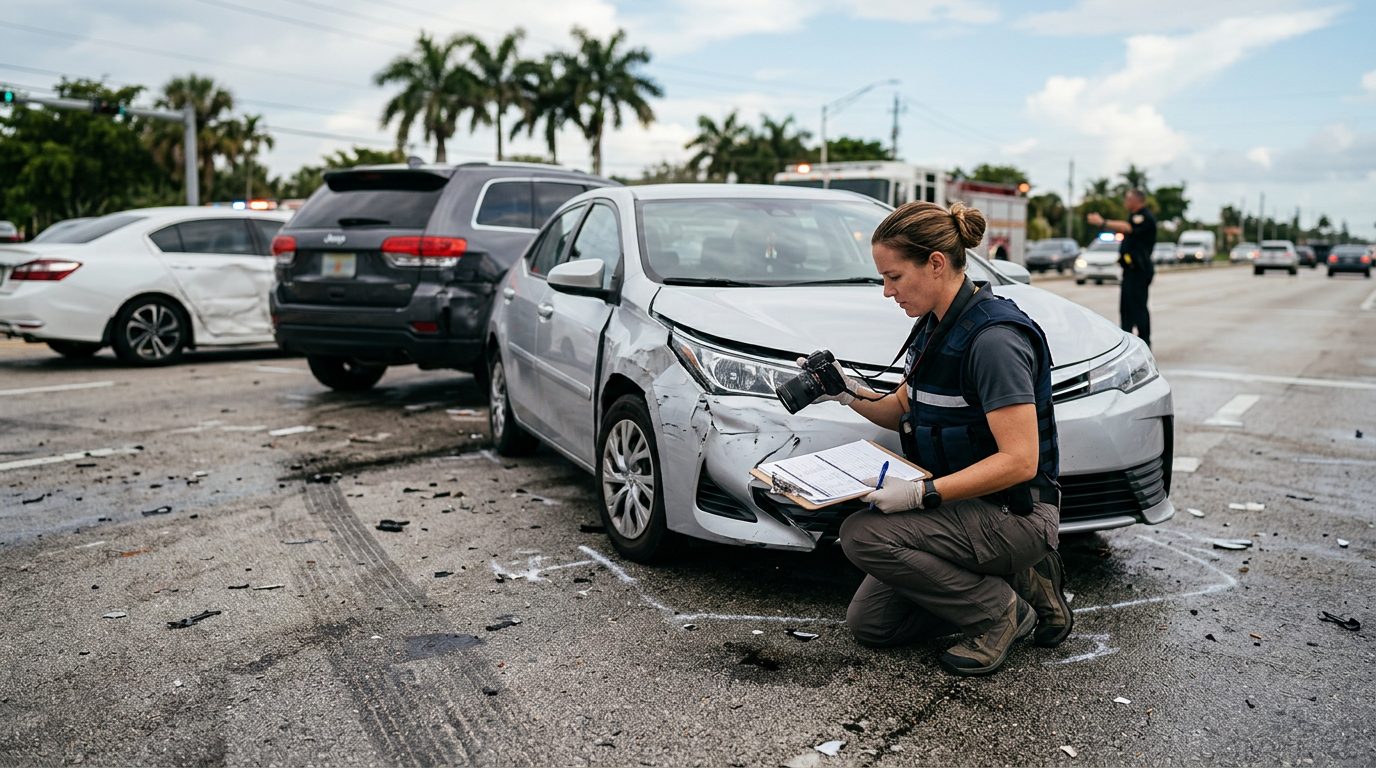
Take photos as soon as it is safe. Capture the vehicle damage, the roadway, traffic signals, lighting, skid marks, and any visible injuries. Photos can preserve details that fade from memory within days.
See a doctor promptly. Follow your doctors’ care. Tell your doctor about every symptom, even the ones that seem minor. Medical decisions belong to your treating doctors.
Keep every bill, receipt, and insurer letter in one folder. Giving a recorded statement or signing a medical release can be risky if you do not understand it first. Ask questions before you sign or speak.
How to Get a Florida Crash Report and What the Public Can See
Ask the agency that investigated the crash for a copy of the report. Use the report number from the scene. Ask the agency how its request process works.
A crash report records what the investigating officer observed and documented at the scene. It is one piece of evidence. It is not a final ruling on who was at fault.
News coverage is a different source. A news story about a crash on a North Miami Beach road can share useful details. But it is not an official report, and it does not establish fault.
Reports may take time to become available. While you wait, write down what you remember while it is still fresh. Note the time, the weather, the direction of travel, and what you saw and heard.
Florida’s No-Fault System: PIP Benefits and the 14-Day Rule
Florida’s personal injury protection (PIP) coverage pays certain benefits after a crash. The law ties those benefits to prompt care. Under Florida’s PIP statute, § 627.736, PIP benefits are subject to key limits: they pay only a percentage of medical expenses and lost income, and medical benefits are capped at $2,500 unless a qualifying provider determines that an emergency medical condition exists, so the benefits available in any case depend on its facts and Florida law.
The statute ties these benefits to receiving initial care within 14 days of the crash. Because of that timing rule, getting checked out early matters. The statute also lists exceptions. Review the text with a lawyer.
PIP does not cover every loss. Pain and suffering claims beyond PIP follow the threshold in Florida’s tort threshold statute, § 627.737. We cover that in the next sections.
Keep your PIP letters and forms organized. Answer insurer questions carefully. Keep copies of everything you send.
Have questions about what happened?
Ask our team directly. The first conversation is free, confidential, and there is no obligation to continue.
When Injuries Are Catastrophic: Spinal Cord, Brain, Amputation, Burn, and Fatal Crashes
Serious crash injuries can change a person’s life permanently. Florida law treats some of these harms differently. Catastrophic injuries can include:
- Spinal cord injuries and paralysis
- Traumatic brain injuries
- Amputations
- Severe burns
- Serious back or neck injuries
A spinal cord injury can affect the body far from the point of impact. According to the National Institute of Neurological Disorders and Stroke, an injury to the spinal cord between C1 and C4 can stop breathing.
Under § 627.737(2), a plaintiff may recover damages for pain, suffering, mental anguish, and inconvenience from a motor vehicle crash. But only if the injury falls into certain categories. Those include:
- Significant and permanent loss of an important bodily function
- Permanent injury within a reasonable degree of medical probability, other than scarring or disfigurement
- Significant and permanent scarring or disfigurement
- Death
When a crash causes a death, Florida’s wrongful death law may give the family a claim. Under § 768.19, a person who would have been liable had the injured person lived can be liable for damages, even when the injured person has died. Florida law sets who may bring that claim. A lawyer can review that with the family.
Families in this position carry grief and practical worries at the same time. Keep the crash report, medical bills, and funeral receipts together. Write down the names of witnesses. Talk with a lawyer soon about deadlines.
Time Limits and Fault Rules That Can Change Your Claim
Florida sets deadlines for filing lawsuits. Its shared-fault rule can reduce or bar recovery. Deadlines apply, so act promptly.
Florida’s filing deadlines are set out in Fla. Stat. § 95.11. The period can vary with the type of action and when it began. Exceptions and alternative periods can apply. Do not assume one timeline fits every case.
If a government vehicle was involved, the claim may fall under § 768.28. That section waives sovereign immunity in certain tort actions. It also sets recovery limits. These rules differ from ordinary car claims, so ask about them early.
Florida’s comparative fault rule is in § 768.81(6). Under Florida’s comparative-fault statute, § 768.81(6), in negligence actions filed after March 24, 2023 (HB 837, ch. 2023-15), a plaintiff found more than 50 percent at fault for their own harm may not recover damages. Claims filed before that date are governed by a different rule, and the facts of each case and applicable Florida law may change the result. This subsection does not apply to personal injury or wrongful death from medical negligence under chapter 766.
Seat belts can matter too. Under Fla. Stat. § 316.614, a violation of the Florida Safety Belt Law, such as failing to wear an available, operational seat belt, may be considered as evidence of comparative negligence in any civil action. The failure must have caused or substantially contributed to the injuries.
Evidence That Matters on North Miami Beach Roads
Useful evidence includes photos, witness names, video, vehicle damage, and any app records from the trip. Each item can help show what happened before and after impact.
Location details matter. The exact street, lane, and direction of travel can help reconstruct the crash. Busy roads such as Biscayne Boulevard and NE 163rd Street can carry heavy traffic and have multiple cameras. Note landmarks near the spot.
Traffic camera and business surveillance footage may be overwritten after a set period. Ask a lawyer how to request that footage be kept as soon as possible.
If a rideshare was involved, § 627.748 requires a transportation network company driver to share insurance information after an accident. On request, the driver must also disclose whether he or she was logged on to the app at the time.
Be careful with recorded statements. Anything you say can be used later. You can ask for time to think before answering a question.
Questions Readers Ask About Car Accident Records in Florida
Are all car accidents public record?
Ask the agency that handled the crash how its request process works.
Can a family member get a crash report?
A family member can ask a lawyer how requests for a crash report are typically handled, and what the investigating agency requires. Ask the agency directly.
Does a news report decide who was at fault?
No. A news report is not an official finding of fault. A crash report is not a final ruling either.
Want to know where you stand?
Tell us what happened and our team will walk you through the options available to you, at no cost.
Talk With Igor Hernandez About Your North Miami Beach Crash
Are you deciding whether to accept an early insurance offer or give a recorded statement? You can talk it through with Igor Hernandez first. He is a Florida-licensed attorney admitted to The Florida Bar.
CHG Personal Injury Lawyers focuses on personal injury claims, including car accidents. The firm serves people throughout Florida. CHG charges no attorney’s fees and no case costs unless there is a recovery.
The first consultation is free, confidential, and carries no obligation to continue. Bring your crash report number, insurance letters, and medical timeline. That way, the conversation can focus on your facts.
If your crash left you with questions, contact CHG Personal Injury Lawyers to set up your free consultation.
Before You Speak With an Insurance Company
Insurance representatives may ask for a recorded statement or quick approval of a settlement. Consider speaking with a lawyer before you give a statement or sign anything, and follow your doctors' guidance on your care.
Three Steps to Take Now
1. Get Medical Care
See a doctor even if you feel you only have minor soreness. Some injuries, such as concussions or back and neck injuries, may not show symptoms right away. Follow your doctors' care plan.
2. Record What Happened
Write down the date, time, and location, and what you remember about the crash. Keep photos of the vehicles and the scene, along with the names of witnesses and any police report number.
3. Learn the Florida Rules
Florida has its own rules for car accident claims, including rules about insurance and time limits. Whether any claim exists depends on the facts of your crash, your medical records, and applicable Florida law.