
Car Accidents in Miami Lakes, Florida
Hurt in a Car Accident in Miami Lakes? Start With Your Health, Then Protect Your Rights
Your medical care comes first. Keeping your records, your insurance communications, and Florida's deadlines in view can help you move forward. CHG Personal Injury Lawyers, based in Miami, is here to explain your options.
How CHG Personal Injury Lawyers Can Help
Florida law, explained
Our practice focuses on personal injury cases in Florida. We explain how Florida rules and deadlines may apply to your situation, based on the facts of your case.
A free, confidential first consultation
Your first consultation is free, confidential, and comes with no obligation to continue. CHG charges no attorney's fees and no case costs unless there is a recovery.
By Igor Hernandez, Admitted to The Florida Bar, CHG Personal Injury Lawyers, Miami, Florida
Car accidents in Miami Lakes can leave you hurt, confused, and facing bills. Your first priority is medical care. Then protect your records, your insurance claim, and the deadlines that Florida law sets.
If your Miami Lakes crash has left you with medical bills, insurer calls, and missed paychecks, you don't have to sort it out alone. Talk it through with our team — the first consultation is free, confidential, and carries no obligation.
If You Were Hurt in a Crash in Miami Lakes, Start Here
Get checked by a doctor as soon as you can, and follow your doctors’ care. Symptoms of some injuries, such as head, neck, and back injuries, may not appear right away. Tell your doctor about every symptom, even the ones that seem small.
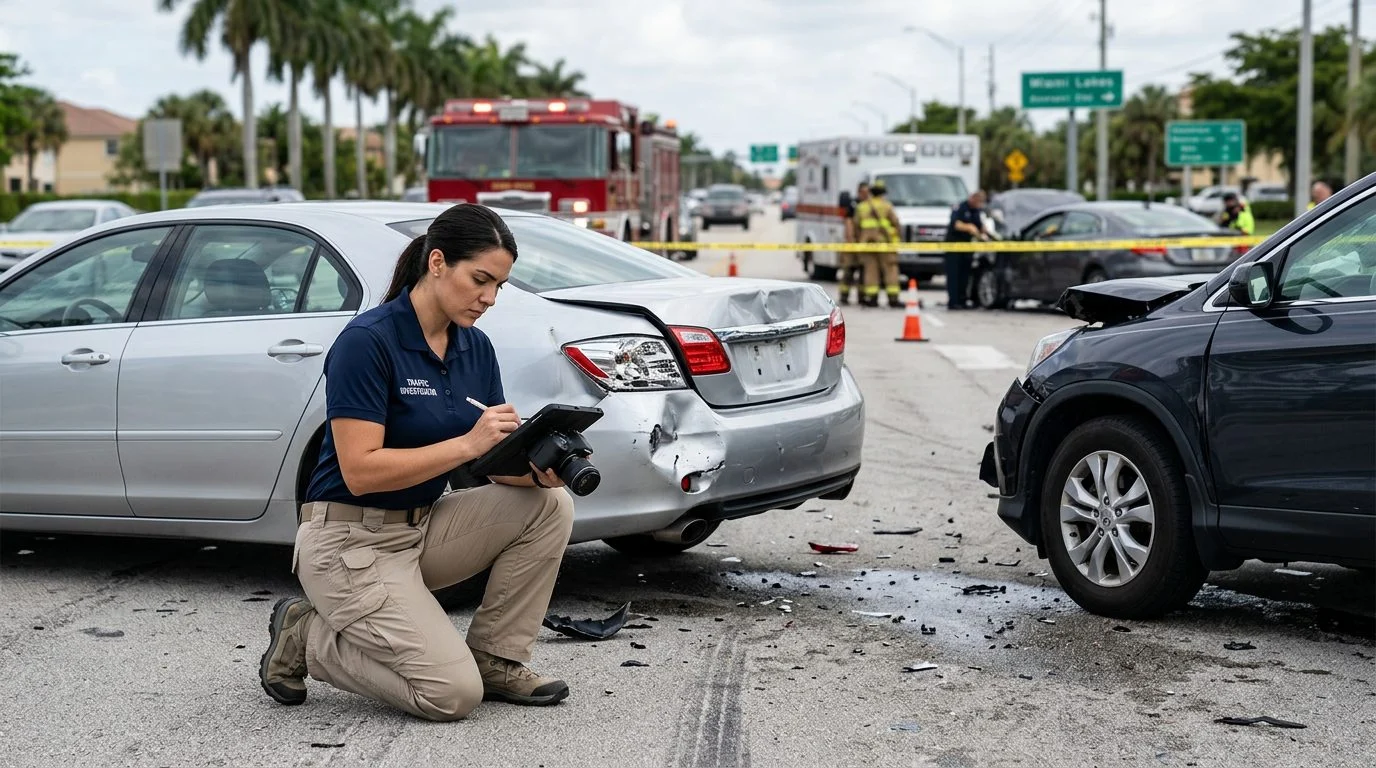
Protect the evidence while memories are fresh. Ask the responding agency for the crash report number. Photograph the scene, the vehicles, road signs, and your injuries. Save every medical bill, receipt, and pay stub that shows missed work.
Check your own auto policy too. Florida’s no-fault system uses personal injury protection (PIP) coverage, and the rules sit in Fla. Stat. § 627.736. Keep every letter from your insurer. A lawyer can review them with you.
Crashes on Miami Lakes Roads and Why Local Context Matters
Where a crash happens can shape how it gets investigated. Drivers in Miami Lakes travel many roads, including the Palmetto Expressway, Miami Lakes Drive, and intersections near shopping centers and schools. Dealing with an insurance company alone can feel like merging onto the Palmetto at rush hour. Everyone is moving fast, and you need room to think.
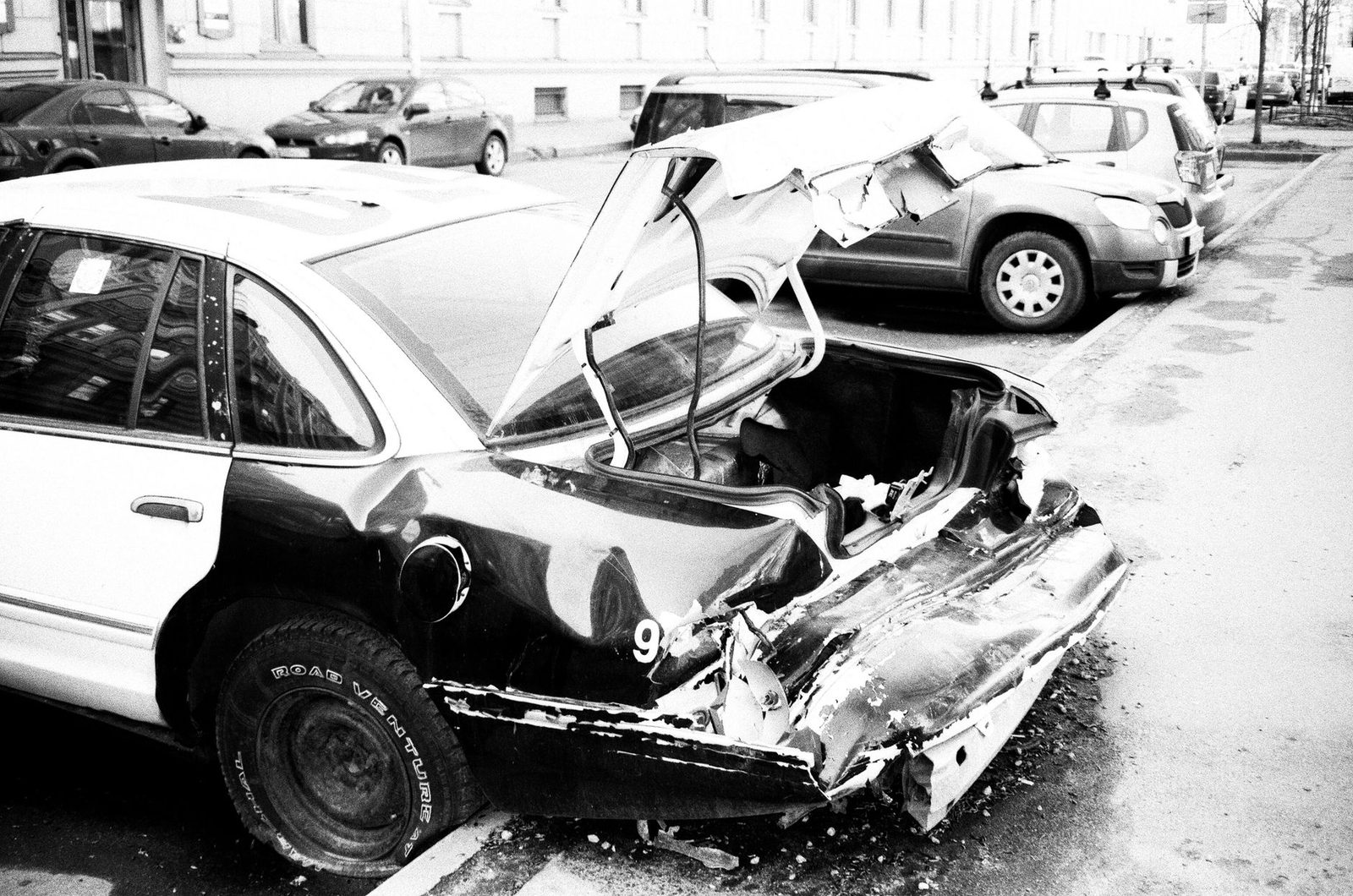
Road conditions, lane markings, traffic signals, and the time of day all matter to the investigation. The Florida Highway Patrol or a local police department may write the crash report. That report is one record among several. Photos, witness names, vehicle damage, and medical records can tell a fuller story.
How Fault Is Decided Under Florida Law
Florida divides fault by percentage, and your own share of fault can reduce what you may recover. Under Fla. Stat. § 768.81, in negligence actions to which the statute applies, judgment is entered against each liable party in proportion to that party’s percentage of fault, subject to the statute’s exceptions, such as actions based on intentional torts. It does not hold each party liable for the whole amount on that basis.
For negligence actions to which § 768.81 applies and that were filed after March 24, 2023, § 768.81(6) bars recovery by a party found more than 50 percent at fault for its own harm. Causes of action filed earlier follow pure comparative fault. That rule does not apply to medical negligence cases under chapter 766. Exceptions and the facts of your crash can change how the rule applies.
Who may be responsible for a crash can depend on the facts, including the conduct of more than one driver or vehicle owner, and on applicable Florida law. Your facts and Florida law decide whether any of these rules apply to you.
Not sure what your next step is?
Talk it through with our team — the first consultation is free, confidential, and carries no obligation.
Florida No-Fault PIP and When a Lawsuit May Come Into Play
PIP is your own coverage, and a lawsuit for pain and suffering is a separate step. Under Fla. Stat. § 627.737, subsection (1) provides that an owner, registrant, operator, or occupant of a motor vehicle for which the required security has been provided, and every person or organization legally responsible for that person’s acts or omissions, is exempt from tort liability for bodily injury, sickness, or disease damages arising from the vehicle’s ownership, operation, maintenance, or use only to the extent that the personal injury protection (PIP) benefits described in § 627.736(1) are payable for that injury, or would be payable but for an exclusion authorized by ss. 627.730-627.7405. The exemption does not apply when a person is entitled to bring an action for pain, suffering, mental anguish, and inconvenience under subsection (2), and how it applies depends on the facts of each case. Whether that exemption applies depends on whether PIP benefits are payable to the injured person. It does not apply to people who may sue under subsection (2).
The statute limits when a person may recover damages in tort for pain, suffering, mental anguish, and inconvenience from bodily injury arising out of the use of a motor vehicle, and that recovery is available only in the event that the injury or disease consists in whole or in part of the conditions the statute lists. It must involve significant and permanent loss of an important bodily function, a permanent injury within a reasonable degree of medical probability that is not scarring or disfigurement, significant and permanent scarring or disfigurement, or death. Whether your injury fits one of these categories depends on the facts, your medical records, and Florida law.
Insurers can request an exam. Under § 627.736, the costs of any examinations requested by an insurer are borne entirely by the insurer. Section 627.736(7)(a) directs that the exam be conducted in the municipality where the insured is being treated, or at a site reasonably accessible to the insured, defined as anywhere within the insured’s municipality of residence or within 10 miles by road of the residence if that site is in the insured’s county of residence. If the exam is to be held at a reasonably accessible site and no qualified physician is available at one, the exam is conducted in the area closest to the insured’s residence. Under § 627.736(7)(a), an insurer may not withdraw payment of a treating physician without the consent of the injured person covered by PIP unless the insurer first obtains a valid report from a Florida physician licensed under the same chapter as the treating physician, stating that the treatment was not reasonable, related, or necessary. Whether this limit applies depends on the facts of the case. Keep every PIP and medical letter.
Florida Deadlines Readers Should Not Let Pass
Florida sets time limits for filing lawsuits, and missing one can end a claim. Florida law sets deadlines for filing these claims, and they can vary by type of claim. Exceptions also apply.
Under § 95.031(1), and except as provided in subsection (2), in s. 95.051, and elsewhere in these statutes, the limitation period is measured from when a cause of action accrues, a point the statute ties to the occurrence of the cause’s last element. That start date is not always the day of the crash, so a lawyer should check your dates early.
Insurance claims and lawsuits follow separate timing. Don’t treat one as a substitute for the other. Contact a lawyer promptly rather than waiting for insurance letters to settle.
Serious Injuries and Fatal Crashes: Caring for Families After a Loss
Families of someone killed in a crash may have rights under the Florida Wrongful Death Act. Under § 768.19, liability may arise when death is caused by a wrongful act, negligence, default, or breach of contract or warranty, and the event would have entitled the injured person to maintain an action and recover damages had death not ensued. This applies even when the death happened under circumstances constituting a felony.
Who may bring the claim is a question for a lawyer to answer from your family’s facts and the statute. Ask that question early, while you still have time to act.
Some injuries change a family’s life for years. The National Institute of Neurological Disorders and Stroke publishes health information on spinal cord injury. Recovery differs from person to person.
Families can take practical steps. Keep the crash report and every bill in one folder. Write down the names, dates, and calls from insurers. Ask questions in a calm setting, when you feel ready.
Have questions about what happened?
Ask our team directly. The first conversation is free, confidential, and there is no obligation to continue.
Talk With Igor Hernandez About Your Miami Lakes Crash
Igor Hernandez is the responsible lawyer at CHG Personal Injury Lawyers, and he is Admitted to The Florida Bar. The practice focuses on serious and catastrophic injury claims, including car, truck, and motorcycle accidents, spinal cord injuries, traumatic brain injuries, and severe burns. The firm serves people throughout Florida.
Our first consultation is free, confidential, and carries no obligation to continue. CHG charges no attorney’s fees and no case costs unless there is a recovery.
Is PIP the same as a lawsuit? No. PIP is personal injury protection coverage under Florida’s no-fault system, and a lawsuit for pain and suffering follows separate rules.
Can a family sue after a fatal crash? Florida’s Wrongful Death Act may allow certain family members to bring a claim. A lawyer can explain who may bring it in your situation.
Is there a time limit to file? Yes. Florida sets time limits under § 95.11, and exceptions and different rules can apply.
If your Miami Lakes crash has left you with medical bills, insurer calls, and missed paychecks, you don’t have to sort it out alone. Contact our team to talk about your situation.
Steps to Take After a Crash in Miami Lakes
1. Seek medical care
Get checked by a doctor as soon as you can. Some head, neck, and back injuries may not show symptoms right away, so follow your doctors' care even if you feel well at first.
2. Document the scene
If it is safe, take photos of vehicles, roadway conditions, and visible injuries. Write down names, contact information, and witness details.
3. Get the police report
Ask the responding agency for a copy of the crash report. It is an important record of how the crash was documented.
4. Talk to a lawyer before giving recorded statements
Insurance adjusters may ask for recorded statements early on. Speak with a lawyer first so you understand what you are agreeing to.
Watch the Clock
Florida law sets deadlines for injury claims, and those deadlines can depend on the facts of your case. Do not wait to get advice. Contact our office promptly so your options are reviewed while the facts are fresh.