

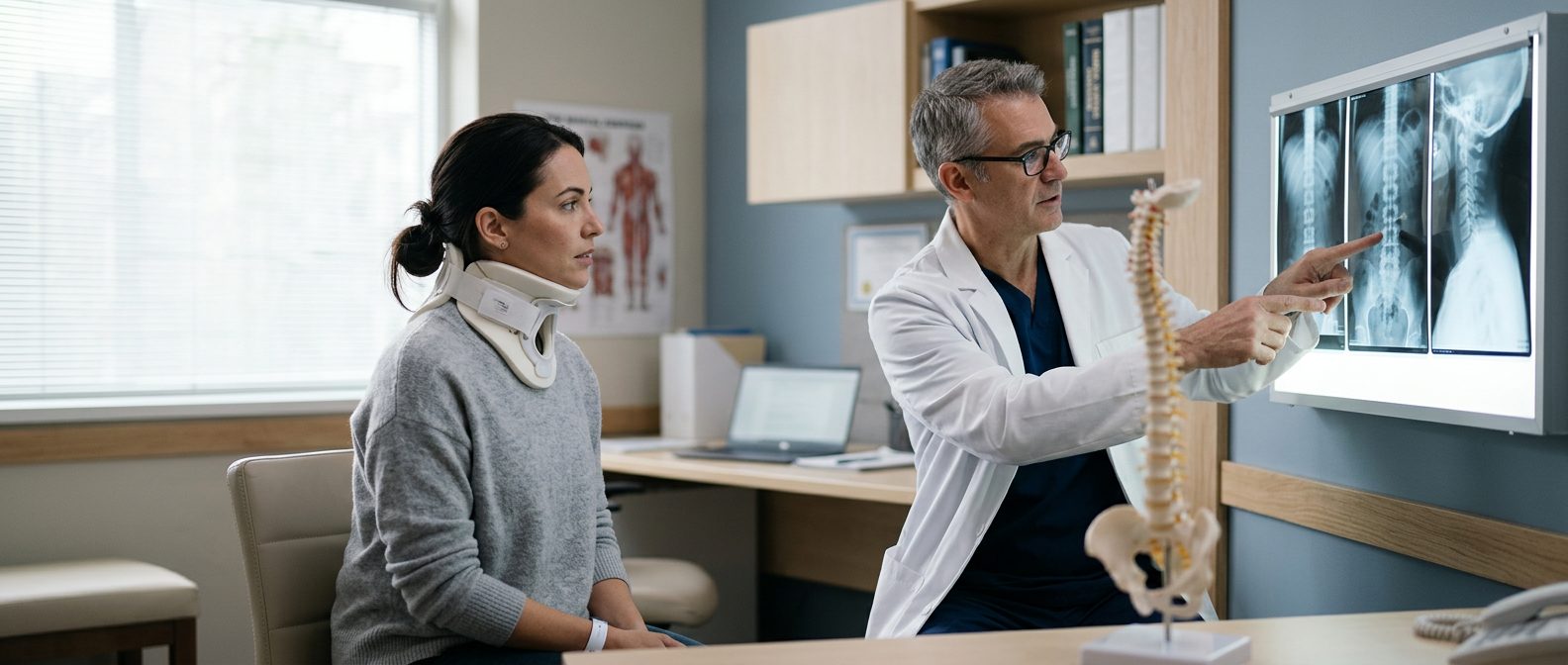
Spinal Cord Injuries
Signs of Spinal Injury After a Car Accident
Know what to watch for. Spinal injuries can develop over hours or days. Early recognition and medical care are critical.
By CHG Lawyers · Published October 03, 2026
Signs of Spinal Cord Injury After a Car Accident: What to Look For and What to Do
Paralysis—the inability to feel or move your arms or legs—is the clearest sign of a spinal cord injury. If someone conscious after a crash says they cannot feel their legs or move their limbs, suspect spinal cord injury right away. This is not muscle soreness or bruising. It is a medical emergency requiring immediate care.
Understanding the difference between a spine injury and a spinal cord injury, recognizing the warning signs, and knowing what to do at the scene can mean the difference between prompt treatment and missing critical hours.

Not sure what your next step is?
Talk it through with our team — the first consultation is free, confidential, and carries no obligation.
Spine Injury vs. Spinal Cord Injury: The Critical Difference
This distinction matters for medical care and legal understanding:
- A spine injury is damage to the bones (vertebrae) or discs of the spine. A fractured vertebra is a spine injury. It can be painful and serious, but the nerve tissue inside may be unharmed.
- A spinal cord injury is damage to the nerve tissue itself—the bundle of nerves that carries signals between the brain and the rest of the body. A spinal cord injury can happen with or without a visible bone fracture.
You can have a spine injury without spinal cord damage. You can also have spinal cord damage without a visible bone fracture. Only imaging—MRI or CT scan—can show whether the spinal cord itself is injured.
Paralysis and loss of sensation indicate spinal cord damage, which is permanent and life-altering. Bone fractures can heal. Spinal cord damage does not.
The Red Flag: Paralysis and Loss of Sensation
When someone conscious reports they cannot feel or move their legs after a crash—especially with neck or back pain—suspect spinal cord injury.
Here’s what paralysis means: the signals from the brain are not reaching the limbs. The spinal cord carries those signals. If it is damaged by a fractured vertebra, a herniated disc, or the force of impact, the signals get interrupted. The result is loss of sensation (numbness, tingling, burning) or loss of movement (weakness, inability to move).
This is catastrophic because it suggests damage to the nerve tissue inside, not just the bones.
Early Warning Signs to Recognize at the Scene
According to Mayo Clinic, emergency symptoms of a spinal cord injury after an accident include:
- Paralysis or weakness in the arms, legs, hands, or feet
- Loss of sensation or numbness below the injury site
- Severe neck or back pain, especially pain that radiates down the spine
- Tingling, burning, or “pins and needles” sensations in the limbs
- Loss of bladder or bowel control
- Difficulty breathing or chest tightness (in upper spinal injuries)
- Loss of consciousness or altered mental state
- Visible deformity or swelling of the neck or back
Not every accident victim will show all of these signs. But when someone conscious reports they cannot feel or move their legs after a crash and also has neck or back pain, suspect spinal cord injury until imaging proves otherwise.
Have questions about what happened?
Ask our team directly. The first conversation is free, confidential, and there is no obligation to continue.
What First Responders and Bystanders Should Do
If you witness an accident and suspect spinal cord injury, your actions in the first minutes matter:
1. Call 911 immediately. Tell the dispatcher about paralysis, loss of sensation, or inability to move limbs. Be specific: “The victim says they cannot feel their legs” or “They cannot move their arms.” This helps paramedics prepare.
2. Do not move the victim unless they are in immediate danger (fire, traffic). Movement can worsen spinal cord damage. Improper handling can make a partial injury complete.
3. Keep the victim’s head, neck, and spine as still as possible. If they are lying on their back, support their neck gently with your hands or rolled towels. Do not twist, bend, or rotate the spine. If they are on their side, keep them there until paramedics arrive.
4. Do not allow the victim to stand, walk, or sit up on their own, even if they say they feel fine. Spinal cord damage may not be obvious to the injured person.
5. If the victim is conscious and able to speak, ask them to describe what they feel. Where does it hurt? Can they feel your touch on their legs? Can they wiggle their toes? Can they squeeze your hand? Write down their answers. This information helps with medical diagnosis and legal documentation.
6. Reassure the victim and keep them calm while waiting for emergency personnel. Panic can worsen shock and complicate medical assessment.
7. Preserve evidence from the scene. Take photos of vehicle damage, road conditions, traffic signals, skid marks, weather, and lighting. Photograph the accident scene from multiple angles. Record witness names and contact information. Note the time of day and any other vehicles involved. This evidence matters later if negligence is involved.
How Doctors Diagnose and Classify Spinal Cord Injury
In the emergency department, doctors perform a detailed neurological exam. They test sensation and movement in all four limbs. They ask the patient to move their fingers and toes, to report where they feel touch, and to describe any pain or numbness.
Imaging studies (MRI, CT, X-ray) show the extent of damage to the spine and spinal cord.
The ASIA Impairment Scale (AIS) is the standard classification system used worldwide to grade spinal cord injury severity and level. Developed by the American Spinal Injury Association and endorsed by the International Spinal Cord Society, the AIS ranges from:
- AIS A (Complete): Total loss of sensory and motor function below the injury level
- AIS B (Incomplete): Sensory function preserved but motor function lost below the injury level
- AIS C (Incomplete): Motor function preserved but more than half of the muscles below the injury level cannot move against gravity
- AIS D (Incomplete): Motor function preserved and at least half of the muscles below the injury level function adequately
- AIS E (Normal): Normal sensory and motor function
The level of injury—cervical (neck), thoracic (mid-back), lumbar (lower back), or sacral (tailbone)—combined with the AIS grade determines the extent of paralysis and what functions may be affected. A cervical injury may affect all four limbs (quadriplegia). A thoracic or lumbar injury typically affects the lower body (paraplegia).
Early diagnosis and imaging are critical because treatment decisions depend on the exact nature and location of the injury.
Temporary Paralysis and Spinal Shock: What You Need to Know
Some accident victims experience temporary paralysis due to spinal shock—a temporary loss of nerve function below the injury. Spinal shock can last hours to weeks and may resolve partially or completely.
However, temporary paralysis does not mean the spinal cord is uninjured. Imaging is always necessary. Even if some sensation or movement returns, permanent damage may have occurred. Medical evaluation and ongoing monitoring are essential to understand the full extent of injury.
Real-Life Descriptions of Spinal Cord Injury Symptoms
When people injured in car accidents describe their symptoms, they often say:
- “I can’t feel my legs” or “My legs are numb”—loss of sensation is a major red flag.
- “I can’t move my toes” or “My arms feel weak”—loss of movement below the injury.
- “It feels like pins and needles” or “Burning sensation”—nerve pain, not muscle pain.
- “I can’t catch my breath” or “My chest feels tight”—breathing changes in upper spinal injuries.
- “I have severe pain in my neck or back”—especially if accompanied by any of the above.
Any combination of these symptoms after a car accident, fall, or other trauma demands immediate emergency care and imaging.
Want to know where you stand?
Tell us what happened and our team will walk you through the options available to you, at no cost.
When Negligence Caused the Injury
If another driver’s reckless or negligent behavior caused the accident—speeding, running a red light, distracted driving, or failure to yield—you may have a legal claim.
Spinal cord injuries are catastrophic, life-altering injuries. They often require lifelong medical care, rehabilitation, adaptive equipment, and home and vehicle modifications. Your life changes permanently.
Damages in a spinal cord injury claim can include:
- Medical expenses (emergency care, surgery, hospitalization, rehabilitation, ongoing care)
- Lost wages and lost earning capacity (often substantial, given the permanence of the injury)
- Pain and suffering
- The cost of future medical care and adaptive equipment
- Modifications to home and vehicle to accommodate paralysis
- Assistance and personal care services
Under Florida Statute § 95.11, an injured person generally has two years from the date of injury to file a personal-injury lawsuit. Document everything: medical records, accident reports, police reports, witness statements, photos from the scene, and the impact on daily life.
An attorney who focuses on catastrophic injury claims can help evaluate whether negligence occurred, what compensation may be available, and how to build a strong case for your future.

FAQ
What is the most telling sign of a spinal cord injury?
Paralysis or loss of sensation in the arms or legs is the clearest sign of spinal cord injury after an accident.
Can you have a spine injury without paralysis?
Yes. A fractured vertebra or herniated disc can cause severe pain without damaging the spinal cord itself. Imaging is needed to tell the difference.
What does the ASIA Impairment Scale measure?
The ASIA Impairment Scale is the medical standard for classifying spinal cord injury severity, ranging from complete loss of function (AIS A) to normal function (AIS E). It helps doctors and patients understand the extent of injury and what functions may be affected.
How long does spinal shock last?
Spinal shock—temporary loss of nerve function—can last hours to weeks, but permanent damage may still exist even if some sensation returns.
What should I do if I witness someone with a suspected spinal cord injury?
Call 911 immediately and keep the victim’s head, neck, and spine as still as possible. Do not move them unless they are in immediate danger. Preserve evidence from the scene with photos and witness information.
If someone else caused my spinal cord injury, can I sue?
If negligence caused the accident, you may have a legal claim for medical expenses, lost wages, pain and suffering, and future care costs. An attorney can evaluate your case and the statute of limitations (generally two years in Florida).
If you or someone you know suffered paralysis or loss of sensation after a car accident—and someone else’s recklessness caused it—contact us for a free case evaluation. We focus exclusively on catastrophic injury claims and can help you understand what may come next.
Key Warning Signs to Know
Loss of Sensation or Paralysis
Inability to feel or move your arms, legs, hands, or feet is the clearest sign of spinal cord injury. This may develop immediately or over the first few hours after impact.
Severe Pain or Pressure
Intense pain in the neck, back, or along the spine—especially pain that radiates into your limbs—can signal vertebral fracture, disc herniation, or cord damage.
Loss of Bladder or Bowel Control
Inability to control urination or bowel movements, or unexpected loss of function, is a serious warning sign that demands immediate medical evaluation.
Weakness, Tingling, or Numbness
Partial loss of strength, pins-and-needles sensations, or numbness in the arms, legs, or torso may indicate nerve or cord involvement that requires urgent imaging.
Do Not Wait
Spinal injuries are not always obvious at the scene. Symptoms can emerge hours or even days after the crash. If you experience any of the signs above—or if you have severe neck or back pain—seek emergency medical care immediately. Delays in diagnosis and treatment can worsen outcomes.
What You Need to Know
Spinal Injury ≠ Paralysis
A fractured vertebra or herniated disc can cause severe pain and permanent impairment without damaging the spinal cord itself. Imaging—MRI, CT scan, or X-ray—is essential to determine the full extent of injury.
Immediate Medical Evaluation Matters
Even if you feel 'okay' after the crash, a thorough medical exam can detect injuries you may not notice. Some spinal injuries worsen without prompt treatment.
Document Everything
Keep records of all medical visits, imaging results, treatment notes, and symptom changes. This documentation is vital if you pursue a claim for your injuries.
Your Recovery Comes First
Focus on medical care and rehabilitation. Once you are stable, an attorney can help you understand your legal options and whether the accident was caused by negligence.