
Florida Car Accident Claims
Waiting on a Car Accident Settlement? Here's What Shapes the Timeline
Every case moves at its own pace. Learn what drives the wait, what you can do while you recover, and how a Florida personal injury firm can help you plan your next steps.
Serving Injured People Throughout Florida
Florida
Florida-based personal injury firm
Free
Confidential first consultation with no obligation to continue
No Fee
No attorney's fees or case costs unless there is a recovery
By CHG Lawyers · Published November 20, 2026
If you were hurt in a Florida car accident, you may be asking how long your settlement will take and how much of it will be yours. How much lawyers take from a car accident settlement often depends on a fee agreement, and medical bills and liens can also be paid from the same money.
The exact answer depends on your facts. No one can promise a timeline or a dollar figure. This guide explains the stages of a claim, the filing deadline, what slows a case down, and how fees and liens reduce a settlement. It focuses on Florida law and Florida claims.
Why There Is No Single Answer to How Long a Florida Settlement Takes
There is no single timeline, because each Florida car accident claim depends on its own facts. Picture the weeks after a crash. You’re sore, bills are arriving, and an adjuster from the other driver’s insurer keeps calling. That is a hard place to make decisions.
Timing usually depends on how serious the injuries are, how long treatment lasts, how quickly insurers respond, and whether the case has to go to court. A claim for minor injuries moves differently from one involving surgery or long-term care. Use this page as a map of the process, not a forecast of your case.
If you're waiting on an insurer or weighing a first offer after a Florida car accident, you don't have to work out the timeline alone. We're glad to talk through your facts with you. Talk it through with our team — the first consultation is free, confidential, and carries no obligation.
The Stages of a Florida Car Accident Claim, From Crash to Payment
A Florida car accident claim usually moves through five stages, and a case can settle at any of them. The stages often overlap.
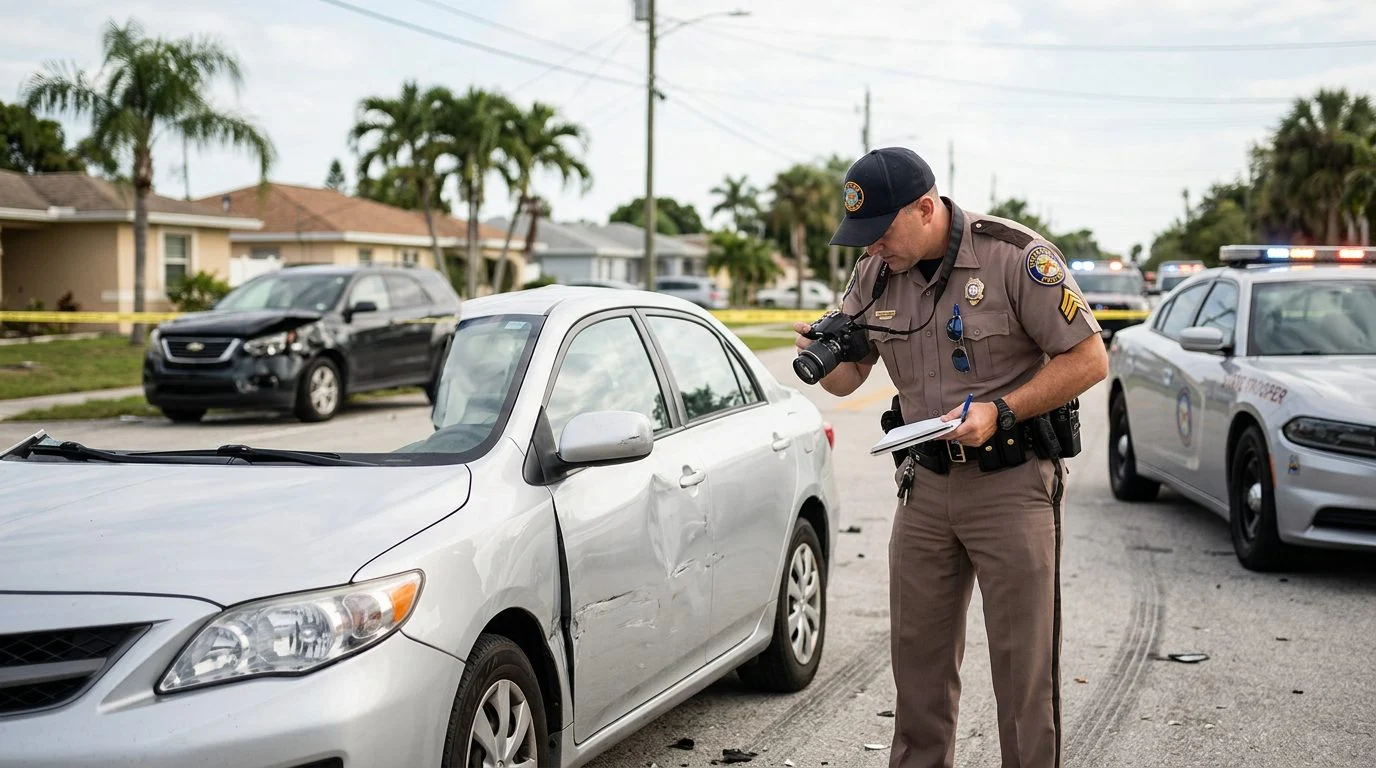
Stage one: the crash report. When a crash results in death, personal injury, or any indication of complaints of pain or discomfort, the officer’s long-form crash report must be submitted within 10 days after the investigation ends, under § 316.066. The parties and their insurers can get the report. Notify your own insurer promptly.
Stage two: treatment and records. You focus on healing while providers document your care. Bills, records, and wage information are gathered during this stage. It is often the longest part of the process.
Stage three: the demand. A written demand goes to the at-fault driver’s insurer. It describes your injuries, treatment, bills, and losses, and asks for payment.
Stage four: negotiation. The insurer may make an offer, ask for more records, or dispute parts of the claim. Counteroffers can go back and forth for weeks or months.
Stage five: a lawsuit. If talks stall, a lawsuit may be filed. Discovery is the exchange of evidence, including records and sworn testimony. Mediation is a settlement conference with a neutral mediator. Some cases still go to trial.
Florida’s Two-Year Deadline and Why Timing Matters Now
Florida generally gives two years to file a lawsuit based on negligence, under Florida Statutes § 95.11. Negligence means failing to use reasonable care. Many car accident claims are based on negligence. Other deadlines may apply in some cases, so check your situation early.
Talks with an insurer do not change the date set by the statute. The clock does not wait for the insurer to answer your demand. Keep a calendar that starts on the day of the crash.
Deadlines apply, so contact a lawyer promptly. Do not wait on an insurer’s reply before you ask about your options. Acting early protects your choices.
How Medical Treatment and Records Affect the Timeline
Insurers and lawyers usually need to know your treatment is complete or stable before they can discuss a full value. Until then, the true cost of the injury is unknown. This is often the biggest reason a claim takes longer.
Serious injuries, such as spinal cord injuries, traumatic brain injuries, and fractures that need surgery, often require longer care and more records. That can extend the timeline. Florida law also limits when some providers can bill. Under § 627.736, a provider’s statement generally cannot include charges for care given more than 35 days before the statement’s postmark, with exceptions.
Florida also limits pain-and-suffering damages in car accident cases. Medical records must be collected and reviewed before a demand goes out. Follow your doctors’ care. Our firm does not give medical advice.
Insurance Claims, Florida PIP, and Talking With the Insurer
Florida’s no-fault system pays Personal Injury Protection (PIP) benefits first. Florida’s no-fault insurance law, found in Florida Statutes section 627.737, sets specific conditions that must be met before an injured person can seek damages for pain and suffering from an at-fault driver. Whether those conditions are met depends on the facts of each case, so contact our team to review your situation.
An insurer may ask for a recorded statement. You can ask a lawyer before you give one. Be honest with both the insurer and your lawyer about prior injuries, treatment, and how the crash happened. Inconsistent details can hurt a claim.
If you request it in writing, a liability insurer must provide a sworn statement of coverage within 30 days. Under § 627.4137, that statement lists each known policy, the insurer’s name, each insured, the coverage limits, a statement of any policy or coverage defense which such insurer reasonably believes is available to such insurer at the time of filing such statement, and a copy of the policy.
A first offer is often a starting point, not a final answer. Read every release before you sign. Under § 768.041, a release with one party does not release the liability of another party who may be liable for the same harm.
Medical Liens and Outstanding Bills That Come Out Before You Are Paid
A medical lien is a creditor’s claim against your settlement for unpaid treatment. Several payers may have a right to be repaid from it. These claims must be identified and resolved before money is paid out, and that can add time at the end of a case.
Medicaid is the payor of last resort under § 409.910. Medicaid must be repaid in full from third-party benefits, regardless of whether the recipient is made whole.
Medicare works differently. CMS explains that a conditional payment covers services another payer may be responsible for. It must be repaid when a settlement, judgment, award, or other payment is made. Medicare.gov notes that if an insurer does not pay promptly, usually within 120 days, Medicare may pay and later recover that amount.
Some treatment is given under a letter of protection, which promises payment from a future settlement or judgment. Florida law defines this arrangement in § 768.0427, and it requires disclosure before those charges can be claimed.
Not sure what your next step is?
Talk it through with our team — the first consultation is free, confidential, and carries no obligation.
How Attorney Fees and Case Costs Affect What You Keep
Many personal injury lawyers take a contingency fee, which is a percentage of the money recovered rather than an hourly bill. Case costs, such as record fees and filing charges, are often paid from the same recovery.
The gross settlement is the total agreed amount. Net recovery is what remains after fees, case costs, and liens are paid. Here is a hypothetical example, not a prediction and not this firm’s rate:
- Gross settlement: $100,000
- Contingency fee at one-third: $33,333
- Case costs: $2,000
- Medical lien paid in full: $15,000
- Remaining before any lien reductions: $49,667
Ask whether the fee percentage is calculated before or after case costs. Ask how liens will be handled and whether they can be reduced. CHG Personal Injury Lawyers charges no attorney’s fees and no case costs unless there is a recovery.
Questions to Ask and Documents to Gather While You Wait
Gather the crash report, photos, insurance cards and claim numbers, medical records and bills, wage loss records, and a daily log of symptoms and limits. These records show the full picture and help any lawyer judge timing.
Ask any lawyer how the fee is calculated, who pays case costs and when, how liens are resolved, and which deadline applies to your case.
Can I still recover if I was partly at fault?
Under § 768.81, in a negligence action, the court shall enter judgment against each party liable on the basis of such party’s percentage of fault, not on the basis of joint and several liability. In a negligence action, a party found more than 50 percent at fault for their own harm may not recover any damages. This does not apply to an action for damages for personal injury or wrongful death arising out of medical negligence pursuant to chapter 766.
Does a settlement always mean a quick payment?
No. Liens, records, and insurer responses can all extend the time before funds are paid, so plan for a process rather than a set date.
Talk Through Your Own Settlement Timeline With CHG Personal Injury Lawyers
If you’re waiting on an insurer or weighing an early offer, you don’t have to sort out the timeline and the bills alone. Many people in this position are also caring for an injured family member while they try to understand the next steps.
CHG Personal Injury Lawyers serves clients throughout Florida. Igor Hernandez, an attorney admitted to The Florida Bar, is responsible for this page. For Spanish speakers: La consulta inicial es gratuita, confidencial y sin compromiso de continuar.
Contact CHG Personal Injury Lawyers to talk through your own facts.
What Usually Affects the Timeline
Your Medical Treatment
Settling a claim often means knowing your injuries and prognosis. Following your doctors' care and keeping complete records can take time, and that time shapes when a case is ready to resolve.
Insurance Negotiations
Insurers review medical bills, lost income, and the accident facts before making an offer. Back-and-forth negotiation can stretch the process, especially when the first offer falls short.
Disputes About Fault
When the parties disagree about who caused the crash, investigation and evidence gathering take longer. Police reports, witness statements, and vehicle data all play a role.
Court Schedules
If a lawsuit is filed, court calendars, discovery, and mediation add steps. Many cases resolve without trial, but each stage takes its own amount of time.
How We Help Florida Families Plan Ahead
Plain-Language Answers
We explain each stage of the process in clear terms, so you know what to expect and why.
Attention to Your Situation
Our team listens to your recovery goals, your work and family needs, and your questions about money.
Organized Records
We help gather medical bills, reports, and wage information early, which can keep your claim moving.
Florida Roots
Igor Hernandez and our attorneys are licensed in Florida and represent clients across the state.
Before You Sign Anything
Insurance adjusters may ask for a recorded statement or a quick settlement. Talk with a lawyer before you give a statement or sign a release, and follow your doctors' care.