

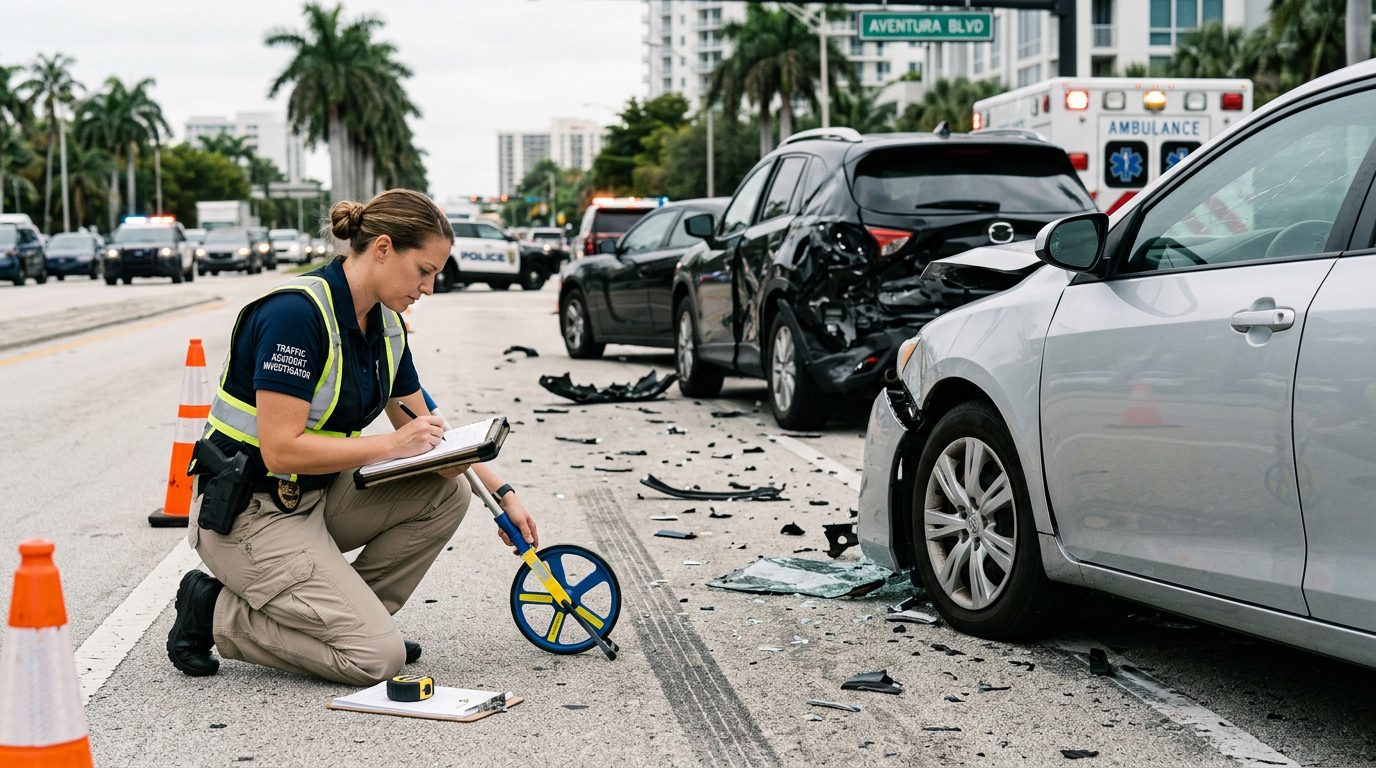
Car Accidents in Aventura
Injured in a Car Accident? Know Your Rights
From minor collisions to life-altering injuries, you may have a claim. Get the guidance you need to protect your recovery.
By CHG Lawyers · Published September 12, 2026
Car Accidents in Aventura: Florida Law, Your Claim, and What You’re Owed
If you’ve been injured in a car accident in Aventura, you have the right to seek compensation from the driver who caused the crash. But the path to that compensation depends on Florida’s no-fault insurance system. The decisions you make in the first days and weeks after the crash will determine whether you recover what your case is actually worth.
Many injured drivers in Aventura don’t realize they have a limited window to act. In Florida, you have two years to file a negligence lawsuit—but waiting costs you (Fla. Stat. § 95.11(5)(a)). Insurance companies know that delay weakens your position. This guide explains how Florida’s system works, why timing matters, and what you need to do now to protect your claim.
Not sure what your next step is?
Talk it through with our team — the first consultation is free, confidential, and carries no obligation.
Aventura’s Geography Creates Serious Crash Risks
Aventura sits where US Route 1 meets Aventura Boulevard. You can easily access I-95 and the Palmetto Expressway from here. This intersection of high-volume routes creates conditions for serious collisions: rear-end crashes at traffic lights, angle collisions at busy intersections, and multi-vehicle pileups during peak hours.
Whether your accident happened on US 1 near Aventura Mall, on Aventura Boulevard during rush hour, or on a residential side street, the same legal principles apply. If another driver’s negligence caused your injury, you have the right to recover compensation. The specifics of your case—liability, insurance coverage, injury severity—determine what that compensation will be.
What to Do Immediately After Your Accident
Your first priority is safety. If anyone is injured or vehicles are blocking traffic, call 911. Move to a safe location away from traffic if possible.
Then document the scene:
- Photograph and video: vehicle damage, road conditions, traffic signals, street markings, the other driver’s vehicle, and their license plate.
- Collect the other driver’s information: name, phone number, address, insurance company name and policy number, vehicle make and model, and license plate.
- Get witness contact information from anyone who saw the crash.
- Request a police report: officers will document the scene. The report number becomes part of your claim file.
- Seek medical attention: injuries like whiplash, concussion, and spine damage often don’t appear immediately. A medical evaluation creates a documented record of your condition.
Do not admit fault or apologize at the scene. Let the police report and evidence speak for themselves.
“Minor” Accidents Can Cause Serious, Lasting Injuries
One critical mistake injured drivers make is assuming that because a crash seemed low-speed or minor, their injuries can’t be serious. The body doesn’t work that way.
Symptoms of whiplash and soft-tissue injuries can take hours or days to appear after impact. Concussions and traumatic brain injuries occur at low speeds and may show no obvious symptoms immediately after the collision. Neck and spine injuries are especially common in rear-end crashes and often don’t appear on initial X-rays. They emerge days later when inflammation and nerve involvement become apparent.
Delaying medical care damages your claim. Insurance adjusters argue that a gap in treatment means the injury wasn’t serious. Document every symptom, every medical visit, every treatment, and every expense. This record is central to your claim’s value.
Florida’s No-Fault System: PIP Coverage vs. Third-Party Liability Claims
Florida requires all drivers to carry Personal Injury Protection (PIP) insurance. This is the “no-fault” system: your own PIP coverage pays your medical bills and lost wages regardless of who caused the accident. PIP pays 80% of reasonable medical expenses and 60% of lost income, up to the $10,000 policy limit, if you get initial care within 14 days of the crash (Fla. Stat. § 627.736).
When You Can Sue for More:
If your injuries are serious enough, Florida law allows you to step outside the no-fault system. You can file a third-party liability claim against the at-fault driver’s insurance company.
This distinction is critical—and many injured drivers don’t understand it. An attorney can evaluate whether your injuries cross the threshold.
The Statute of Limitations: Why Acting Now Matters
Florida Statute § 95.11 generally sets a two-year deadline for negligence lawsuits on claims that accrued after March 24, 2023; claims that accrued earlier are subject to the prior four-year limit. Two years sounds like plenty of time. It isn’t.
Here’s why delay costs you:
- Evidence fades: witness memories blur, surveillance footage is deleted (many systems keep video for 30–90 days), and scene conditions change.
- Medical causation becomes harder to prove: the longer the gap between the accident and treatment, the more an insurance adjuster will argue your injuries came from something else.
- Your negotiating position weakens: insurance companies know that as the statute of limitations approaches, you become desperate to settle. They use that urgency against you.
- Your attorney’s investigation becomes incomplete: the sooner your legal team investigates, the more evidence they can gather while it’s fresh.
Acting within weeks of your accident—not months or years—protects your claim.
Have questions about what happened?
Ask our team directly. The first conversation is free, confidential, and there is no obligation to continue.
Protecting Your Claim: What NOT to Do
After the crash, avoid these common mistakes:
- Do not post about the accident on social media. Insurance companies monitor public posts and use them to argue your injuries aren’t serious. A photo of you smiling at a restaurant weeks later becomes evidence that you’re not suffering.
- Do not accept a settlement offer without legal advice. Initial offers are typically 30–50% below what your case is worth, especially if your injuries are serious or permanent.
- Do not sign anything or give a recorded statement to the other driver’s insurer. Anything you say can be used to minimize your claim. Your attorney handles all communication.
- Do not delay medical treatment. Every gap in treatment weakens your claim.
- Keep all documentation: police report, medical records, bills, receipts for transportation, records of lost wages, photos of vehicle damage, and witness statements.
What Your Claim Is Worth
If another driver caused your accident, you may recover compensation for:
- Medical expenses: past and future treatment, surgery, rehabilitation, ongoing care, and medical equipment.
- Lost wages: income you lost while recovering or attending medical appointments.
- Permanent injury or disability: if the accident caused lasting harm, your claim is significantly higher. Permanent impairment, chronic pain, reduced earning capacity, and loss of enjoyment of life all increase your award.
- Pain and suffering: physical pain, emotional distress, and reduced quality of life.
- Property damage: repair or replacement of your vehicle.
The value of your claim depends on: – The severity and permanence of your injuries. – How clear it is that the other driver caused the crash. – The insurance coverage available (the at-fault driver’s policy limits cap what you can recover). – Your lost income and medical expenses.
A serious, permanent injury is worth far more than a minor soft-tissue injury. Insurance companies know this. They count on injured drivers not knowing their claim’s true value.
When You Need an Attorney
You should consult an attorney if:
- Your injuries are serious or permanent. The value of your claim is likely far higher than an initial settlement offer.
- Liability is unclear or disputed. An attorney investigates, gathers evidence, and builds a strong case.
- The other driver was uninsured or underinsured. Your attorney can help you access your own uninsured or underinsured motorist coverage and file a claim under your policy.
- The insurance company is delaying, denying, or lowballing your claim. An attorney knows how to push back and escalate.
- You’re unsure whether your injuries meet Florida’s serious injury threshold. An attorney advises you on whether you can pursue a third-party claim for pain and suffering.
An attorney handles all communication with insurers, allowing you to focus on recovery. You don’t have to negotiate alone.
Frequently Asked Questions
How long do I have to file a car accident claim in Florida?
Under Florida Statute § 95.11, negligence lawsuits on claims that accrued after March 24, 2023 generally must be filed within two years; claims that accrued earlier are subject to the prior four-year limit. However, acting sooner protects your claim, preserves evidence, and strengthens your negotiating position with the insurance company.
What if I was partially at fault for the accident?
Florida follows a modified comparative-negligence rule. If you’re found to be 50% or less at fault, you can still recover damages—but your award is reduced by your percentage of fault. If you’re found greater than 50% at fault for your own harm, you may not recover any damages.
Should I accept the insurance company’s first settlement offer?
Rarely. Initial offers are typically much lower than the true value of your claim, especially if your injuries are serious or permanent. An attorney can evaluate whether the offer reflects your actual damages.
What if the other driver doesn’t have insurance?
Your own uninsured motorist (UM) coverage may cover your injuries. An attorney can help you file a claim under your policy and pursue recovery.
Can I post about my accident on social media?
No. Insurance companies monitor social media and use posts to argue that your injuries aren’t as serious as you claim.
What is the difference between PIP and a third-party liability claim?
PIP is no-fault coverage that pays your medical bills and lost wages regardless of who caused the accident. A third-party liability claim is a fault-based claim against the at-fault driver’s insurance company for damages PIP doesn’t cover, primarily pain and suffering, which is recoverable only if your injury meets Florida’s threshold, such as a permanent injury. You can pursue both PIP benefits and a third-party claim, but pain-and-suffering damages are available only if your injuries meet Florida’s threshold.

Want to know where you stand?
Tell us what happened and our team will walk you through the options available to you, at no cost.
Next Steps: Protecting Your Aventura Car Accident Claim
If you’ve been injured in a car accident in Aventura, start now:
- Gather all documentation: police report, medical records, photos of the scene and vehicle damage, insurance information, and witness contact details.
- Understand your injuries and treatment needs before accepting any settlement.
- Know your deadline: you have two years to file a lawsuit, but acting sooner protects your claim (Fla. Stat. § 95.11(5)(a)).
- Consult an attorney if your injuries are serious, permanent, or ongoing—or if you’re unsure whether you have a claim worth pursuing.
An attorney can review your case, explain your rights under Florida law, clarify whether your injuries meet the serious injury threshold, and advise you on the best path forward.
If you’ve been injured in a car accident in Aventura—whether it seemed minor at first or you’re dealing with ongoing pain—contact us for a free case evaluation. We help people in your situation, and we’re here to explain what your claim is worth and what comes next.
What to Do After a Car Accident in Aventura
At the Scene
Move to safety if possible. Call 911 if anyone is injured. Exchange contact and insurance information with the other driver. Take photos of vehicle damage, the accident scene, and road conditions. Get names and contact details from witnesses.
Seek Medical Care
See a doctor even if you feel fine—some injuries appear hours or days later. Keep all medical records, bills, and receipts. Document your symptoms and how the injury affects your daily life.
Report & Document
File a police report if required. Notify your insurance company promptly. Keep records of all accident-related expenses: medical care, vehicle repair, lost wages, and transportation costs.
Protect Your Claim
Do not admit fault or sign anything without understanding it. Avoid posting about the accident on social media. Contact a personal injury attorney before speaking with the other driver's insurance company.
Why You Need Legal Representation
Insurance Companies Protect Their Interests, Not Yours
Complex Claims Require Proper Documentation
Medical records, accident reports, repair estimates, and expert testimony must be organized and presented correctly. We handle the paperwork so you can focus on recovery.
You May Be Entitled to More Than You Realize
Compensation can include medical expenses, lost income, pain and suffering, and future care costs. We identify all damages and fight for fair compensation.
Time Matters
Evidence fades, witnesses' memories fade, and legal deadlines apply. Acting quickly preserves your claim and strengthens your position.
Don't Wait to Get Help
The sooner you contact an attorney, the sooner we can protect your rights, gather evidence, and begin building your case. Insurance companies count on injured people to delay or handle claims alone.
Common Questions About Car Accident Claims
How long do I have to file a claim?
Florida law sets a two-year window from the accident date to file a negligence lawsuit (Fla. Stat. § 95.11(5)(a)). However, acting sooner protects evidence, preserves witness accounts, and strengthens your negotiating position with insurance.
What if I was partially at fault?
Florida's comparative negligence rule allows you to recover compensation even if you share some responsibility—as long as you are not more than 50% at fault (Fla. Stat. § 768.81(6)). Your recovery is reduced by your percentage of fault.
What damages can I recover?
You may recover medical expenses, lost wages, vehicle repair or replacement, pain and suffering, and future medical care. In severe cases involving permanent injury or death, damages can be substantial.
Do I need an attorney?
We charge no attorney’s fees and no case costs unless there is a recovery.
Types of Car Accidents We Handle
Catastrophic Injuries
Spinal cord injuries, paralysis, traumatic brain injuries, amputations, and severe burns that cause permanent impairment and life-altering changes.
Truck Accidents
Collisions with commercial trucks often result in severe injuries due to size and weight. We investigate negligence, mechanical failure, and driver error.
Rideshare Accidents
Injuries in Uber, Lyft, or other rideshare vehicles. We pursue claims against the driver, the platform, and other responsible parties.
Motorcycle & ATV Accidents
Riders face heightened injury risk. We pursue full compensation for medical care, lost income, and pain and suffering.