

Amputation & Limb Loss | Florida
Making Your Home Livable Again After Limb Loss
Losing a limb changes how you move through every room of your house. Here's a plain-language look at the home modifications amputees often need, what they can cost, and how those costs can become part of a catastrophic injury claim.
Why Families Turn to CHG
Nationwide
Catastrophic injury cases accepted
Bar-Admitted
Florida Bar licensed attorneys
Bilingual
Help in English & Spanish
Free
Case evaluations, no obligation
By CHG Lawyers · Published July 26, 2026
Home Modification Costs After Amputation: What You Need and What Can Be Recovered
After a traumatic amputation, your own home can become the hardest place to move around. Making it safe and easy to use is not a luxury. It is basic independence. When someone else’s negligence caused the limb loss, you can ask for the reasonable cost of those changes as part of your compensation.
This guide is for the injured person and their family. It explains the changes and devices people often need. It shows how those costs get documented and proven. And it points to the Florida law that governs these claims. This is general information, not legal advice. No result can be promised.
For the full picture of these cases, see our main amputation injury guide.
Not sure what your next step is?
Talk it through with our team — the first consultation is free, confidential, and carries no obligation.
Why your home has to change after limb loss
A traumatic amputation can turn a familiar home into an obstacle course overnight. Steps you once climbed without thinking. A narrow bathroom door. A bathtub with high walls. These become daily barriers. And every barrier is a fall risk.
That last point matters more than most families expect. The National Limb Loss Resource Center, run by the Amputee Coalition, reports that falls are a leading cause of injury among people living with limb loss. That is why the first changes a family fights for are usually a safe bathroom and a step-free path to a bed.
This page focuses on amputations caused by serious accidents or wrongdoing. Think truck crashes, unsafe property, or medical mistakes. That legal context matters. It affects who may have to pay for these changes.
Common home modifications amputees need
What you need most depends on a few things. Did you lose a lower limb or an upper limb? Do you use a prosthesis (an artificial limb), a wheelchair, or both?
Entry and access
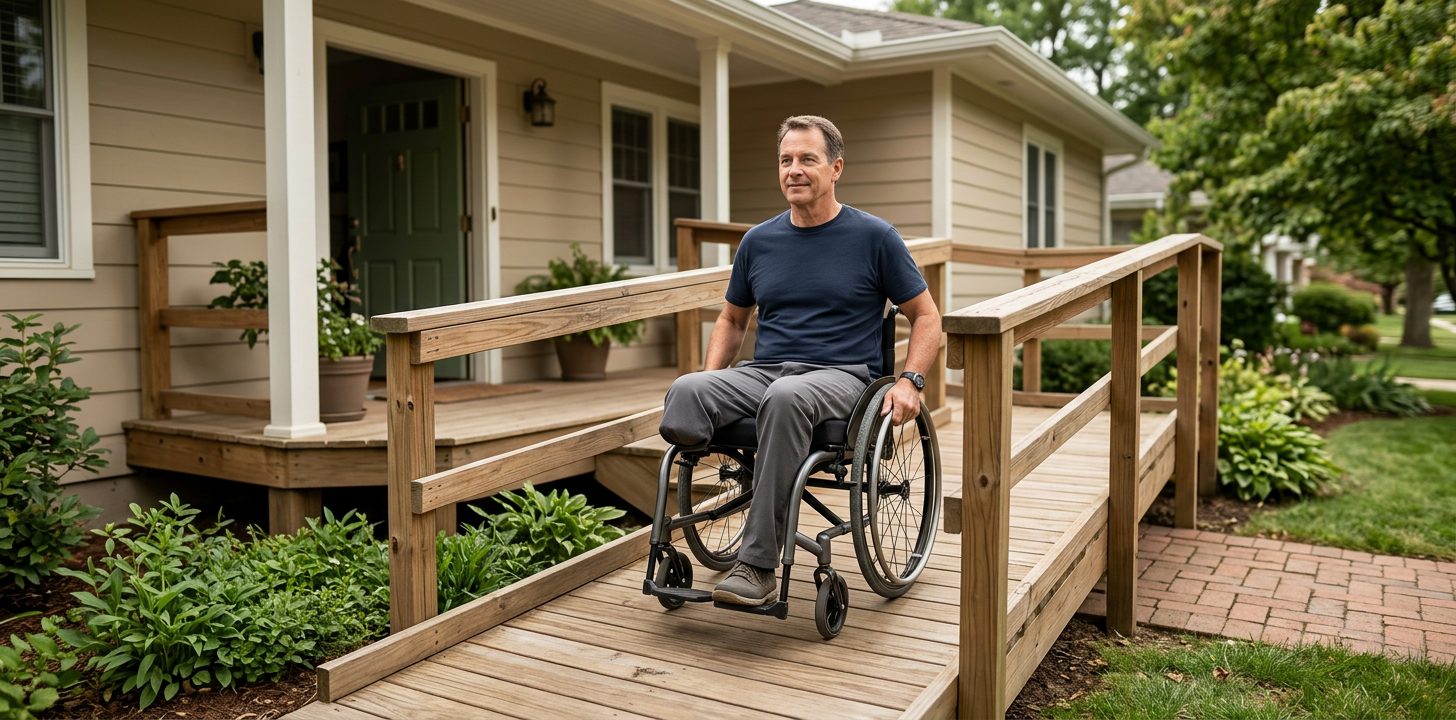
Ramps and threshold ramps replace steps at doorways. Doorways often need to be wider for a wheelchair. The U.S. Access Board’s ADA Accessibility Standards use a 32-inch clear-width benchmark. Many contractors follow it even in private homes. Multi-story homes may need a stair lift or platform lift.
Bathroom
The bathroom is usually the top priority. Common changes include a roll-in shower with no curb, grab bars anchored into wall studs, a shower bench, a taller toilet, and a sink you can reach while seated.
Kitchen
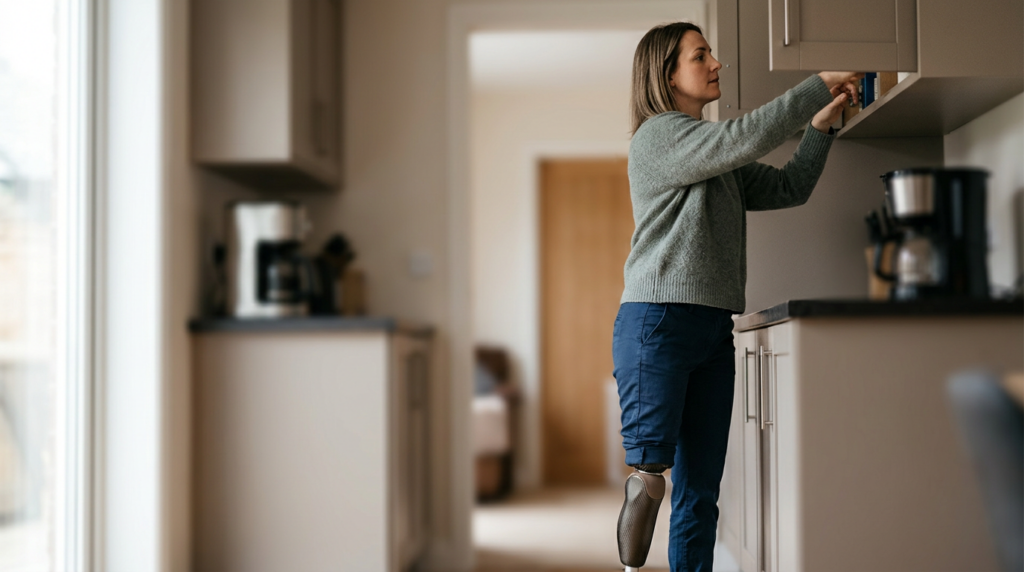
Lowered countertops and cabinets let you work while seated. Appliances, outlets, and controls may need to move within easy reach.
Bedroom and living areas
Many families turn a main-floor room into a bedroom to avoid stairs. They also move furniture to leave a clear turning space for a wheelchair.
Safety and control features
Railings, non-slip flooring, and lever door handles all help. So do smart-home controls for lights and locks. After upper-limb loss, one-handed and voice-controlled features matter most.
Assistive devices and adaptive equipment beyond the home
Beyond the house, most people need mobility devices, prosthetics, and adaptive tools. These are ongoing needs, not one-time buys.
Mobility equipment includes manual and power wheelchairs, walkers, and transfer boards. Prosthetic limbs are a big long-term cost. They wear out. They need repair, adjustment, and replacement over a lifetime.
Adaptive daily-living tools also help. Think dressing aids, adapted kitchen tools, and one-handed devices. These matter most after upper-limb loss. Many people also need vehicle changes, such as hand controls or a wheelchair lift, so they can keep driving.
These needs continue for decades. So they are usually planned out in a life-care plan. See our guide to future medical costs after a catastrophic injury.
How much do home modifications after amputation cost?
Costs vary a lot. They depend on the change, the home, the region, and the level of amputation. The ranges below are general context. They are not price quotes or promises:
- Simple items (grab bars, threshold ramps, lever handles): often a few hundred dollars each.
- A modular wheelchair ramp: commonly a few thousand dollars, depending on length and rise.
- A full accessible bathroom remodel: often tens of thousands of dollars.
- A stair lift or platform lift: often several thousand to well over ten thousand dollars.
- A whole-home accessibility renovation: can reach the high tens of thousands or more.
Treat every number as a general estimate. And remember that many costs repeat. Devices wear out. Prosthetics need replacement. A growing child, aging parents, or changing health may all call for new updates later. A professional accessibility assessment gives a real number for your home instead of a guess.
Are home modification costs recoverable in an injury claim?
When someone else’s negligence caused the amputation, you can ask for the reasonable cost of making your home accessible. These costs are economic damages — the measurable money costs of adapting your life. They can cover both past expenses (changes already done) and future ones (changes a professional expects you’ll need for years to come).
This applies across the accident types we handle. The amputation may have come from a truck crash, a preventable accident, or medical negligence. It may also have come from a violent attack on someone else’s property. That could be an assault, robbery, or shooting at an apartment complex, parking garage, hotel, or store that failed to provide reasonable security. Lawyers often call this type of claim negligent security. In each case, the accessibility costs can be part of the claim.
Here is one important caution about how much you can recover. Florida follows a modified comparative-fault rule. This means your own share of blame is counted against you. Under Fla. Stat. § 768.81, your recovery is reduced by your share of fault. And a person found more than 50% at fault for their own injury generally recovers nothing. Outcomes always depend on the specific facts. So no lawyer can promise a result, and this page is not legal advice.
Have questions about what happened?
Ask our team directly. The first conversation is free, confidential, and there is no obligation to continue.
How the need for home modifications is documented and proven
Insurers and defense lawyers rarely take these costs seriously without solid proof. In the cases our attorneys handle, proving the need usually rests on four building blocks:
- Medical necessity. Treating doctors, physiatrists (doctors focused on physical rehabilitation), and occupational therapists explain which changes you medically need.
- Home accessibility assessment. A specialist visits your home and finds the specific barriers and fixes.
- Contractor estimates. Licensed contractors put real dollar figures on the recommended work.
- A life-care plan. This central document projects your lifetime costs for changes and devices. See our guide to the life-care plan in catastrophic-injury cases.
This is where many self-represented claims fall short. They capture today’s bills but miss decades of future need. Start keeping records early. Save receipts, estimates, and medical notes from the first weeks after the injury. Our guide to the first steps after a catastrophic injury explains why.
What insurance and other assistance may (and may not) cover
Health insurance, Medicare, and Medicaid often cover limited durable medical equipment, such as a wheelchair or a walker. But they rarely pay for full home renovations. A widened doorway, a roll-in shower, or a ramp usually falls outside standard coverage. That gap surprises many families.
Some help exists elsewhere. Nonprofit grants and community groups help amputees with equipment and smaller changes. Community fundraising can bridge a short-term gap. These are worth pursuing. But set realistic expectations. They seldom cover a lifetime of accessibility needs.
That shortfall is exactly why a claim matters when negligence caused the injury. The person or company at fault — not you, and not a charity — may be responsible for the reasonable cost of adapting your life. To see how widespread the need for accessible living is, the Christopher & Dana Reeve Foundation tracks paralysis and mobility statistics in the United States.
Getting help understanding your options
You don’t have to price out your entire future alone. A free case evaluation can help you understand whether these costs may be recoverable in your situation.
CHG Personal Injury Lawyers focuses only on catastrophic, life-altering injuries. Our team includes attorneys admitted to The Florida Bar, and we handle cases nationwide.
Timing matters. For most negligence claims that arise on or after March 24, 2023, Florida sets a two-year deadline to file suit under Fla. Stat. § 95.11. Deadlines vary by case. So don’t wait to learn your rights.
¿Prefiere leer en español? Consulte nuestra guía sobre amputaciones. When you’re ready, contact us for a free case evaluation.
Frequently asked questions
What home modifications do amputees need most after limb loss?
The most common are ramps, wider doorways (many contractors follow the ADA’s 32-inch clear-width benchmark), a roll-in shower with grab bars, and a main-floor bedroom. Lower-limb loss usually drives mobility changes. Upper-limb loss drives one-handed and voice-controlled features.
How much do home modifications cost after an amputation?
Costs range from a few hundred dollars for grab bars to tens of thousands for a full accessible remodel. A professional home assessment gives an accurate number for your specific home.
Are home modification costs recoverable in an injury claim?
When someone else’s negligence caused the amputation, the reasonable cost of accessible changes can be part of the economic damages you seek. Under Florida’s comparative-fault rule, your recovery can be reduced or barred by your own share of fault. And no result can be guaranteed.
Does insurance or Medicare cover home renovations for amputees?
Health insurance, Medicare, and Medicaid often cover limited medical equipment. But they rarely pay for full home renovations. Larger accessibility changes usually fall outside standard coverage.
How do you prove the need for home modifications in a claim?
With doctors’ opinions on medical necessity, a home accessibility assessment, licensed-contractor estimates, and a life-care plan projecting lifetime costs. Save all records and receipts from the start.
How long do I have to file an amputation injury claim in Florida?
For most negligence claims that arise on or after March 24, 2023, Florida generally allows two years to file suit under Fla (Fla. Stat. § 95.11(5)(a)). Stat. § 95.11. Deadlines vary by case. So speak with an attorney promptly.
Common Home Modifications After Amputation
Ramps & Entryways
Wheelchair or prosthetic use often requires exterior and interior ramps to replace stairs and thresholds so you can safely enter and move through your home.
Wider Doorways
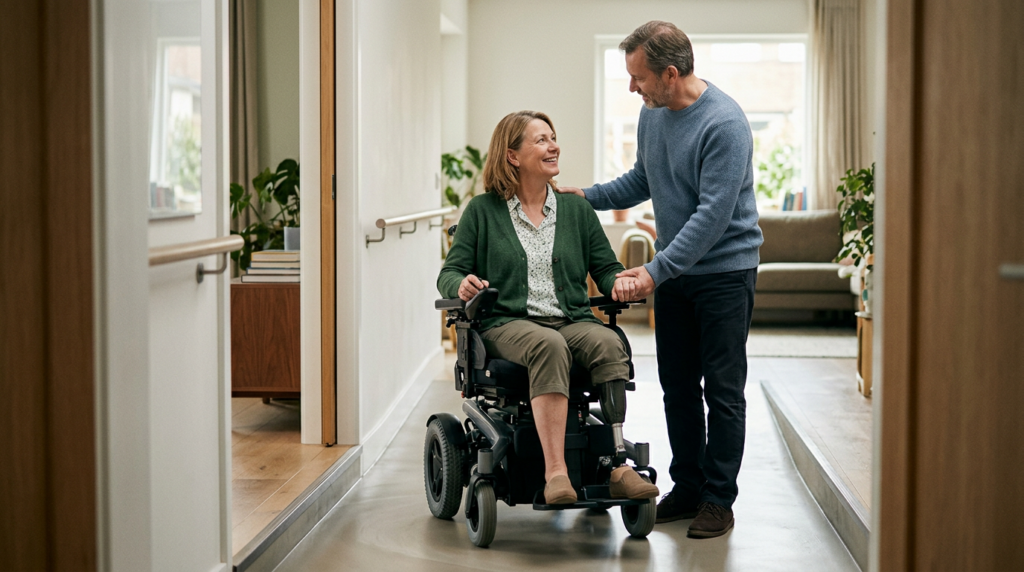
Many contractors widen doorways toward the ADA's 32-inch clear-width benchmark so wheelchairs and mobility aids fit through comfortably.
Roll-In Bathrooms
A roll-in shower, grab bars, and accessible fixtures reduce fall risk in one of the most dangerous rooms in the house.
Main-Floor Living
Relocating a bedroom and bathroom to the ground floor removes the daily obstacle of stairs after lower-limb loss.
Want to know where you stand?
Tell us what happened and our team will walk you through the options available to you, at no cost.
How Needs Differ by the Injury
Lower-Limb Loss
Usually drives mobility changes — ramps, wider doorways, roll-in showers, and single-floor living arrangements.
Upper-Limb Loss
Often calls for one-handed hardware, lever handles, and voice-controlled lighting, locks, and appliances.
Long-Term Comfort
The right modifications aren't luxuries — they restore independence, dignity, and safety in the place you live every day.
Keep Every Receipt and Estimate
Home modification costs can be part of what you recover in a catastrophic injury claim — but only if they're documented. Save contractor estimates, invoices, and photos, and talk to a lawyer before finalizing major renovations.
Questions Amputees and Families Ask
What modifications are needed most?
The most common are ramps, wider doorways, a roll-in shower with grab bars, and a main-floor bedroom. Lower-limb loss usually drives mobility changes, while upper-limb loss drives one-handed and voice-controlled features.
How much do modifications cost?
Costs vary widely depending on the size of the home, the extent of the changes, and local labor. A minor entry ramp is far less than a full bathroom retrofit or a ground-floor addition. A licensed attorney can help you build a supported estimate.
Who pays for these changes?
When someone else's negligence caused your amputation — in a truck crash or another serious accident — the cost of making your home accessible may be recoverable as part of your claim.
How is the amount proven?
Life-care planners, contractors, and medical experts help document current and future modification needs so the true, lifelong cost is part of your case.