


Amputation & Limb Loss · Florida
When a Crush Injury Costs a Limb: Understanding Compartment Syndrome
Compartment syndrome is a medical emergency. When pressure inside a limb is not relieved in time, the result can be permanent nerve damage, tissue death, or amputation. If a serious accident or a delay in care led to your limb loss, we can help you understand your options.
Why families turn to CHG Personal Injury Lawyers
Nationwide
Catastrophic-injury cases accepted across the U.S.
Florida Bar
Licensed, admitted attorneys
EN/ES
Bilingual guidance in English & Spanish
$0
No fee to start your free case review
By CHG Lawyers · Published August 01, 2026
Crush Injuries and Compartment Syndrome: When an Accident Leads to Amputation
A crush injury can cause a dangerous buildup of pressure. Doctors call this compartment syndrome. If no one relieves that pressure fast, it can destroy muscle and nerve tissue. This can lead to amputation.
Here is the plain version. Compartment syndrome amputation happens when swelling inside a limb blocks blood flow. If the block lasts long enough, the tissue dies.
Maybe you are reading this while you recover. Or maybe a loved one is in the hospital, and you are trying to understand words like “fasciotomy” and “compartment pressure.” This page is written for you, not for doctors. It explains how a survivable injury can turn into limb loss. It shows the warning signs. And it explains when an accident or a medical delay may give you a legal claim.
This is educational information. It is not medical or legal advice. If you have questions about your own situation, you can request a free case evaluation any time.
For the bigger picture, see our main guide on amputation and limb loss injury claims.
Not sure what your next step is?
Talk it through with our team — the first consultation is free, confidential, and carries no obligation.
What is a crush injury?
A crush injury happens when heavy force presses or traps a body part. Think of a limb pinned under wreckage, machinery, or a heavy load.
Our attorneys often see crush injuries in catastrophic cases. They come from truck and heavy-vehicle crashes. They also come from being pinned under equipment, from industrial and workplace accidents, and from building or structure collapse.
A crush injury is far more than a bad bruise. The force can damage muscle, nerves, blood vessels, and bone all at once.
Worse, the harm can keep growing in the hours after the accident. This can happen even after the person looks stable. That delay is where compartment syndrome becomes a real danger. It is why a limb that seemed saveable in the emergency room can still be lost.
What is compartment syndrome?
Your muscles are packed into groups called “compartments.” Each group is wrapped in a tough sheet of tissue called fascia. Fascia does not stretch much.
So when swelling or bleeding fills a compartment, the fluid has nowhere to go. The pressure inside climbs fast.
As the pressure rises, it squeezes the small blood vessels shut. This cuts off oxygen to the muscle and nerve inside. Penn Medicine explains that if the pressure lasts long enough, the muscles may die. The arm or leg may stop working.
There are two types. Chronic compartment syndrome builds slowly, usually from repeated exercise. That is not what this page is about.
This page is about acute compartment syndrome. UT Southwestern calls it a limb-threatening emergency. Acute cases usually start within hours. The trigger is often a crush injury, a broken bone, or the moment blood flow returns to a trapped limb.
How a crush injury turns into compartment syndrome — the chain no clinical page connects to your case
Here is the sequence that matters, step by step. Understanding it helps you spot a problem and speak up.
- The crush. Crushing force, a broken bone, or long compression damages tissue. This starts bleeding and swelling inside a compartment.
- Reperfusion — the hidden turn. When rescuers free a trapped limb, blood rushes back in. That sudden return of flow can cause more swelling, not less. Families are often caught off guard. The person was freed, everyone relaxed, and then the limb got worse.
- The pressure cycle. Swelling raises pressure. Pressure lowers blood flow. Low blood flow starves the tissue of oxygen. Starved muscle and nerve cells begin to die.
- The point of no return. Once cells die from lack of oxygen, that damage cannot be undone.
Warning signs doctors watch for. These are often taught as the “P’s”:
- Pain that seems far worse than the injury should cause, especially sharp pain when the muscle is gently stretched
- Paresthesia (numbness or pins-and-needles)
- a tight, “full” feeling in the limb
- later, Pallor (a pale limb) and a Pulseless, cold limb
Pain out of proportion and pain on stretch are usually the earliest signs. A pulseless, cold limb is a late and serious sign. Waiting for it is waiting too long. These signs can get worse within hours. That is why hospitals watch patients closely after a serious accident or fracture.
The clinical pages above explain the biology well. What they do not do is connect that biology to your legal situation. That is the rest of this guide.
Why time matters: the treatment window
Time is everything with compartment syndrome. Once cells die from lack of oxygen, the damage is permanent.
The main treatment is a fasciotomy. This is surgery that cuts open the tight fascia to release the trapped pressure. Once the pressure is gone, blood can flow again. Done in time, a fasciotomy can save the limb.
Hours count. When high pressure lasts too long, muscle and nerve death cannot be reversed. Patient-education sources like Penn Medicine stress that early treatment gives the limb its best chance.
This is why a delayed or missed diagnosis changes everything. A patient who reports the classic warning signs should be checked and treated promptly. Doctors consistently report that earlier recognition and treatment are linked to a better chance of saving the limb. We cannot and will not promise any specific result. But the medical literature is clear that speed matters. A delay can be the difference between keeping a limb and losing it.
Can compartment syndrome cause limb loss?
Yes. Compartment syndrome can cause limb loss when the tissue damage is too great to repair. In those cases, UT Southwestern notes that amputation may be needed to protect the person’s life or remaining function.
Amputation is not only about the limb itself. When large amounts of muscle die, they release toxins into the bloodstream. Doctors call this rhabdomyolysis. These toxins can overwhelm and injure the kidneys.
Severe infection is another risk. It is more likely where dead muscle no longer gets blood. Sometimes amputation is the safest option to stop these life-threatening problems from spreading.
Do you always have to amputate for compartment syndrome? No. Amputation is a last resort. Many limbs are saved when pressure is relieved in time. Doctors choose amputation only when the limb cannot be saved, or when keeping it puts the patient in danger. These are medical decisions made by treating doctors, and outcomes vary from person to person.
Have questions about what happened?
Ask our team directly. The first conversation is free, confidential, and there is no obligation to continue.
How long does it take to recover from compartment syndrome?
Recovery time varies widely. It depends on how severe the injury is, the surgeries involved, and any complications. There is no single answer. Anyone who promises one is not being honest with you.
For someone whose limb was saved by a fasciotomy, healing may involve several steps:
- open-wound care
- one or more return trips to the operating room to close the wound (sometimes with a skin graft)
- physical therapy over weeks or months
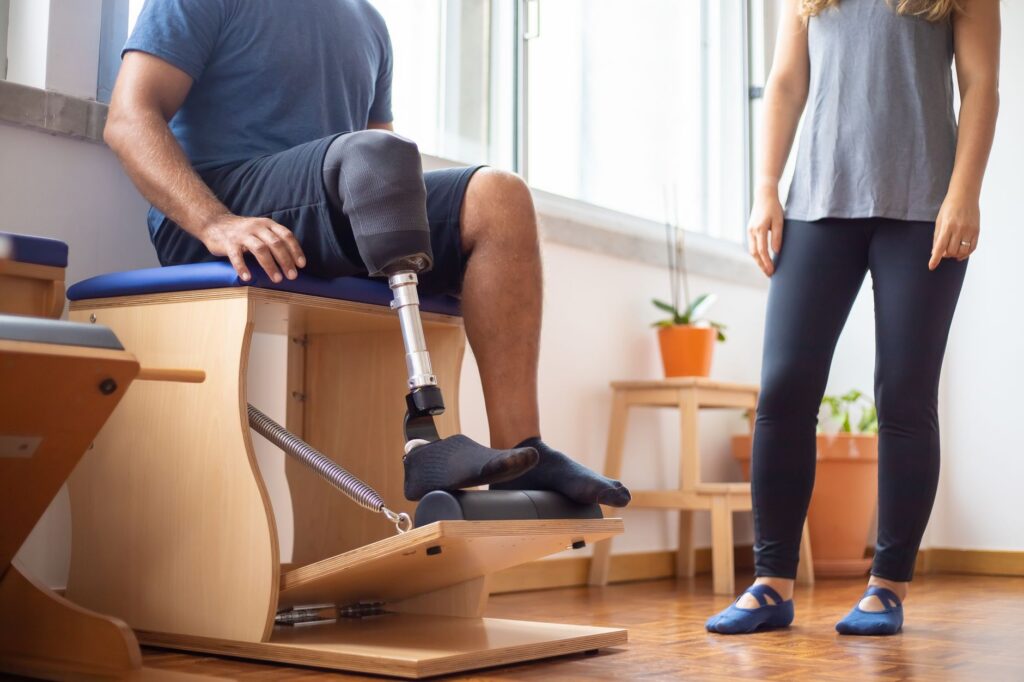
For someone who lost a limb, recovery is an ongoing journey. It can include wound healing, physical and occupational therapy, prosthetic fitting, and learning to adapt to daily life.
We share these ranges only so families can set realistic expectations. They are never a guarantee. To learn what rehabilitation often looks like, see our guide on amputation recovery and rehabilitation.
When an accident or a medical delay may lead to a claim
You may have a legal claim if someone else’s carelessness caused the injury. You may also have a claim if a preventable medical delay turned a survivable injury into an amputation. There are often two separate paths worth looking at. A single case can involve both.
Path one: the accident itself. Maybe you were badly hurt in a truck crash, at an unsafe workplace, or on a dangerous property. If so, the person or company responsible may owe you compensation. In plain terms: if someone else’s carelessness caused the crash or the crush injury, you may have a claim against them.
Path two: a delay in diagnosing or treating the compartment syndrome. Maybe you or your family reported the classic warning signs — worsening pain, numbness, a tight limb. Maybe no one acted, and that delay cost the limb. That may be medical negligence. The main question a lawyer asks is simple: would faster, reasonable care more likely than not have saved the limb? This is why the timeline you write down (below) matters so much.
These situations fall under catastrophic injury and medical negligence claims. Our firm is based in Florida and takes catastrophic-injury cases nationwide.
A few Florida rules matter here:
- Filing deadline. Most personal-injury claims that arose on or after March 24, 2023 must be filed within two years under Fla. Stat. §95.11.
- Shared fault. Florida uses a modified comparative-fault rule under Fla. Stat. §768.81. This rule generally bars recovery if you are found more than 50% at fault.
- Medical-negligence cases have their own pre-suit investigation rules and deadlines under Fla. Stat. §766.
Deadlines and rules can differ by state and by case type. So do not guess about your own. We cannot guarantee any outcome. But a free case evaluation can help you understand your options before an important deadline passes.
What families can do next
The most useful thing you can do right now is save information while it is fresh. You do not need to know any legal terms to get help. That is our job.
- Write down the timeline. Note when symptoms started, exactly what you told the medical team, who you told, and when treatment happened. In a possible delay case, this timeline is often the single most important document.
- Keep the records. Save hospital paperwork, operative notes, discharge summaries, and imaging reports. You have a right to request your medical records.
- Document the accident. Keep photos, crash or incident reports, witness names, and anything about the scene, vehicle, or equipment.
- Track the costs. Save bills, receipts, prosthetic estimates, and notes about missed work.
Read them if you want background before you call. When you are ready, our team is here to listen. Reach us for a free, confidential case evaluation.
For related reading, see our overview of catastrophic injury claims and truck accident injuries.
Frequently asked questions
Do you have to amputate for compartment syndrome?
Not always. Amputation is a last resort. Doctors use it only when the limb cannot be saved, or when keeping it endangers the patient’s life or health. Many limbs are saved when pressure is relieved in time with a fasciotomy.
How long does it take to recover from compartment syndrome in the leg?
Recovery varies widely by severity, surgery, and complications. Someone whose limb was saved may heal over weeks or months with wound care and physical therapy. Someone who loses a limb faces longer, ongoing rehabilitation and prosthetic training.
Can compartment syndrome cause limb loss?
Yes. If pressure cuts off blood flow long enough, muscle and nerve tissue can die. Amputation may become necessary to protect the person’s health. Sometimes it is needed to stop complications like rhabdomyolysis or infection.
When does compartment syndrome occur after an accident?
It usually begins within hours of a crush injury, a fracture, or when blood flow returns to a trapped limb. The earliest warning signs are pain that seems worse than expected and sharp pain when the muscle is stretched. This is why early monitoring matters.
This article is for general education and is not medical or legal advice. Every case is different, and no outcome is guaranteed.
Time is tissue
Compartment syndrome can destroy muscle and nerve within hours. When medical providers miss the warning signs or delay a fasciotomy, a limb that could have been saved may be lost. If you believe a delay in diagnosis or treatment contributed to an amputation, keep your medical records and speak with an attorney.
Common questions after a compartment-syndrome amputation
Do you have to amputate for compartment syndrome?
Not always. Amputation is a last resort, used only when a limb cannot be saved or when keeping it endangers the patient's life. Many limbs are saved when pressure is relieved in time with a fasciotomy.
What causes compartment syndrome?
It often follows a high-energy crush injury or severe trauma — such as a truck crash, a serious fall, or a badly broken bone — where swelling and pressure build inside a muscle compartment and cut off blood flow.
How long is recovery?
Recovery varies widely. Even when a limb is saved, patients may face multiple surgeries, rehabilitation, and lasting impairment. An amputation begins a lifelong process of adaptation, prosthetic care, and ongoing medical support.
Could a delay have made it worse?
Sometimes. When the condition is recognized and treated promptly, outcomes are often better. A missed or delayed diagnosis can turn a survivable injury into a permanent, life-altering loss.
Want to know where you stand?
Tell us what happened and our team will walk you through the options available to you, at no cost.
How we help families facing limb loss
We investigate what happened
From the crash or fall that caused the crush injury to the medical care that followed, we work to understand every factor that led to the amputation.
We account for lifelong needs
Prosthetics, home modifications, lost income, and future care are real costs. We build a claim that reflects what a permanent injury truly means.
We handle it with dignity
A catastrophic injury changes everything. We keep you informed in plain language and treat your family with respect at every step.
Licensed attorneys on your side
Our Florida Bar–admitted lawyers take catastrophic-injury cases nationwide, so serious injuries are handled by experienced counsel.
If an accident or a delay in care led to an amputation, let us review your case at no cost.
Related practice areas
- Amputation & Limb Loss Injury Claims: A Complete Guide for Victims and Families