

Amputation Injury Claims
What You Can Recover After an Amputation Injury
Amputation changes everything. You deserve compensation that reflects the full cost of your loss—medical care, lost income, and the lifetime support you'll need.
By CHG Lawyers · Published September 21, 2026
What Damages Can You Recover After Losing a Limb in an Accident?
If you or someone you love has lost a limb, you are likely dealing with surgeries, fear, and a home that suddenly doesn’t work the way it used to. Money can’t undo that. But when someone else’s negligence caused it, the law lets you recover damages for amputation injury — the cost of what happened — and understanding those costs is a step toward getting your footing back.
There are two main kinds of damages. Economic damages are your measurable money losses: medical bills, lost income, the cost of a prosthetic. Non-economic damages cover the personal toll — pain, and the parts of life you can no longer do the same way. Together they are meant to account for a lifetime, not a few months.
We’ll walk through every category below so you know what’s at stake before you talk to anyone. First, one honest thing: there is no fixed price for a limb, and this page will explain exactly why.
If you've lost someone this way, you don't have to sort through it alone. Talk it through with our team — the first consultation is free, confidential, and carries no obligation.
Economic damages: the measurable financial losses
Economic damages are the costs you can document with paperwork. In the catastrophic cases our attorneys handle, they stretch across decades.
They usually include:
- Past and future medical bills — emergency care, the amputation surgery itself, hospital stays, and later revision surgeries. A residual limb often changes shape over time, requiring surgical revision to maintain a proper fit for the prosthetic socket.
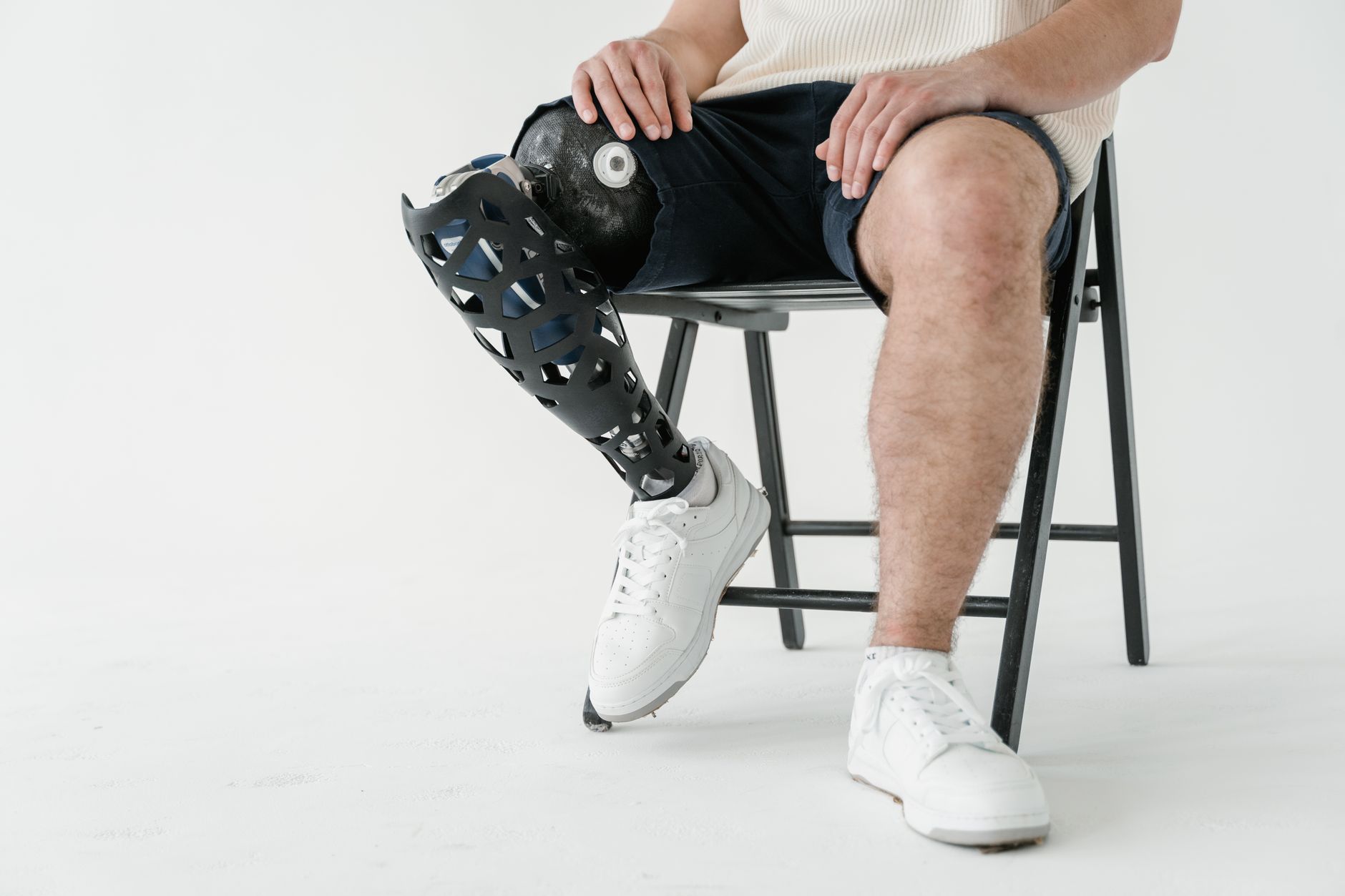
- Prosthetics and their replacement cycle. A prosthetic limb is not a one-time cost. A basic prosthetic foot may cost $5,000–$15,000, while a microprocessor-controlled knee can run $20,000–$100,000 or more. These devices wear out and are typically replaced every three to five years — sometimes over 50 years for a young person. For a 30-year-old, that means 10 to 15 replacements across a lifetime.
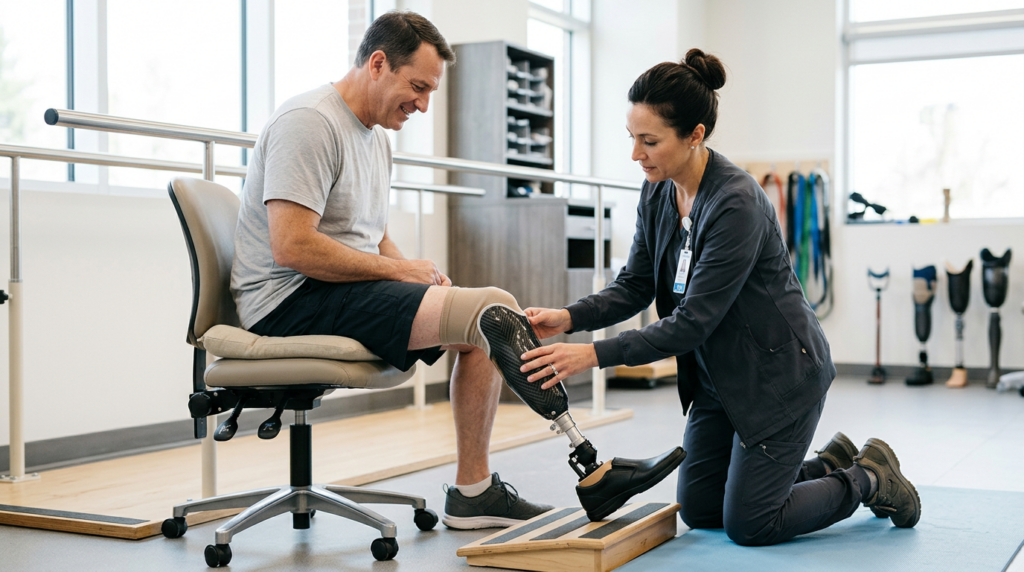
- Rehabilitation — physical therapy, occupational therapy, pain management, and prosthetic training, often ongoing for months or years after the amputation.
- Home and vehicle modifications — ramps, widened doorways, roll-in showers, accessible kitchens, and hand controls or adaptive equipment for driving.
- In-home and attendant care for daily tasks most people take for granted — bathing, dressing, household maintenance.
- Lost wages and out-of-pocket costs you have already absorbed.
The prosthetic replacement cycle surprises many families. Multiply the cost of a single advanced microprocessor knee across a 50-year lifespan, and it becomes one of the largest numbers in the case — often exceeding $1 million in lifetime device costs alone.
Lost earning capacity: the money you can no longer earn
Lost wages look backward — the paychecks you’ve already missed. Lost earning capacity looks forward, at the income your injury has taken off the table for the rest of your working life. It is often the larger of the two.
Losing a limb can end a career. A roofer, a nurse, a warehouse worker, or a construction laborer may not be able to return to the same job at all. You might have to switch fields, cut your hours, take a lower-paying role, or stop working.
To prove this, lawyers work with vocational experts, who study what work you can realistically still do given your amputation, and forensic economists, who project what you would have earned over your lifetime versus what you’ll likely earn now, in today’s dollars. Younger victims often have the largest earning-capacity losses: a 25-year-old faces 40-plus years of reduced income. For a worker earning $50,000 annually, a career-ending amputation can represent a loss of $1 million or more in today’s dollars.
Non-economic damages: pain, suffering, and quality of life
Yes, you can recover damages for amputation injury that include pain and suffering. These are a recognized, real category of harm — not an add-on.
They often include:
- Physical pain, including phantom limb pain — real, sometimes severe pain that feels like it comes from the missing limb. Studies show phantom pain affects 50–80% of amputees and can persist for years.
- Emotional harm such as depression, anxiety, and post-traumatic stress after a sudden loss.
- Loss of enjoyment of life — the hobbies, sports, and daily routines you can’t do the same way.
- Disfigurement and its effect on identity, confidence, and relationships.
- Loss of consortium, a separate claim a spouse or family member may bring for lost companionship and support.
These losses are deeply personal. Two people with the same amputation can live it very differently — which is part of why no one can quote you a number sight unseen.
How lifetime costs are calculated: the life care plan
Lifetime costs are calculated using a life care plan — a professional roadmap of every future need and its price. It is the backbone of a serious amputation claim.
A credentialed life care planner reviews your medical records and prognosis, then maps out what’s ahead: surgeries, prosthetic replacements, therapy, medications, home care, and equipment. Each item gets a documented cost, adjusted for inflation and your life expectancy.
Several experts build this picture together. Physicians confirm the medical needs. Life care planners project the costs. Economists translate it into a lifetime figure. Vocational experts address the work impact. The level of the amputation matters too — losing an arm affects daily function differently than losing a leg, as our page on upper-limb amputation claims explains. In most limb-loss claims, these future costs — not the past bills — are the largest part of the case.
How much is a limb-loss claim worth? Why we won’t hand you a number
Here is where we differ from pages that lead with a big settlement figure: we won’t give you one, and we’ll tell you why.
Any lawyer who promises you a specific dollar amount before reviewing your case isn’t being straight with you. Settlement numbers you find online are individual outcomes from specific facts — different injuries, different insurance, different states. They are not predictions for your case.
The reason isn’t legal caution alone — it’s that the value genuinely turns on your specific facts:
- The level and severity of the amputation. An above-the-knee amputation has different lifetime needs than a partial foot or a finger.
- Your age and occupation, which shape lost earning capacity.
- Fault. Florida uses a modified comparative-negligence rule under Fla. Stat. §768.81. Since a 2023 amendment, a person found more than 50% at fault for their own harm generally cannot recover damages, and any recovery is reduced by your share of fault.
- Available insurance. Practically, the money on the table often depends on the at-fault party’s coverage limits.
So the honest first step is a careful look at your situation — not a quick quote.
Not sure what your next step is?
Talk it through with our team — the first consultation is free, confidential, and carries no obligation.
Wrongful death: when a catastrophic amputation injury is fatal
Sometimes an amputation injury this severe cannot be survived — complications like massive blood loss, severe infection, or septic shock can prove fatal. When that happens, the surviving family may bring a wrongful-death claim.
Florida’s Wrongful Death Act (Fla. Stat. §§768.16–768.26) lets close family members seek compensation for funeral and burial costs, the loss of the person’s financial support, and the loss of their companionship and guidance. If you’ve lost someone this way, you don’t have to sort through it alone. Our guide on wrongful-death claims explains the next steps for families.
Evidence that supports the value of your claim
Strong evidence is what turns a claim’s value from a guess into a documented figure. The more complete the record, the harder it is to dispute.
Helpful evidence includes:
- Medical records, surgical reports, and documents describing your long-term prognosis.
- Bills and receipts for every cost, including out-of-pocket expenses and prosthetic device invoices.
- Employment and income records to prove lost wages and earning capacity.
- Photographs, incident reports, and other proof of how the accident happened.
- Expert reports, such as the life care plan, economic analysis, and vocational assessment.
Deadlines matter too. For many Florida negligence claims that arose on or after March 24, 2023, you generally have two years to file under Fla. Stat. §95.11. Acting early also protects evidence before it disappears. Our amputation lawsuit timeline shows what to expect step by step.
When the amputation came later: delayed and secondary limb loss
Losing a limb weeks or months after an accident is still fully compensable. Not every limb can be saved right away — infection, failed treatment, or worsening complications can force surgery later.
That delayed loss is still tied to the original negligence. If a truck crash or an unsafe property caused the injury that led to the amputation, the responsible party can be held accountable for the full result. Learn more on our page about delayed and secondary amputation injuries.
Frequently asked questions
Do I have to go to court to recover damages?
Many amputation claims settle without a trial. But being prepared to go to court often strengthens your position in negotiations.
Who pays the damages in an amputation injury claim?
Usually the at-fault party’s insurer. In a truck crash, that may be the trucking company’s insurer; in a case involving an attack on an unsafe property, it may be the property owner’s insurer.
Can I still recover if I was partly at fault?
Possibly. Under Florida’s comparative-negligence rule, your recovery is reduced by your share of fault, and being more than 50% at fault generally bars recovery. A lawyer can assess how this applies to your facts.
Have questions about what happened?
Ask our team directly. The first conversation is free, confidential, and there is no obligation to continue.
Talk to a catastrophic injury lawyer about your losses
Understanding your damages is a first step toward rebuilding. You don’t have to figure out the numbers alone, and asking questions costs you nothing.
CHG Personal Injury Lawyers is a Florida-based firm with licensed attorneys who handle catastrophic cases nationwide, in English and Spanish. We focus exclusively on serious, life-altering injuries — including limb loss from truck crashes and attacks on unsafe property.
We can’t promise a result, and no honest lawyer can. What we can do is listen, explain your options, and help you understand what a full claim looks like. Request your free case evaluation whenever you’re ready — there’s no pressure and no cost to talk.
Types of Damages You May Recover
Medical and Rehabilitation Costs
Surgery, hospitalization, prosthetics, physical therapy, occupational therapy, and ongoing medical care—often for the rest of your life.
Lost Wages and Earning Capacity
Income you've lost and the reduction in what you can earn going forward, accounting for your changed ability to work.
Pain, Suffering, and Loss of Enjoyment
Compensation for the physical pain, emotional trauma, and the activities and independence you've lost.
Assistive Devices and Home Modifications
Prosthetics, wheelchairs, adaptive equipment, and changes to your home to make it accessible and safe.
Caregiver and In-Home Support
The cost of personal care assistance, nursing, or household help you now require.
Vocational Retraining
Education and training to help you return to work in a role suited to your new abilities.
How Damages Are Calculated
Economic Damages
These are measurable costs: medical bills, therapy expenses, prosthetic devices, home modifications, lost income, and the cost of future care. We work with medical providers and vocational counselors to document what you'll actually need and what it will cost.
Non-Economic Damages
These account for your pain, suffering, emotional distress, loss of companionship, and the permanent change to your quality of life. There's no invoice for these losses, but they are real and significant—and the law recognizes your right to be compensated for them.
Settlement vs. Trial
Many amputation claims resolve through negotiation with the at-fault party's insurer. We prepare every case as if it will go to trial, which strengthens our position in settlement talks and ensures you're ready if court becomes necessary.
Who Pays
Usually the at-fault party's liability insurer. In a truck crash, that's the trucking company's insurer; in a workplace accident, it may be workers' compensation; in a negligent security case, the property owner's insurer. We identify all responsible parties and their coverage.
Time Matters
Amputation claims involve complex medical evidence, long-term cost projections, and often multiple defendants and insurers. The sooner you connect with a lawyer, the sooner we can preserve evidence, gather medical records, and begin building your case.
Common Questions About Amputation Damages
Will my case go to court?
Many amputation claims settle without trial. However, we prepare every case thoroughly for court, which strengthens your negotiating position and ensures you're ready if the insurer won't offer fair compensation.
How long does it take to recover damages?
Settlement timelines vary. Some cases resolve in months; others take longer if they require trial. We work to move your case forward while ensuring we don't rush into an unfair offer.
What if I was partially at fault?
Florida law allows you to recover damages even if you share some responsibility for the accident, as long as you were not more than 50% at fault. We evaluate the facts carefully to determine liability.
How much is my case worth?
Every amputation case is unique. The value depends on your age, income, the specific limb lost, your medical needs, and the circumstances of the accident. We evaluate all these factors to estimate what your claim is worth.