
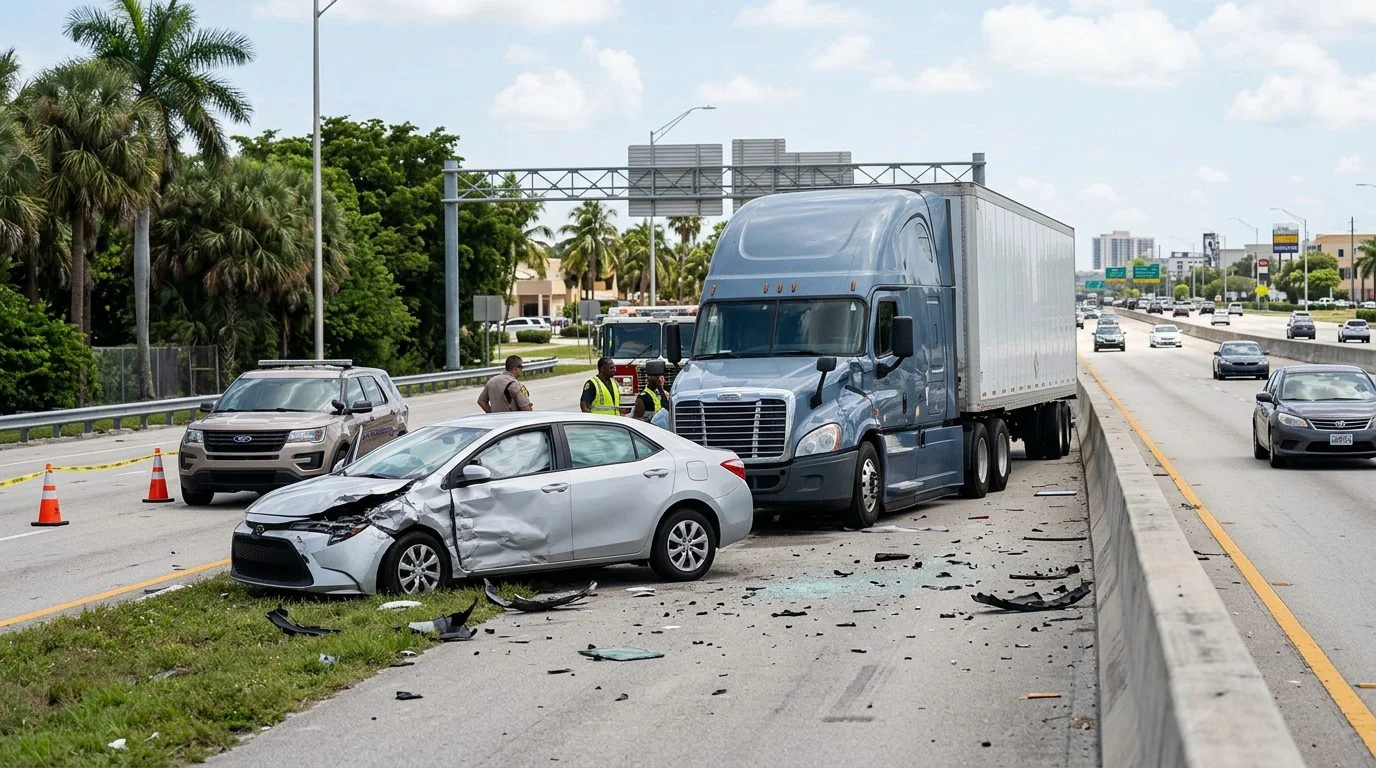
Truck Accidents | Serving Florida
After a Florida Truck Crash, Knowing Your Losses Is the First Step Toward Recovery
A collision with a commercial truck can leave bills, missed paychecks, and lasting changes to daily life. Here is how those losses are typically grouped so you can start documenting them with confidence.
By CHG Lawyers · Published November 13, 2026
If an Amazon delivery truck or delivery van hit you or someone you love, bills and missed paychecks can pile up fast. A truck accident claim in Florida can seek money for two main kinds of losses. The first kind is economic losses, which you can prove with paperwork. The second kind is non-economic losses, such as pain and changes to everyday life. When a crash causes a death, the surviving family may have claims of its own.
This guide explains each type of loss in plain words. It also explains the Florida rules that shape what you can recover. It shows how long you have to act.
Why Knowing Your Losses Matters After an Amazon Truck Crash in Florida
Knowing your losses early helps you track what the crash has cost you. A delivery truck crash can leave medical bills, lost pay, and changes to daily life. Some of these may surprise you right away. Writing them down while the details are fresh makes them easier to explain later.
Many people only think about the car repair or the first hospital bill. The full picture is often larger. It can include ongoing therapy, lost overtime, help with household tasks, and the stress of not knowing what comes next.
Start a simple log today. Include appointments, symptoms, receipts, and days missed from work.
If a delivery truck crash has left you with bills and missed paychecks, you may have a claim, and our team can walk through it with you. Talk it through with our team — the first consultation is free, confidential, and carries no obligation.
Economic Damages: Bills, Wages, and Costs You Can Document
Economic damages are losses with a dollar figure. You can prove them with records. Florida’s comparative fault statute defines them to include past and future lost income, medical and funeral expenses, lost support and services, and other economic losses caused by the injury.
Medical bills are usually the first category people track. They can include emergency care, hospital stays, surgery, medication, imaging, and follow-up visits.
For bills already paid, Florida’s medical expense evidence law limits proof to the amount actually paid. This applies no matter who paid it.
Lost wages cover missed shifts, lost overtime, and lost ability to do your job. If the injury lowers what you can earn later, that loss may be part of a claim too. Ask your employer for a letter showing your pay and the days you missed.
Other costs add up. These include vehicle repair or replacement, damaged belongings, rides to appointments, and therapy or equipment your doctors recommend. Save every receipt. Keep every bill.
Non-Economic Damages: Pain, Suffering, and Changes to Daily Life
Non-economic damages cover losses that don’t come with a receipt. They include physical pain, emotional distress, and the loss of things that once made daily life feel normal. These losses are real, even though no invoice shows them.
Examples include pain from the injury and from treatment. They also include anxiety or nightmares after a violent crash, and trouble sleeping. You may lose the ability to play with your kids, work in the yard, or keep up a hobby you loved. Scarring or a lasting physical change can count too.
These losses are harder to put a number on than bills. Keep a daily note of your pain, your activities, and what you can no longer do. Share it with your doctors so your records match what you describe.
Losses That Come With Catastrophic Injuries
Catastrophic injuries can bring losses that last for years, or a lifetime. Spinal cord injuries, paralysis, traumatic brain injuries, amputations, and severe burns often need long-term medical care, therapy, and equipment.
A claim may consider attendant care. This means help with daily tasks such as bathing, dressing, and getting around. It may also consider home changes, like ramps, wider doorways, or an accessible bathroom.
Wheelchairs, prosthetic limbs, and other adaptive equipment can cost a lot. They may also need replacing over time.
If the injury keeps you from working the job you had, lost earning capacity may be part of the claim. A spouse or adult child who gives up work to care for you has losses too. Those losses are assessed case by case.
Follow your doctors’ care plan. This section explains what losses a claim may include. It is not medical advice.
Wrongful Death Losses a Family May Be Able to Pursue in Florida
When a crash causes a death, Florida law allows a wrongful death claim. Under the Florida wrongful death statute, certain survivors may recover:
- Lost support and services
- Lost companionship and protection are among the losses families often describe when they talk with a lawyer about a wrongful death claim.
- Mental pain and suffering from the date of injury, for a surviving spouse, minor children (or all children if there is no surviving spouse), parents of a minor child, and parents of an adult child if there are no other survivors. In claims for medical negligence, adult children and parents of an adult child cannot recover these damages.
Florida’s survivor definition covers the spouse, children, and parents. It also covers blood relatives and adoptive brothers and sisters who were partly or wholly dependent on the person who died for support or services.
The claim is for the survivors and the estate, under Florida’s rules on who brings the action.
In Ripple v. CBS Corp., the Florida Supreme Court held that a surviving spouse does not bring a separate loss of consortium claim. The spouse’s losses are recovered in the wrongful death case instead.
Families often grieve and handle paperwork at the same time. You don’t have to sort out every detail alone. The deadlines below still apply.
Who May Be Responsible and How Florida Fault Rules Affect Recovery
More than one party may share responsibility in a delivery truck crash. These can include the driver, a delivery contractor, a trucking company, or others. Who may be responsible depends on the facts of the crash.
Florida uses modified comparative negligence. This is a shared-fault rule. Under Florida’s comparative fault statute, a person found more than 50 percent at fault for their own harm may not recover any damages. Fault below that line reduces the recovery by that person’s share.
Florida’s fault rules have changed over time, so which version applies can depend on when the crash happened, and a lawyer can review how the rules apply to your situation. See Florida’s 2023 tort reform law.
Evidence helps show fault and value. Useful items include:
- The police crash report
- Dash-camera or vehicle data
- Driver logs
- Maintenance records
Federal rules on driver logs require motor carriers, except private motor carriers of passengers (nonbusiness), to record each driver’s duty status for each 24-hour period.
Not sure what your next step is?
Talk it through with our team — the first consultation is free, confidential, and carries no obligation.
Florida Deadlines and Steps to Protect Your Losses
Florida’s general deadline for negligence claims is two years. This applies to claims that accrued after March 24, 2023. See Florida’s filing deadline statute.
The amendments made by this act to s. 95.11, Florida Statutes, apply to causes of action accruing after the effective date of this act. The amendments made by this act to s. 95.11, Florida Statutes, apply to causes of action accruing after the effective date of this act (Chapter 2023-15, Laws of Florida).
Deadlines apply, so act promptly.
See Florida crash report law. These reports can be made available to the parties and their legal representatives.
Federal rules require motor carriers to keep inspection, repair, and maintenance records for 1 year. They must keep them for 6 months after a vehicle leaves their control. See the federal maintenance records rule.
Records like these can be lost as time passes. Early contact matters.
Keep your own records too. These include:
- Medical treatment notes
- Bills, pay stubs, and receipts
- A log of missed work

Talk With CHG Personal Injury Lawyers About Your Losses
If a delivery truck crash has left you with bills, lost work, or a family facing a loss, talking with a lawyer early can help. A lawyer can help you see what your claim may include.
CHG Personal Injury Lawyers is a Florida personal injury firm serving clients throughout Florida. Igor Hernandez, a lawyer admitted to The Florida Bar, is the responsible lawyer for this page.
The firm offers a free first consultation. It is confidential and comes with no obligation to continue. CHG charges no attorney’s fees and no case costs unless there is a recovery.
To contact CHG Personal Injury Lawyers about your crash, call or send a message at your convenience. For more on timing, read our truck accident statute of limitations guide.
Frequently Asked Questions
What losses can I claim after a truck accident in Florida?
Economic losses, such as medical bills and lost wages, are often part of a claim. Non-economic losses, such as pain and changes to daily life, may be part of it too.
How long do I have to file?
For most negligence claims that accrued after March 24, 2023, Florida’s general deadline is two years. Deadlines apply, so contact a lawyer promptly.
Can a family recover losses after a fatal truck crash?
Florida’s wrongful death law lets certain survivors pursue losses through the personal representative of the estate.
Why Documenting Your Losses Early Matters
Keep a Running Record
Save medical bills, receipts, pay stubs, and mileage. A clear, dated record makes it easier to show what the crash has cost you and your family.
Include the Human Impact
Pain, sleep loss, and changes to family routines are real losses. Note them in a journal as they happen, alongside what your doctors recommend.
Account for Your Family
A serious injury often affects the people who depend on you. Their hardships, including caregiving and household changes, can be part of the picture.
Act Promptly
Deadlines apply to injury claims in Florida. Contacting our team early helps protect your options while your memory and evidence are fresh.
Follow Your Doctor's Care
Your health comes first. Attend every medical appointment, follow your providers' treatment plans, and keep copies of all records. This page is general information, not medical advice.
Common Categories of Losses in Florida Truck Claims
Medical Expenses
Emergency care, hospital stays, surgery, rehabilitation, medications, and future treatment linked to the crash are often among the most significant losses.
Lost Income and Earning Capacity
Missed work, reduced hours, or a lasting inability to earn at your previous level can all be part of a truck accident claim.
Property Damage
Damage to your vehicle, personal belongings, and other property, along with rental or transportation costs, may be included.
Pain and Suffering
Physical pain, emotional distress, and anxiety after a serious collision are non-economic losses that many claims address.
Loss of Enjoyment of Life
When an injury keeps you from hobbies, travel, or everyday activities you once enjoyed, that change in your life can be part of the claim.
Wrongful Death Losses
When a truck crash causes a death, surviving family members may pursue losses such as lost support, funeral costs, and the loss of companionship.