
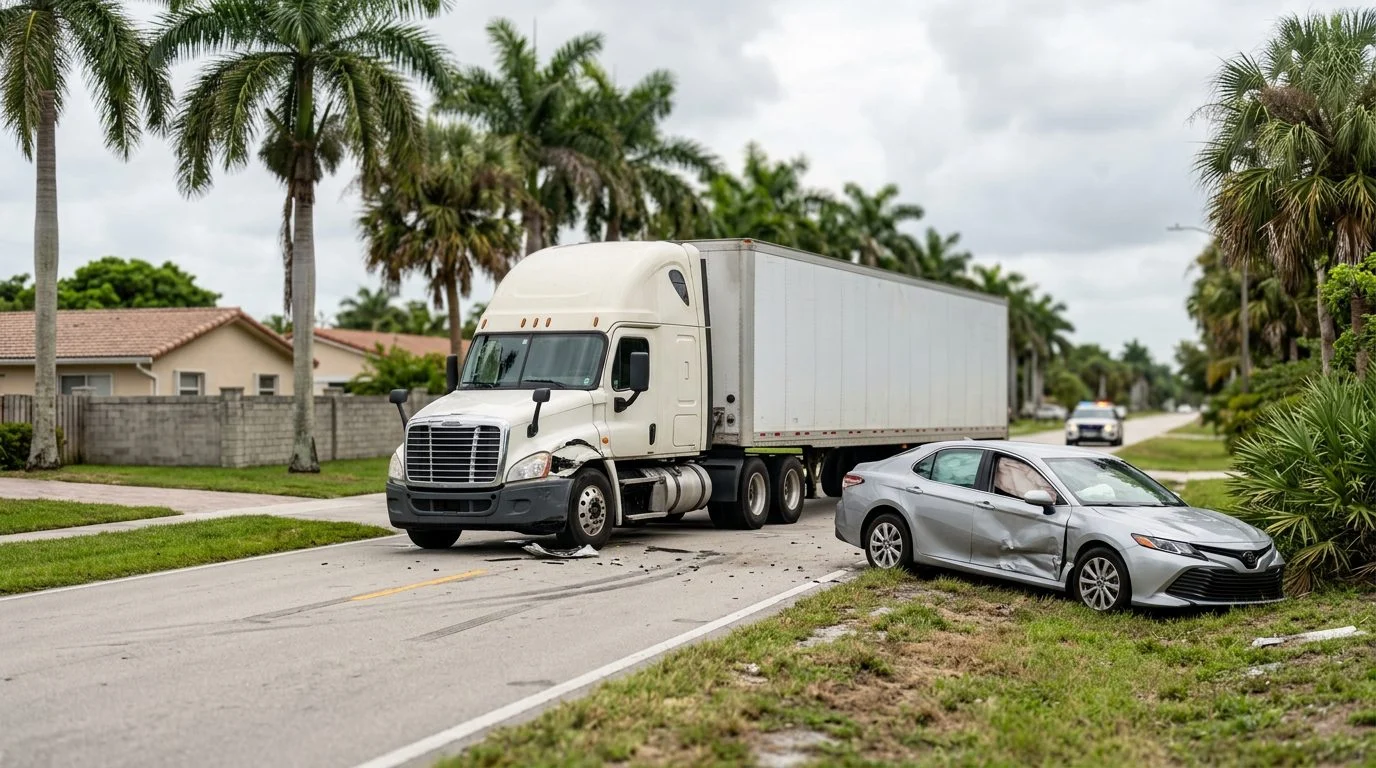
Amazon Delivery Truck Accidents | Florida
Hurt in a Crash With an Amazon Delivery Truck? Here Is What to Do Next
A collision with a large delivery vehicle can leave you facing medical bills, lost work, and an insurance company that wants a quick answer. Clear steps can protect your health and your options.
Why Florida Families Contact CHG
Florida
Florida-based personal injury firm serving clients throughout the state
Free
Confidential first consultation with no obligation to continue
No Fees
No attorney's fees or case costs unless there is a recovery
By CHG Lawyers · Published November 24, 2026
A crash with an Amazon delivery van can leave you hurt and shaken. Insurance calls may start before you catch your breath.
The short answer: call 911, get checked by a medical provider, write down what you can, and report the crash promptly. Florida also sets deadlines for insurance benefits and lawsuits. The first weeks matter.
This guide covers those steps in the order they usually matter. It is written for injured people and for family members who help them. It is not medical advice, so follow your doctors’ care.
What to Do in the First Minutes After an Amazon Delivery Truck Crash
Call 911 right away, even if the crash looks minor. A police report and medical responders create a record you will need later.
Check yourself and your passengers for injuries. If your vehicle still runs, turn on the hazard lights. Move to a safe spot away from traffic only if you can do it safely.
Tell the dispatcher and the officer that a delivery van was involved. Ask whether the driver seemed to be on a route or under a delivery schedule. These details help the investigation.
Before you leave, ask the officer for the report number and the agency name. The investigating officer completes a Florida Traffic Crash Report, Long Form for certain crashes, including those that result in death, personal injury, or any indication of complaints of pain or discomfort, and those that involved a commercial motor vehicle; for crashes on public roadways that do not require the long form, the officer shall complete a short-form crash report or provide a driver exchange-of-information form. Fla. Stat. § 316.066 requires the long-form crash report within 10 days after the investigation is complete, for crashes that result in death, personal injury, or any indication of complaints of pain or discomfort. The report number is how you will find it.
If an Amazon delivery van crash left you or someone you love hurt, you may have a claim, and our team can talk through your facts with you in a free, confidential consultation. Talk it through with our team — the first consultation is free, confidential, and carries no obligation.
Get Medical Attention Even If You Feel Fine
See a doctor as soon as you can, even if you feel okay. Back, neck, and head injuries can take hours or days to show symptoms.
A gap in care can make it harder to connect your injuries to the crash. Tell every provider that a commercial delivery vehicle hit you. Describe how it happened.
But you must receive initial services within 14 days after the crash. See Fla. Stat. § 627.736. Do not wait to be seen.
Follow the care plan your doctors give you. Keep every appointment. Keep copies of every bill, prescription, and visit summary in one folder.
Collect Information at the Scene Without Taking Chances
Get the driver’s name, phone number, insurance details, and license information. Stay polite and brief. Do not argue about who caused the crash.
Write down the van’s license plate and the company name on its side. Look for any DOT or USDOT number and take a photo of it. Note package labels or route details you can see. Also note the driver’s employer, if the driver mentions it.
Collect names and phone numbers of witnesses. This includes anyone who saw the crash start or saw how the driver behaved before it. Ask them to write down what they saw while it is fresh. Memories are often the easiest to lose.
Document the Scene, Your Vehicle, and Your Injuries
Photos and notes made on the day of the crash are often your most useful evidence. Take pictures of your vehicle’s damage from several angles. Include the roadway, traffic signals, skid marks, debris, and the weather.
Save any dashcam or phone video. Then record a short voice memo or write notes. Describe how the crash happened while the details are fresh.
Keep a daily journal. Note pain, sleep problems, missed work, and activities you can no longer do. Photograph visible injuries, such as bruising or swelling, as they change over the following days. These notes show how the injury affects daily life.
Do not post about the crash or your injuries on social media. Insurers and opposing parties may review public posts. A photo of a good day can be taken out of context.
Identify Every Party That May Be Responsible
More than one party may be responsible for a crash involving an Amazon delivery van. List everyone, not only the driver. In some cases, the driver, the company that employs the driver, and the vehicle’s owner may each have a role.
Other possibilities include a maintenance contractor, an equipment owner, or another driver whose carelessness added to the crash. The name printed on a van is not always the only company involved. Write down every name you see.
Each party may have its own insurance company. Note every insurer, adjuster, and claim number you receive.
Florida apportions fault. Under Fla. Stat. § 768.81, a court enters judgment against each liable party. The judgment is based on that party’s percentage of fault. It is not joint liability.
Fla. Stat. § 768.041 says a release with one party does not release any other person who may be liable for the same harm.
What to Say and What to Avoid Saying After the Crash
Stick to facts with police and insurers. Avoid guessing about speed, distance, or who caused the crash. A guess given early can be repeated later and used against you.
Say what you saw, what you felt, and what you did next. Do not admit fault. Do not say you are “fine” when you are hurting. Early statements can be compared with later records.
Florida uses comparative fault. Under Fla. Stat. § 768.81, a party found more than 50 percent at fault for his or her own harm may not recover any damages. Your own share of fault can reduce what you recover.
That is why describing the facts accurately matters more than arguing about them. Be careful with recorded statements to any insurance company. Ask for time to review the facts first. Consider talking with a lawyer before you agree to one.
Not sure what your next step is?
Talk it through with our team — the first consultation is free, confidential, and carries no obligation.
Should You File an Insurance Claim If the Crash Was Not Your Fault?
Yes. Report the crash to your own insurer promptly, even when another driver caused it. See Fla. Stat. § 627.736.
The at-fault party’s insurer may call you quickly with an early settlement offer. Review any offer carefully before you accept it. Once you settle, you may lose the chance to seek more money on that claim, unless the settlement does not fully satisfy the claim, you send written notice by certified or registered mail to the underinsured motorist insurers, and they authorize the settlement or fail to respond within 30 days; in that case the settlement is without prejudice to any underinsured motorist claim.
If the at-fault driver’s coverage is not enough, underinsured motorist coverage may apply. Florida law requires written notice when a proposed settlement would not fully satisfy the claim. The notice must be sent by certified or registered mail to underinsured motorist insurers. Those insurers then have 30 days to respond. See Fla. Stat. § 627.727(6)(a).
Keep records of every communication with every insurer. Include dates, names, and claim numbers.
How Long After a Crash Must It Be Reported, and What Deadlines Apply?
Report the crash to police at the scene. If your insurer requires it, give written notice as soon as practicable after the crash. Write down the date you notified each insurer.
Florida generally gives two years to file a lawsuit based on negligence. Other deadlines may be shorter; for example, Fla. Stat. § 95.11 allows one year for an action for specific performance of a contract. See Fla. Stat. § 95.11. Insurance notice deadlines are set by other statutes. They may also run on their own timeline.
Missing a deadline can cost you a claim you might otherwise have had. Do not wait for every piece of paperwork before you get advice on the clock. Contact a lawyer promptly so the dates are tracked from the start.
How the Investigation Typically Unfolds After an Amazon Delivery Truck Crash
Investigators usually start with the police crash report. They also look at witness statements, photos, and measurements of the scene. You can ask for a copy of the officer’s report once it is finished.
Trucking and delivery companies often keep records. These include driver logs, maintenance history, and inspection reports. Federal rules require many commercial drivers to record their duty status for each 24-hour period. They may do this electronically or on a paper grid. See 49 C.F.R. § 395.8.
Drivers must also prepare a written vehicle inspection report at the end of each day’s work when a defect or deficiency is discovered by or reported to them. Carriers must keep them for three months from the date each report was prepared. See 49 C.F.R. § 396.11. Three months is short, so early requests matter.
A lawyer may send a preservation letter. This letter asks the company to keep these records. After some crashes, federal rules also set deadlines for post-accident drug and alcohol testing of commercial drivers. The Federal Motor Carrier Safety Administration explains these rules. In complex cases, accident reconstruction professionals may analyze the physical evidence and digital data.
How to Organize Your Documents After an Amazon Delivery Truck Accident
Keep one folder, paper or digital, for everything connected to the crash. Put the police report, insurance letters, claim numbers, and adjuster contact information in it.
Add a running list of every phone call. Include the date, the person’s name, and what was said. Keep medical records, bills, prescriptions, and receipts. Save receipts for mileage to appointments and for out-of-pocket costs.
Track lost wages with pay stubs, employer letters, and notes of missed shifts. List the people who helped you. Note any household tasks you cannot do on your own right now.
If you have Medicare, know its reporting rules. Under CMS guidance, Medicare beneficiaries must notify Medicare when a claim is made against a party with liability insurance. If an insurer does not pay personal injury protection benefits within 30 days after it receives written notice of the covered loss and amount, the benefits are overdue. Medicare may later seek repayment, according to Medicare.gov.
Talk With CHG Personal Injury Lawyers About Your Accident
If you are still sorting out an Amazon delivery van crash, you do not have to figure it out alone. You also do not have to decide anything today.
CHG Personal Injury Lawyers is a Florida-based personal injury firm. We take cases of every severity. Our team can review your crash, the parties involved, and the deadlines that may apply. This is true whether your crash happened in Miami or elsewhere in Florida. Igor Hernandez is the responsible lawyer for this page.
CHG charges no attorney’s fees and no case costs unless there is a recovery. The initial consultation is free, confidential, and without obligation to continue.
If you were hurt in a crash involving an Amazon delivery van, reach out to our team. We can talk through what happened and what your options may be.
If an Amazon delivery van crash left you or someone you love hurt, you may have a claim, and our team can talk through your facts with you in a free, confidential consultation. Talk it through with our team — the first consultation is free, confidential, and carries no obligation.
Frequently Asked Questions
What should I do first after a truck accident?
If you can, move to safety and call 911. Get medical care, even if you feel fine. Then collect what you can. This includes the truck company’s name, the driver’s information, photos of the scene, and witness contacts. Avoid giving recorded statements to the trucking company’s insurer before you speak with a lawyer.
Should I see a doctor after a truck accident if I feel fine?
Yes. Some serious injuries, including brain and spinal injuries, may not cause obvious symptoms right away. An early medical evaluation creates a record of your condition. It also gives your doctors the information they need. Follow your doctors’ care plan.
Who can be held responsible after a truck accident?
Responsibility can fall on the truck driver, the trucking company, or the vehicle owner. It may also fall on a maintenance or loading company, or another party whose negligence contributed to the crash. The answer depends on the facts. Trucking companies often have their own insurers and legal teams. CHG Personal Injury Lawyers offers a free, confidential first consultation with no obligation to continue. The firm charges no attorney’s fees or case costs unless there is a recovery.
How long do I have to file a claim after a truck accident in Florida?
Florida generally allows two years to file most negligence lawsuits (Fla. Stat. § 95.11(5)(a)). But deadlines can vary. They depend on the facts, the parties involved, and whether a government entity is responsible. Missing a deadline can end a claim. Contact a lawyer promptly after the accident.
Your First Steps After an Amazon Truck Crash
Get to Safety and Call 911
If you can, move away from traffic and call 911. Ask for police and medical help at the scene, even if you feel you have only minor injuries.
Get Medical Care Right Away
Some injuries, including head and back injuries, may not show symptoms for hours or days. Follow your doctor's care plan and keep every appointment and record.
Document the Scene
Take photos of the vehicles, the damage, the road, and any visible injuries. Write down the truck's number, the driver's name, and the names of any witnesses.
Talk to a Florida Lawyer
A conversation with our lawyers can help you understand the next steps. Our team can handle communication with the trucking company and its insurer for you.
Be Careful With Recorded Statements
An insurance adjuster for the trucking company or delivery contractor may ask you to give a recorded statement soon after the crash. Speak with a lawyer before you agree to one.