
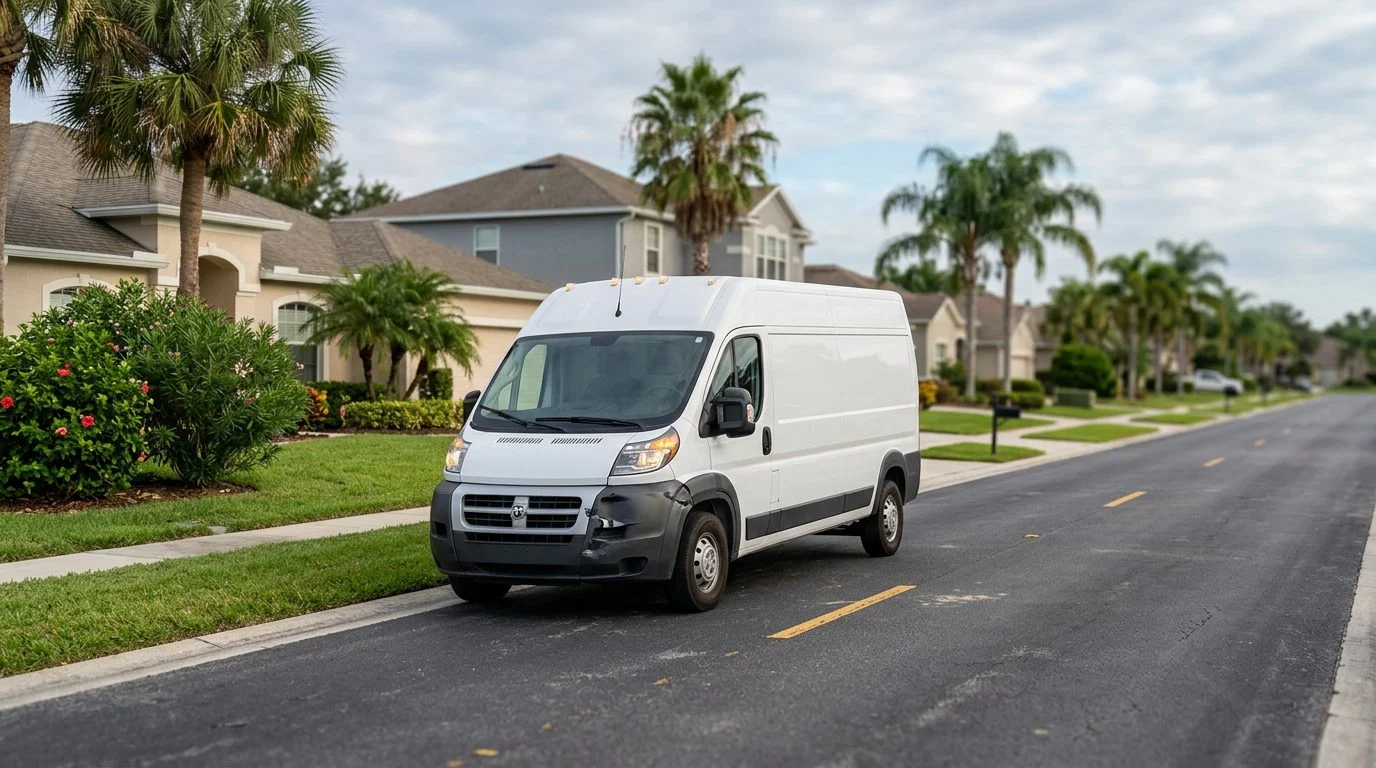
Amazon Delivery Van Accidents | Florida
Hurt by an Amazon Delivery Van? Don't Face the Insurance Adjuster Alone.
The adjuster calling you works for the insurer, not for you. Here is how to protect your health and your claim while you recover.
Why Injured Floridians Call Us
Florida
Based in Florida and serving clients throughout the state
Licensed
Attorneys admitted to The Florida Bar
No Fees
No attorney's fees or case costs unless there is a recovery
By CHG Lawyers · Published November 16, 2026
What to Know Before Speaking With an Insurance Adjuster After a Delivery Van Accident
A friendly insurance adjuster may call after a delivery van accident and ask for a recorded statement. Here is the short answer: be careful before you say anything on the record. The adjuster works for the insurer. Your words can shape who is blamed and how serious your injuries look.
This guide explains that first call, the Florida rules that matter, and what to protect while your claim is still open.
Not sure what your next step is?
Talk it through with our team — the first consultation is free, confidential, and carries no obligation.
Why the Insurance Adjuster Is Calling You
The adjuster is calling to close the claim for the insurance company that hired them. That goal is not the same as your goal, which is to seek compensation for the losses the crash caused you.
Most first calls sound warm. The adjuster may ask how you’re doing, then ask for a few minutes to record what happened. Expect questions about how the crash happened, where you were headed, and how you feel. Every answer goes into a file the insurer controls.
These calls often come within days of the crash. At that point you may not know the full extent of your injuries. Stiffness, headaches, and dizziness often show up later. A statement given too soon can lock in one version of events before the facts are clear. Slowing down is not rude. It protects the accuracy of your account.
Who Employs the Driver and Who Insures the Van
The company that pays the driver and the company that insures the van may not be the names you expect. Some deliveries may be made by drivers who work for Delivery Service Partners (DSPs), which run delivery routes. Some deliveries may be made by Amazon Flex drivers, who may work as independent contractors.
That means more than one insurance policy may apply. Florida law lets you ask for insurer details in writing. Under Fla. Stat. § 627.4137, each insurer that does or may provide liability coverage for your claim, including excess or umbrella coverage, must give you a sworn statement within 30 days of your written request. That statement covers the insurer’s name, each insured’s name, the coverage limits, any policy or coverage defense the insurer reasonably believes is available, and a copy of the policy. The crash report also lists each party’s insurance company under Fla. Stat. § 316.066.
Write down the driver’s name, the van’s company markings, the DSP name if you can see it, and any delivery ID or tracking number.
What a Recorded Statement Can Do to Your Claim
A recorded statement becomes part of the claim file. The insurer can use it to argue who was at fault and how serious your injuries are.
Common questions include “How fast were you going?” and “Did you feel fine at the scene?” A quick “I’m fine” in shock can be quoted back to you later. Give short, accurate answers. If you don’t know something, say so. Don’t guess about speed, distance, or timing.
You can ask for questions in writing. You can also wait until you understand your injuries before you say more. Never sign a release or accept money until you know the full cost of your injuries, including future medical care.
How Florida’s Fault and Deadline Rules Apply
Florida’s fault rule can cut off recovery entirely. Under Fla. Stat. § 768.81, in a negligence action to which the section applies, a party found to be greater than 50 percent at fault for their own harm may not recover any damages.
Act promptly so deadlines don’t catch you off guard.
Under Fla. Stat. § 627.4136, a person who is not an insured under the terms of the liability insurance contract must first obtain a settlement or verdict against an insured for a cause of action covered by that policy before a cause of action against the liability insurer can accrue or be maintained.
Evidence That Disappears Fast After a Delivery Van Accident
The evidence that matters most is what you capture in the first days. Keep these items together in one place:
- Photos of the scene, the road, the van, and your vehicle
- Video from a dashcam, doorbell, or nearby business
- Names and phone numbers of witnesses
- The police report number and the officer’s name
- Medical records that note your symptoms from the first day
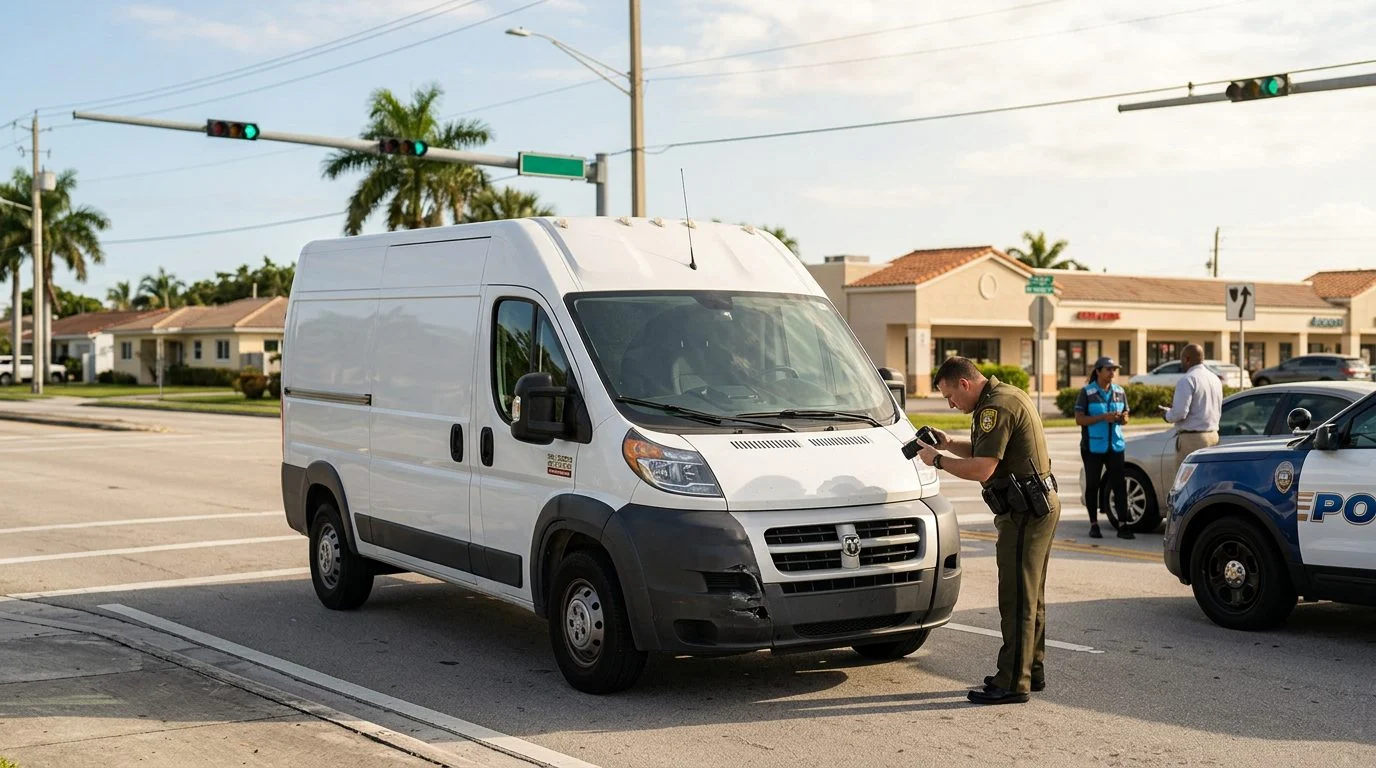
Florida requires a long-form crash report to be completed and submitted to the department within 10 days after an investigation is completed. This applies to certain motor vehicle crashes, such as those that resulted in death, personal injury, or any indication of complaints of pain or discomfort (Fla. Stat. § 316.066). Crash reports that reveal personal information about the parties involved, such as home or employment addresses and phone numbers, are confidential and exempt from public records disclosure for 60 days after the report is filed (Fla. Stat. § 316.066(2)(a)). Ask for a copy early, and check with the department about whether your status as a party lets you obtain it during the 60-day period.
Delivery companies may keep GPS, route, and vehicle data that show speed, braking, and timing. Ask in writing that this data be preserved. Don’t wait for a later request, because you can’t count on it staying available.
Not sure what your next step is?
Talk it through with our team — the first consultation is free, confidential, and carries no obligation.
Injuries That Show Up Days Later
Pain, stiffness, or dizziness that appears hours or days after a crash is common. It still needs to be reported. Neck, back, and head injuries often follow this pattern. An adjuster may point to a gap in treatment as a reason to doubt your injuries, so keep every appointment.
Follow your doctor’s care plan. Report every symptom, even minor ones, and write them down with dates. Your doctors guide your care, not the insurer.
What to Do Before You Talk to an Amazon Insurance Adjuster Again
Before the next call, write down what you know, ask for everything in writing, and hold off on any money. Here is a simple order to follow:
- Note the adjuster’s name, direct number, and the claim number.
- Request the policy details in writing. Florida Statutes § 627.4137 requires a liability insurer to disclose certain policy information, such as its name and coverage limits, in a sworn statement within 30 days of the injured person’s written request.
- Avoid discussing fault on the phone.
- Ask for questions in writing, or ask for time to understand your injuries.
- Don’t accept any amount until you know your medical bills and future care needs.
Do I have to give a recorded statement right away?
You can ask for questions in writing or ask for time. Taking a few days to understand your injuries is a reasonable request.
How long do I have to file a claim?
Talk with our lawyers promptly, because time limits may apply to your claim.
What if the first offer seems low?
Don’t accept it until you understand your medical bills and future care. Early offers can come before the full cost of an injury is known.
If an Amazon adjuster has asked for a recorded statement after your van crash, you don’t have to decide alone. Our team at CHG Personal Injury Lawyers can review your situation and explain your options in a free, confidential first consultation, with no obligation to continue. CHG charges no attorney’s fees and no case costs unless there is a recovery.
Igor Hernandez, one of the firm’s licensed Florida lawyers, is the responsible lawyer for this page. CHG Personal Injury Lawyers is a Florida firm that serves people hurt across the state, including in Miami, Orlando, Tampa, and Jacksonville.
How Our Firm Can Help After an Amazon Van Crash
We Handle the Insurance Contact
Our team can answer the adjuster's calls and letters so you can focus on your recovery.
We Review Your Records
We gather the crash report, medical bills, and proof of lost work so your claim is documented from the start.
We Keep the Family in View
Serious injuries affect the whole household. We take time to explain your options in plain language.
Plain-Language Guidance
Our attorneys explain each step, so you always know what is being asked of you and why.
Think Before You Give a Recorded Statement
An insurance adjuster may ask you to describe the crash on a recording. Anything you say can be used to evaluate your claim. You may ask for questions in writing or ask for time to understand your injuries first. Follow your doctors' care, and speak with a lawyer before you answer detailed questions.
What to Do in the First Days After the Crash
Get Medical Care
Follow your doctors' treatment plan and keep every appointment.
Document the Scene
Write down what happened, photograph the vehicles and the area, and save the names of any witnesses.
Keep Your Records
Save medical bills, pharmacy receipts, pay stubs, and any letters from insurers in one place.
Speak With Our Team
Contact our firm before you sign any release or accept any settlement offer from an adjuster.