
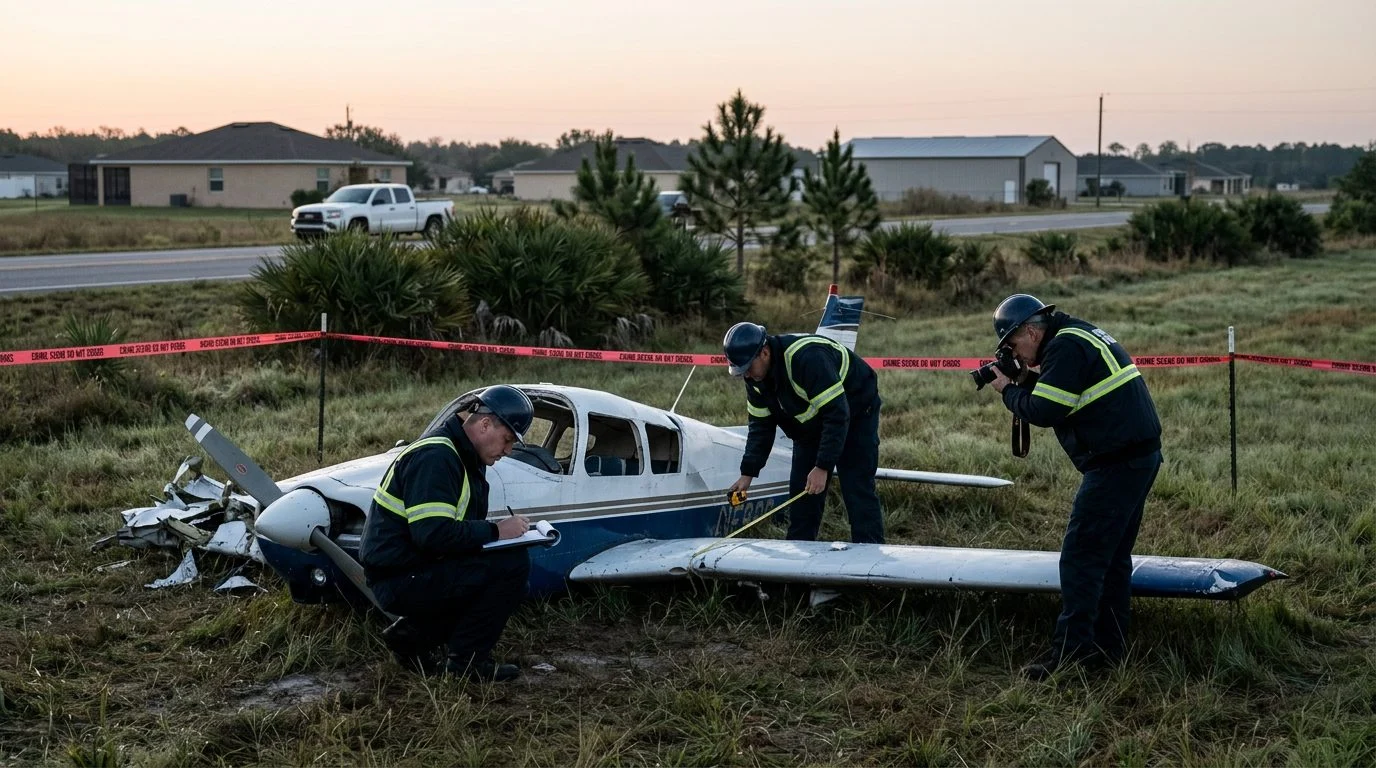
Airplane Crashes | Florida Families
Airplane Crashes: What the Numbers Show and What They Miss
Behind every statistic is a person, a family, and a set of questions that need clear answers.
About CHG Personal Injury Lawyers
Florida
Florida-based personal injury firm
Licensed
Attorneys admitted to The Florida Bar
Free
Confidential first consultation, with no obligation to continue
By CHG Lawyers · Published November 21, 2026
If a plane crash has touched your family, you may be asking a simple question: how often do these crashes happen? The answer depends on what gets counted, but the latest public figures give you a clear starting point.
In 2025, IATA’s Safety Report counted 51 airline accidents among 38.7 million flights. In 2024, the National Safety Council estimated 1,201 accidents involving U.S.-registered civilian aircraft, using preliminary data.
How Many Airplane Crashes Happen a Year?
Yearly totals depend on which flights are counted, so no single number tells the whole story. The totals for the latest full year come from a few public sources, and each one uses its own scope.
The NTSB, the federal agency that investigates U.S. aviation accidents, publishes Statistical Reviews of U.S. civil aviation accidents. The FAA also keeps its own aviation safety records. Investigations can take a long time, and counts change as records are completed.
Two things change the total most. The first is which aircraft are counted: airliners, private planes, training planes, or helicopters. The second is whether the count covers all accidents or only fatal ones. Read any number with its scope in mind.
How common is an airplane crash?
Crashes are rare for any one passenger but common enough to be counted every year. IATA’s 2025 figure works out to about one accident for every 759,000 flights. That rate describes the airline system as a whole, not any single trip.
If a crash has touched your family, you may have questions about your rights, and our team is glad to talk them through with you in confidence. Talk it through with our team — the first consultation is free, confidential, and carries no obligation.
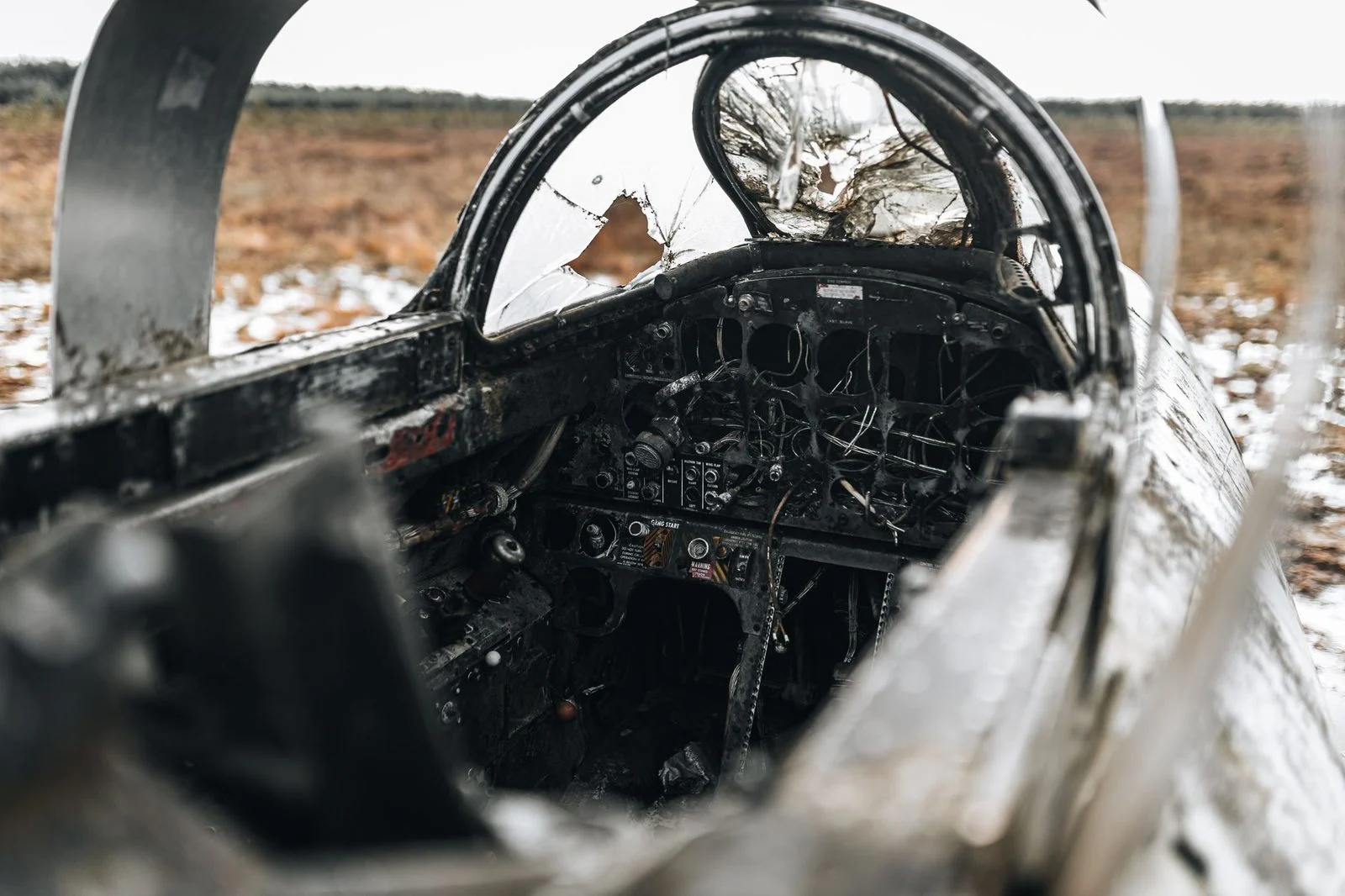
What Counts as an Airplane Crash in the Data
An accident is the serious event. An incident is a less serious event that still affects safety. In plain terms, an accident involves a death or serious injury, or serious damage to the aircraft. An incident is a safety event that falls short of that.
Most crash counts use the accident category. That is why a total can look very different from the number of close calls or safety reports that get filed in the same year.
Aircraft type matters too. A count may include a single-engine private plane, a helicopter, a flight-training aircraft, or a large airliner. Some statistics separate these groups, and some combine them into one total.
That is why one source may report a total in the thousands while another reports a few dozen. The sources may count different aircraft, different flights, or different time periods. Preliminary and final figures also differ, and the NSC’s 2024 count is still preliminary.
Commercial Airlines Versus General Aviation
Most aircraft accidents in U.S. data involve general aviation, not commercial airlines. That difference surprises many people.
Commercial aviation means scheduled passenger and cargo flights run by airlines. General aviation covers most other civil flying, including private flights, flight training, business travel on small aircraft, aerial work, and recreational flying.
General aviation includes many small aircraft flown in many different ways. That variety is one reason it shows up so often in accident data. The NTSB reports both groups, but the counts are not the same kind of flying.
Most commercial airline flights do not end in an accident. IATA’s 2025 figure of 51 accidents among 38.7 million flights reflects that. Because the two groups are reported separately, a general aviation total should not be compared with an airline total as if they describe the same flying.
When in a Flight Do Most Accidents Happen?
Many accidents happen during takeoff and landing, when the aircraft is close to the ground. These phases are short, but they call for precise control, quick decisions, and steady conditions.
Weather, runway conditions, and crew workload can all matter during these moments. Climb, cruise, and descent take up much more of a typical flight, yet they are not where most of the accidents happen.
Safety agencies focus on takeoff and landing because a small problem near the ground leaves less time to recover. Pilot training, checklists, and runway standards all aim at these moments.
This is a general pattern in aviation safety. It is not a judgment about any specific crash, and it does not explain what happened in any one case.
How Many Aviation Accidents Are Fatal?
Not every aviation accident causes a death. Many end with injuries or damaged aircraft, and some involve no injuries at all.
The NSC’s 1,201 figure for 2024 counts accidents, not deaths. Fatal accidents are a smaller group inside the total, and the NTSB keeps its fatal-accident counts within its statistics.
Fatality numbers can also be confusing. One crash can cause several deaths, so a count of deaths and a count of fatal crashes are different numbers. Check which one a source is reporting before you compare two headlines.
Behind every fatality figure is a family. A statistic can show how many people died. It cannot show the person they were or what their loss means at home.
How Safe Is Flying Compared With Other Travel?
Comparisons depend on how the risk is measured, so be careful with any headline that ranks one kind of travel above another. Risk can be measured per flight, per passenger mile, or per trip, and each measure gives a different picture.
Accident counts do not tell you how a particular flight will go. An airline’s accident rate describes a large group of flights over a year. It cannot predict the outcome of any one trip, and no number can promise a specific result.
When you compare flying with driving or other travel, check that both numbers use the same measure. Rates built on different measures can look alike or far apart for reasons that have nothing to do with safety.
If you are anxious about flying, the numbers may help you see the scale of the risk. They should not be read as a promise about your own trip.
Not sure what your next step is?
Talk it through with our team — the first consultation is free, confidential, and carries no obligation.
Why the Numbers Change From Year to Year
Yearly totals rise and fall for several reasons. The number of flights changes. So do the aircraft in service, the weather, and how investigations and reports are finished.
IATA’s airline figures show this pattern. The count fell from 54 accidents in 2024 to 51 in 2025, while the number of flights rose from 37.9 million to 38.7 million.
The NSC’s U.S. figure fell from 1,216 in 2023 to 1,201 in 2024. That is a preliminary estimate, so it can still change once records are complete.
One year’s drop does not establish a trend. Look at several years before drawing a conclusion. For updated totals, check the NTSB’s Statistical Reviews.
If a Crash Has Affected Your Family
If a crash has hurt or killed someone you love, the statistics can feel far from your reality. You may be trying to understand what happened and what your family can do next.
Investigations and legal claims run on separate tracks. The NTSB investigates many aviation accidents, and its reports can take time. Federal law also limits how parts of an NTSB report can be used. Under 49 U.S.C. § 1154, no part of an NTSB report related to an accident may be used in a civil damages action on the matters in the report.
Florida has its own rules for death claims. The Florida Wrongful Death Act is the name given to Florida Statutes sections 768.16 through 768.26. Under Fla. Stat. § 768.19, when a person’s death is caused by the wrongful act, negligence, default, or breach of contract or warranty of any person, and the event would have entitled the person injured to maintain an action and recover damages if death had not ensued, the person or watercraft that would have been liable in damages if death had not ensued shall be liable for damages. Fla. Stat. § 768.21 lists what survivors may recover, including lost support and a surviving spouse’s loss of companionship.
Deadlines matter. Florida deadlines for these claims can be short, so waiting can cost your family options. For international flights, the Montreal Convention, Article 35 extinguishes the right to damages if an action is not brought within two years, reckoned from the date of arrival at the destination, or from the date on which the aircraft ought to have arrived, or from the date on which the carriage stopped. Other flights follow different rules, so the right deadline depends on the facts.
Talk With CHG Personal Injury Lawyers
If a crash is why you’re reading this, you don’t have to sort out the reports, timelines, and deadlines alone. CHG Personal Injury Lawyers is a Florida-based firm that handles airplane crash injury claims and wrongful death cases for families across Florida.
Igor Hernandez, an attorney admitted to The Florida Bar, is the responsible lawyer for this page. The initial consultation is free, confidential, and carries no obligation to continue. CHG charges no attorney’s fees and no case costs unless there is a recovery.
To learn how these claims work, read our guide to airplane crash injury claims. When you are ready, contact CHG to start a confidential conversation about your family’s questions.

Frequently Asked Questions
How many airplane crashes happen a year in the United States?
The number changes from year to year, but the National Transportation Safety Board (NTSB) records thousands of aviation accidents in the United States each year. For current totals, check the NTSB’s public accident database.
Are airline crashes more common than small plane crashes?
No. Most reported aviation accidents involve small private and general aviation aircraft, while large commercial airline crashes are rare.
Who investigates airplane crashes in the United States?
The NTSB investigates civil aviation accidents and publishes its findings, and the Federal Aviation Administration (FAA) oversees aircraft and pilot rules. Both agencies make their records available to the public.
What should I do if I was hurt in a plane crash?
Get medical care right away and follow your doctors’ advice. CHG Personal Injury Lawyers, based in Florida, offers a free, confidential consultation with no obligation to continue, and no attorney’s fees or case costs are charged unless there is a recovery. Florida deadlines for filing a claim can be strict, so contact the firm promptly.
How We Can Help Florida Families
Plain-Language Answers
We explain the facts about aviation accidents and the steps families may consider, without legal jargon.
Licensed Florida Attorneys
Our lawyers are admitted to The Florida Bar and represent people across Florida.
Compassion for Families
We understand that a crash affects far more than the people on board, and we take time to listen.
A Free First Step
Your initial consultation is free, confidential, and carries no obligation to continue.
Keep Your Records Safe
If you lost someone in an aviation accident or were injured in one, keep any letters, reports, photos, and medical records you have. Follow the care advice of your doctors, and speak with a lawyer early so important evidence is preserved.
Understanding Aviation Accident Information
Check Official Sources
Public accident records from agencies such as the National Transportation Safety Board can help you understand what has been reported about a specific event.
Many Factors Can Be Involved
Aviation accidents can involve weather, mechanical systems, maintenance, operations, and other factors. Each case is different, and an investigation takes time.
Families Have Questions
When a loved one dies, families often need help understanding their options, including wrongful death claims brought by the family.
You Do Not Have to Figure It Out Alone
Our team can answer your questions in plain language and explain what the next steps may look like for your situation.