

Catastrophic Aviation Injury
Airplane Crash Cases: Justice for Victims and Families
When a plane crash causes catastrophic injury or death, you need a law firm that understands aviation accidents and fights for the compensation your family deserves.
By CHG Lawyers · Published August 22, 2026
Airplane Crash Cases: Catastrophic Injury Claims & Wrongful Death
Airplane crash cases are legal claims brought by survivors of catastrophic aviation injuries or by families who have lost a loved one in a crash. These cases arise from commercial flights, private planes, helicopters, charter services, and air tours. They involve permanent, life-altering harm: spinal cord injuries and paralysis, traumatic brain injuries, amputations and limb loss, severe burns, catastrophic back and neck injuries, and wrongful death.
When an aviation accident occurs, liability may rest with the airline or operator, the aircraft manufacturer, maintenance providers, pilots, air traffic control, or airport operators. This guide explains what airplane crash cases are, how they happen, who may be responsible, and what injured survivors and bereaved families should do next.
Not sure what your next step is?
Talk it through with our team — the first consultation is free, confidential, and carries no obligation.
What Are Airplane Crash Cases?
Airplane crash cases are legal claims for compensation arising from catastrophic injuries or death caused by aviation accidents. These cases differ fundamentally from routine personal-injury claims because aviation crashes typically result in severe, permanent harm rather than minor or temporary injury.
A survivor of an airplane crash may suffer: – Spinal cord injury with paralysis – Traumatic brain injury (TBI)—damage to the brain causing cognitive and physical impairment – Amputation of limbs – Severe burn injuries – Catastrophic back and neck damage
Families who lose a loved one in a crash pursue wrongful-death claims. They seek compensation for funeral expenses, lost financial support, loss of companionship, and in some cases punitive damages (extra money to hold wrongdoers accountable).
Aviation accidents are rare in the United States, especially among commercial carriers. When they do happen, the consequences are almost always severe. The catastrophic nature of these injuries—and the permanent disability or loss they cause—distinguishes airplane crash cases from other personal-injury litigation.
How Safe Is Air Travel?
Commercial aviation in the United States is highly regulated and statistically very safe. Modern aircraft undergo rigorous maintenance. Pilots receive extensive training and certification. Air traffic control systems are sophisticated and well-established. The Federal Aviation Administration (FAA) oversees all aspects of aviation safety, from aircraft design and maintenance to pilot licensing and airspace management.
General aviation—private planes, small aircraft, helicopters, and charter services—carries a higher accident risk than commercial aviation. These aircraft operate under different rules, often with less stringent maintenance oversight and less experienced pilots. When accidents do occur in either category, the injuries are typically catastrophic.
How Many Airplane Crashes Are There in a Year?
The National Transportation Safety Board (NTSB) investigates aviation accidents across the United States every year.
Commercial aviation accounts for a small fraction of these accidents due to its strong safety record. General aviation—private planes, small multi-engine aircraft, and helicopters—accounts for the majority of accidents.
While aviation accidents are statistically rare relative to the number of flights flown, they remain a significant cause of catastrophic injury and death. For those involved, the impact is permanent and devastating.
What Causes Airplane Crashes?
Aviation accidents result from one or more contributing factors. The most common causes include:
Pilot Error
Pilot error includes poor decision-making, fatigue, inadequate training, or violation of safety procedures. Pilot fatigue can impair judgment and reaction time.
Mechanical and Maintenance Failures
Defective parts, inadequate maintenance, repair errors, or failure to follow maintenance protocols can lead to mechanical failure during flight. Airlines and maintenance providers have a legal duty to maintain aircraft safely.
Aircraft Defects
Manufacturing defects, design flaws, or failure to warn of known hazards can render an aircraft unsafe. Aircraft manufacturers may be liable for defects that cause crashes, though federal law bars claims against the manufacturer of a general aviation aircraft when the accident occurs after the applicable limitation period.
Weather and Environmental Conditions
Severe turbulence, icing conditions, wind shear, poor visibility, and thunderstorms can contribute to accidents. Pilots must make safe decisions regarding weather conditions.
Air Traffic Control Errors
Miscommunication, navigational errors, or failure to provide timely guidance can lead to collisions or unsafe flight paths.
Multiple Contributing Factors
Most aviation accidents result from a combination of causes. For example, pilot error combined with inadequate maintenance and poor weather may all contribute to a single crash.
Catastrophic Injuries in Airplane Crashes
The impact forces in an aviation accident are extreme. Survivors often suffer permanent, life-altering injuries:
Spinal Cord Injuries and Paralysis
Spinal cord injuries result from trauma to the spine during impact or structural collapse. Paraplegia (paralysis of the lower body) and quadriplegia (paralysis of all four limbs) are common outcomes. These injuries cause permanent loss of motor function and sensation. They require lifelong medical care, mobility aids, and home modifications.
Traumatic Brain Injuries
Impact forces, turbulence, or striking objects inside the cabin can cause severe head trauma. TBI survivors may experience cognitive impairment, memory loss, personality changes, seizures, and chronic pain. Recovery is often incomplete and requires years of rehabilitation.
Amputations and Limb Loss
Crush injuries, fire, or structural damage can result in the loss of one or more limbs. Amputation survivors face permanent disability, phantom pain, prosthetic needs, and psychological trauma.
Severe Burn Injuries
Post-crash fires or fuel ignition can cause severe burns. Burn survivors endure painful recovery, multiple surgeries, scarring, infection risk, and permanent disfigurement.
Catastrophic Back and Neck Injuries
Severe impact can damage the cervical or lumbar spine. This causes chronic pain, loss of mobility, and neurological impairment.
Wrongful Death
Fatalities in aviation crashes are the most catastrophic outcome. Families lose a loved one permanently. They may recover damages for: – Funeral and burial expenses – Lost financial support the deceased would have provided – Loss of companionship and guidance – In some cases, punitive damages to hold wrongdoers accountable
Who Can Be Held Liable in an Airplane Crash?
Determining liability in an aviation accident requires investigation and legal analysis. Multiple parties may bear responsibility:
Airlines and Operators
Airlines and aircraft operators have a duty to maintain their aircraft, hire qualified crew, follow all safety protocols, and operate aircraft safely. Negligence in any of these areas can create liability.
Aircraft Manufacturers
Manufacturers are liable for design defects, manufacturing defects, or failure to warn of known hazards. If a defect caused or contributed to the crash, the manufacturer may be held responsible.
Maintenance Providers
Third-party maintenance companies are liable for negligent repair, failure to follow maintenance protocols, or use of defective parts.
Pilots and Crew
Pilots and crew members can be held liable for pilot error, violation of safety procedures, fatigue, or negligence.
Air Traffic Control
The FAA or private air traffic control operators can be liable for errors in directing aircraft, miscommunication, or failure to provide timely guidance.
Airport Operators
Airport operators may be liable for unsafe runway conditions, inadequate lighting, poor drainage, or other negligent maintenance of airport facilities.
Third Parties
Fuel suppliers, contractors, or other parties whose negligence contributed to the crash may also be liable.
In most aviation accidents, multiple parties share responsibility. A thorough investigation identifies all liable defendants so you can pursue full compensation.
What Happens After an Airplane Crash?
Immediate Response
Emergency services respond to the crash scene. Survivors receive emergency medical treatment. The National Transportation Safety Board (NTSB) is notified and begins its investigation.
NTSB Investigation
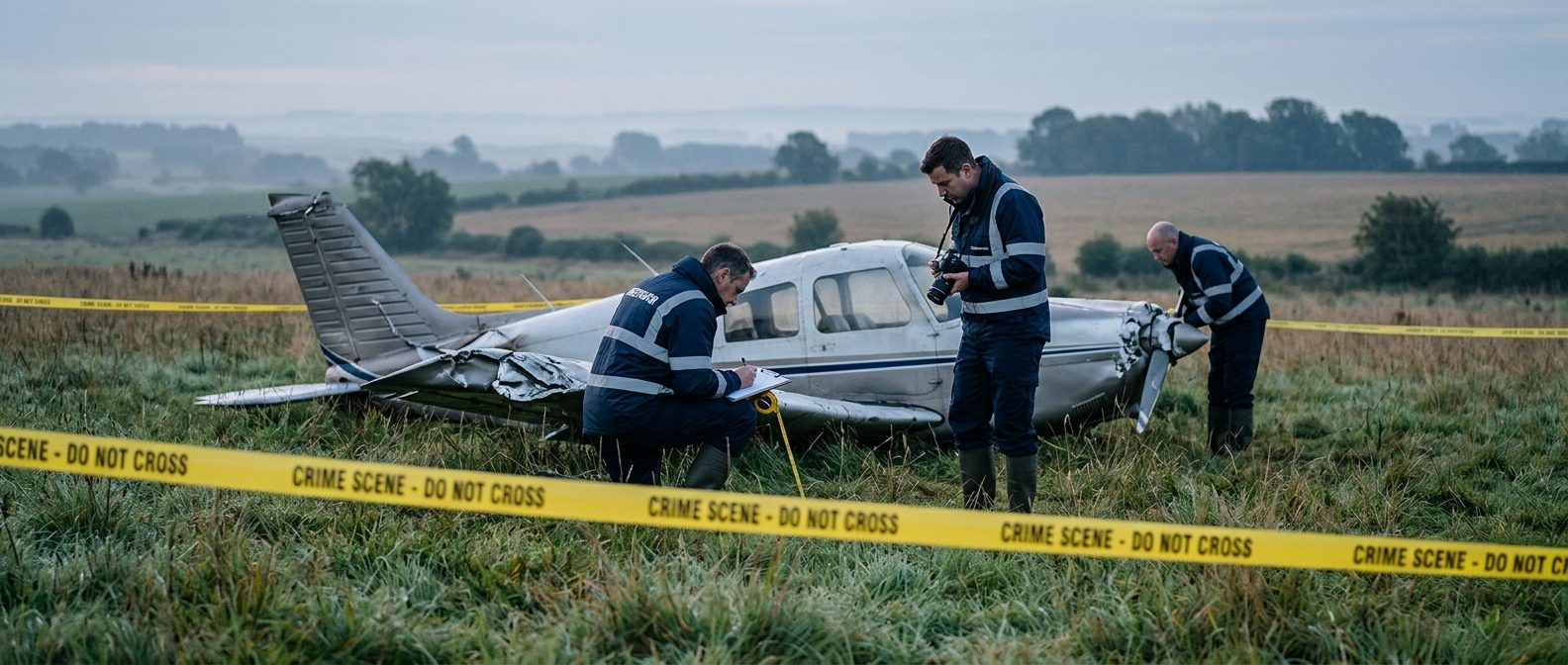
The NTSB leads the investigation into commercial aviation accidents. The FAA and other federal agencies participate. Investigators examine the aircraft wreckage, interview witnesses and crew, review maintenance records, analyze flight data, and determine the probable cause.
Investigation Timeline
NTSB investigations can take months or years to complete.
Medical Treatment
Survivors receive emergency care, hospitalization, and rehabilitation. Catastrophic injuries require ongoing specialized medical treatment, often for life.
Legal Considerations
Injured survivors and families should consult an attorney promptly. Statute of limitations deadlines apply. Evidence must be preserved. Insurance claims must be filed. Liability must be determined.
Have questions about what happened?
Ask our team directly. The first conversation is free, confidential, and there is no obligation to continue.
NTSB and FAA Investigations: What You Need to Know
The National Transportation Safety Board (NTSB) is an independent federal agency responsible for investigating commercial aviation accidents. The NTSB’s role is to determine the probable cause of the accident—not to assign fault or liability, but to establish what happened and why.
Investigation Process
NTSB investigators examine physical evidence, interview witnesses, review maintenance and training records, and analyze flight data recorders (“black boxes”). The investigation is thorough and methodical.
Public Records
NTSB investigation reports are public documents. However, under federal law, no part of an NTSB Board report related to an accident may be admitted into evidence or used in a civil action for damages.
Your Rights
Under NTSB rules, no party representative in the investigation may occupy a legal position or represent claimants or insurers. An attorney can represent your interests in your own claim, which proceeds separately from the NTSB investigation.
Why Your Claim Needs Evidence Beyond the NTSB Report
Even if the NTSB concludes that mechanical failure caused the crash, no part of the Board’s report may be admitted into evidence or used in a civil action for damages, so a claim must be built on other evidence.
Types of Airplane Crash Cases We Handle
Our firm represents survivors of catastrophic injuries and families who have lost loved ones in:
- Commercial airline crashes (major carriers, scheduled flights)
- Private plane crashes (single-engine, multi-engine, executive jets)
- Helicopter crashes (medical helicopters, tour helicopters, private helicopters)
- Charter flight crashes (air taxi services, charter operators)
- Air tour crashes (sightseeing flights, scenic tours)
- Seaplane crashes (amphibious aircraft, water-based operations)
Compensation in Airplane Crash Cases
Injured survivors and bereaved families may recover compensation for:
- Medical expenses (emergency care, hospitalization, rehabilitation, ongoing treatment)
- Lost wages and loss of earning capacity
- Pain and suffering
- Permanent disability and loss of independence
- Loss of enjoyment of life
Wrongful death claims allow families to recover:
- Funeral and burial expenses
- Loss of financial support the deceased would have provided
- Loss of companionship, guidance, and emotional support
- In some cases, punitive damages to hold wrongdoers accountable
Compensation depends on the facts of the case, the extent of liability, and the severity of injuries or loss. No outcome is guaranteed; each case is unique.
Statute of Limitations for Airplane Crash Claims
Florida Statute § 95.11 sets forth the time limits for filing lawsuits in Florida. For personal-injury claims, the statute of limitations is typically two years from the date of injury. For wrongful-death claims, it is two years from the date of death.
However, aviation claims may be governed by federal law or international treaties (such as the Warsaw Convention or Montreal Convention for international flights). These may impose different deadlines and liability limits.
Time is critical: evidence can be lost, witnesses’ memories fade, and investigation findings may become unavailable. Consult an attorney immediately after an aviation accident.
Why You Need an Attorney for an Airplane Crash Case
Aviation law is highly specialized and complex. Multiple federal regulations, international treaties, and liability theories apply. Airlines and manufacturers have sophisticated legal teams and substantial insurance. You need equally experienced representation.
An attorney who focuses exclusively on catastrophic injury cases understands:
- How to investigate aviation accidents and obtain NTSB reports
- How to identify all liable parties (airline, manufacturer, maintenance provider, pilot, air traffic control, airport operator)
- How to retain aviation experts, engineers, and medical specialists
- How to navigate federal aviation regulations and international treaties
- How to negotiate with insurers and litigate against well-resourced defendants
- How to preserve evidence and meet statute of limitations deadlines
Without experienced legal representation, you risk losing your claim or recovering far less than you deserve.
What to Do If You or a Loved One Has Been Injured in an Airplane Crash
Seek Medical Attention
Your health and safety come first. Get emergency care immediately.
Preserve Evidence
Document the scene if safely possible. Take photographs. Keep all communications with the airline, FAA, or other parties. Do not discard any physical evidence.
Gather Witness Information
Collect names and contact information from other passengers, crew members, and witnesses.
Do Not Sign Documents Without Legal Counsel
Do not sign settlement agreements, liability waivers, or statements to insurers without consulting an attorney first. Insurance companies may try to minimize their liability.
Report the Accident
Cooperate with NTSB and FAA investigations. Provide truthful statements to investigators.
Document Your Injuries and Recovery
Keep detailed medical records, treatment notes, rehabilitation progress, and records of lost wages or expenses.
Contact an Attorney
The sooner you reach out, the sooner we can begin investigating your claim, preserving evidence, and protecting your legal rights.
Our Approach to Airplane Crash Cases
Our firm focuses exclusively on catastrophic injury cases. We represent survivors of life-altering injuries and families who have lost loved ones—not routine personal-injury claims. We understand the permanent impact of aviation accidents.
We handle airplane crash cases nationwide. We work with aviation experts, engineers, medical specialists, and investigators to build strong cases. We pursue all liable parties aggressively and fight for maximum compensation. We guide injured survivors and bereaved families through the legal process with empathy and respect. We work on contingency: you pay nothing unless we recover compensation for you.
Want to know where you stand?
Tell us what happened and our team will walk you through the options available to you, at no cost.
Frequently Asked Questions
What is the most common cause of airplane crashes?
Pilot error and mechanical failure are the two leading causes. Most crashes result from a combination of factors.
How long does an NTSB investigation take?
Preliminary reports are released within days. Final reports typically take 12–24 months or longer, depending on the complexity of the accident.
Can I sue an airline for an airplane crash?
Yes. Airlines have a duty to maintain aircraft safely, hire qualified crew, and follow safety protocols. Breach of that duty can result in liability.
What is the difference between the Warsaw Convention and the Montreal Convention?
Both are international treaties governing liability for aviation accidents on international flights. The Montreal Convention (1999) replaced the Warsaw Convention (1929) and provides greater liability limits and protections for passengers.
What if the crash was caused by weather?
Pilots must make safe decisions regarding weather. If a pilot flew into dangerous weather despite warnings, or failed to divert to safety, the airline may be liable. Weather alone does not eliminate liability.
How much compensation can I recover?
Compensation depends on the facts, liability, and severity of injuries or loss. No amount is guaranteed. Each case is unique.
Get Help Today
If you or a family member survived an airplane crash and now lives with spinal cord injury, paralysis, traumatic brain injury, amputation, severe burns, or other catastrophic harm—or if you lost a loved one in an aviation accident—you may have a legal claim.
People in your situation can reach out to us, and we’re here to help. Contact us for a free case evaluation. We’ll listen to your story, explain your options, and guide you forward with the support you deserve.
Why CHG Personal Injury Lawyers for Your Airplane Crash Case
Focused on Catastrophic Injury
We focus exclusively on the most severe, life-altering injuries—spinal cord damage, traumatic brain injury, amputations, severe burns, and wrongful death. We understand the permanent impact these injuries have on you and your family.
Complex Aviation Claims
Airplane crashes involve federal regulations, multiple defendants, insurance carriers, and technical evidence. We navigate these complexities to build a strong claim on your behalf.
National Reach, Local Knowledge
Based in Florida and licensed to practice in the state, we handle catastrophic aviation cases nationwide. We work with accident reconstruction experts, medical specialists, and aviation engineers.
Empathetic, Plain-Language Guidance
We explain your legal options clearly, without jargon. Our goal is to help you understand what happened and what comes next.
Types of Catastrophic Aviation Injuries We Handle
Spinal Cord Injuries & Paralysis
Crash impact can cause permanent spinal cord damage, resulting in paraplegia or quadriplegia. These injuries require lifelong medical care, mobility equipment, and home modifications.
Traumatic Brain Injury (TBI)
Severe head trauma in a crash can cause lasting cognitive, physical, and emotional impairment. TBI often requires ongoing rehabilitation and specialized care.
Amputation & Limb Loss
Crush injuries, fire, or impact trauma can result in the loss of a limb. Survivors face prosthetics, phantom pain, and profound life changes.
Severe Burn Injuries
Post-crash fires cause severe burns requiring emergency treatment, skin grafts, and long-term wound care. Scarring and functional loss are common.
Catastrophic Back & Neck Injuries
Blunt force trauma can cause permanent spinal damage without complete paralysis, leading to chronic pain, limited mobility, and ongoing treatment.
Wrongful Death
When a plane crash is fatal, your family may pursue a wrongful-death claim. We help families seek compensation and answers.
Act Quickly
Aviation accident claims are subject to strict legal deadlines and procedural requirements. The sooner you contact an attorney, the sooner we can investigate, preserve evidence, and protect your rights.
Common Questions About Airplane Crash Cases
What causes airplane crashes?
Pilot error, mechanical failure, weather, air-traffic-control issues, and maintenance failures are common factors. Most crashes result from a combination of causes. A thorough investigation identifies who or what was responsible.
Who investigates an airplane crash?
In the United States, civil airplane crashes are generally investigated by the National Transportation Safety Board (NTSB), a federal agency.
Who can be held liable?
Liability may rest with the airline, the aircraft manufacturer, maintenance contractors, pilots, air-traffic control, or a combination. We identify all responsible parties and pursue claims against them.
How is compensation determined?
Damages in catastrophic injury cases include medical expenses, lost income, pain and suffering, disability, long-term care costs, and other losses. We work to ensure your claim reflects the full scope of your injury and its impact on your life.