


Traumatic Brain Injury
Severe vs. Moderate Traumatic Brain Injury: How TBI Is Graded
Understanding the Glasgow Coma Scale and what different TBI grades mean for recovery, disability, and your legal rights.
By CHG Lawyers · Published August 17, 2026
Severe vs Moderate Traumatic Brain Injury: Mild, Moderate, and Severe TBI Grading
Not sure what your next step is?
Talk it through with our team — the first consultation is free, confidential, and carries no obligation.
Mild, Moderate, and Severe TBI: How Doctors Grade a Serious Brain Injury
Doctors grade a severe vs moderate traumatic brain injury (TBI) as mild, moderate, or severe. They use three main tools to decide. First, the Glasgow Coma Scale (GCS) score. Second, how long the person lost consciousness. Third, how long they had memory loss. Doctors call that memory loss post-traumatic amnesia.
The difference between a severe and moderate traumatic brain injury comes down to two things. How low the GCS score is. And how long these effects last.
This page explains how that grade is decided. It also explains what it means for your family. Maybe a loved one just came out of an accident. Maybe the care team keeps saying words like “moderate” or “severe.” You deserve a clear answer. This is educational information. It is not medical or legal advice.
What “grading” a traumatic brain injury actually means
Grading a TBI is how the medical team describes how badly the brain was hurt. It is a starting point, not a final verdict on recovery. The grade helps doctors make fast choices about treatment, monitoring, and long-term planning.
Here is what matters most for families. The grade is a snapshot in time. Two people with the same “grade” can have very different outcomes. A severe grade does not mean recovery is impossible. A moderate grade does not promise an easy path.
In the catastrophic-injury cases our attorneys handle, we see this often. This early label shapes a family’s fear. Yet the real story usually unfolds over months.
So use the grade to understand today’s medical picture. Don’t treat it as a prediction of your loved one’s whole future.
The three main severity levels at a glance
Doctors use three levels: mild, moderate, and severe. They decide the level using the GCS score, the length of lost consciousness (LOC), and the length of memory loss (PTA).
Here is a quick comparison. It draws from the NCBI/NIH criteria for TBI severity and the DSM-5 classification review:
| Level | GCS score | Loss of consciousness | Post-traumatic amnesia |
|---|---|---|---|
| Mild | 13–15 | 0 to 30 minutes | 0 to 24 hours |
| Moderate | 9–12 | 30 minutes to 24 hours | 24 hours to 7 days |
| Severe | 3–8 | More than 24 hours | More than 7 days |
These are classification criteria. They are not promises about any one person. A doctor may not have every number at once. So they often use the strongest available sign to set the grade.
How doctors measure severity: GCS, loss of consciousness, and amnesia
Doctors measure TBI severity with three checks. The Glasgow Coma Scale. How long the person was unconscious. And how long their memory was disrupted. Imaging like a CT or MRI scan then adds more detail.
The Glasgow Coma Scale (GCS)
The GCS scores three things. Eye opening. Verbal response (talking). And movement, called motor response. Each part gets points. The points add up to a total between 3 and 15. A higher score means the person is more alert. A lower score means the brain is more deeply affected.
Loss of consciousness
How long someone was “knocked out” tells doctors a lot. A brief blackout points to a milder injury. Being unconscious for many hours points to a severe one.
Post-traumatic amnesia (PTA)
Post-traumatic amnesia is the time after the injury when the person can’t form or keep new memories. A longer memory gap usually means a more serious injury. It is one of the most useful signs doctors track.
Imaging fills in the picture
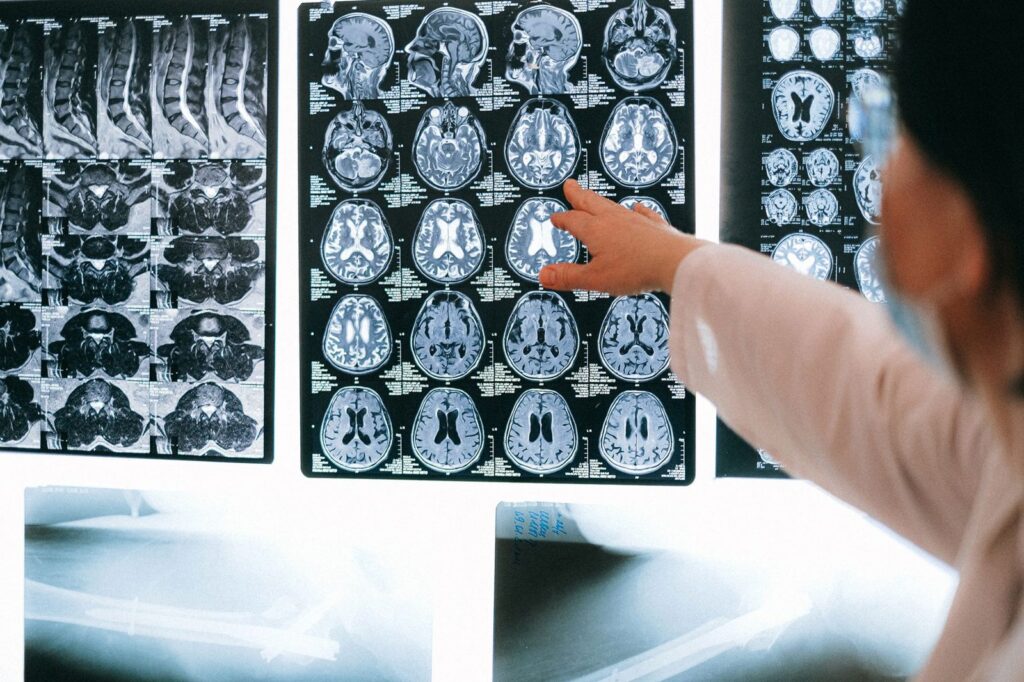
CT and MRI scans show bleeding, swelling, or damage inside the skull. These images back up the scores with clear visual proof.
One caveat: alcohol, sedation drugs, and a breathing tube can all change an early GCS score. Because of this, the care team often re-checks the grade once the person is more stable.
Severe vs moderate traumatic brain injury: the key differences
The main difference is depth and duration. Severe TBI means a GCS of 3–8. Moderate TBI means a GCS of 9–12. Severe injuries also involve longer unconsciousness and longer memory loss.
With moderate TBI, the person usually loses consciousness for 30 minutes to 24 hours. Memory loss lasts from 24 hours to 7 days, per the DSM-5 classification review.
With severe TBI, unconsciousness usually runs past 24 hours. Memory loss often stretches beyond a week. The Cleveland Clinic notes that passing out for more than 24 hours points to a severe injury. Coma is also possible.
Acute care differs too. Moderate cases usually need close monitoring and repeat scans. Severe cases often mean intensive care (ICU) and pressure monitoring inside the skull. They sometimes need surgery to control bleeding or swelling.
The line between the two isn’t always clean. A patient can improve and move down a grade. Or they can worsen and move up. That’s why the medical record may show the grade changing over the first days. For the most serious cases, our family guide on coma and vegetative state explains what to expect and what to ask.
Have questions about what happened?
Ask our team directly. The first conversation is free, confidential, and there is no obligation to continue.
Mild TBI (including concussion) and why “mild” can still be serious
“Mild” is a medical label. It does not describe how the injury feels or how it affects a life. A concussion is a form of mild TBI. Yet it can still cause real, lasting problems.
Common symptoms include headaches, dizziness, trouble with memory and focus, and mood changes. The Brain Injury Association of America explains that symptoms like anxiety, depression, and irritability may start right away. They may also show up later or come and go over time.
Sometimes a “mild” TBI shows bleeding or bruising on imaging. Doctors call this a “complicated mild TBI.” Our firm focuses on catastrophic, permanent, life-altering injuries. Still, some symptoms need urgent re-checking right away. These include repeated vomiting, worsening confusion, or a seizure.
Symptoms families often see with moderate and severe TBI
Families often notice physical, thinking, and emotional changes together after a moderate or severe TBI. Watching for these signs helps you know what to ask the care team.
Physical signs can include long periods of unconsciousness, seizures, and loss of coordination or movement. The Cleveland Clinic lists weakness in the arms or legs as a common effect.
Cognitive effects touch memory, attention, language, and problem-solving. Your loved one may struggle to follow a conversation or plan a simple task.
Emotional and behavioral changes are common too. A calm person may become quick to anger. A social person may pull away from others.
Write down what you see and bring it to the team. Our page on the long-term effects of severe brain injury covers what recovery and daily life can look like over time.
How doctors diagnose a traumatic brain injury
Doctors diagnose a TBI in a few steps. An emergency assessment. A GCS score. A neurological exam. And brain imaging. Together these steps confirm the injury and set the severity grade.
CT scans are used first in an emergency. They quickly reveal bleeding and swelling. MRI scans give more detailed pictures. They can catch damage a CT may miss. As the CDC explains, a moderate or severe TBI can come from a bump, blow, or jolt to the head. It can also come from a penetrating injury, such as a gunshot.
Not every serious brain injury comes from impact. Some happen when the brain is starved of oxygen. This can happen during a medical emergency. Doctors call this an anoxic or hypoxic injury. Our anoxic and hypoxic brain injury page explains how it differs.
One practical tip: ask for copies of the records. The chart documents the GCS score, imaging results, and the severity grade. Those documents matter for care planning. They also matter later, if negligence caused the injury.
People also ask
How long does it take to heal from a moderate TBI?
Recovery from a moderate TBI varies a lot. It is usually measured in weeks to many months. Some people improve steadily. Others live with lasting effects. No one can honestly promise a timeline or a full recovery.
What are the criteria for severe traumatic brain injury?
Severe TBI is defined by a GCS score of 3–8. It also involves loss of consciousness longer than 24 hours. And post-traumatic amnesia lasting more than 7 days. Imaging often shows bleeding, swelling, or damage, per the NCBI/NIH criteria.
Does a TBI ever go away?
Symptoms can improve a great deal over time, especially with rehabilitation. But a moderate or severe TBI often causes some permanent impairment. Improvement and full disappearance are not the same thing. Outcomes differ for every person.
How do you differentiate between mild, moderate, and severe TBI?
Doctors use three tools. The Glasgow Coma Scale score. The length of lost consciousness. And the length of post-traumatic amnesia. Imaging then supports the grade.
Want to know where you stand?
Tell us what happened and our team will walk you through the options available to you, at no cost.
Common causes of moderate and severe TBI
Falls and firearm-related injuries cause most moderate and severe TBIs, according to the CDC. But several other causes send people to the ICU with a serious head injury.
Car and truck crashes are a major source of catastrophic head injuries. The force in a large-truck collision can cause severe, life-altering brain damage.
Violence is another cause. Some people suffer a serious brain injury during an assault, robbery, or shooting. This can happen on someone else’s property.
Maybe you or a loved one were attacked at an apartment complex, a parking lot or garage, a hotel, a bar, or a store. Maybe the owner failed to provide reasonable safety. That means things like working locks, gates, lighting, cameras, or guards. If so, you may have a claim against that property owner. Lawyers call this negligent security. It is a type of premises liability. Our negligent security page explains it in plain terms.
When another party’s carelessness caused the injury, a family may have legal options worth understanding.
Why the severity grade matters after a serious accident
The severity grade matters for one main reason. It records, in the medical file, how serious the injury really was. That record helps everyone understand the care your loved one will need going forward.
Moderate and severe TBIs often need long-term rehabilitation and assistive support. They can bring lifelong costs. Those needs are real, and they add up. When the injury came from someone else’s negligence, families sometimes seek help. They want to know if they can recover money for that care.
Florida law is time-sensitive here. Most negligence claims that started on or after March 24, 2023, have a deadline. You generally have two years to file under Fla. Stat. §95.11.
Florida also uses a shared-fault rule. It is called modified comparative negligence, under Fla. Stat. §768.81. Under this rule, a person found more than 50% at fault generally recovers nothing.
Are you trying to understand the difference between a severe vs moderate traumatic brain injury? Do you want to know what it means for your family’s next steps? We’re here to help. You can request a free, no-obligation case evaluation with our team. We can’t promise any specific result. But we can help you understand your options.
To learn more about these injuries overall, visit our main traumatic brain injury resource.

Frequently Asked Questions
What is the difference between a severe and moderate traumatic brain injury?
The main difference is how long a person loses consciousness and how confused or unresponsive they are afterward. Doctors often use the Glasgow Coma Scale (GCS): a moderate TBI usually scores 9 to 12, while a severe TBI scores 8 or lower, meaning the injury to the brain is much more serious and lasting.
How do doctors grade a traumatic brain injury as mild, moderate, or severe?
Doctors grade a TBI using measures like the Glasgow Coma Scale, how long the person was knocked out, and how long they had memory gaps after the injury. Brain scans such as CT or MRI and the person’s symptoms also help the medical team decide how serious the injury is.
Can a “mild” TBI still cause serious, long-term problems?
Yes. Even an injury labeled “mild” can lead to lasting problems with memory, thinking, mood, or headaches, so the medical grade does not always match how much the injury changes someone’s daily life.
What should my family do after a loved one suffers a severe brain injury in an accident?
Focus first on getting the medical care and follow-up your loved one needs, and keep records of the diagnosis, treatment, and how the injury affects daily life. When someone else’s carelessness caused the injury, you can contact CHG Personal Injury Lawyers for a free case evaluation to learn about your options.
How Doctors Grade Traumatic Brain Injury
Moderate TBI (GCS 9–12)
Loss of consciousness lasting 15 minutes to several hours. The person may be confused or disoriented for days or weeks. Brain imaging often shows injury, and recovery can take months. Many people experience lasting cognitive, physical, or emotional changes.
Severe TBI (GCS 8 or Lower)
Loss of consciousness lasting hours, days, or longer—sometimes weeks or months. Severe brain swelling, bleeding, or structural damage is common. Recovery is prolonged and uncertain. Many survivors face permanent disability, requiring lifelong care and support.
The Glasgow Coma Scale (GCS)
Doctors use the GCS to measure eye opening, verbal response, and motor response immediately after injury. Scores range from 3 (most severe) to 15 (least severe). A score of 8 or lower indicates severe TBI and signals the need for urgent, intensive medical care.
Why the Grade Matters
TBI grade predicts recovery timeline, disability risk, and long-term needs. Severe TBI often results in permanent cognitive impairment, physical paralysis, loss of independence, or death. Medical and legal documentation of the grade is critical for insurance claims and injury lawsuits.
Catastrophic Brain Injury Changes Lives
Even moderate TBI can cause permanent memory loss, personality changes, chronic pain, and inability to work. Severe TBI often requires 24/7 care, specialized equipment, and lifelong medical treatment. If your injury was caused by someone else's negligence—a truck crash, a fall on an unsafe property, or violence at a location with inadequate security—you may have a right to compensation for medical costs, lost income, and pain and suffering.
What You Should Know About TBI Claims
Medical Documentation Is Essential
GCS scores, CT scans, MRI results, and medical records from the first hours and days after injury are the foundation of your claim. We work with medical professionals to build a complete picture of your injury and its impact.
Liability Depends on How the Injury Happened
If a truck driver was negligent, a property owner failed to provide safe conditions, or security was inadequate and you were assaulted, the responsible party may owe you damages. We investigate the cause and hold negligent parties accountable.
Compensation Covers More Than Medical Bills
Settlements and verdicts in catastrophic TBI cases account for ongoing medical care, rehabilitation, lost wages, home modifications, assistive devices, and the pain and suffering caused by permanent disability.
Time Limits Apply to Your Claim
Florida law sets strict deadlines—called statutes of limitation—for filing a lawsuit. The sooner you contact us, the sooner we can protect your rights and begin investigating your case.