

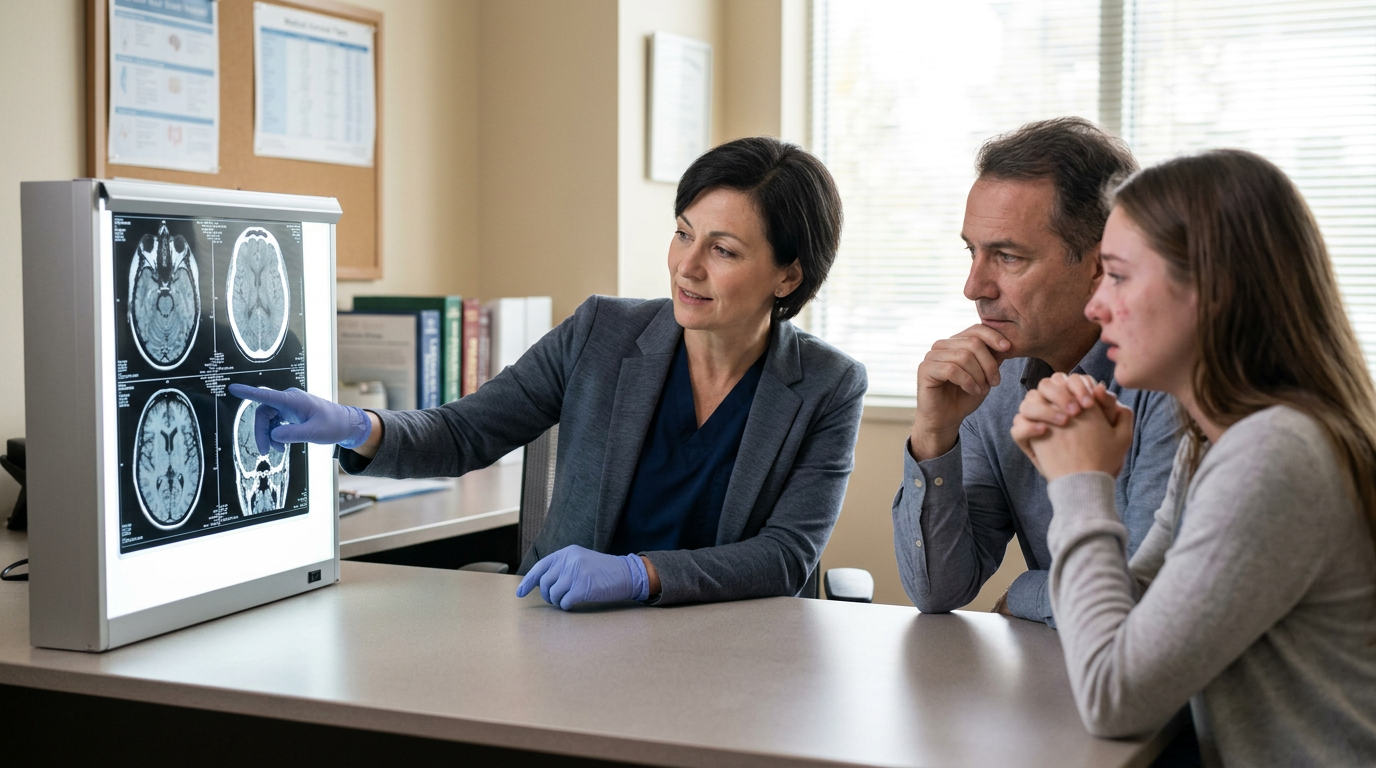
Traumatic Brain Injury Resources
When a Loved One Won't Wake Up: A Family's Guide to Coma After Brain Injury
If someone you love suffered a severe traumatic brain injury and is now in a coma, you are facing questions no family should have to answer alone. This plain-language guide explains what these conditions mean and how CHG Personal Injury Lawyers helps families of catastrophically injured victims.
Standing With Catastrophically Injured Families
Nationwide
Catastrophic injury cases accepted
Bilingual
English & Spanish guidance
FL Bar
Licensed, admitted attorneys
TBI Focus
Severe brain injury claims
By CHG Lawyers · Published August 07, 2026
Caring for a Family Member in a Coma After a Brain Injury: A Family’s Guide
You are probably reading this in a hospital hallway, or on your phone at 3 a.m., trying to make sense of words a doctor said an hour ago. First, breathe. You do not have to understand everything tonight. You do not have to make any big decision this minute.
Right now, three things help more than anything else: be present, learn what the medical terms mean, and write down every update from the care team in one notebook. This page walks you through all three, in plain language. Later — only when you’re ready — it explains what your family can do if someone else’s carelessness caused the injury.
The ICU hours stretch on, and the words feel like a foreign language. Start here, and take it one page at a time.
If your family is facing a catastrophic brain injury, we're here to listen — with no cost and no pressure for a first conversation. Talk it through with our team — the first consultation is free, confidential, and carries no obligation.
If your loved one is in a coma right now
Your job today is to stay present and gather information — not to have all the answers. In the first days after a severe traumatic brain injury (TBI), the picture can change hour to hour. That uncertainty is agonizing, and it is also normal.
No two brain injuries are the same. The care team treating your loved one is the right source for their specific medical questions. This guide gives you the vocabulary and confidence to ask those questions well — and to understand the answers.
How these injuries happen — and why the cause matters to you now
Most families we speak with never expected to be here. A severe TBI most often follows a sudden, violent event. In our work, two causes come up again and again:
- Truck crashes. A fully loaded tractor-trailer can weigh up to 80,000 pounds — roughly 20 to 30 times a passenger car. When one strikes a smaller vehicle, the forces on the head and brain are extreme, even inside a modern car. The U.S. Department of Transportation’s Federal Motor Carrier Safety Administration (FMCSA) reports that large trucks are involved in thousands of fatal crashes each year, and occupants of the other vehicle are the ones most often catastrophically hurt.
- Violent attacks on someone else’s property. A TBI can also come from being assaulted, beaten, or shot — in an apartment parking lot, a garage, a hotel, a bar, or a gas station — where the property owner did not provide basic security. A blow to the head or a fall during an attack can cause a coma. We say more about this below, because many families don’t realize it can be a legal wrong.
Knowing how the injury happened isn’t about blame at the bedside. It matters because, if another party caused it, that fact may one day help pay for the years of care ahead.
Coma, vegetative state, and minimally conscious state are not the same thing
Families are often handed these three terms as if they mean one thing. They don’t. Knowing the difference tells you a great deal about what the doctors are watching for.
Coma
A coma is a state of deep unconsciousness. The person cannot be woken. Their eyes stay closed, they don’t respond to voices, and they show no purposeful movement. A coma is not like sleep — a sleeping person can be roused; a person in a coma cannot. Most comas after a TBI last days to a few weeks, not months. A coma is usually a phase, not an endpoint: people typically move out of it into one of the states below, or toward recovery.
Vegetative state (unresponsive wakefulness syndrome)
Here is the distinction most pages skip. In a vegetative state — clinicians increasingly call it unresponsive wakefulness syndrome — the eyes open and sleep-wake cycles return, but there is no sign the person is aware of themselves or their surroundings. It can look like your loved one is awake, which is one of the most confusing and painful things a family can face. The body is functioning; doctors do not yet see conscious response.
Minimally conscious state
A minimally conscious state (MCS) is a meaningful step beyond the vegetative state. The person shows clear but inconsistent signs of awareness — following a simple command sometimes, tracking a face with their eyes, reaching for an object. The signs come and go, but they are reproducible: doctors can observe them more than once. That reproducibility is what separates MCS from a vegetative state, and it matters because it can carry different implications for rehabilitation.
None of these is brain death. Brain death means the brain has permanently and irreversibly stopped all function, including the brainstem; under Florida law it is legally death (see Fla. Stat. §382.009). A coma, vegetative state, or minimally conscious state means the brain is still working, even if consciousness is impaired. That difference is enormous, and it is worth asking the care team to state clearly which one they are describing.
How doctors track progress — and how to track it with them
Early on, doctors usually can’t give a single, fixed answer about recovery — that’s honest medicine, not avoidance. A brain heals slowly and unpredictably. What’s true on day three may not be true on day thirty.
You will likely hear about the Glasgow Coma Scale (GCS) — a bedside score of eye opening, verbal response, and motor response, ranging from 3 to 15. A score of 8 or below is the common threshold for severe TBI. A rising score across days can signal progress. As weeks pass, specialists in disorders of consciousness may run more detailed assessments, such as the Coma Recovery Scale–Revised, to distinguish a vegetative state from a minimally conscious one.
Here is how to work alongside the medical team:
- Ask specific questions. “What did today’s GCS show compared to yesterday?” is more useful than “Will they wake up?”
- Keep a written log. Date, who you spoke with, the scores, and any instructions. Memory fails under stress — the log becomes your record.
- Ask about a second opinion if you want one. A good team won’t be offended.
Progress is usually measured in small steps, not sudden movie-style awakenings. Families we work with often tell us the daily log became their anchor — a way to see slow change they’d otherwise have missed. That same log can later become a clear, dated record if a legal question ever arises.
How to be present when caring for a family member in a coma
Even when your loved one can’t respond, your presence, voice, and touch may matter — and being there gives you a role. You are not helpless.
- Talk to them calmly about ordinary things — the weather, family news, a shared memory.
- Play familiar music or read aloud. A favorite song brings a piece of home into a clinical room.
- Use gentle touch, if the nurses say it’s safe. Holding a hand is a real form of connection.
- Keep the environment calm. Low light, low noise, and quiet visitors help.
- Coordinate visitors and rest with a simple schedule — for your loved one and for you.
- Watch for small changes. A flicker of eye movement or a squeezed hand matters; report it to the nurse.
Ask a member of the care team how you can help with simple daily care — moisturizing lips, brushing teeth. Small acts keep you close and give your hands something useful to do.
Not sure what your next step is?
Talk it through with our team — the first consultation is free, confidential, and carries no obligation.
The stages of care: ICU, rehab, and long-term decisions
Care after a severe TBI usually moves through stages, and knowing them helps you plan. The path often runs: ICU → acute hospital care → inpatient rehabilitation → skilled nursing or home care. Not every patient follows every step.
Along the way, you’ll meet a team:
- Physiatrists — doctors who focus on rehabilitation medicine.
- Neurologists — focused on the brain and nervous system.
- Physical, occupational, and speech therapists — working to restore function.
- Case managers and social workers — coordinating care and paperwork.
When discharge planning begins, ask direct questions: What level of care will my loved one need? What will a typical day look like? What equipment or home modifications are required? When you evaluate a rehab facility, ask specifically about its experience with disorders of consciousness, its staffing ratios, and how it includes families.
Taking care of yourself and your family
Caring for yourself isn’t selfish — it’s how you protect the whole family through a long crisis. Caregiver burnout is real, and so are grief, anxiety, and financial strain.
- Divide responsibilities. Assign tasks — banking, meals, laundry, hospital shifts.
- Accept help. When friends ask what they can do, give them a specific answer.
- Build a support network through family, faith communities, and support groups.
- Care for the children honestly and in age-appropriate ways. They sense stress even when adults stay quiet.
The Brain Injury Association of America offers guides and a National Brain Injury Information Center for families. Asking for support is a sign of strength.
The financial reality most medical guides don’t mention
This is where a purely medical page stops — but it is where a family’s hardest questions begin.
Severe brain injury is among the most expensive injuries to care for over a lifetime, and the costs arrive fast. Families face ICU bills, months of rehabilitation, home modifications, durable medical equipment, and — for the most severe disorders of consciousness — years of ongoing care.
The financial hit doesn’t stop at medical bills. When a caregiver leaves a job to be at the bedside, household income drops. If the injured person was a breadwinner, the loss compounds. This strain can last decades, not months.
Naming this isn’t meant to frighten you — it’s meant to help you plan and to make sure someone asks who should be paying for this. For a detailed breakdown, see our guide to the lifetime cost of severe TBI care.
When someone else’s carelessness caused the injury
If the brain injury happened because of another person’s carelessness, your family may have legal options. You didn’t choose this. Someone else’s decisions may be the reason your loved one is in that bed.
Consider what happened. A truck accident caused by a fatigued or distracted driver — or by a company that pushed a driver past federal hours-of-service limits — can leave a victim with a catastrophic brain injury.
There is one situation many families don’t realize is a legal wrong. Suppose your loved one was attacked, robbed, shot, or beaten at an apartment complex, a parking lot or garage, a hotel, a bar, a gas station, or a store — and the property owner had failed to provide reasonable security, such as working locks and gates, adequate lighting, cameras, or guards. When a foreseeable attack happens because of that failure, the law calls it negligent security, and the property owner may be responsible. Our negligent security page explains this in plain language.
Why does this matter to a family at the bedside? Because a claim can help fund the lifetime of care your family now faces — medical bills, rehabilitation, lost income, and future needs.
And if your loved one does not survive a catastrophic brain injury, please know this gently: the family may be able to bring a wrongful-death claim. In Florida, that claim is governed by the Wrongful Death Act, Fla. Stat. §768.16–768.26, and it exists to help the people left behind. Our wrongful-death claims page explains how it works.
To understand who may be responsible and how these injuries are proven, see our pages on who is liable for a TBI and the evidence used to prove a TBI was caused by an accident.
Two Florida rules worth knowing early:
- Deadline to file. Most negligence claims that accrue on or after March 24, 2023 must generally be filed within two years, under Fla. Stat. §95.11. Waiting can quietly forfeit a family’s options.
- Shared fault. Florida uses a modified comparative-negligence rule: a person found more than 50% at fault generally recovers nothing, under Fla. Stat. §768.81.
How CHG Personal Injury Lawyers can help
If your family is facing a catastrophic brain injury, we’re here to listen — with no cost and no pressure for a first conversation. Our goal in that first call is simple: to help you understand your options, so you can focus on your loved one while a legal team looks into what happened.
CHG Personal Injury Lawyers handle catastrophic-injury cases in Florida — for families in Miami, Orlando, Tampa, Jacksonville, and across the state — and nationwide. We publish resources in English and Spanish so more families can find clear answers, and our attorneys are licensed and admitted to the Florida Bar.
No ethical firm can guarantee a result, and we won’t. What we can do is help you understand your rights and your options during an impossible time. When you’re ready, request a free case evaluation.
Have questions about what happened?
Ask our team directly. The first conversation is free, confidential, and there is no obligation to continue.
Frequently asked questions
What is the difference between a coma and a vegetative state?
In a coma, the eyes stay closed and there is no sleep-wake cycle. In a vegetative state (unresponsive wakefulness syndrome), the eyes may open and sleep-wake cycles return, but there is still no sign of awareness.
How is a minimally conscious state different from a vegetative state?
In a minimally conscious state, the person shows clear but inconsistent signs of awareness — following a command, tracking a face — that doctors can observe more than once. In a vegetative state, those reproducible signs are absent.
Can a person in a coma hear you?
It’s often unclear, but many families and clinicians believe familiar voices may reach the person, so talking, reading, and playing music are gentle, worthwhile ways to stay connected.
How long can someone stay in a coma after a brain injury?
Most comas after a TBI last days to a few weeks, though some last longer. Recovery paths vary widely, and your care team is the best source for your loved one’s outlook.
Who pays for long-term coma care after an accident?
Costs may be covered by health insurance, and when another party’s carelessness caused the injury — such as a truck crash or an attack that a property’s inadequate security failed to prevent — a personal-injury or wrongful-death claim may help pay for medical care, lost income, and future needs.
Is there a time limit to file a claim if the TBI was caused by an accident?
In Florida, most negligence claims that accrue on or after March 24, 2023 must generally be filed within two years, under Fla. Stat. §95.11 — so it’s wise to ask a lawyer about your specific deadline early.

Continue learning: Traumatic Brain Injury Guide
For a full overview of brain injuries, causes, and claims, start with our Traumatic Brain Injury Guide. From there, explore the lifetime cost of severe TBI care, the evidence used to prove a TBI, and who may be liable for a TBI.
When you’re ready to talk, we’re here. Reach out for a free case evaluation — in English or Spanish — and let us help you understand what comes next.
Protect Your Legal Rights Early
While your focus is rightly on your loved one's care, evidence from the accident or unsafe property that caused the injury can disappear quickly. Speaking with an attorney early does not add stress to your day-to-day caregiving — it helps preserve what your family may need later. We can begin work while you stay at the bedside.
Understanding the Levels of Consciousness
Coma
The eyes stay closed and there is no sleep-wake cycle. A person in a coma cannot be awakened and shows no purposeful response. It is typically the earliest stage after a severe brain injury.
Vegetative State
Also called unresponsive wakefulness syndrome. The eyes may open and sleep-wake cycles return, but there is still no sign of awareness of self or surroundings.
Minimally Conscious State
There are clear but inconsistent signs of awareness — following a simple command, tracking with the eyes, or responding to a familiar voice. These signals can come and go over time.
Emerging & Recovery
As consciousness returns, doctors watch for reliable communication and purposeful behavior. Recovery paths vary widely, and long-term needs are often significant.
How CHG Personal Injury Lawyers Helps Families
We Focus on Catastrophic Cases
Our work centers on the most serious, life-altering injuries — traumatic brain injury, paralysis, amputation, and severe burns — including cases that end in wrongful death.
We Investigate What Caused It
Whether the injury came from a truck crash or a violent attack on an unsafe property, we work to identify who was responsible and preserve the evidence.
We Understand the Weight of Long-Term Care
Coma and severe TBI can mean years of medical care and lost income. We pursue accountability so families can focus on healing.
We Come to You
When a family member is hospitalized, you cannot leave. We handle consultations by phone and can meet where you are, in English or Spanish.