
Hard Cases Still Deserve a Careful Look
Some injury claims take more proof, more time, and more persistence. Here is what makes them difficult, and how a Florida injury firm can help you weigh your options.
About CHG Personal Injury Lawyers
Florida
Florida-based firm serving clients throughout the state
Free
Confidential first consultation with no obligation to continue
Licensed
Attorneys admitted to The Florida Bar
By CHG Lawyers · Published November 8, 2026
Obstacles That Make Catastrophic Injury Claims Harder in Florida
Not sure what your next step is?
Talk it through with our team — the first consultation is free, confidential, and carries no obligation.

Why Some Claims Are Harder Than Others
Every injury claim has to clear the same basic hurdles: prove who was responsible, prove what the injury costs, and file on time. Catastrophic cases raise each of those hurdles. A spinal cord injury, traumatic brain injury, amputation, severe burn, or wrongful death can change a family’s life for decades, and the law, the evidence, and the defense arguments all reflect that.
This page does not rank lawsuits. It explains the specific obstacles that Florida law and the evidence create, and how they show up in the cases our firm handles: catastrophic injury claims, truck crashes, and negligent security. Florida law comes first. Where federal law controls a particular claim, we say so.
Obstacle 1: Proving the Injury Is Permanent and Pricing Its Future
Catastrophic claims need more than an accident report and medical bills. They need proof that the harm is permanent and a realistic estimate of what it will cost over a lifetime.
That usually means: – Complete medical records and imaging studies – Testimony from treating physicians and rehabilitation physicians – Life-care plans that list adaptive equipment, ongoing therapy, home modifications, and attendant care – Projections of future lost income and non-economic losses such as pain, loss of enjoyment of life, and emotional distress
Insurers often dispute whether an injury is truly permanent and whether the projected costs are reasonable. Each dispute adds time and expense, which is why these cases move slowly.
Traumatic brain injuries are harder still. Brain damage often does not show up on standard CT or MRI scans, especially in mild to moderate cases. Memory loss, concentration problems, mood changes, and headaches can appear weeks or months after the crash. Proof usually depends on neurological testing and neuropsychological assessments performed by medical witnesses. Juries can find a visible injury, such as a broken leg or a scar, easier to understand than test results showing cognitive decline.
Amputation and severe-burn cases raise a similar problem. The injured person must show ongoing care, prosthetics, or reconstructive surgery will be needed for life. Insurers frequently send their own physicians to examine the injured person, and those physicians may testify that recovery is possible or that certain treatment is unnecessary. The jury then has to decide whose medical evidence is more credible.
Obstacle 2: Who Is Responsible, and How Fault Is Divided
Florida’s comparative-fault rule is one of the most significant obstacles in any injury case. Under Fla. Stat. § 768.81(2), contributory fault chargeable to the injured person diminishes the amount awarded for economic and noneconomic damages for an injury attributable to that person’s fault. That fault does not, by itself, bar recovery, subject to subsection (6) of the same statute.
Florida also does not hold every defendant responsible for the full amount. The practical effect is that every percentage point assigned to someone else reduces what a defendant pays.
This creates a specific tactic. A defendant may try to place a nonparty on the verdict form. If the defendant cannot meet that burden, the nonparty’s share should not be placed on the form.
In truck crashes, the defense often argues the injured driver was speeding or failed to brake in time. In negligent-security cases, it may argue the victim was somewhere they should not have been. These arguments can reduce a recovery if a jury accepts them, so they must be answered with evidence early.
Obstacle 3: Punitive Damages Carry a Higher Burden and Built-In Limits
Some cases involve conduct serious enough to support punitive damages. These are harder to obtain than compensation for medical bills and lost income.
- Burden of proof. Under Fla. Stat. § 768.725, the plaintiff must establish entitlement to punitive damages at trial by clear and convincing evidence. The lower greater-weight standard applies to the amount.
- Caps. Under Fla. Stat. § 768.73(1)(a), an award may not exceed the greater of three times the compensatory damages or $500,000. Higher limits apply in narrow situations described in paragraphs (1)(b) and (1)(c) of that statute.
- Prior awards. Under § 768.73(2)(a), punitive damages may not be awarded against a defendant that establishes before trial that punitive damages were previously awarded against it for the same act or single course of conduct.
- Jury instructions. Under § 768.73(4), the jury may neither be instructed nor informed about these limits.
Families should understand that these rules shape how a case is valued from the start, not only at the end.
Obstacle 4: Deadlines Depend on the Type of Claim
Florida sets a deadline for filing a personal-injury lawsuit. The time limit comes from Fla. Stat. § 95.11. The statute organizes deadlines by type of action, and the period is measured by when the action must be commenced, meaning filed in court. The starting point is not always the accident date.
Do not assume a deadline from an older article or another state’s rule. Miss the deadline, and the claim can be barred for good. In catastrophic cases, medical evidence, witnesses, and crash data take time to gather, which is why early investigation matters.
Maritime claims follow a separate timeline. Federal law sets time limits that apply to some injury claims involving vessels, so deadlines can be shorter than people expect.
Not sure what your next step is?
Talk it through with our team — the first consultation is free, confidential, and carries no obligation.
Obstacle 5: Government Defendants Have Narrow Rules
A claim against a city, county, state agency, or other government body follows different rules. Under Fla. Stat. § 768.28(1), the state waives sovereign immunity for torts only to the extent the statute specifies.
The recovery limits are significant. Under § 768.28(5)(a), the government is liable in the same manner as a private person but not for punitive damages or pre-judgment interest.
Examples include a crash involving a government vehicle, an injury on a county road, or an attack in a publicly owned parking garage. Because these rules are narrow, a government-defendant claim should be reviewed as early as possible.
Obstacle 6: Maritime Claims and Limits on Liability
Maritime injuries are governed largely by federal law. Under 33 U.S.C. § 905(a), an employer’s liability to an employee under the compensation chapter is exclusive, with one exception: if the employer fails to secure payment of compensation, the injured employee may elect to sue. In that action, the defendant may not plead the fellow-servant rule, assumption of risk, or the employee’s contributory negligence.
For injuries caused by a vessel’s negligence, § 905(b) allows the injured person to bring an action against the vessel as a third party. That vessel liability is not based on the warranty of seaworthiness.
Under § 30527(b)(2), that subsection does not limit liability in cases involving sexual harassment, sexual assault, or rape.
Obstacle 7: Aviation Claims and Treaty Limits
Air-travel injury claims are governed by the Montreal Convention. Under article 20, if the carrier proves that the passenger’s own negligence caused or contributed to the damage, the carrier is wholly or partly exonerated to that extent.
The limit for death or bodily injury increased from 128,821 SDRs to 151,880 SDRs (about US$202,500 when announced), effective 28 December 2024, according to the ICAO notice. The revised limit took effect on 28 December 2024.
Obstacle 8: Trucking Cases and Who Else May Be Liable
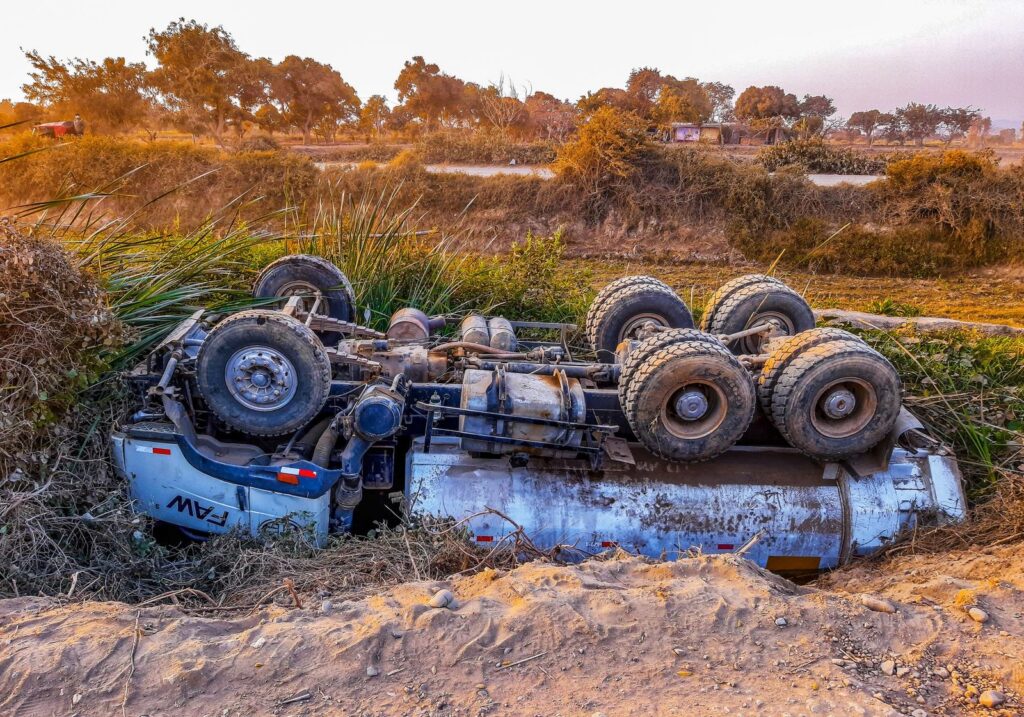
Truck-accident cases are shaped by federal regulation and by the many companies in the chain of responsibility. The U.S. Supreme Court addressed one piece of that chain in Montgomery v. Caribe Transport II, LLC (2026). The Court held that a state-law claim that a broker negligently hired an unsafe motor carrier falls within the safety exception to federal preemption under the FAAAA, and so is not preempted.
Montgomery’s negligent-hiring claim falls within the FAAAA’s safety exception, which saves it from preemption. Other questions still matter: whether the driver was fatigued, whether hours-of-service rules were violated, whether the truck was poorly maintained, and whether the load was properly secured. Each question requires investigation and documentation, and the defense will examine each one.
Obstacle 9: The Alcohol and Drug Defense
Florida law bars recovery in some cases where the injured person was impaired. Under Fla. Stat. § 768.36(2), a plaintiff may not recover damages if the trier of fact finds that, at the time of injury, the plaintiff was under the influence to the extent that normal faculties were impaired, or had a blood or breath alcohol level of 0.08 percent or higher, and that the plaintiff was more than 50 percent at fault as a result.
This defense comes up often in motorcycle, ATV, jet ski, and drowning cases, and in incidents at bars and nightclubs.
Not sure what your next step is?
Talk it through with our team — the first consultation is free, confidential, and carries no obligation.
Obstacle 10: Product Design and the State-of-the-Art Argument
In crashworthiness cases, the claim is that a vehicle or product’s design made the injuries worse than they otherwise would have been. Florida law requires the jury to look at a specific moment. Under Fla. Stat. § 768.1257, in an action based upon defective design against a manufacturer, the finder of fact considers the state of the art of scientific and technical knowledge and other circumstances that existed at the time of manufacture, not at the time of loss or injury.
That means evidence about what was known when the product was made carries much of the weight. Design-based claims therefore depend on early work to gather the product’s history and engineering records.
Negligent Security: When Someone Else’s Property Failed to Protect You
Imagine walking to your car in an apartment complex parking garage at night. The gate that should have been closed is broken, the lights on that level have been out for weeks, and there are no working cameras. You are attacked, shot, robbed, or assaulted. The property owner knew about the problems, or should have, and did nothing reasonable to protect people who lived and parked there.
If that describes what happened to you or a family member, you may have a claim against the property owner. Lawyers call this a negligent security claim.
The central question is foreseeability. Useful evidence can include prior crimes at the location, police reports, complaints from tenants or customers, and security practices at comparable properties. Defendants often argue they could not have predicted the specific attack. Their statements, records, and maintenance logs can answer that argument, but only if they are preserved early.
Fault allocation adds another layer. The defendant may try to place the attacker on the verdict form as a nonparty, which is governed by the rules described in Obstacle 2. Whether the apportionment section applies at all depends on how the claim is framed. Under § 768.81(4), that section does not apply to any action based upon an intentional tort. That is why the legal framing of the claim matters from the start.
Why These Obstacles Call for Early Action
Across every case type on this page, the same steps matter most: preserve evidence, identify witnesses, document medical treatment, and understand the deadlines that apply. Photos, surveillance footage, maintenance logs, and crash data can disappear. Witnesses move. Medical records need to be complete before projections can be made.
CHG Personal Injury Lawyers focuses on personal injury claims of every severity, including catastrophic injury claims such as spinal cord injuries and paralysis, traumatic brain injuries, amputations, severe burns, truck crashes, negligent security, and wrongful-death claims. We do not promise any result, because every case depends on its own facts.
Frequently Asked Questions
What makes a personal-injury case harder to pursue?
Obstacles include comparative fault, the need for detailed medical proof of permanence and future costs, tight filing deadlines, and defendants who challenge every part of the claim (Fla. Stat. § 768.81(6)).
How long do I have to file a lawsuit in Florida?
Florida sets filing deadlines by type of action, and the start date is not always the accident date. Missing a deadline can bar a claim, so do not wait to get the timing reviewed.
What if I’m partly at fault for my injury?
Can I sue a city or county?
Claims against government bodies are subject to the waiver and limits in Fla. Stat. § 768.28, including dollar caps on recovery. These claims should be reviewed early.
If you were hurt in a catastrophic accident, a truck crash, or an attack on someone else’s property, the deadlines and proof requirements can feel overwhelming. Families reach out because they need to know whether they have a claim and what their options are. Contact us for a free case evaluation to discuss what happened and what comes next. CHG charges no attorney’s fees and no case costs unless there is a recovery.
Attorney advertising. This page is published by CHG Personal Injury Lawyers, a Florida personal injury firm. The responsible lawyer is Igor Hernandez. This content is general information, not legal advice, and reading it does not create an attorney-client relationship. Prior results do not guarantee a similar outcome.
What a Thorough Case Review Looks At
The Medical Picture
Serious injuries often need detailed records showing the diagnosis, the treatment, and what the future may hold. Our lawyers review those records with you and follow your doctors' care.
The Facts of the Incident
We look at how the injury happened, what evidence exists, and who may be responsible, so you understand the strengths and the challenges of your situation.
Deadlines and Timing
Florida courts apply filing deadlines, and they vary by type of claim. Acting early helps preserve evidence and keeps your options open.
Your Family's Needs
Serious injuries affect loved ones too. We take time to understand how the injury has changed daily life for you and your family.
Do Not Wait to Ask for Help
Evidence can disappear and filing deadlines apply in Florida. If you were seriously hurt, contact a lawyer promptly rather than waiting to see how your recovery goes.
Common Reasons a Claim Can Be Difficult
Disputed Fault
The other side may argue that you share some of the blame or that someone else caused the harm.
Proving Permanence
Showing that an injury is lasting, and what it will cost over time, requires careful medical documentation.
Challenges to Every Detail
Defendants and their insurers often question the injury, the treatment, and the money being claimed.
Limited or Missing Evidence
Video, witness accounts, and property records can be lost quickly, which makes early action important.