
Slip and Fall | Hialeah, Florida
Hurt in a Slip and Fall in Hialeah? You Don't Have to Figure Out Your Options Alone.
Falls on wet floors, broken stairs, poor lighting, and unsafe walkways can cause injuries that change daily life. CHG Personal Injury Lawyers helps Florida families understand their options after a fall.
Starting Your Conversation With CHG
Free
First consultation, confidential and with no obligation to continue
Florida
Serving people injured across the state
By CHG Lawyers · Published October 14, 2026
Slip and Fall Injury Rehab Hialeah: What Injured Visitors Should Know
By Igor Hernandez, responsible lawyer, CHG Personal Injury Lawyers, Hialeah, Florida. Igor Hernandez is admitted in Florida as a member of The Florida Bar. The firm handles personal injury claims of any severity for clients throughout Florida.
Falls on stairs, at the bottom of an escalator, or after a handrail gives way are examples of slip-and-fall incidents. Two questions usually come first: how to heal, and who is responsible. This page covers both in plain terms.
Someone searching for slip and fall injury rehab Hialeah often needs both answers at once. Pain, appointments, and bills can pile up quickly. Each step depends on the facts of the case. For the broader guide, see slip and fall in Hialeah.
Not sure what your next step is?
Talk it through with our team — the first consultation is free, confidential, and carries no obligation.
When a Stair, Escalator, or Handrail Fall Leaves You Hurt
A fall on someone else’s property can leave you hurt and unsure who should answer for the harm.
Picture a errand at a Hialeah shopping plaza. You step onto a stair with a cracked, worn edge, and your foot slides off. Or the escalator stops as you step off, and you tumble forward. Or a handrail in a parking garage stairwell pulls loose from the wall as you grab it. Each fall happens on property that someone else controls.
Florida law may allow an injured visitor to bring a claim against the property owner. Whether a claim exists depends on the facts of each case. Lawyers call this area of law premises liability. The term describes an owner’s responsibility for dangerous conditions on property it owns or controls.
Whether an owner is responsible depends on what happened, where it happened, and what the owner knew or should have known. No outcome can be promised, and every case is different. Still, knowing the basic framework can help you make better choices in the first days after a fall.
Why Medical Evaluation and Rehabilitation Matter After a Fall
The most important step after any fall is a medical evaluation, even if you can walk.
A doctor can look for injuries that aren’t obvious at the scene. Your medical records document what was found, what treatment started, and how rehabilitation is going. Those records may be relevant to a claim, depending on the facts. They matter first because they guide your recovery.
Rehabilitation looks different for each person. It may include physical therapy, follow-up visits, prescribed exercises, or care at home. Follow your provider’s instructions and keep every appointment you can. Ask for copies of visit notes and discharge instructions.
Keep bills, referral slips, and receipts in one folder or digital file. Florida law addresses how medical expenses can be proven. Under Fla. Stat. § 768.0427, evidence of past treatment expenses that have been satisfied is generally limited to the amount actually paid, regardless of the source of payment. Keep payment records as well as bills.
Common Injuries From Falls on Stairs, Escalators, and Handrails
Falls on stairs, escalators, and handrails can cause sprains, fractures, head injuries, and back or neck injuries.
Sprains and strains stretch or tear ligaments and muscles. Fractures break bones, such as wrists, ankles, hips, or ribs. Head injuries can range from mild to severe. Back and neck injuries can affect the spine, discs, and nerves. Your injuries depend on how you fell and on your health.
Some injuries are not felt right away. Pain, stiffness, or dizziness can appear later. For that reason, a medical check is wise after any fall, even if you feel fine at first.
A blow to the head, loss of consciousness, numbness, weakness in an arm or leg, or severe neck or back pain needs emergency medical care right away. Do not wait to see whether these symptoms fade.
Where These Falls Happen: Offices, Malls, Hotels, and Parking Structures
Many of these falls happen in places open to the public, such as offices, shopping centers, hotels, and parking garages.
In Hialeah and across Miami-Dade, many buildings have stairwells, escalators, and ramps that owners maintain every day. Conditions that may be relevant include worn stair treads, loose or missing handrails, poor lighting, wet floors, and an escalator that is out of service without clear warnings. Such conditions are facts to be weighed. They do not automatically mean the owner was careless.
The type of property matters. Fla. Stat. § 768.0755 addresses a slip on a transitory foreign substance, such as a temporary spill, in a business establishment. In that situation, the injured person must prove actual or constructive knowledge of the condition. The same statute says it does not affect any common-law duty of care owed by a person or entity in possession or control of business premises. A stair, escalator, or handrail case may therefore be analyzed under broader premises duties, not only the spill test.
How Maintenance and Inspection Records May Be Relevant
Records can help show what a property owner knew or should have known about a hazard.
Lawyers often call this knowledge “notice.” Under the transitory-substance statute, constructive knowledge can be shown with circumstantial evidence. That includes a condition that existed long enough that ordinary care should have revealed it. It also includes a condition that occurred with regularity, so it was foreseeable.
Records that may be relevant include maintenance logs, inspection reports, work orders, incident reports, and repair invoices. A maintenance log may show when a handrail was last checked or when a step was repaired. What these records show depends on what exists and what they say.
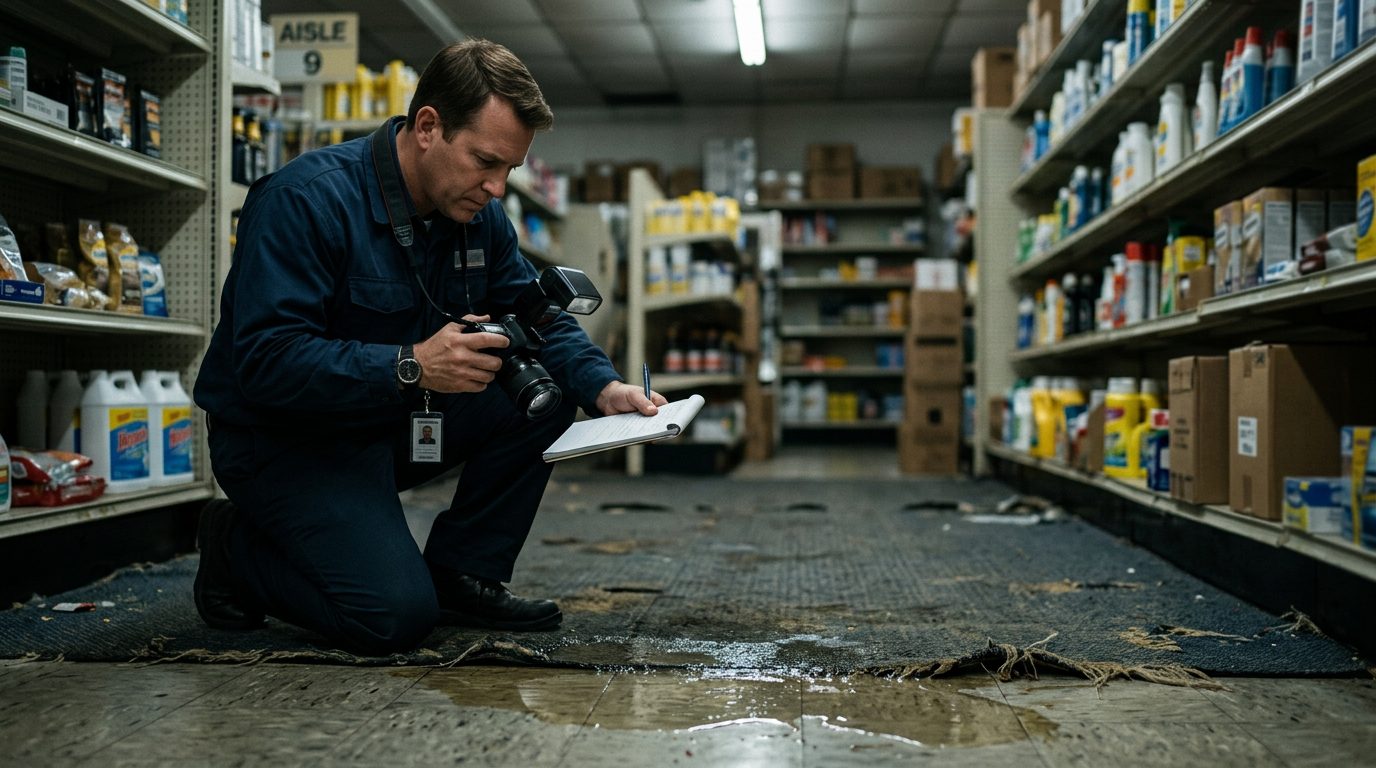
If it is safe, take steps right away. Write down the exact location, the time, the lighting, your footwear, and the names of any witnesses. Photograph the area and the hazard. Keep the shoes and clothing you wore. Ask staff whether an incident report was made, and write down their answer.
Have questions about what happened?
Ask our team directly. The first conversation is free, confidential, and there is no obligation to continue.
How Florida Law Approaches Negligence and Comparative Fault
Under Florida law, an injured person’s own share of fault may reduce what they can recover, depending on the facts of each case.
Under Fla. Stat. § 768.81, in a negligence action to which the section applies, a party found to be greater than 50 percent at fault for his or her own harm may not recover any damages. The section has exceptions, including for certain medical negligence actions under chapter 766.
The statute also changes how judgments are entered. Each liable party is judged on its own percentage of fault, not on joint and several liability. A defendant that wants to blame someone who is not in the lawsuit must say so in its court filings.
Whether that standard was met depends on the facts. No one can say in advance how a court would divide fault in your case.
Why Time Limits Matter in Florida Premises Claims
Florida sets deadlines for filing lawsuits by statute, and the clock may start when a claim accrues.
Under Fla. Stat. § 95.11, Florida sets time limits for many kinds of civil actions. Under Fla. Stat. § 95.031, a cause of action generally accrues when the last element constituting it occurs. Which period applies, and when it starts, depends on the type of claim, the facts, and any exceptions.
Do not assume a general rule covers your fall. A deadline for one kind of claim may not apply to another. An early conversation helps you learn which deadlines may apply, so important dates and evidence are not overlooked.
What Compensation Questions Depend On
No figure can be given here, because what a fall claim may be worth depends on its facts and proof.
Many people ask about average payouts, how long settlement takes, or what a good offer looks like. General information cannot answer those questions. Each case has its own injuries, facts, and proof, and no outcome can be promised. This page gives no dollar amounts, ranges, or timelines.
In general terms, claims may include categories such as medical bills, lost income, and other losses. Whether any category applies, and what proof is needed, depends on the facts. Civil cases can also take time. The National Center for State Courts notes that civil litigation can be slow and costly, and that alternative dispute resolution may resolve disputes more quickly. That is general context, not a timeline for any case.
CHG charges no attorney’s fees and no case costs unless there is a recovery. Spanish: CHG no cobra honorarios de abogado ni costos del caso si no hay recuperación.
Frequently Asked Questions
What is the average payout for a slip and fall in Florida?
No single figure applies. Each case depends on its facts, and no outcome can be promised.
How long do I have to file a claim?
Florida deadlines come from statute and depend on the type of claim and when it accrued. Ask a lawyer to check your dates early.
Can I recover if I was partly at fault?
Florida’s comparative fault statute may reduce recovery by your share of fault. Under § 768.81, a party more than 50 percent at fault for its own harm may not recover any damages.
Talk With CHG About Your Fall in Hialeah
A fall on stairs, an escalator, or a handrail can raise medical, financial, and legal questions at the same time.
If a fall on those stairs left you hurt and you aren’t sure whether the property owner is responsible, our team would welcome a free, confidential first consultation through our contact page.
With an office in Hialeah, CHG Personal Injury Lawyers represents injured people and their families throughout Florida, and Igor Hernandez, a member of The Florida Bar, is the lawyer responsible for this page. He is admitted in Florida as a member of The Florida Bar. The firm’s practice focuses on personal injury claims of any severity for clients throughout Florida.
Want to know where you stand?
Tell us what happened and our team will walk you through the options available to you, at no cost.
How CHG Can Help
Clear Explanations
We explain the facts, the evidence, and the steps involved in plain language, so you can make informed decisions about your situation.
Support for Your Family
Injuries affect the people around you too. We keep your family's needs in mind as we review your options.
CHG charges no attorney's fees and no case costs unless there is a recovery.
Your Health Comes First
After any fall, see a doctor promptly, even if the pain seems minor at first. Keep every appointment, follow your providers' instructions, and save your medical records and receipts. These records can matter to your claim.
What to Do After a Slip and Fall
1. Get Medical Care
Tell your doctor exactly how the fall happened, and describe every symptom, including ones that appear later.
2. Document the Scene
If you are able, take photos of the spot, the floor or stairs, lighting, and any warning signs or their absence.
3. Identify Witnesses
Write down names and phone numbers of anyone who saw the fall or spoke with you afterward.
4. Speak With a Lawyer
A free, confidential consultation can help you understand your options and the questions to ask as you recover.