


Severe Burn Injuries · Florida
Long-Term Effects of Severe Burns: What Changes
Deep burns rarely end when the wound closes. Scarring, nerve damage, and years of treatment can reshape a life. If someone else's negligence caused the burn, you may have a claim — and we're here to help you understand it.
By CHG Lawyers · Published August 06, 2026
Long-Term Effects of Severe Burns: What Changes Forever After It Heals
Did you or someone you love survive a serious burn? Then you are probably asking one hard question about the long-term effects of severe burns: Will I be like this forever?
Here is the honest answer. A wound can “close.” A doctor can call it “healed.” But you may still live with numbness, tightness, and daily pain. Healed is not the same as recovered. Deep burns destroy skin, nerves, and tissue that the body cannot fully rebuild. So what changes after the surface heals often stays changed.
Most pages on this topic start with a chart of burn “degrees.” We won’t. You already know the burn was severe. What you need to know is what life looks like afterward. And when someone else caused the burn, you need to know why those lifelong costs matter to a legal claim. That’s how this guide is set up.

Not sure what your next step is?
Talk it through with our team — the first consultation is free, confidential, and carries no obligation.
First, what “severe” means here
We’re talking about deep partial-thickness, full-thickness, or deeper burns. These are the burns that don’t heal on their own and leave lasting damage. Doctors judge how bad a burn is by four things:
- The burn’s depth.
- The total body surface area (TBSA) it covers — how much of the body is burned.
- Its location. Hands, face, feet, joints, and the airway are high-risk spots.
- The person’s age and overall health.
You can often tell a burn was severe by what it leaves behind. The skin may look charred, white, brown, or leathery. You may lose feeling in the burned area. Or the burn may cross a joint, the face, or the airway. These are the burns that tend to change things for good. That’s what the rest of this page is about.
The long-term effects of severe burns after the wound closes
Your nerves may never feel the same
Deep burns damage or destroy nerve endings. That damage rarely reverses. This creates a cruel split. Some survivors lose all feeling in the burned area. Others develop neuropathic pain — a burning, stabbing, or electric feeling that can last for years.
When hands or feet are burned, nerve injury takes away fine control. Buttoning a shirt, holding a cup, gripping a steering wheel, or typing can become truly hard. Neuropathic pain is also very hard to treat. Many people need long-term medication, nerve blocks, or ongoing care from a pain specialist.
Scars keep tightening — and can lock a joint
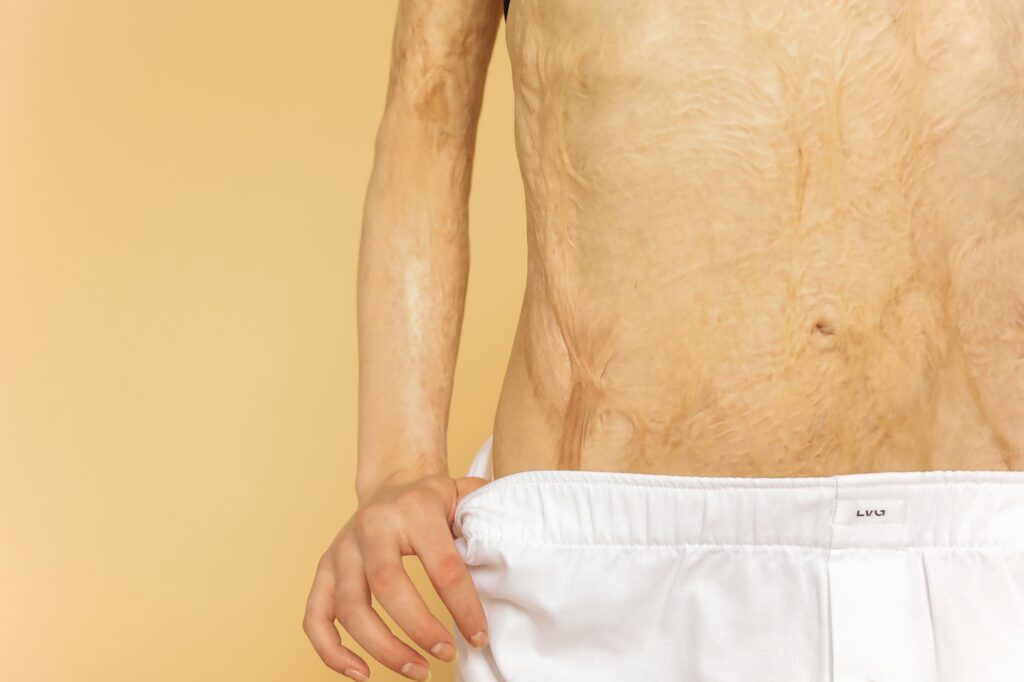
Deep burns leave scars that keep changing for months or years. Hypertrophic scars are raised, red, and firm. Keloid scars grow past the edges of the first wound. Both stay tight and discolored for a long time.
The bigger threat is a contracture. This is scar tissue that pulls tight across a joint as it heals. A contracture over the hand, elbow, neck, or knee can sharply limit motion. In plain terms, you may not be able to fully open your hand or turn your head.
Contractures often need repeated skin grafts and reconstructive surgery. They also need months of physical and occupational therapy. Even then, some loss of function can be permanent. That reaches into work, independence, and small daily tasks.
Pain and itching that don’t stop
Doctors widely see severe burns as among the most painful injuries a person can suffer. For some survivors, the pain never fully ends. It comes from three sources at once: damaged nerves, tightening scar tissue, and the many procedures needed to rebuild the skin.
Then there’s the itching. Deep, lasting pruritus (itching) is one of the most common and most overlooked long-term burn problems. It can last for years and disrupt sleep and mood. This is why pain management is a core part of long-term burn care, not an extra.
Your body regulates heat and sun differently
Where skin and sweat glands are destroyed, the body loses part of its cooling system. Heat and humidity are a daily fact across Florida. They can become truly dangerous. Grafted and rebuilt skin is also fragile. It breaks down more easily, heals slowly, gets infected easily, and burns and darkens quickly in the sun. So many survivors need lifelong sun protection.
Breathing, and sometimes limb loss
If someone breathed in smoke or hot gases, an inhalation injury can cause long-term lung and airway problems. And in the worst cases, a burn destroys tissue so deeply that amputation is the only option. That brings its own permanent changes. Our amputation injuries resource covers this in depth.
Major burns can affect health for years. So survivors usually need ongoing medical follow-up long after they leave the hospital.
The emotional toll is part of the injury
The mental scars can outlast the physical ones. Many survivors relive the event. Some struggle with sleep. Others feel panic around fire, cars, or the place where they were hurt. This pattern fits post-traumatic stress disorder (PTSD). Visible scarring can also change how a person sees themselves and feels in public. It can affect relationships, dating, and confidence at work.
None of this is weakness. It’s a normal response to a life-altering event. Counseling, therapy, and sometimes medication are a real part of recovery. Families feel it too. Spouses, parents, and children often become caregivers overnight. Support for the whole household matters.
Have questions about what happened?
Ask our team directly. The first conversation is free, confidential, and there is no obligation to continue.
Long-term care, and what it costs
A multidisciplinary burn team manages severe burns, not one single doctor. This team includes burn surgeons, plastic and reconstructive surgeons, specialized nurses, physical and occupational therapists, pain specialists, and mental-health professionals. Rehab and reconstructive surgery can restore real movement, strength, and independence. But treatment often runs for years and may not undo every problem.
The costs are large, and they don’t stop. They include repeated surgeries, ongoing therapy, medication, assistive devices, home changes, and special scar and skin care. On top of that, many survivors can’t return to the work they did before. Lost income and long-term money strain are part of life for many families. As explained below, they can be part of a legal claim.
When someone else caused the burn
Severe burns often trace back to something that should have been prevented. This could be a building fire, an explosion, a defective product, a workplace failure, or a serious crash. In our practice, that includes truck accidents, where fuel fires and high-speed crashes cause devastating burns.
Burns also happen when a property owner fails to keep people reasonably safe. Say you were hurt by a fire or explosion at an apartment complex, a hotel or motel, a store, or a short-term rental. And say the owner ignored a known hazard or skipped basic safety steps. You may have a claim against that property owner. Lawyers call this premises liability. When an attack or crime was allowed to happen, they call it negligent security. But you don’t need to know the term to ask whether you have a case.
A few honest, education-first points about Florida law:
- There is a filing deadline. For most negligence claims that start on or after March 24, 2023, Florida’s statute of limitations (the legal filing deadline) is two years, under Fla. Stat. § 95.11(5)(a). Waiting can cost you the right to recover anything. So it’s worth confirming your deadline early.
- Shared fault is measured, not automatic. Florida follows a modified comparative negligence rule under Fla. Stat. § 768.81. This means fault is shared based on each side’s share of the blame. Under that statute, a person found more than 50% at fault for their own harm generally cannot recover damages.
- The future is part of the number. The lasting effects of a severe burn are very costly. So a serious claim looks past today’s bills. It accounts for future surgeries, care, and lost earning power. Documenting that future is often where the real difference lies.
Every case is different, and no lawyer can promise a result. Anyone who does is one to walk away from. This page is general education, not legal advice.
Want a straight answer about your own situation? The licensed attorneys at CHG Personal Injury Lawyers offer a free, confidential case evaluation. We are admitted to The Florida Bar. We handle catastrophic-injury cases nationwide, and we help clients in English and Spanish. For a fuller picture of how these claims work, see our guide to catastrophic injury claims.
Request your free, confidential case evaluation.
Related resources
- Severe burn injuries — our main guide to burn injury claims
- Amputation injuries — when a burn or trauma leads to limb loss
- Truck accidents — a common cause of fire and explosion burns
- Negligent security — when an unsafe property fails to protect you
Want to know where you stand?
Tell us what happened and our team will walk you through the options available to you, at no cost.
Frequently asked questions
Can burns cause permanent damage?
Yes. Deep partial-thickness and full-thickness burns destroy skin, nerves, and tissue the body can’t fully regrow. This often causes lifelong scarring, joint stiffness (contractures), and nerve damage even after the wound “heals.”
Are burns the most painful injury?
Doctors widely see severe burns as among the most painful injuries. The pain can continue long after the wound closes. This is due to nerve damage, tight scar tissue, and repeated procedures.
What type of doctor treats severe burns?
A multidisciplinary burn team treats them. It is led by burn surgeons and plastic and reconstructive surgeons. The team also includes specialized nurses, physical and occupational therapists, pain specialists, and mental-health providers.
Does burn rehabilitation restore function?
Rehab and reconstructive surgery can restore a lot of movement and independence. But treatment often continues for years and may not reverse every long-term effect.
How long do I have to file a burn injury claim in Florida?
For most negligence claims starting on or after March 24, 2023, Florida gives you two years under Fla. Stat. § 95.11(5)(a). Deadlines and their exceptions depend on your facts. So it’s wise to confirm yours with a lawyer early.
How Severe Burns Change a Body Over Time
Permanent Scarring & Contractures
Deep partial-thickness and full-thickness burns destroy skin the body can't fully regrow. As scars mature they tighten, pulling on joints and limiting movement — a condition called contracture that can require repeated surgery.
Nerve Damage & Chronic Pain
Burns can destroy or damage the nerves in and beneath the skin. Some survivors lose sensation permanently, while others live with chronic, hard-to-treat pain long after the wound has closed.
Repeated Surgeries & Rehabilitation
Skin grafts, reconstructive procedures, and months or years of physical therapy are common. The medical timeline for a catastrophic burn is measured in years, not weeks.
Emotional & Life Impact
Visible scarring, mobility limits, and time away from work carry a heavy emotional and financial weight — for the survivor and for the family supporting them.
When a Burn Was Someone Else's Fault
Severe burns from a truck crash, a fire caused by unsafe conditions, an explosion, or dangerous equipment may give rise to a legal claim against those responsible. The sooner the facts are preserved, the stronger the record for your case.
Why Families Turn to CHG Personal Injury Lawyers
Focused on Catastrophic Injury
We concentrate on severe, life-altering injuries — severe burns, spinal cord injuries, TBI, amputations, and wrongful death — not routine claims.
Licensed Florida Attorneys
Our attorneys are admitted to the Florida Bar and take catastrophic injury cases nationwide.
Bilingual, Plain-Language Guidance
We explain your rights in clear English or Spanish, so you understand every step without legal jargon.
Empathetic Representation
We know a severe burn affects the whole family. We handle the legal side so you can focus on recovery.